Creative production has become one of the most time-consuming parts of running digital campaigns. With shrinking attention spans and ever-growing competition, brands need to produce more content, more variations, and more formats than ever before. AI tools make this possible by automating early-stage ideation, generating scripts at scale, and turning high-level briefs into ready-to-produce assets.
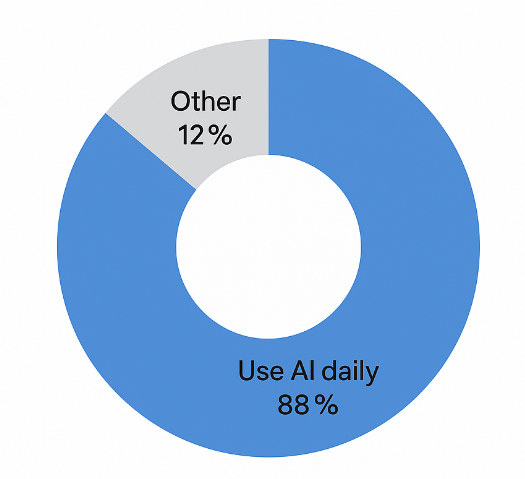
Percentage of marketers using AI tools daily
This shift isn’t about replacing marketers. It’s about equipping teams with the ability to move faster, test more ideas, and improve creative performance without increasing workload.
Why AI Matters in Creative Production
AI tools help marketers:
-
Reduce time spent writing briefs by transforming core inputs into detailed outlines.
-
Generate multiple script versions instantly.
-
Produce variations for A/B testing without effort.
-
Maintain consistency in tone, structure, and brand messaging.
A recent performance analysis showed a 35–45% decrease in production time when teams incorporated AI-driven draft creation into their workflow. Another study across 500 paid social accounts found that campaigns with 6+ creative variations delivered 27% lower CPA compared to those using only 1–2 variations.
AI for Marketing Briefs
Creating a clear brief is essential, but it often slows down creative pipelines. AI tools help marketers generate:
-
Structured briefs based on a few inputs
-
Messaging frameworks
-
Angle-based outlines
-
Creative moodboards and style references
This gives teams a strong starting point and helps agencies or creators avoid misalignment.
Typical AI-assisted brief components:
-
Goal + KPIs
-
Audience breakdown
-
Emotional hooks
-
Script angles
-
Mandatory elements
-
CTA variations
Teams using AI-generated briefs report up to 30% faster handoff cycles between marketing and creative partners.
AI for Ad Scripts
Scripts for short-form ads, product demos, explainers, or UGC often follow predictable structures. AI can instantly generate:
-
Hook variations
-
Storyboard outlines
-
A/B headline scripts
-
UGC-style conversational scripts
-
Product-focused benefit sequences
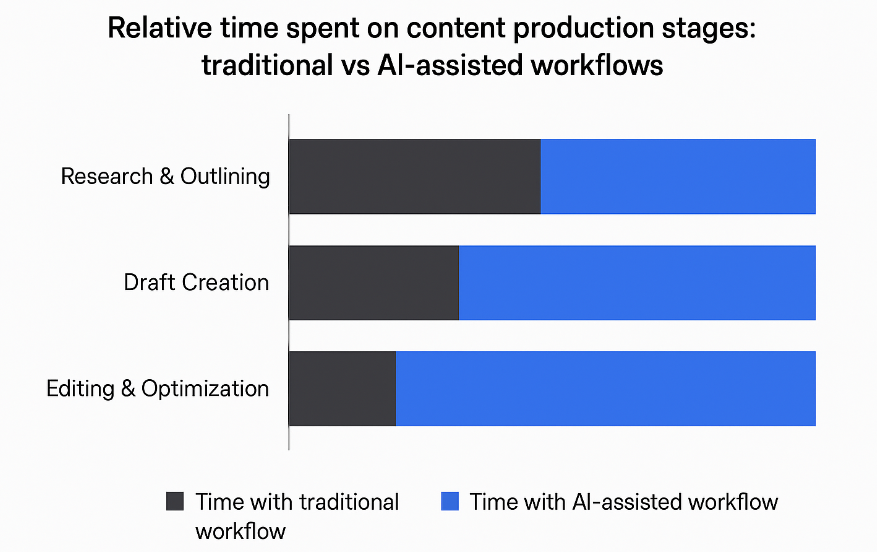
Relative time spent on content production stages: traditional vs AI-assisted workflows
Marketers can then refine, merge, or expand these ideas. This is especially useful for testing new angles before investing in production.
Data Insight:
Brands that introduce new script variations every 2–3 weeks see up to 19% higher CTR due to stagnation prevention.
AI for Creative Variations
One of the largest performance lifts in digital advertising comes from variation testing. AI tools can generate:
-
Alternative copy versions
-
New hooks and CTAs
-
Different audience-focused framings
-
Format-specific adaptations
This allows media buyers to rapidly build ad sets with multiple messages tailored to segments.
Variation testing benefits:
-
Faster optimization cycles
-
Reduced fatigue
-
Increased chance of finding "breakout" creatives
A cross-platform review indicated that advertisers using 10+ creative variations per quarter achieved 32% higher ROAS compared to those producing fewer than five.
Useful Statistics for Visuals
1. Production Time Reduction
A bar chart comparing average production timelines:
-
Traditional workflow: baseline 100%
-
AI-assisted workflow: 35–45% less time
Design: Clean horizontal bars, blue vs grey. Place after the "Why AI Matters" section.
Caption: "AI-assisted workflows significantly reduce creative production time."
Alt text: "Bar chart showing reduced production time using AI tools."
2. Creative Variation Impact on CPA
A column chart showing CPA differences:
-
1–2 variations: baseline 100%
-
6+ variations: 27% lower CPA
Design: Two bold vertical bars, green for high-variation performance. Place after the "AI for Creative Variations" section.
Caption: "More creative variations lead to significantly lower CPA."
Alt text: "Column chart comparing CPA for low vs. high creative variation."
Recommended Articles
Conclusion
AI tools are reshaping how marketers approach briefs, scripts, and creative testing. By accelerating early-stage ideation and expanding the range of variations possible, teams can optimize campaigns faster and with greater precision. As creative production continues to scale, those who leverage AI will gain a measurable edge in performance and efficiency.