Most beginner Facebook campaigns fail long before the algorithm becomes the problem.
The issue usually starts with weak setup decisions. Advertisers pick the wrong objective, target audiences that are too broad, or launch creatives that generate clicks without real purchase intent. Meta’s system will still spend the budget, but the results often become expensive quickly.
A successful campaign starts with clear inputs. Meta’s algorithm performs best when advertisers define a real business goal, build relevant audiences, and give the system enough conversion signals to optimize delivery properly.
Start With the Business Goal, Not the Ad Format
Meta campaigns are built around objectives because the platform optimizes delivery differently depending on the result you want.
A campaign optimized for engagement behaves very differently from a campaign optimized for purchases or leads. If the objective does not match the actual business outcome, Meta may deliver cheap actions that never become revenue.
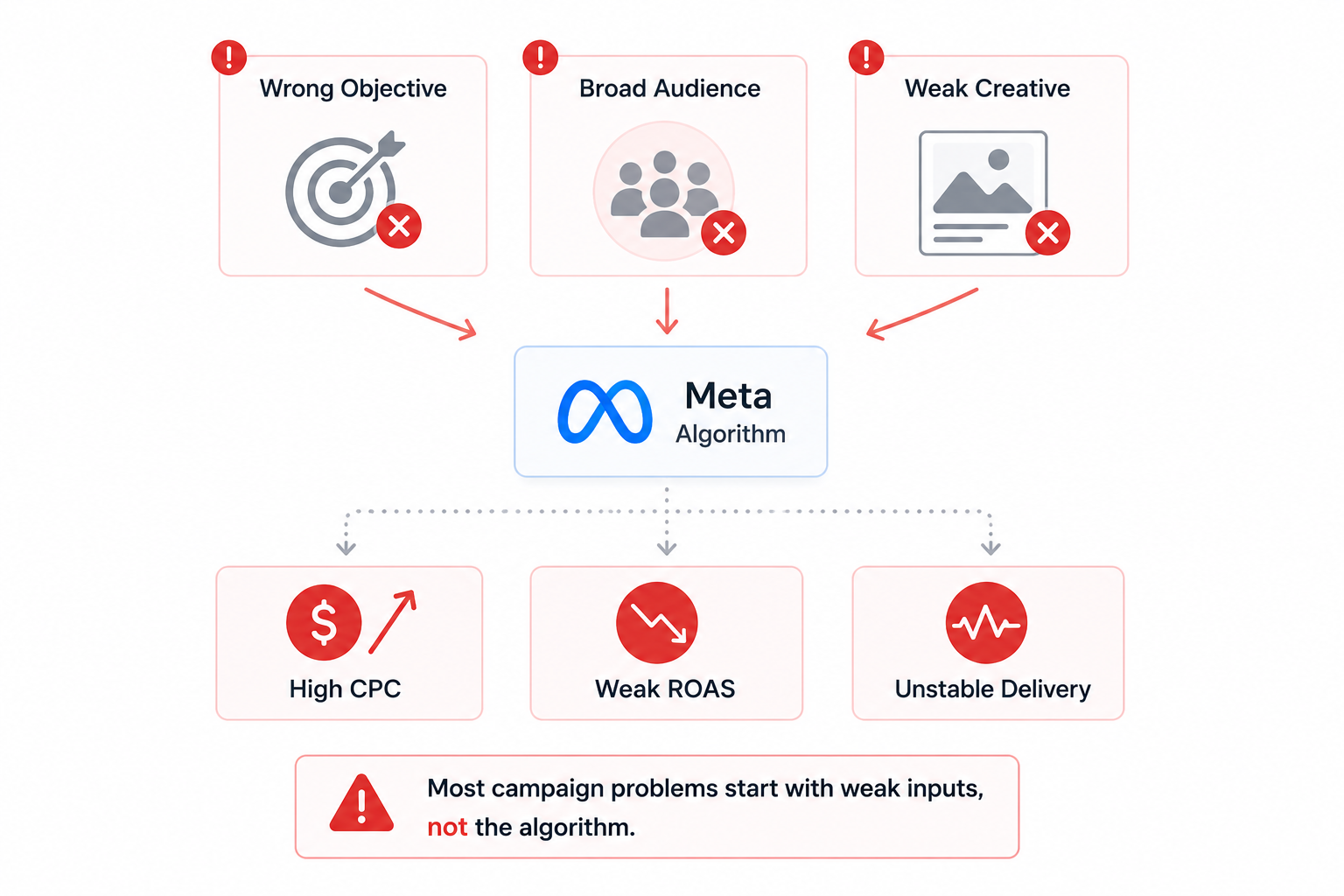
Inside Ads Manager, poor objective selection usually creates patterns like:
- high CTR but low sales;
- cheap engagement with weak lead quality;
- rising CPC after scaling;
- strong reach with poor conversion rates;
- unstable ROAS despite decent traffic.
This is why advertisers should first define the business outcome before choosing audiences or creatives. Businesses focused on sales, bookings, or qualified leads should structure campaigns around those actions from the beginning.
Before launching campaigns, it helps to learn how to launch Facebook ads with a clear goal.
Audience Quality Matters More Than Audience Size
One of the most common beginner mistakes is assuming larger audiences automatically create better performance.
Large audiences may lower CPM initially because Meta can access cheaper inventory. The problem appears later when click quality weakens and conversion rates collapse.
Inside Ads Manager, weak audience targeting often shows up as:
- low-cost traffic that never converts;
- high bounce rates on landing pages;
- weak add-to-cart behavior;
- declining ROAS after initial delivery;
- unstable CPA across ad sets.
This is why advertisers should understand why broad interest targeting wastes ad budgets.
The goal is not reaching the most people. The goal is reaching people most likely to take valuable actions.
For beginners, smaller but more relevant audiences often outperform massive interest groups with weak purchase intent.
Small Budgets Can Still Produce Useful Results
Meta ads remain accessible because advertisers can begin testing with relatively modest budgets.
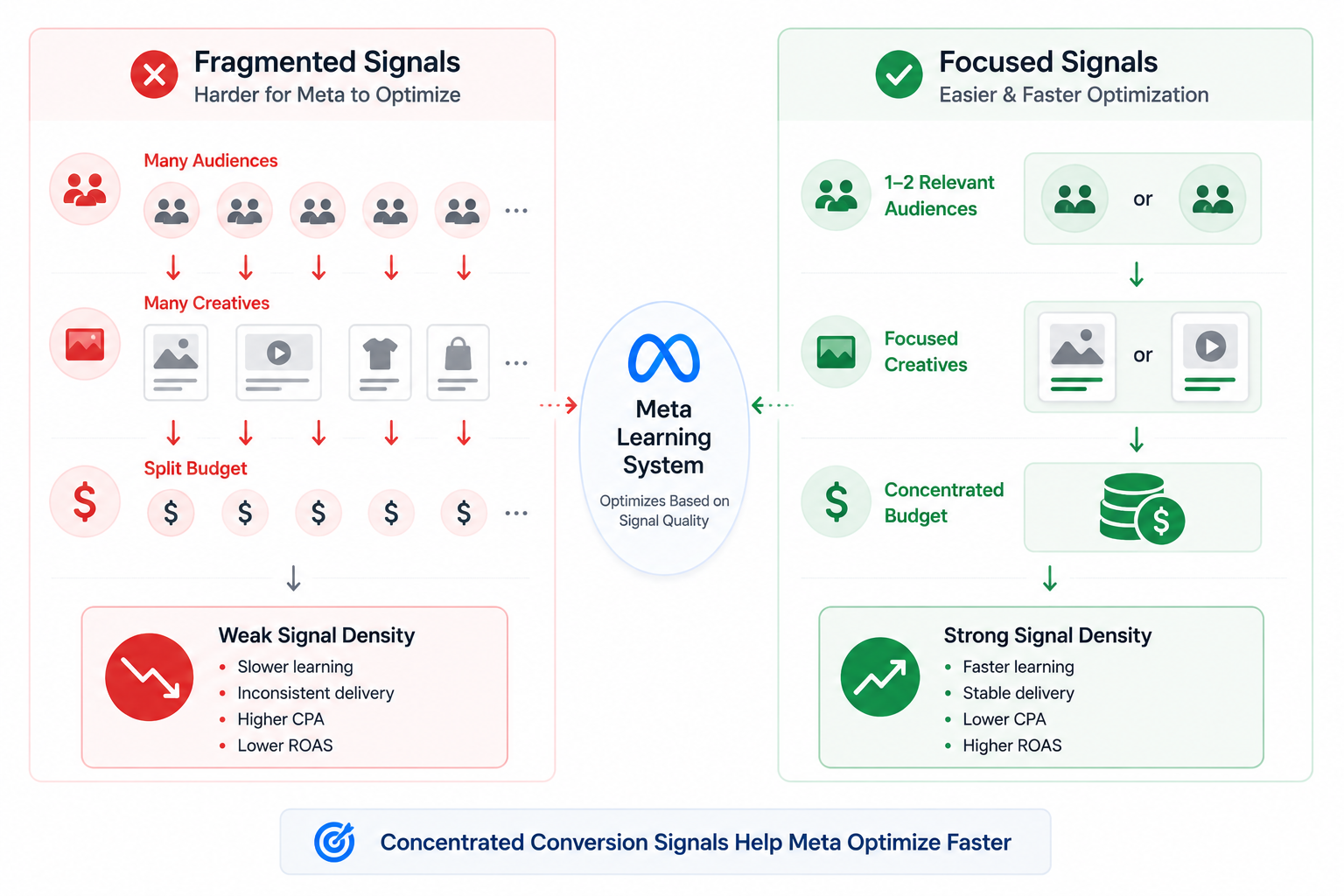
That flexibility helps local businesses, startups, creators, agencies, and service companies validate messaging before scaling aggressively. The mistake beginners make is spreading small budgets across too many audiences, campaigns, or creatives at once.
Weak signal density slows optimization.
A stronger beginner setup usually includes:
- one campaign objective;
- one or two audience groups;
- limited creative variations;
- a stable testing period;
- enough budget to generate meaningful data.
Meta’s algorithm performs better when conversion signals are concentrated instead of fragmented across dozens of ad sets.
Creative Quality Influences Both CTR and CPM
Many beginners think creatives only affect click-through rate.
In reality, creative quality also affects auction competitiveness.
Meta evaluates engagement probability, user feedback, ad quality, and estimated action rates before deciding how aggressively to distribute ads. Weak creatives often create higher CPMs before conversion problems even become obvious.
Inside Ads Manager, low-performing creatives usually trigger:
- rising CPM;
- weak outbound CTR;
- declining quality rankings;
- faster audience fatigue;
- unstable delivery during scaling.
Strong creatives do not need to look overly polished. Clarity matters more than production quality in many industries.
A good beginner ad quickly communicates:
- What the offer is.
- Who the offer is for.
- Why someone should care now.
If users cannot understand those points immediately, Meta often reduces delivery efficiency.
Boosted Posts Are Easy but Limited
Many businesses start advertising by boosting posts directly from a Facebook Page.
That approach is simple, but it limits optimization control. Boosted posts work reasonably well for visibility or lightweight engagement, but they are rarely ideal for lead generation or sales-focused campaigns.
Ads Manager provides significantly more control over:
- conversion-focused objectives;
- audience exclusions;
- placement optimization;
- event tracking;
- structured testing;
- reporting visibility.
This becomes increasingly important once campaigns start spending meaningful budget or targeting multiple audience segments.
Avoid Editing Campaigns Too Aggressively
Beginners often damage campaign performance by reacting too quickly to early data.
They launch campaigns, check results a few hours later, then repeatedly change budgets, targeting, creatives, or placements. Large edits can reset learning and destabilize delivery.
Inside Ads Manager, excessive editing often creates:
- unstable spend pacing;
- inconsistent conversion volume;
- longer learning phases;
- volatile CPA movement;
- uneven ad-set delivery.
Campaigns need enough time to generate reliable behavioral signals before major optimization decisions are made.
That does not mean weak campaigns should run forever. It means advertisers should avoid making emotional decisions based on limited early performance data.
Better Signals Usually Beat Bigger Reach
As advertisers gain experience, they stop chasing the biggest audiences possible.
They start focusing on stronger intent signals instead.
This is where audience quality becomes a major advantage. Advertisers using LeadEnforce can build audiences from Facebook groups, Instagram followers, engaged communities, and social-profile behavior tied to real interests and engagement patterns.
That stronger intent layer often improves:
- lead quality;
- conversion rates;
- CPM stability;
- learning efficiency;
- ROAS consistency.
Meta’s algorithm performs best when it receives clear behavioral signals connected to likely buyers.
Final Takeaway
Facebook and Instagram ads become much easier once the setup process is simplified.
Most beginner campaigns improve significantly when advertisers focus on the fundamentals first: choosing the correct objective, targeting relevant audiences, creating clear creatives, and giving campaigns enough stability to learn properly.
Before launching campaigns, it also helps to review a full Facebook ads checklist for small business so you avoid common setup mistakes that waste budget early.