What separates a high-value customer from a casual browser? It often comes down to behavior — not demographics, not job titles, and not lookalike audiences on paper.
Understanding these behavioral patterns is crucial for advertisers looking to scale campaigns efficiently and build revenue-rich customer pipelines. This guide will help you identify the signals that consistently precede high-LTV conversions, so you can double down on the right audiences and stop wasting budget on low-intent traffic.
1. Multi-Touch Pre-Click Behavior
High-value users rarely convert after a single impression. They see your ad, skip it, research your brand, return later via search, and maybe even click a different ad before converting.
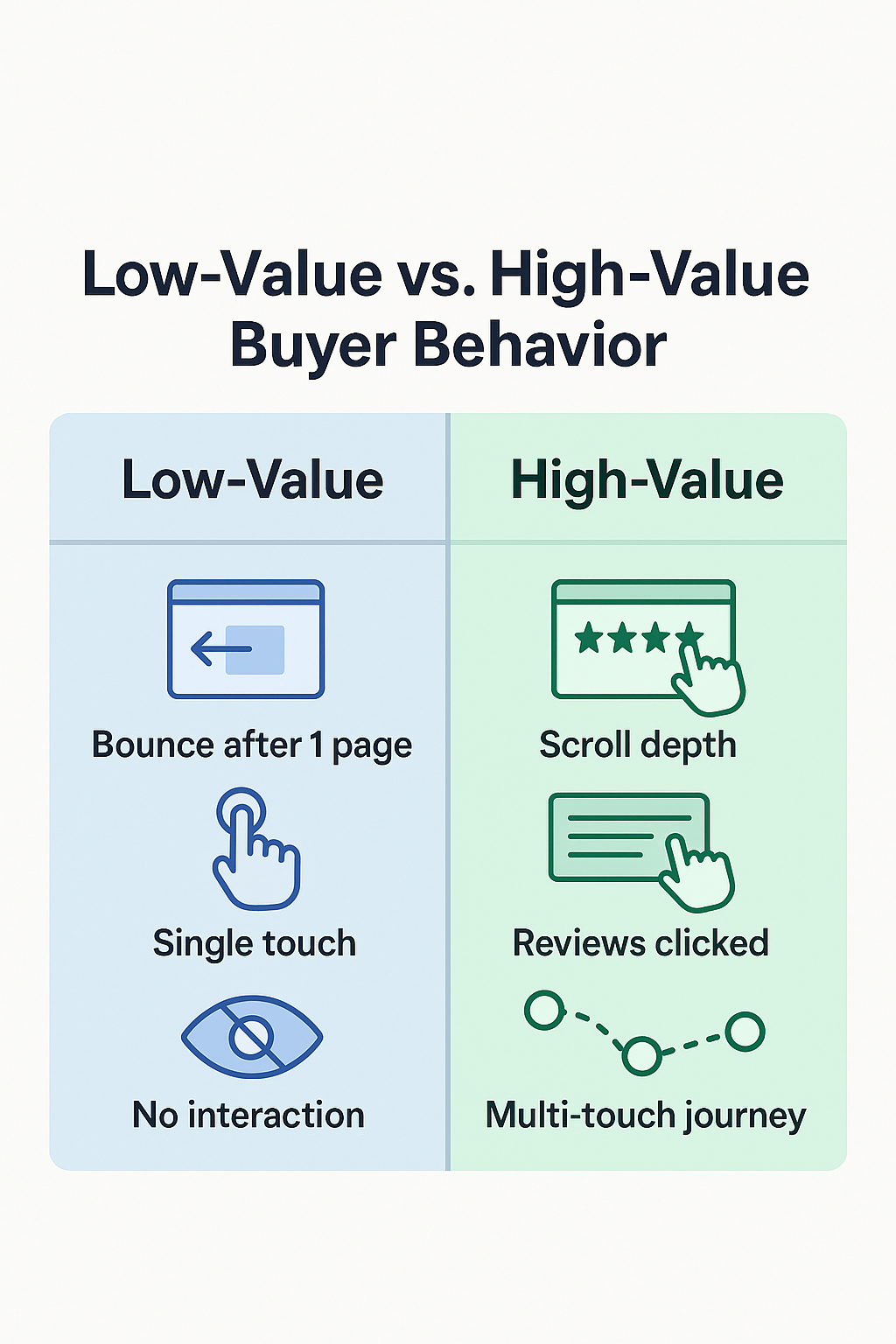
Indicators of high-value intent before the click:
-
Repeated ad impressions followed by a branded search.
-
Users who click multiple ad variants across campaigns.
-
Visitors who bounce initially but return via a different channel.
Why it matters: This behavior signals strong purchase intent. These users are in research mode — not just scrolling casually. You can use this insight to improve view-through attribution and retargeting logic.
Tip: Use Facebook ad funnel strategy best practices to build full-funnel journeys that account for multi-touch behavior.
2. Deeper On-Site Exploration on First Visit
Not all sessions are equal. Some users visit one landing page and leave. Others engage in multi-page browsing patterns that indicate a different level of interest.
Key behaviors to look for:
-
3 or more pages viewed during the first session.
-
Reading buyer guides, FAQs, or return policies.
-
Clicking into secondary pages like product comparisons or trust badges.
What this tells you: These users are investigating — not window-shopping. They’re evaluating your offer and experience in-depth, which correlates with higher average order value (AOV).
Tip: Segment these visitors for high-priority retargeting. They’re prime candidates for reminder emails, cart nudges, or dynamic product ads.
3. Mobile Discovery, Desktop Conversion
High-value users often demonstrate platform-switching behavior. They discover products on mobile but return on desktop to complete the purchase — a classic sign of thoughtful decision-making.
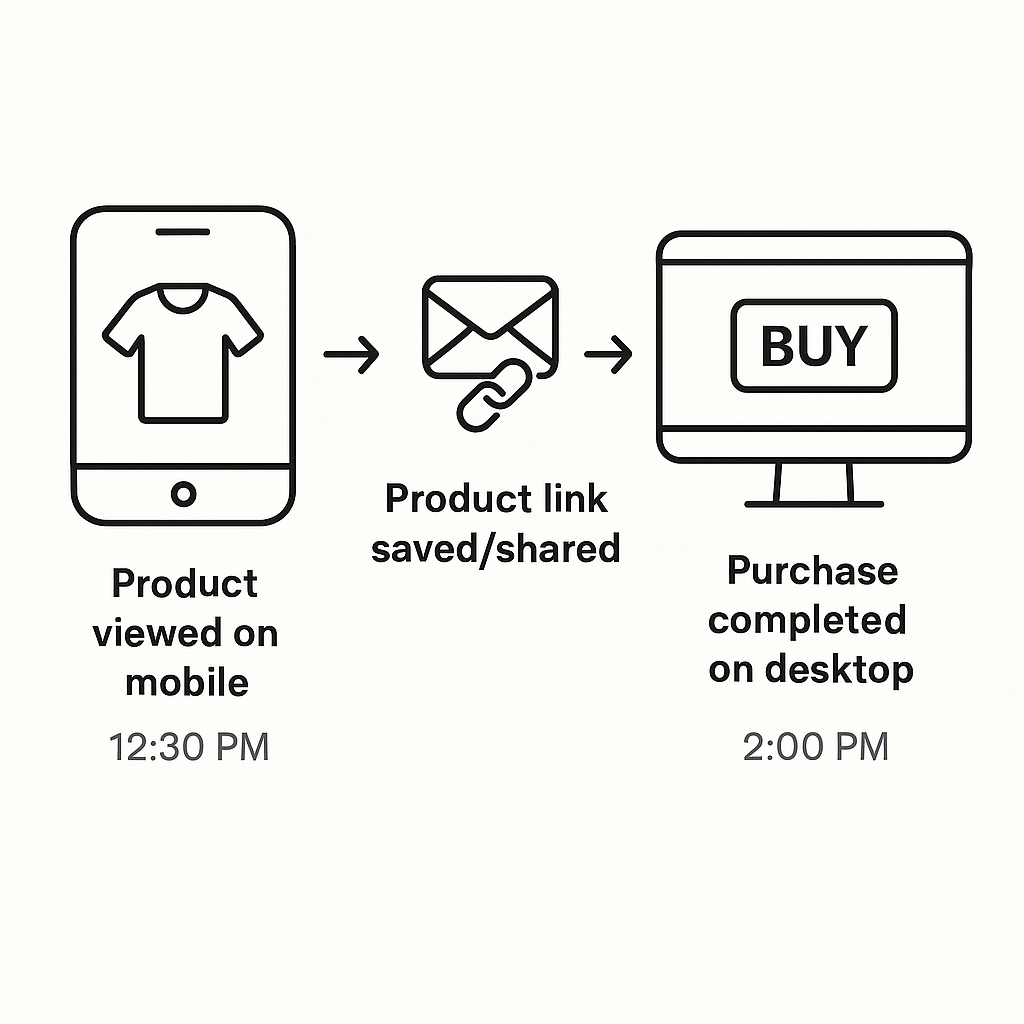
Data-backed signs of high purchase intent:
-
Initial session on mobile, followed by a desktop session within 72 hours.
-
Cart creation on mobile, completion on desktop.
-
Email forwarding or copying product URLs to revisit later.
This pattern is especially common in high-ticket or complex purchases, where the buyer wants a clearer view before committing.
Tip: Design cross-device continuity into your retargeting setup. Make sure product views and cart states are synced across sessions and platforms.
Learn how to optimize campaigns for desktop and mobile behavior separately to drive results more efficiently.
4. Interaction With Trust Elements and Reviews
Conversion isn’t just about pricing. For high-value buyers, confidence plays a larger role. They often spend time validating your brand before they act.
Behavioral signals of trust-seeking users:
-
Clicking review tabs or scrolling through testimonials.
-
Interacting with badges like "verified buyer" or "secure checkout".
-
Hovering or zooming on UGC (user-generated content), photos, or videos.
These actions reveal intent to verify — and often precede larger purchases or first-time customer conversions.
Tip: Surface trust signals higher on landing pages. The more friction you reduce upfront, the less you need to fight hesitation later in the funnel.
Check out our guide on the role of social proof in Facebook ads.
5. Fast Signup or Account Creation
High-value customers often create an account or subscribe to something on their first visit — even before making a purchase.
Why this matters: It’s a sign they anticipate future engagement, not just a one-off transaction.
Actions that predict long-term value:
-
Signing up for a back-in-stock alert.
-
Creating a wishlist or saved product list.
-
Opting into an email series about a product category.
Tip: Consider these early actions as predictive signals. Feed them into your CRM or ad platform as custom audiences to model your next best customers.
Learn more about building persona-driven targeting based on behavioral signals, not just static traits.
6. Scroll Depth and Page Revisits
Clicks alone don’t tell the full story. Scroll behavior often reveals a deeper layer of intent. Users who scroll 75%+ down a landing or product page are far more invested than those who skim headlines and bounce.
Even more telling: users who come back to the same product or landing page multiple times.
Behavior to track:
-
High scroll depth on long-form landing pages.
-
Repeated views of the same URL within a short window.
-
Multiple video plays or carousel interactions on the same session.
This behavior often correlates with high AOV purchases, especially in B2C ecommerce.
Tip: Use these behaviors to build warm remarketing pools or trigger onsite personalization. If someone’s returned to a product page three times in 48 hours, they don’t need awareness — they need urgency.
7. Purchase Delay With High Spend
Not all conversions happen quickly. In fact, longer decision windows are often a feature of higher-value buyers, not a flaw in the funnel.
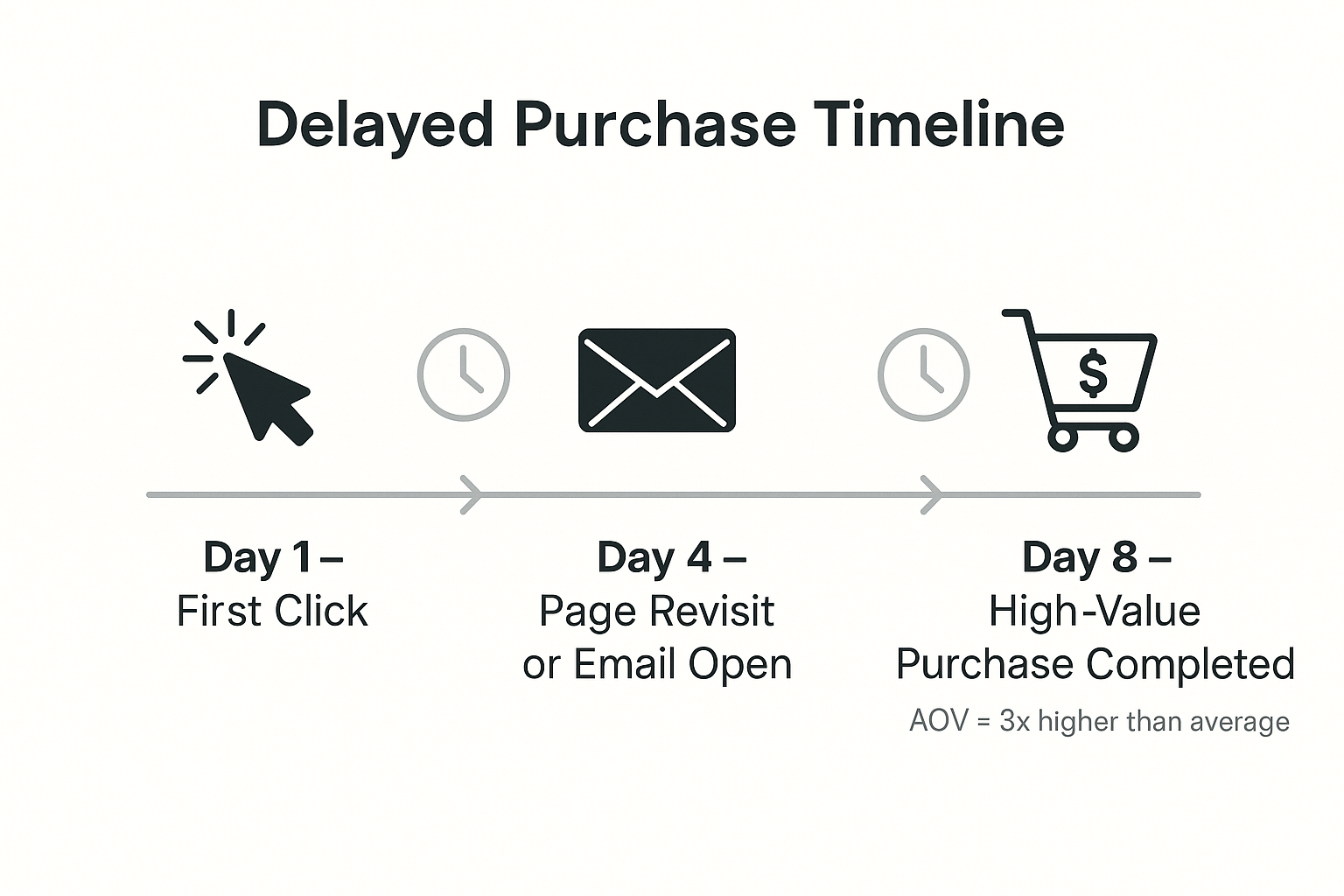
Warning signs you might be misjudging slow buyers:
-
7+ days between first click and conversion.
-
Conversion lag that skews attribution.
-
Delayed but large orders, or multiple purchases in a short window post-conversion.
If you only optimize for short sales cycles, you’ll filter out many high-value customers prematurely.
Tip: Adjust your attribution windows and retargeting logic to account for longer decision journeys. Consider layering Facebook retargeting strategies that remain active across extended timeframes.
Final Thoughts: Behavior Beats Demographics
Demographic data can be helpful, but behavior is predictive. It's real. It shows intent — not assumptions.
If you’re still targeting based only on interests or job titles, you’re missing the bigger picture. You need to watch how people move, click, pause, scroll, and return. That’s where the gold is.
Start mapping out these behaviors. Tag them. Segment them. Use them to prioritize budget, tailor creative, and personalize follow-ups.