In Meta advertising — particularly on Facebook and Instagram — creative is more than design aesthetics. It is a strategic lever that determines how effectively your campaigns perform, scale, and stay relevant.
But this raises a critical question for media buyers and marketers:
Should your creative assets be consistent to build recognition — or varied to maintain engagement and avoid fatigue?
The best advertisers don’t choose one or the other. Instead, they build structured systems that balance both — using consistency to train the algorithm and audience, and variety to keep performance alive over time.
To understand what makes this strategy work, it's essential to examine what the best-performing ad creatives have in common. Patterns in layout, messaging, and emotional appeal provide a strong foundation for both consistency and experimentation.
What Is Creative Consistency — and Why It Matters
The Strategic Role of Creative Consistency
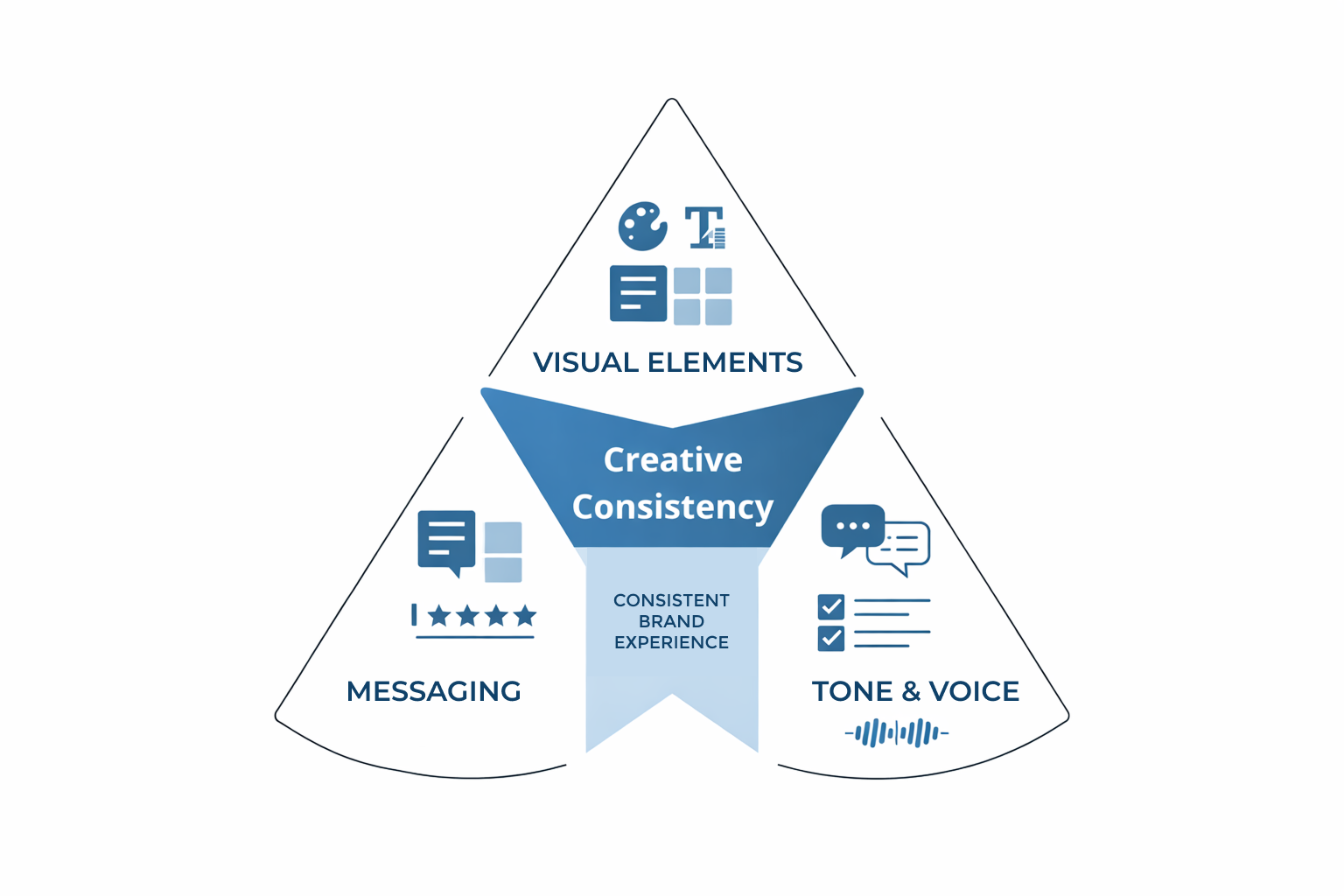
Creative consistency refers to the deliberate repetition of core brand elements — visual, verbal, and structural — across your ad campaigns. This typically includes:
-
Visual consistency — such as brand colors, fonts, logo placement, and design motifs;
-
Messaging alignment — like repeating key taglines, benefits, or CTAs across creatives;
-
Tone and voice — maintaining a unified copy style that aligns with your brand personality.
These elements create a familiar user experience — one that enhances both algorithmic delivery and audience recognition.
Performance Benefits of Consistent Creative Execution
Creative consistency does more than reinforce branding — it strengthens campaign performance in three measurable ways:
-
Improved recall and recognition — users remember and recognize your ads faster when design elements are familiar;
-
Accelerated algorithm learning — Meta's system detects consistent creative signals, which helps improve delivery and targeting;
-
Reduced production cost and waste — templated consistency enables faster iteration with fewer design resources.
In performance-driven environments, consistency is a scaling mechanism — not a constraint.
What Creative Variety Really Means — and Why It’s Necessary
Purposeful Variation — Not Random Testing
Creative variety is not about constant reinvention — it is about introducing fresh creative angles with strategic intent. High-performing variation typically includes:
-
Copy variation — testing new hooks, headlines, and emotional framings around the same offer;
-
Format flexibility — delivering consistent messages through carousels, reels, short-form videos, or static images;
-
Angle diversification — framing the same value proposition from different perspectives (e.g., urgency, social proof, or problem/solution framing).
The goal is not to confuse the user — but to find the version of your message that best unlocks response at each funnel stage.
You can structure this process more effectively using the best campaign frameworks for testing offers vs. creatives. It ensures you're learning from your tests without compromising efficiency or data clarity.
Why Variation Extends Creative Lifespan
Even the best-performing creative assets decay over time — either through user fatigue or platform saturation. Purposeful variety:
-
Reduces performance drop-off — by refreshing how the same core message is presented;
-
Unlocks new learnings — by revealing which angles drive performance across segments and placements;
-
Increases reach and relevancy — especially when targeting broad audiences with diverse motivations.
In short — variety is how you sustain performance without compromising structure.
What Happens When You Get the Balance Wrong
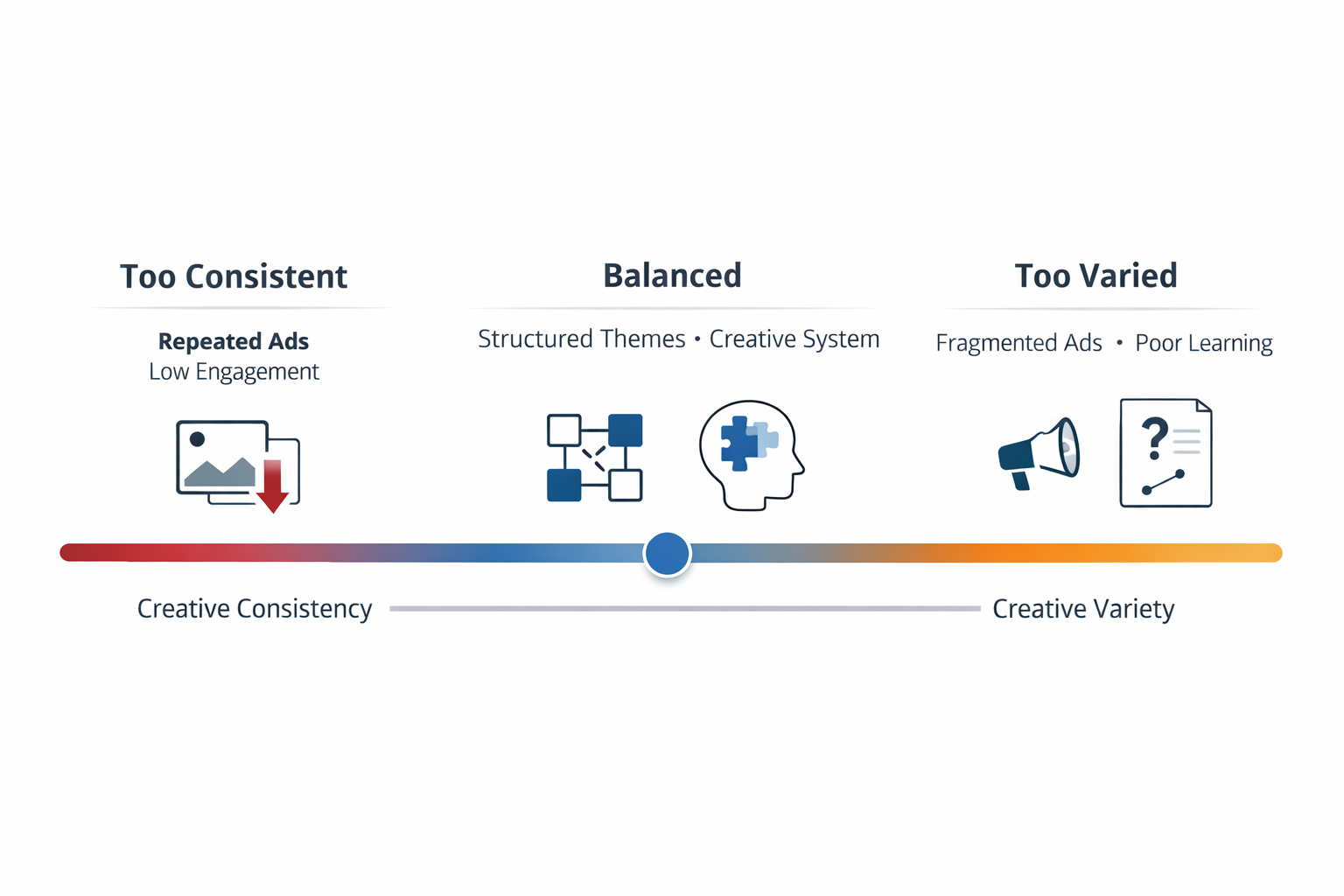
Too Much Consistency — Stagnation and Creative Fatigue
When all your assets look and sound the same, results tend to plateau — or decline. Warning signs include:
-
Decreasing CTR — even with stable targeting and budget;
-
Increased CPMs — without clear external shifts in auction pressure;
-
Stagnant testing outcomes — where no new creative drives significant improvement.
In this case, the creative may feel polished — but to the user, it feels stale and predictable.
Too Much Variety — Chaos and Instability
At the other extreme, excessive variation dilutes performance. When creative inputs lack cohesion, Meta's algorithm struggles to learn. Common issues include:
-
Inconsistent messaging — leading to weak brand perception and reduced trust;
-
Longer learning phases — as the platform fails to recognize patterns in ad performance;
-
Creative waste — with low-performing tests that don’t inform future optimization.
Without a consistent throughline, you’re not testing creative — you’re guessing.
Frameworks to Balance Consistency and Variation Effectively
1. Build Creative Themes — Not One-Off Ads
Group creatives into strategic themes based on user intent, offer type, or funnel stage.
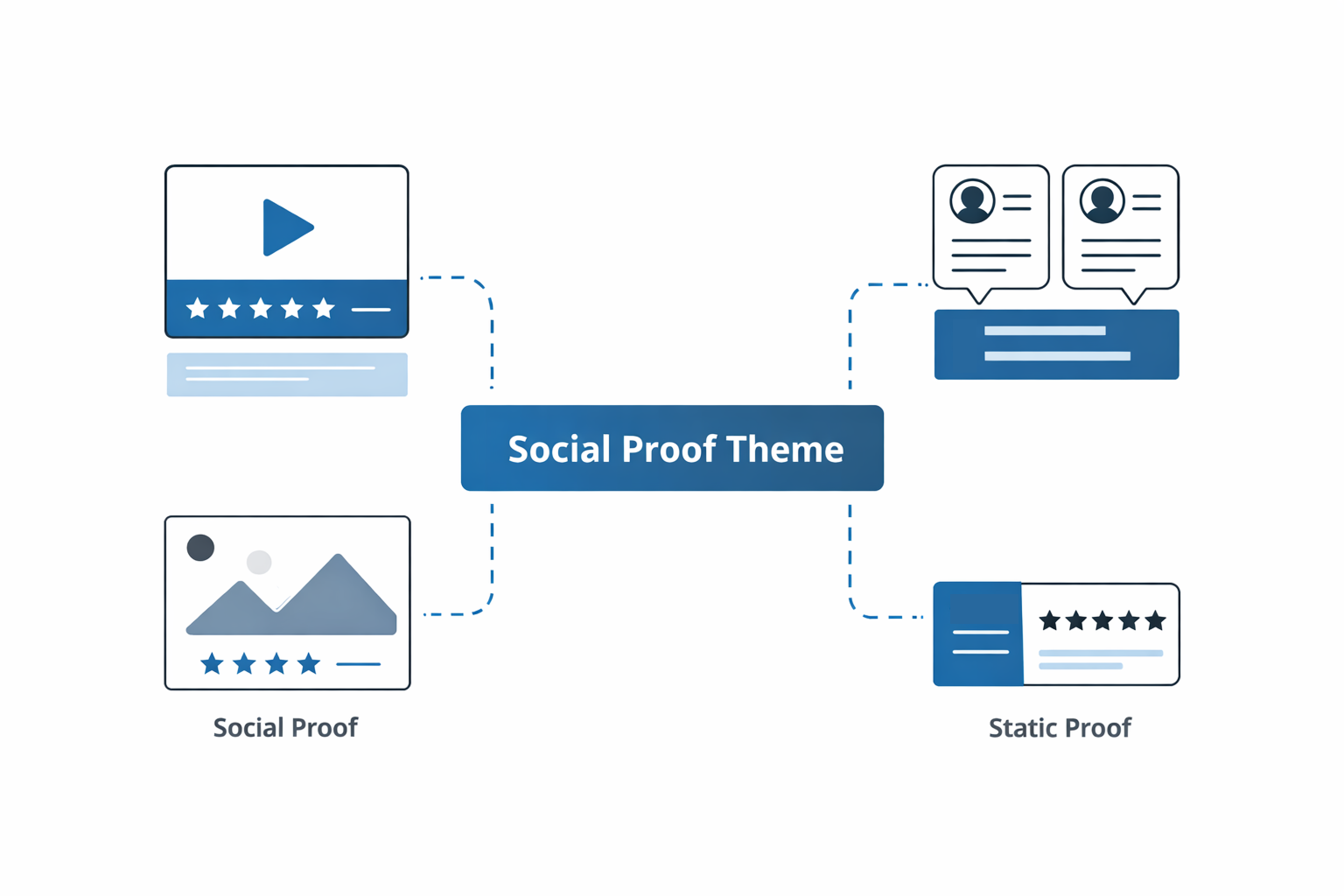
Each theme should:
-
Anchor around a core idea — such as social proof, exclusivity, or product benefit;
-
Maintain consistent brand elements — such as layout, font, or tone of voice;
-
Support controlled variation — testing one variable (e.g., copy) while holding others constant.
Example: a social proof theme might include testimonial headlines, user-generated content, and customer reviews — deployed in video and carousel formats.
This structure enables iteration — without fragmentation.
2. Use a Modular Creative System
High-volume advertisers develop modular systems — where certain elements are fixed, and others are dynamic. This allows for both scale and control. For instance:
-
Fixed elements — such as brand colors, logo placement, or CTA button style;
-
Flexible components — like the headline, testimonial quote, or product shown.
This enables dozens of variations — without straying from your identity.
When you're ready to make changes, follow these five ways to refresh creatives without losing consistency. It's a practical framework for improving performance without creative overhauls.
3. Align Variation with Funnel Depth
Use funnel stage logic to determine where you introduce variety — and where you double down on consistency:
-
Top of Funnel (TOF) — lead with variety. Test broad emotional or curiosity-driven hooks to capture attention;
-
Middle of Funnel (MOF) — balance both. Retain familiar visuals, but vary message framing to reinforce consideration;
-
Bottom of Funnel (BOF) — emphasize consistency. Use repeat visuals, proof, and offer reminders to drive action.
The deeper the funnel — the more consistency matters.
When to Refresh — and How to Avoid Full Rebuilds
Track Key Creative Fatigue Indicators
Even with strong creative strategy, every asset will eventually decline. Watch for these indicators:
-
CTR erosion — despite stable frequency and audience;
-
Rising CPMs — indicating reduced ad relevance or increased competition;
-
Lower ROAS — even with consistent user behavior across the funnel.
These signs mean it’s time to refresh — but not necessarily to replace everything.
Refresh Strategically — Not Randomly
Rather than rebuild entire assets, refresh individual components to revive performance:
-
Update the hook or first frame — to re-engage scrollers;
-
Swap visuals within the same layout — to extend visual lifespan;
-
Rewrite the CTA or supporting copy — to test psychological motivators.
This maintains campaign stability — while restoring momentum.
Conclusion: Scale Comes from Systems — Not Sporadic Genius
The most successful Meta advertisers don’t rely on creative luck. They build structured systems that balance brand consistency with controlled variation — enabling both discovery and scale.
To find your own balance:
-
Define non-negotiable brand elements — and enforce them across all creative themes;
-
Group assets by strategic purpose — not just by format or channel;
-
Match variation to intent — testing angles where the user is least familiar, and reinforcing consistency where trust is needed most.
This is not just a creative philosophy — it is a performance strategy. And it’s one that separates scalable ad accounts from stagnant ones.