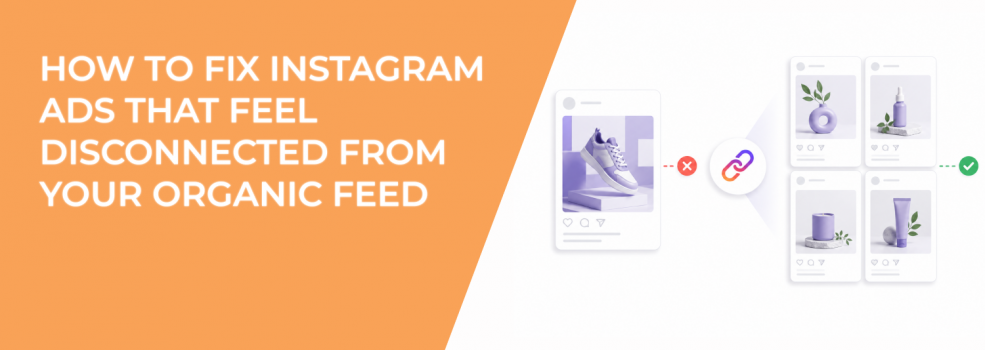
Some Instagram ads fail before users even process the offer.
The problem is not always targeting or bidding. Often the ad simply looks unfamiliar compared to the rest of the account. Users click into the profile after seeing the ad, then immediately notice a mismatch between the promoted creative and the organic content.
That disconnect lowers trust quickly.
A polished studio-style ad might appear inside a casual creator-style Instagram account. A luxury-looking Reel may lead into a profile filled with inconsistent screenshots and reposts. Sometimes the opposite happens. The organic feed feels premium, but the ad looks rushed and overly sales-focused.
Meta’s delivery system reacts to those signals faster than many advertisers realize. Lower engagement quality usually increases CPM and CPC over time. Profile visits stop converting into followers. Comments become weaker. Even strong offers start producing expensive traffic.
Why disconnected Instagram ads reduce performance
Instagram users evaluate ads in context. They rarely judge the ad by itself. They compare it against the account behind it.
That creates a common performance problem for brands running promoted posts or Instagram feed ads. The creative gets attention, but the account experience breaks the momentum.
You can usually spot this issue inside Ads Manager through signals like:
- High CTR with weak conversion rate. People click because the ad catches attention, but the profile or landing experience feels inconsistent afterward.
- Strong thumb-stop metrics but low profile engagement. Users view the ad but do not continue exploring the brand.
- Expensive retargeting CPMs. Meta detects weaker engagement quality and lowers delivery efficiency over time.
- High bounce behavior after profile visits. Users lose confidence once they compare the ad against the organic content.
A B2B SaaS company might run highly produced motion graphics while the Instagram page mostly contains webinar clips and product screenshots. The ad promises one brand experience. The account shows another.
That inconsistency creates friction during evaluation.
The fastest way to spot creative disconnect before scaling
Most advertisers review ads individually. Experienced media buyers review the full user path instead.
Open the Instagram profile directly from the ad preview. Then ask a simple question: does this ad feel like it belongs here?
Common mismatch patterns appear quickly:
- The ad uses a completely different visual style.
A minimalist monochrome ad leading into a colorful meme-heavy account creates immediate brand confusion. - The tone changes between paid and organic content.
An ad speaking like a corporate SaaS brand followed by casual emoji-heavy posts weakens credibility. - The offer positioning shifts.
The ad focuses on performance marketing ROI, but the feed mainly discusses general inspiration or culture content. - The content quality drops after the click.
The promoted post looks premium while the rest of the account feels inactive or outdated.
These gaps usually hurt cold traffic first because new users have no prior trust in the brand.
Why native-looking Instagram ads usually outperform polished campaigns
Instagram is not LinkedIn.
Users expect ads to feel integrated into the browsing experience. When creative looks too detached from normal platform behavior, engagement quality drops.
That does not mean ads should look low quality. It means the creative should match the account’s existing visual language.
Brands with strong Instagram performance often repeat the same structural patterns across both paid and organic content:
- Similar framing and composition.
- Consistent typography and color treatment.
- Repeated content themes.
- Familiar editing rhythm in Reels.
- Matching tone in captions and hooks.
This consistency helps Meta accumulate stronger engagement signals because users interact with the ad and the account similarly.
If you want to improve this alignment, review how to use learnings from organic posts to guide ad creative and how to make Instagram ads look more native.
Consistency matters even more for retargeting campaigns
Retargeting magnifies creative inconsistencies.
Cold audiences may tolerate some disconnect because they only see the ad once. Warm audiences notice repetition patterns much faster.
A user who already watched Reels, visited the profile, or engaged with Stories expects continuity. If retargeting ads suddenly switch tone, style, or messaging direction, the campaign starts feeling fragmented.
This becomes especially expensive for e-commerce brands scaling prospecting and retargeting simultaneously.
One campaign may use creator-style UGC while another uses highly polished catalog creative. The user experiences both inside the same buying journey.
That fragmentation weakens recall.
Brands usually get better results when they build one recognizable creative system across placements, which is why why organic and paid social need to work together becomes more important as spend increases.
Final takeaway
Instagram ads rarely operate alone. Users compare the ad against the profile, the content style, the tone, and the overall account identity within seconds.
When paid creative feels disconnected from the organic feed, trust drops before the user even reaches the landing page.
The strongest Instagram advertisers build campaigns that feel like a natural extension of the account itself, not a separate advertising layer.