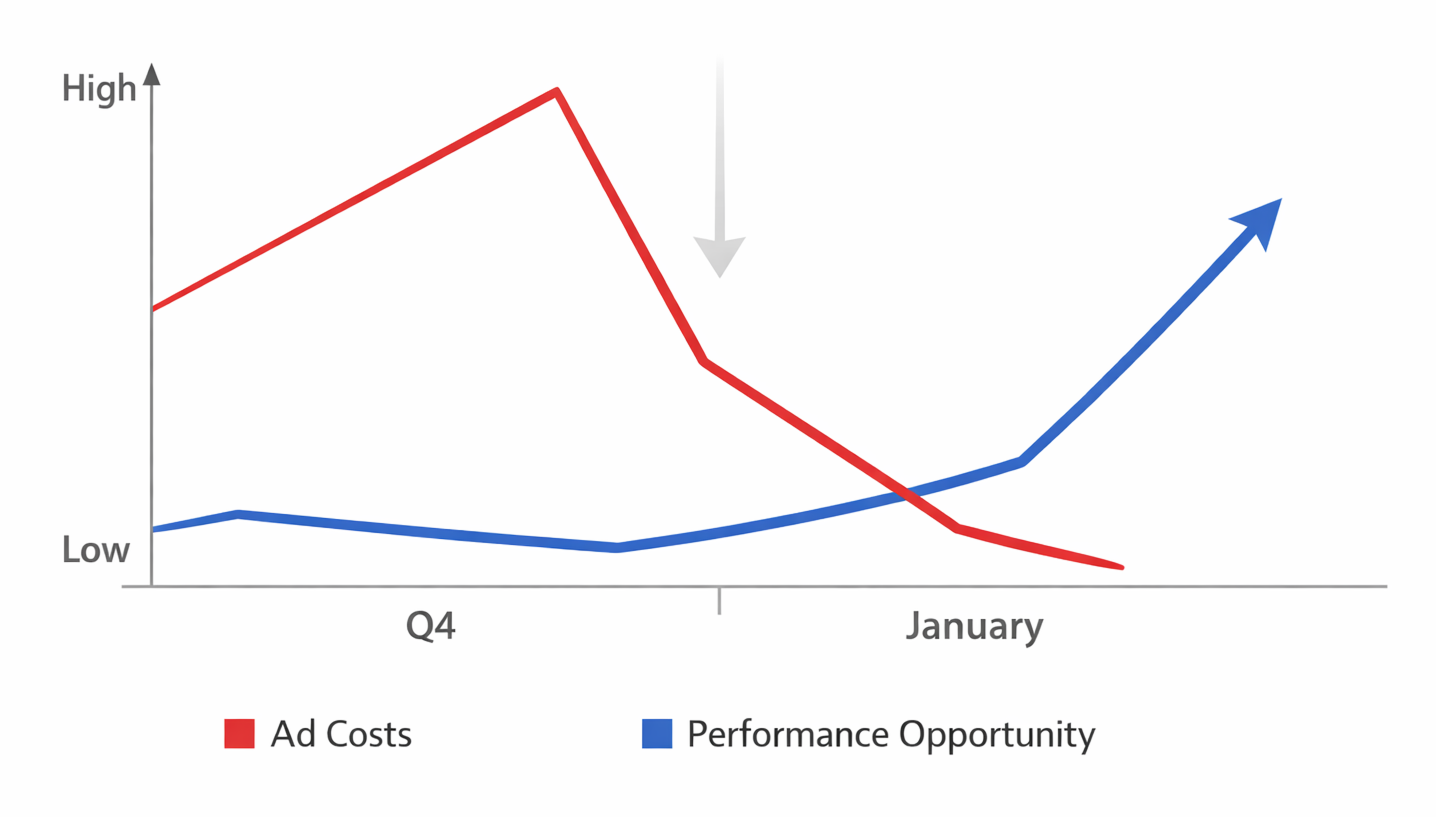
The ad market shifts fast after Q4. Costs drop. Competition thins out. Buyers behave differently.
This isn’t the time to go on autopilot. January gives you cleaner data and lower pressure, which makes it ideal for controlled testing.
But don’t test just to test. Start with parts of the funnel that actually impact cost-efficiency and scale potential.
For an overview of how to plan your testing strategy, check out Key Strategies for Facebook Ad Testing: What You Need to Know.
Start with Offer Angles — Not Visuals
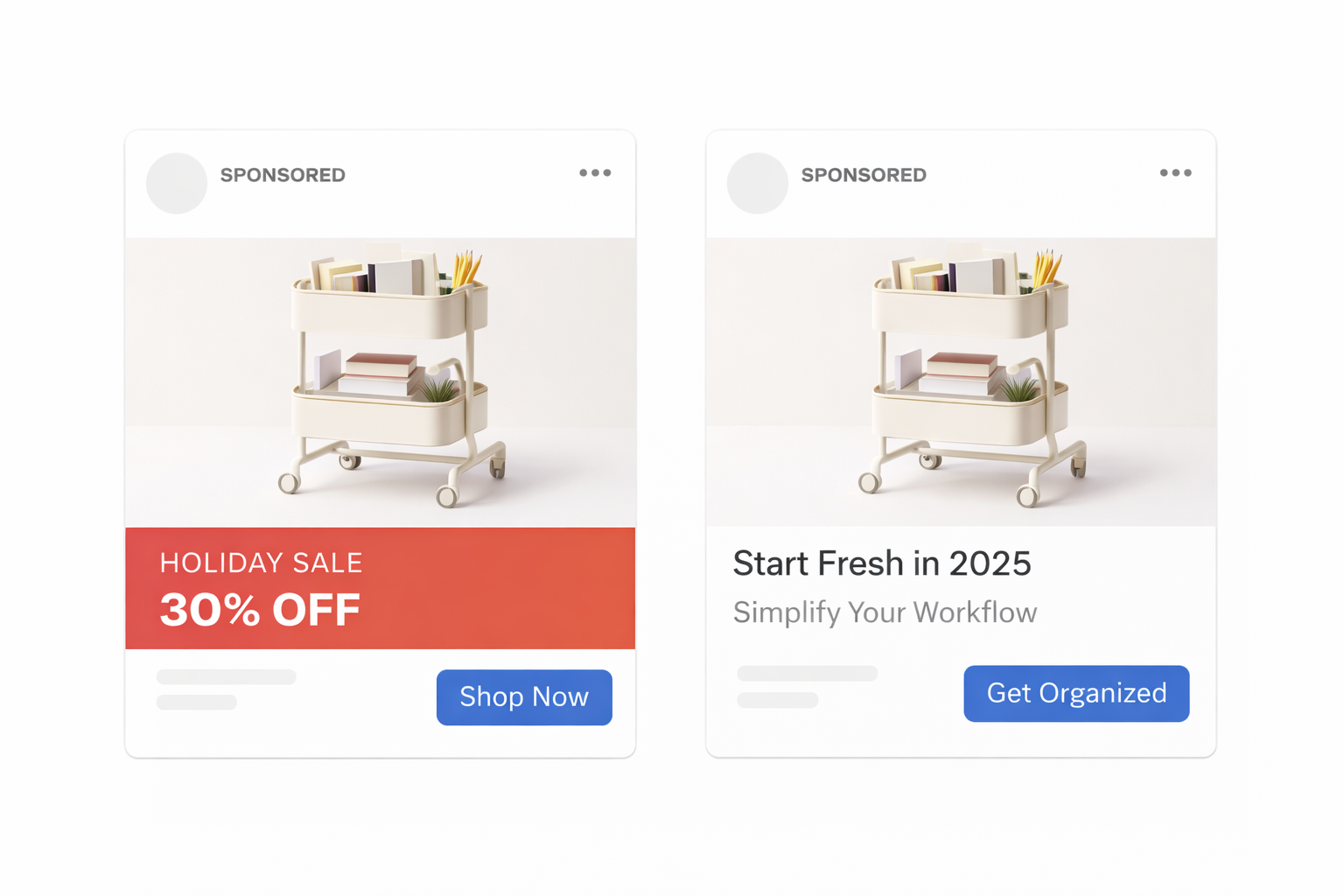
Your holiday offer likely won’t work in January. People are tired of spending and more selective. That doesn’t mean they’re not buying — it means the offer has to meet them where they are now.
Instead of guessing, test things like:
-
Seasonal problem framing. Shift messaging to align with common January goals: saving money, simplifying routines, restarting habits. For example, “Reset your workflow for 2025” performs better than “Act now.”
-
Low-friction bundles or intro products. Instead of discounts, test a curated “starter pack,” trial version, or bundle that feels manageable and low-risk.
-
Post-holiday context. People are returning gifts, setting resolutions, and regretting impulse buys. Try messaging like, “Didn’t get what you wanted? Make it happen yourself.”
These tests help you figure out which emotional and practical triggers resonate right now. Once you know that, you can shape the rest of the campaign around it.
Warm vs Cold: Prioritize What You Can Actually Convert
Many advertisers treat Q1 like a cold-audience acquisition sprint. That’s wasteful. In January, you can get strong returns by focusing on the right segments — not all segments.
Three audience groups worth testing:
-
Q4 engagers who didn’t convert. These people already clicked, watched, or saved your ads. Retarget them with updated value or timing.
-
Existing customers. Post-purchase cross-sells or subscriptions often perform better now, when people are refocusing routines.
-
Cold stacks built around behavior, not just interests. For example, pair “online shoppers” with “home office” interests to narrow targeting without killing volume.
You don’t need to scale everything at once. Find the groups that respond best to your current offer — then expand.
Focus on Hooks, Not Full Creatives
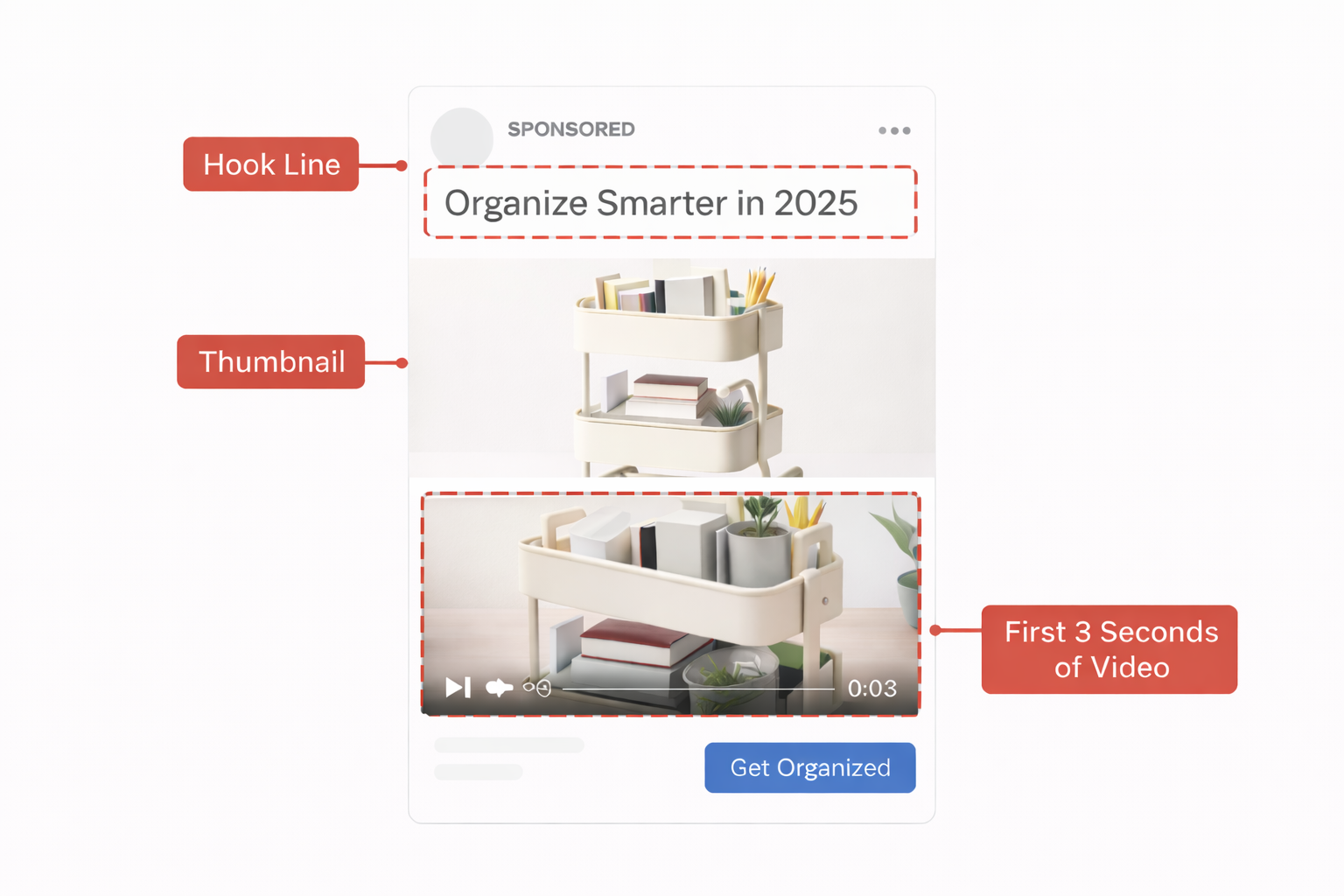
The biggest mistake marketers make in January is rebuilding every ad from scratch. Don’t. Use what worked in Q4 as a base. Then focus testing on the first impression.
This is especially true when running structured A/B tests. Learn how to build tests the right way in How to A/B Test Your Facebook Ad Creative for Better Results.
Here’s what that means:
-
First 3 seconds of video. Try different intros — one starts with a bold question, one with a surprising stat, one with product-in-use footage.
-
Headline variations. Small changes can shift scroll behavior. Compare “New Year. Better Setup.” with “Organize Smarter in 2025.”
-
Thumbnail or static lead image. Test clean vs. bold visuals, warm tones vs. cool tones, or more whitespace vs. product close-ups.
For deeper insight into refining your copy, read The Benefits of Testing Facebook Ad Copy Variations for Better Performance.
Keep the structure the same. Isolate the first visual or text element. That’s where people decide to stop or scroll.
Clean Up Your Landing Funnel
It doesn’t matter how well your ad performs if the page doesn’t convert. January is the perfect time to audit the full click path — from ad to action.
Here’s where to start:
-
Headline consistency. If your ad promises a “quick setup,” your landing page headline should say the same — not “Explore Our Full Range.”
-
Page load speed on mobile. Test on 4G, not just Wi-Fi. A delay of 2 seconds can tank conversion rate.
-
Form or checkout simplicity. Try reducing input fields, removing optional steps, or reordering the layout to surface value faster.
Check your “landing page views” vs. “link clicks” in Ads Manager. If there’s a big gap, the page isn’t loading fast or clearly enough.
Reels and Stories Behave Differently — Treat Them That Way
In January, Reels and Stories often outperform Feed placements — but only if your creative fits. Don’t just repurpose a Feed ad into Stories format.
Instead, test:
-
Vertical, native-first creative. Show the product in motion, use captions, and keep the message front-loaded. People skip fast.
-
Stories-only promos. Try a time-limited offer or bonus that’s exclusive to Stories. These viewers are often higher intent.
-
CTA built into the visual. Use on-screen prompts instead of relying only on Meta’s call-to-action buttons. “Swipe for a demo” works better when seen early.
Review placement performance in Ads Manager. If Reels is driving strong results, allocate more budget — but only if your ad is designed for that environment.
Don’t Split Test Everything. Test Like a Grown-Up.
One variable per test. That’s it. Otherwise, your data tells you nothing.
Change the headline or the offer — not both. Launch a new hook or a new placement — not a full new campaign every week.
Let tests run for 3 to 5 days before drawing conclusions. Use statistically significant results, not gut feelings or one-day spikes.
January doesn’t reward chaos. It rewards structure and learning.
Recap: What to Test First in January
If you’re not sure where to start, here’s your order of operations:
-
Offer and positioning. Is the angle right for January? Does it speak to current needs?
-
Audience segments. Are you showing the right offer to the right level of intent?
-
Hook variations. Is your first impression stopping the scroll?
-
Landing experience. Is there friction between click and conversion?
-
Placement-specific creative. Are your ads made for where they’ll appear?
Don’t test everything. Test what matters. January gives you the space to think clearly — use it.