Running Facebook and Instagram ads without real audience clarity is like fishing with the wrong bait.
You might get a few nibbles. But the people you’re reaching aren’t the ones who are ready to bite.
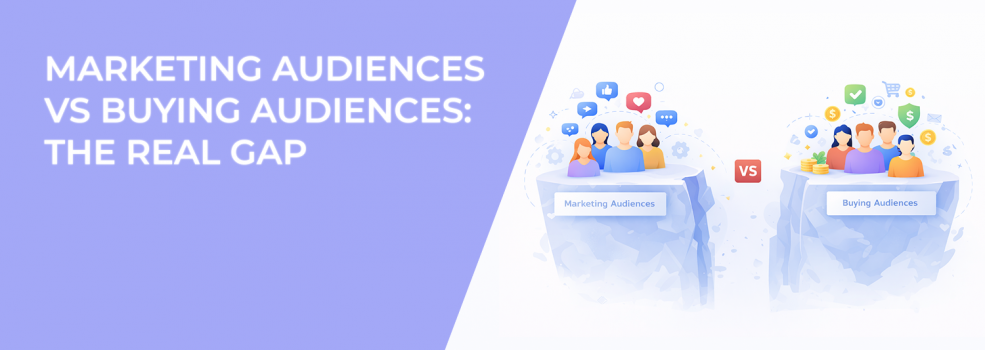
This is one of the most common — and costly — mistakes marketers make: confusing a marketing audience with a buying audience.
Let’s break down the difference, see where most campaigns go wrong, and show how to fix it.
What is a marketing audience?
A marketing audience is broad. It includes people who might be interested in your product — someday.
These are people who fit a general profile: they look like your customer on paper, but haven’t shown strong interest yet.
They might be:
-
Demographically matched: age 25–45, urban, working professionals;
-
Interest-based: follow pages about fitness, startups, or fashion;
-
Lookalike audiences: created from your past buyers or email subscribers.
These are the audiences most advertisers start with. And they work — but mostly at the top of the funnel.
They’re great for:
-
Building awareness;
-
Testing creative hooks;
-
Reaching new potential customers.
But they often don’t convert on the first click. That’s where the problem begins. Many campaigns fail because the target audience looks right, but acts wrong — as explained in Why your target audience might be too broad — even if it looks right.
What is a buying audience?
A buying audience is much more specific. These are people who’ve already shown clear interest or intent.
They don’t just look like your customer — they’ve acted like one.
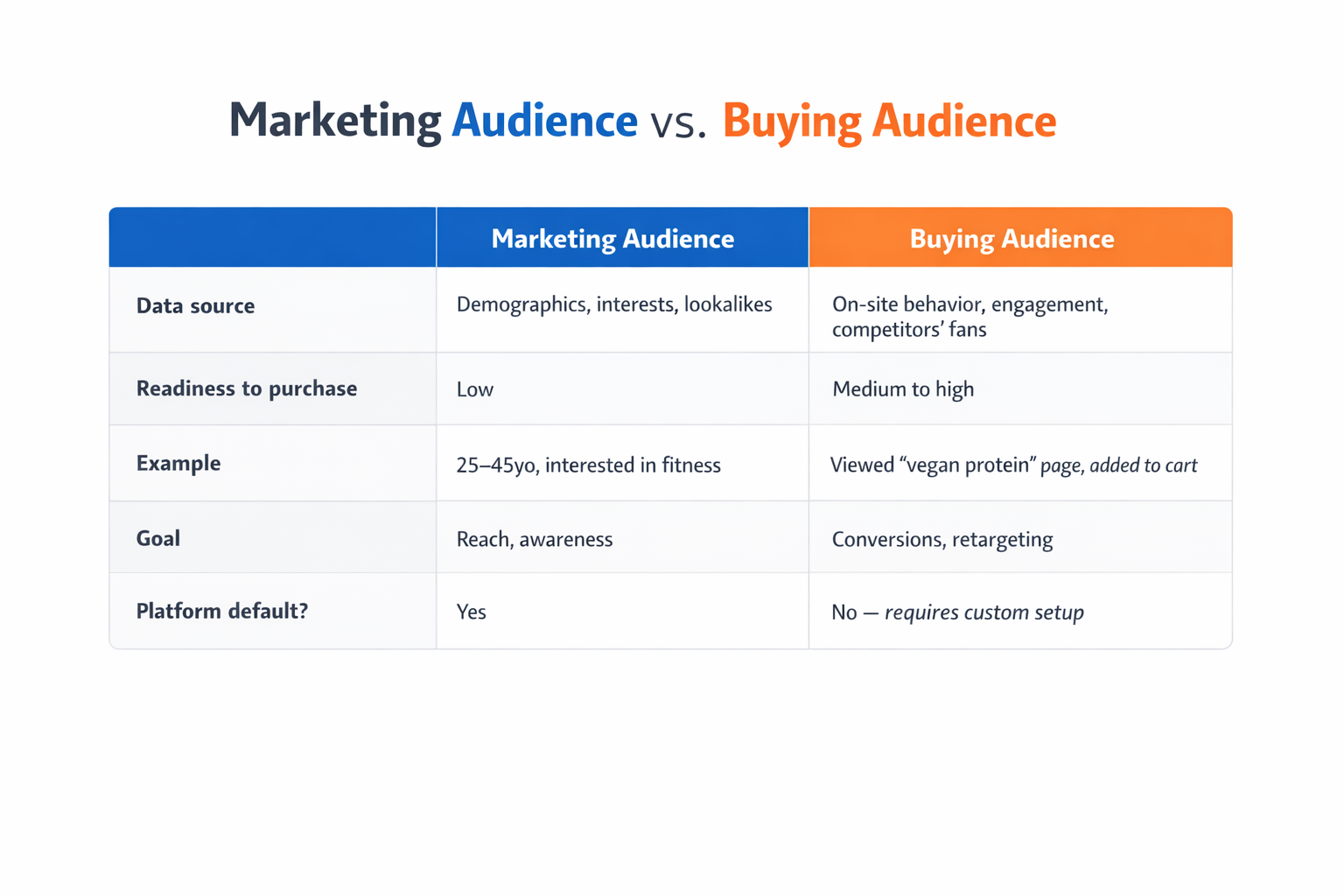
Here are some examples of buying audiences:
-
Website visitors who viewed your product or pricing pages;
-
People who clicked on “Shop Now” but didn’t check out;
-
Instagram users who engaged with product-related posts;
-
Followers of direct competitors or similar brands.
These users are closer to making a decision. They’ve seen your offer, taken a step toward it, and just need the right message to act.
Let’s say you run a skincare brand. Instead of targeting “women interested in beauty,” a buying audience could be:
-
People who added a moisturizer to cart but didn’t buy;
-
Users who follow niche skincare influencers;
-
Visitors who read your “Best Serums for Oily Skin” blog post.
These users don’t need brand awareness. They need a final nudge — a strong offer, a reminder, or a limited-time promo.
Why most campaigns get stuck in the middle
If your campaigns are stuck between reach and results, this is likely why:
1. Marketing audiences are easier to build, so people stop there
Meta makes it simple to create interest-based or lookalike audiences. They're fast, familiar, and broad.
But because they include everyone who might be interested — not just those ready to act — results get watered down.
You may get:
-
High CTR but low conversion rates;
-
Lots of likes, few purchases;
-
Good top-of-funnel numbers, poor bottom-funnel performance.
This isn’t a creative problem. It’s a targeting problem — one LeadEnforce breaks down in Targeting myths that are wasting your ad budget.
2. Buying audiences take more effort to build
You need the right tracking in place. That means:
-
Meta Pixel or CAPI (server-side tracking);
-
Logged events like ViewContent, AddToCart, Purchase;
-
Clear landing pages and funnel stages.
You also need to think beyond platform defaults — and start using tools that give you real behavioral insight.
The real cost of ignoring this gap
If you focus only on broad marketing audiences, you’ll likely face:
-
Wasted spend: Paying for clicks from users who never intended to buy;
-
Misleading creative feedback: Thinking your ad isn’t working, when really the audience wasn’t right;
-
Burned-out audiences: Showing the same intro ad to people who've already seen it five times.
As Why your ads get clicks but no sales explains, creative isn't the problem — the misalignment between audience and message is.
How to build better buying audiences
Here’s how to move from generic reach to real results:
1. Look for behavior, not just traits
People who act like buyers are better than people who look like buyers.
Instead of targeting:
-
“Men aged 30–40 interested in golf,”
Try: -
“People who viewed our golf bag collection in the last 14 days.”
Some high-intent audiences you can build right now:
-
Website visitors in the last 7–30 days;
-
People who saved your Instagram posts;
-
Users who clicked on product links from Stories or Reels;
-
Shoppers who started checkout but didn’t finish.
If you want more tips, check out Behavior-based Facebook targeting: the secret weapon of top e-commerce brands.
2. Use competitor and community audiences
You’re not the only brand your customer follows.
Tools like LeadEnforce help you build Facebook and Instagram audiences from:
-
Followers of niche influencers;
-
Members of relevant Facebook groups;
-
Users engaging with competing brand pages.
Learn how to do this in How to build high-performing custom audiences in LeadEnforce.
Example:
If you sell running shoes, don’t stop at "running" interests.
Build audiences from:
-
People who follow brands like On, Brooks, or Hoka;
-
Followers of marathon coaches or running gear reviewers;
-
Facebook group members like "Beginner Marathon Runners" or "Trail Running Tips."
These users are already part of the conversation — and more likely to buy.
3. Match message to intent
Not everyone needs to see the same ad.
A cold audience may need a product explainer or a strong hook. A warm buyer needs proof and urgency.
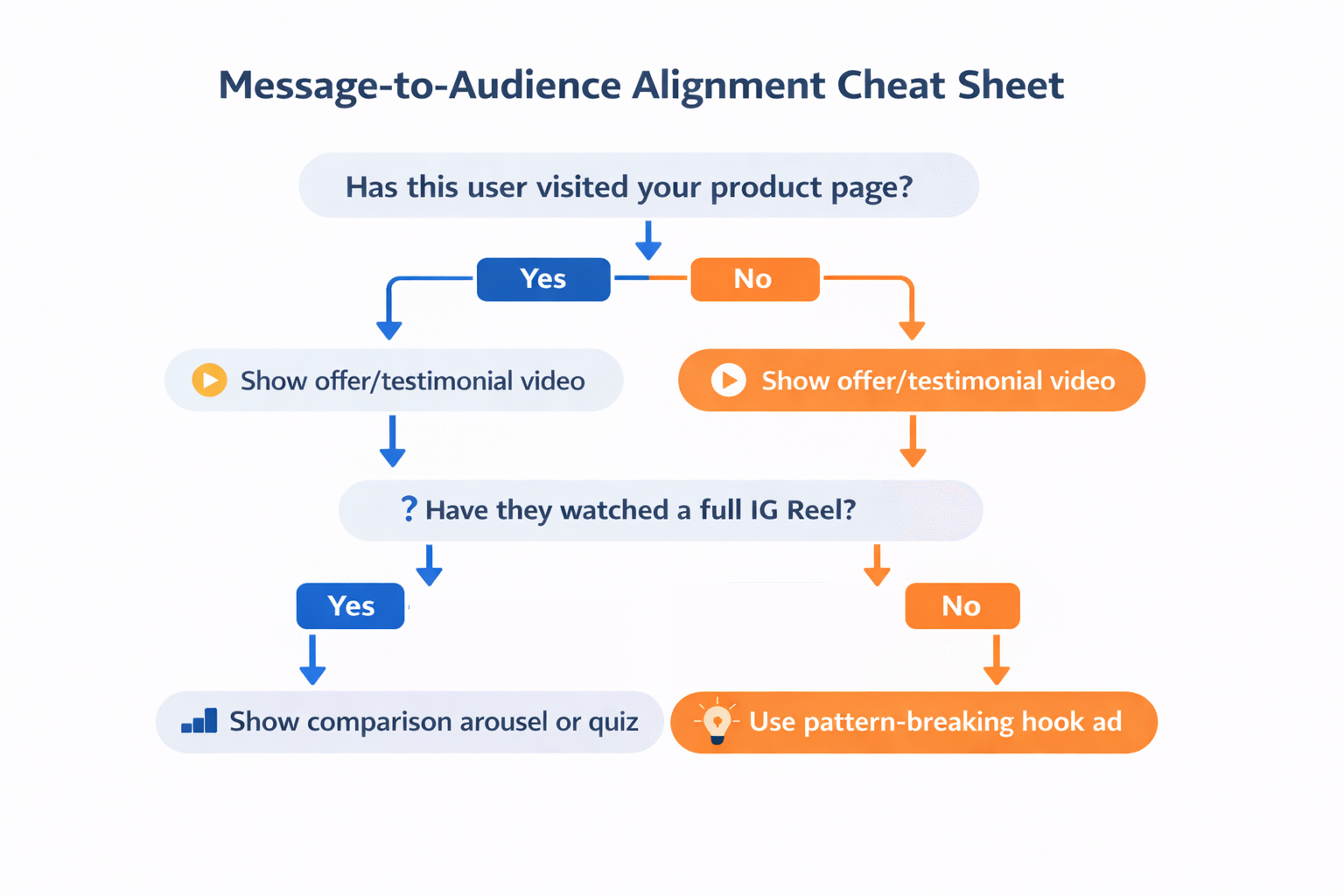
Here’s a simple framework:
Funnel stage vs creative message
| Funnel stage | Creative focus |
|---|---|
| Cold | Eye-catching hook, intro to the problem |
| Warm | Product benefits, credibility, testimonials |
| Hot | Discounts, urgency, bundles, social proof |
If you want to avoid wasting your message, read 5 audience segmentation mistakes that waste ad budget.
Why it’s even more important now
Privacy updates (like iOS14+) have made audience tracking harder. Meta doesn’t get the same data it used to.
That means advertisers need to take control:
-
Use tools like LeadEnforce to build deeper, intent-based audiences;
-
Refresh audience segments every few weeks to avoid fatigue;
-
Combine platform data (like Meta’s pixel) with external sources (followers of brands, groups, creators).
The advertisers winning today are those who know their audience better than Meta does.
Closing the gap = scaling with confidence
When you match the right audience with the right message, your campaigns become more:
-
Efficient — fewer wasted impressions;
-
Profitable — higher ROAS and lower CPA;
-
Predictable — because intent drives consistency.
Marketing audiences help you get attention. Buying audiences help you get sales.
You need both — but they should serve different goals.