Choosing a Meta objective is not only an optimization decision. It is also a channel-planning decision.
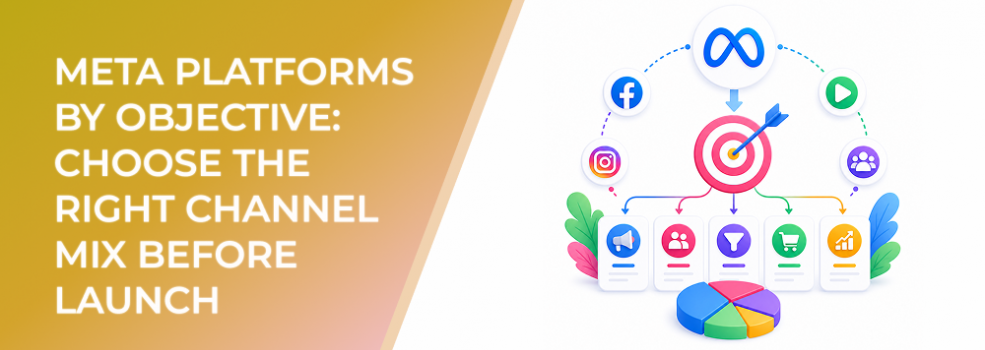
Meta notes that all six ad objectives in Ads Manager support ads on Facebook, Instagram, Messenger, and Audience Network, while five of the six also support WhatsApp. Meta’s six simplified objectives are sales, leads, engagement, app promotion, traffic, and awareness.
That does not mean every platform should be treated the same.
Support does not equal strategy.
What platform support really means
When an objective supports a platform, it means your campaign may be eligible to deliver there based on settings and availability.
But eligibility is only the starting point.
Each platform creates a different user experience:
- Facebook often supports feed browsing, communities, longer captions, and consideration.
- Instagram is highly visual and fast-moving, especially in Reels and Stories.
- Messenger can support conversation-driven interaction.
- WhatsApp can support direct response or conversation paths when available.
- Audience Network extends delivery outside Meta-owned social surfaces.
- Threads can support additional social discovery where available.
The marketer’s job is to decide whether each channel supports the conversion behavior the campaign needs.
Business impact on CPC, CPA, CAC, ROAS, and lead quality
CPC
Expanding across more supported platforms may lower average CPC by increasing available inventory. But low CPC can be misleading if the traffic does not convert.
CPA
CPA depends on whether the platform context matches the action. A user who is ready to message may behave differently from a user casually watching short-form content.
CAC
Customer acquisition costs rise when advertisers expand into channels without aligning creative and intent.
ROAS
Sales campaigns need more than platform eligibility. They need the right audience, offer, creative, and conversion path for each channel.
Lead quality
A leads objective may support multiple platforms, but the quality of leads can vary based on user context and how the lead action is presented.
Budget efficiency
A campaign can spend across supported channels while still wasting budget if the platform mix is not monitored.
Typical scenarios where this applies
Platform-by-objective planning is useful when:
- launching a cross-platform Facebook and Instagram campaign;
- deciding whether to include Messenger or WhatsApp;
- running lead-gen campaigns with sales follow-up;
- testing awareness campaigns before conversion campaigns;
- building a full-funnel Meta structure;
- comparing platform-level CPA or ROAS;
- scaling campaigns beyond one primary placement;
- diagnosing why blended performance looks good but business results disappoint.
This is especially relevant for agencies and growth teams that manage multiple clients or product lines. A channel mix that works for one offer may not work for another.
Risks and considerations
Treating all platforms as equal
Meta’s infrastructure may connect platforms, but users do not behave the same way on each one.
Using one creative everywhere
A creative built for Facebook Feed may not work in Instagram Reels. A Reels-first asset may not explain enough for a complex B2B offer.
Ignoring post-click intent
Platform behavior matters after the click. Some users are ready to buy. Others only want to browse, message, or engage.
Over-expanding too early
Running across many platforms before you have strong audience and creative signals can make optimization harder.
Over-restricting too soon
Excluding platforms based on assumptions can reduce delivery opportunities before performance data exists.
Prerequisites and dependencies
Before choosing platform mix, clarify:
- primary campaign objective;
- target audience segment;
- creative assets by platform;
- conversion path;
- reporting structure;
- lead qualification process;
- acceptable CPA or CAC;
- testing budget;
- whether direct messaging or website conversion is the desired action.
A practical platform plan should answer:
“Where is this audience most likely to understand the offer, and which platform experience supports the next step?”
How LeadEnforce helps
LeadEnforce helps advertisers build audiences that are more useful across platform tests.
Instead of relying only on broad Meta targeting, marketers can create audiences from Facebook groups, Instagram profiles, followers, engagers, LinkedIn professional data, and custom social-profile data.
This helps channel planning in several ways:
- Facebook group audiences can support community-informed campaigns.
- Instagram follower and engager audiences can support visual and social-intent campaigns.
- LinkedIn-informed professional data can support B2B and role-based campaigns.
- Custom social-profile data can help build niche audiences for specific offers.
When you test a channel mix with stronger audience inputs, you can better judge whether a platform is producing weak results or whether the original targeting was too broad.
Practical recommendations
Start with objective and funnel stage
Awareness campaigns need different platform assumptions than sales or lead campaigns.
Build creative for the platform
Do not simply duplicate the same creative across every supported platform. Adapt format, pacing, copy, and CTA.
Use platform breakdowns
Review performance by platform and placement. Blended campaign averages often hide where quality is coming from.
Match messaging to intent
A Messenger or WhatsApp path may work best when the user needs a conversation. A Feed or Reels path may work better for discovery or education.
Test channel expansion gradually
Start with a logical platform mix, then expand based on performance and audience quality.
Judge performance by business outcome
For lead campaigns, track qualified leads and booked calls. For sales, track purchase value and ROAS. For traffic, track landing-page behavior, not just clicks.
Final takeaway
Meta objective support tells you where ads can run, but business performance depends on choosing the platform mix that matches audience behavior, creative fit, and conversion intent.
To build more relevant audiences before testing your next Meta channel mix, join the free 7-day LeadEnforce trial period.
Related LeadEnforce Articles
- Cross-Platform Strategy: How to Synchronize Facebook and Instagram Ads — Helps advertisers coordinate platform strategy instead of duplicating campaigns.
- Ways to Advertise on Instagram (And Which One Actually Scales) — Useful for understanding Instagram advertising control and scalability.
- How to Optimize Facebook Ad Placements Automatically with Advantage+ — Explains how automated delivery can work across supported platforms.
- How to Use Facebook Ads to Increase Engagement for Your Instagram Page — Relevant for advertisers using cross-platform campaigns to drive Instagram engagement.