Paid social ads are great at grabbing attention. But attention alone doesn’t drive conversions. People scroll, click, and leave. Without a follow-up strategy, those potential customers are often lost.
That’s where email retargeting comes in. When paired with paid social — especially Facebook and Instagram — it helps turn curiosity into action. This guide shows how these channels work better together, and how to build a conversion-focused strategy that recovers lost leads, builds trust, and grows your business.
Why Paid Social Alone Isn’t Enough
Facebook and Instagram offer advanced targeting, fast reach, and strong engagement. But relying on ads alone has limits.
Common challenges of running ads in isolation:
-
Short attention spans: Users may click your ad, browse, and disappear in seconds;
-
Low first-visit conversions: Few people buy the first time they visit a website;
-
Rising ad costs: You pay for every click, even if it doesn't lead to a sale;
-
Ad fatigue: Audiences tune out when they see the same message repeatedly.
You need a channel that helps nurture those leads and bring them back. That’s where email shines.
What Is Email Retargeting?
Email retargeting is the process of sending follow-up emails to users based on their behavior — on your website, with your ads, or within your funnel.
You don’t just send a newsletter. You send a targeted, timely message based on intent.
Common email retargeting triggers:
-
Visited a specific product or pricing page;
-
Added an item to cart but didn’t check out;
-
Watched a video ad or clicked through to your site;
-
Signed up for a lead magnet or email list.
These actions show interest. Email helps turn that interest into revenue — without paying again for the same user.
To build your email list from paid traffic, consider this guide: How to Use Facebook Ads to Build an Email List for Your Business.
Why Email + Paid Social Performs Better
Used together, paid social and email retargeting complement each other across the full funnel. You’re not only attracting traffic — you’re converting it more efficiently.
1. Creates a Multi-Touch, Multi-Channel Experience
People rarely convert after a single ad. But multiple brand touchpoints increase familiarity and trust.
Example:
-
A user sees a Facebook ad for your meal kit service;
-
They click, browse, and leave;
-
Later, they receive an email: “Still thinking about dinner made easy? Here's 10% off your first box.”
That second touch may be what finally drives the sale.
2. Aligns Messaging for Consistency
When your ad and email messaging support each other, the user journey feels smooth and trustworthy.
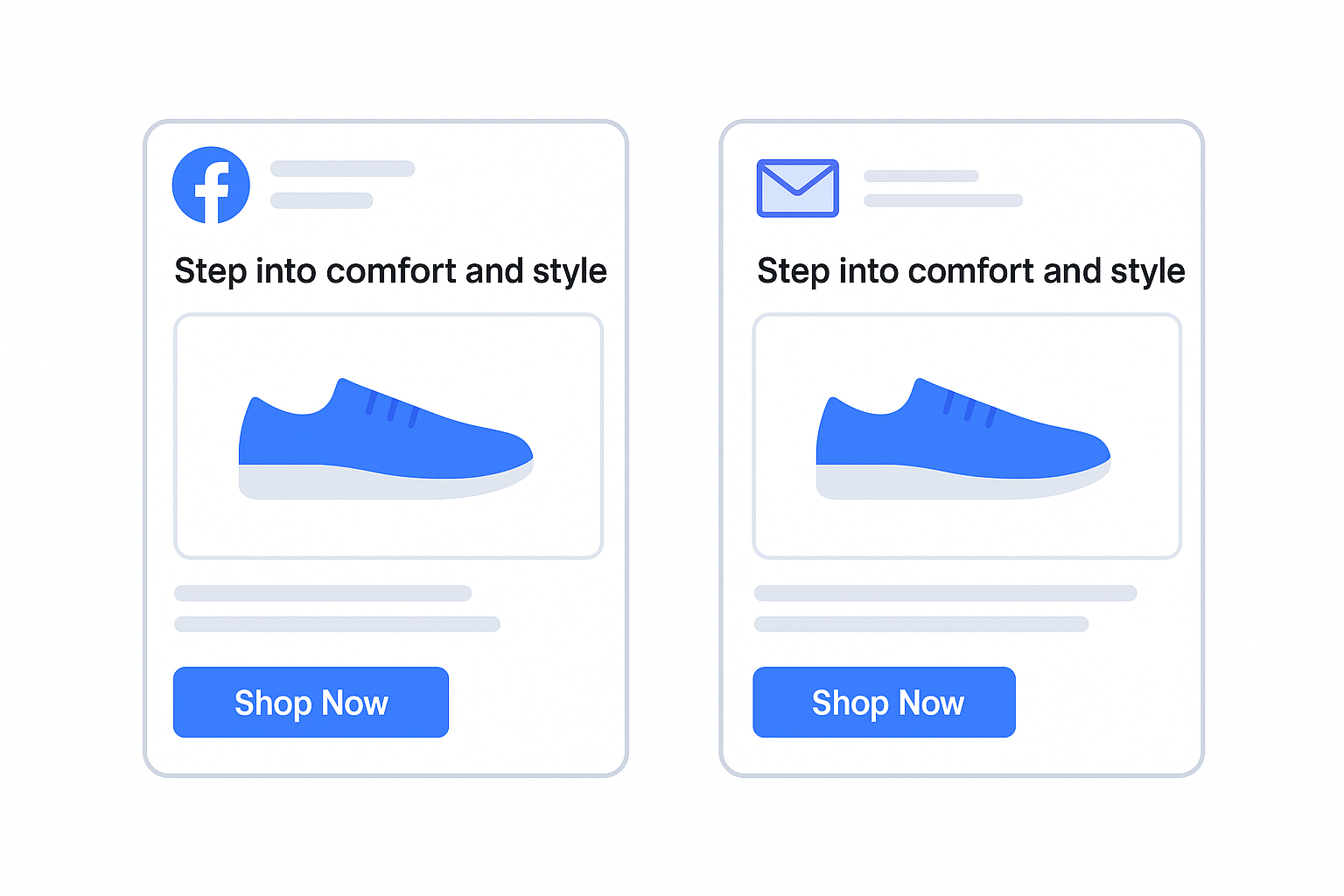
Example pairing:
-
Ad copy: “Join thousands who switched to our eco-friendly laundry strips.”
-
Email subject: “Why over 50,000 customers love our laundry solution.”
The message is reinforced — without sounding repetitive.
3. Lowers Acquisition Costs Over Time
Email retargeting allows you to re-engage warm leads without paying again to reach them. Once a user enters your email funnel, every follow-up costs a fraction of what you'd pay for another click.
You also reduce wasted spend on users who were interested — but not yet ready.
For deeper strategies, see: How to Boost Email Marketing With Facebook Ads.
Full-Funnel Example: Paid Social + Email Retargeting
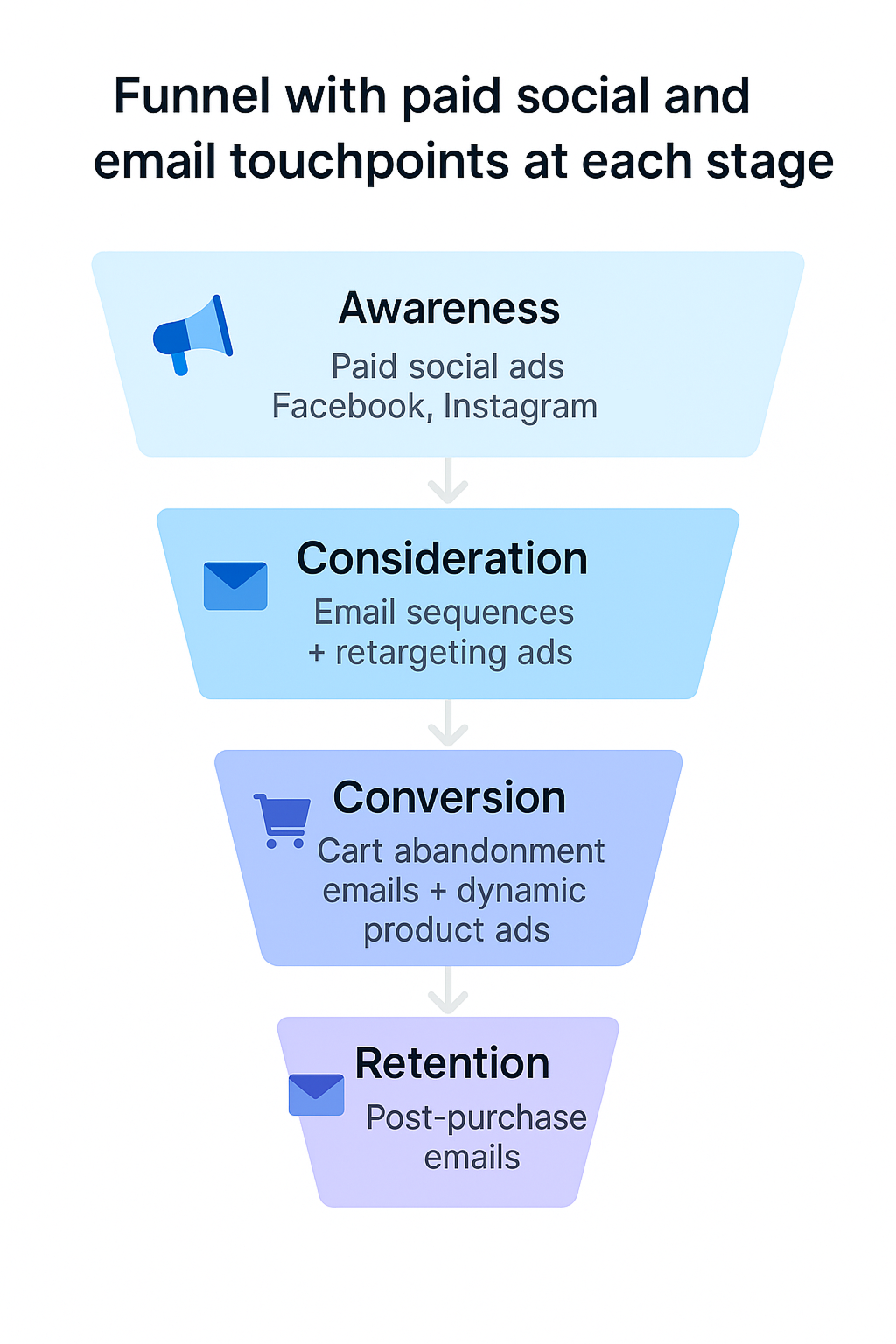
Let’s walk through what a full-funnel campaign looks like when both channels are used effectively.
Top of Funnel: Awareness (Paid Social)
-
Objective: Introduce your brand and grow your email list.
-
Strategy: Use Facebook Lead Ads or Reels to collect email signups;
-
Offer ideas: Discount code, free sample, guide, quiz, or giveaway.
Tip: Keep forms short — just name and email. Offer immediate value after signup.
Related guide: Combine Facebook Lead Ads and Email for Game-Changing Results.
Middle of Funnel: Consideration (Email + Retargeting Ads)
-
Objective: Build trust and address objections;
-
Email types: Welcome sequence, product education, testimonials, FAQs;
-
Ad types: Retargeting ads with video reviews, user-generated content, or “how it works” explainer visuals.
Tip: Coordinate messaging. If the email explains how your product works, match the ad with a review showing it in action.
Bottom of Funnel: Conversion (Email + Dynamic Ads)
-
Objective: Close the sale;
-
Email tactics: Cart abandonment, limited-time offers, testimonials;
-
Paid social tactics: Facebook dynamic ads with exact product the user viewed.
Tip: Use urgency, but keep it honest. “Your cart is about to expire” works best when tied to a real offer deadline.
For high-converting email tactics, read: Secrets Behind High-Performing Email Marketing Campaigns.
Post-Purchase: Retention (Email)
-
Objective: Increase lifetime value;
-
Emails to send: Thank-you emails, usage tips, referral programs, upsell offers;
-
Bonus: Ask for reviews or feedback, which can feed future ad creatives.
Tip: Automate a check-in email 2–4 weeks after purchase. Offer a discount for repeat purchases or a referral code.
How to Make the Integration Work
Running email and ads together doesn’t mean more complexity — it just requires smart coordination.
Best practices:
-
Track behavior: Use Facebook Pixel and email platform tracking to trigger actions;
-
Segment email lists: Based on site behavior, purchase history, or ad engagement;
-
Build lookalike audiences: Use high-engaging email subscribers as seed audiences for Facebook ads;
-
Test across both channels: Try email subject lines as ad headlines. Repurpose top-performing ad images in emails.
Tip: Align visuals and tone. A bold, modern Instagram ad followed by a bland email will feel disconnected.
Results to Expect When You Sync Paid Social With Email
Businesses that combine paid social and email retargeting often report:
-
Lower cost per acquisition (CPA);
-
Higher return on ad spend (ROAS);
-
Improved email open and click rates;
-
More repeat purchases and higher customer lifetime value.
These aren’t hypothetical results. Full-funnel brands — especially in ecommerce, SaaS, and lead generation — use this strategy to increase conversions without increasing ad budgets.
Final Takeaway
Your audience doesn’t live in one place. They scroll through ads, open emails, browse your site, and compare options — all in a single day.
Pairing paid social with email retargeting lets you follow up with the right message, on the right channel, at the right time. You build trust, stay visible, and close more sales — without overspending on ads or losing warm leads.
If you’re already running paid campaigns but aren’t following up via email, now is the time to connect the two. Done right, this combination is one of the most reliable and cost-effective ways to grow your business online.