This article explores how familiarity drives performance, why recognition improves conversion rates, and how to build a strategy that connects both worlds.
Retargeting has become one of the most efficient tools in digital advertising, allowing businesses to re-engage users who have already interacted with their brand. Yet, the success of retargeting campaigns depends heavily on how well users recognize and trust the brand before those ads even appear.
Why Brand Awareness Matters for Retargeting
When audiences are familiar with a brand, retargeting ads don’t feel intrusive — they feel relevant. Studies show that 71% of consumers are more likely to purchase from a brand they recognize. Familiarity reduces friction and builds confidence in the buying decision.
According to Nielsen, brand recall can increase ad effectiveness by up to 60%. That means users who have seen or engaged with a brand before are significantly more likely to click on and convert from retargeting ads.
The Psychological Power of Familiarity
Human brains are wired to favor what they recognize. Known as the mere exposure effect, repeated exposure to a brand increases comfort and trust. In digital terms, this translates to higher click-through rates (CTR) and lower cost per acquisition (CPA).
For example, a campaign that combines brand awareness ads with follow-up retargeting can reduce CPA by up to 25% compared to retargeting-only approaches. This synergy occurs because awareness ads lay the foundation of trust, making retargeting ads more persuasive.
Building Awareness Before Retargeting
The most successful marketers understand that retargeting is not a starting point — it’s a follow-up. Before audiences are ready to respond to retargeting, they need to know who you are and what you stand for.
Here are a few strategies to build that foundation:
-
Top-of-Funnel Campaigns: Use video, display, or social media ads to introduce your brand. Focus on storytelling and recognizable visuals rather than direct conversion goals.
-
Consistent Visual Identity: Ensure all ads share the same tone, color palette, and style. Recognition builds when users see familiar elements across multiple platforms.
-
Content that Educates: Providing helpful content builds authority and keeps your brand top-of-mind when users encounter your retargeting campaigns later.
Integrating Awareness and Retargeting Data
Data-driven marketing enables brands to measure awareness-building efforts and adjust retargeting accordingly. Tracking impressions, reach, and engagement at the awareness stage helps define when audiences are ready for conversion-focused messaging.
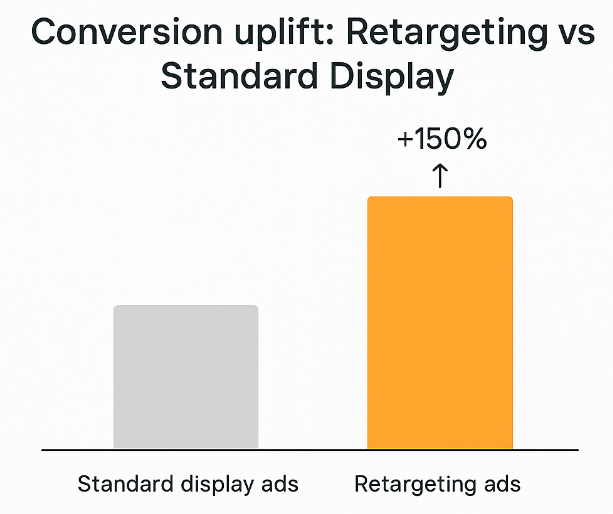
Retargeting ads deliver up to 150% higher conversion rates compared to standard display advertising
For instance, when users watch 50% or more of an awareness video, that engagement data can trigger more personalized retargeting campaigns. This layered approach ensures that retargeting is not wasted on audiences who haven’t yet built a connection with the brand.
Conclusion
Retargeting works best when it doesn’t operate in isolation. Building strong brand awareness first enhances trust, boosts ad performance, and maximizes ROI. The path to conversion is smoother when recognition comes before persuasion.