Most advertisers are chasing clicks. Some are chasing conversions. But the smartest ones are looking for something deeper — intent.
Not just any intent. We're talking about high-intent users — people on the edge of a decision, primed to act, wallets ready.
So how do you find them? How do you target the hidden intent layer — the signals that separate window shoppers from buyers?
Let’s dig in.
What Is the “Hidden Intent Layer”?
Intent is layered. At the surface, users might search for broad terms like “best running shoes.” But that doesn’t tell you much — they could be researching, comparing, or just browsing.
Go a level deeper and you’ll find signals that reveal a whole different mindset.
These are the users who type in “best Nike running shoes under $100 with free shipping”; scroll to the bottom of the product page; or revisit your site three times in one day.
These are signals of commercial intent — and they’re gold.
Marketers who learn how to spot this hidden layer can shift from broad targeting to laser focus, moving from attracting traffic to attracting action.
If you’re still relying on outdated interest categories, this 2025 guide to Facebook interest targeting for B2C brands is worth a look.
Why Most Campaigns Miss the Mark
A lot of campaigns cast too wide a net. Keywords are chosen based on volume, not depth. Creatives are built for everyone, which often means they convert no one.
Here’s the problem: intent isn’t always obvious.
It hides in behavior, patterns, and subtle user actions. When you rely only on demographics or generic interests, you end up skipping the most important part of the funnel — the point where decision meets desire.
Still wondering why your ad performance is lagging despite everything looking “correct”? Here’s why Facebook Ads often fail due to hidden targeting issues.
Tip #1: Use Behavioral Triggers, Not Just Keywords
Keywords alone don’t tell the full story. But when you combine them with behavioral data, you get a more accurate picture of buying intent.

Look for users who:
-
Visit pricing or checkout pages.
-
Stay longer than average on high-converting landing pages.
-
Click product comparison links.
-
Return within short timeframes.
These aren't just page views — they’re signals of intent.
Platforms like Leadenforce allow you to build audiences based on these nuanced actions — not just the pages users visit, but how they behave while on them.
To explore this deeper, see how behavior-based Facebook targeting helps top e-commerce brands find qualified buyers.
Tip #2: Segment by Funnel Stage — Then Go Deeper
You’ve heard of top, middle, and bottom-of-funnel stages. But inside each of those are intent levels that most marketers completely overlook.
Instead of segmenting only by funnel position, layer in factors like:
-
Recency — how recently a user acted.
-
Frequency — how often they return or engage.
-
Engagement depth — how far down they scroll or how many pages they visit.
Someone who visits your pricing page five times in two days is not just interested — they’re ready to make a move.
If you want to tighten up your segmentation strategy, check out this step-by-step guide to defining your target audience.
Tip #3: Align Creative with Intent Signals
One of the most common mistakes is running the same ad to everyone. But people at different intent levels need different types of messaging.
If someone’s been comparing products, show them proof points — ratings, user testimonials, or comparison tables.
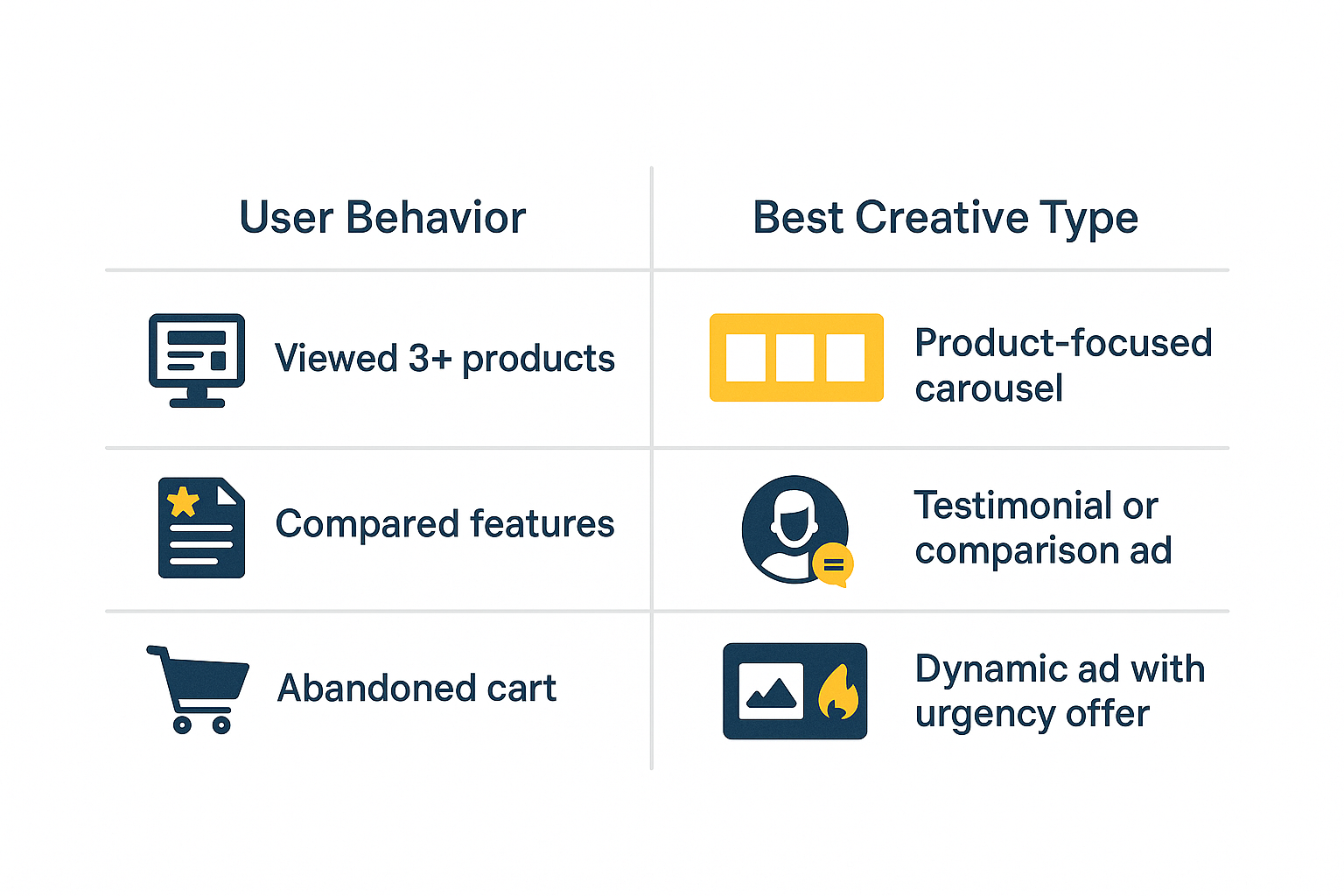
If they’ve abandoned their cart, don’t just remind them. Instead, nudge them with urgency-based incentives — a low-stock message, a limited-time discount, or a personalized offer.
The better you align creative to actual behavior, the more likely you are to convert. And if you’re working with very specific groups, here's how to layer detailed targeting for hyper-specific audiences.
Tip #4: Use Predictive Targeting to Find the Next High-Intent User
The best part? You don’t have to figure this out manually anymore.
Modern platforms use predictive models to identify users who behave like your best converters — not based on demographics, but on patterns such as:
-
Time spent on site.
-
Action sequences.
-
Scroll depth and repeat sessions.
These patterns don’t always show up in your analytics dashboard — but they reveal users who are very close to converting.
To get the most out of these models, it’s important to understand the difference between custom and lookalike audiences — and when to use each one.
Why This Strategy Works So Well
Because high-intent users don’t need to be convinced — they need to be clarified.
They’ve already done their research. They’re emotionally invested. They just need the right information, the right incentive, or the right nudge to move forward.
When you speak to where they are in their decision journey, conversions feel frictionless — not forced.
This is where the hidden intent layer becomes a game-changer. It allows you to reduce wasted ad spend, optimize faster, and close more of the right buyers.
Final Thoughts: Are You Targeting the Right Intent?
Most marketers structure campaigns around categories like age, interests, or device — but those aren’t strong predictors of action.
What separates smart targeting from average targeting is intent — what people actually do rather than who they appear to be.
So if you want better returns, you need to stop guessing and start observing. Track behavior. Segment based on real signals. Use smarter tools. Align your messaging accordingly.
Once you do, you won’t just be showing ads — you’ll be meeting the right people at the right moment with the right offer.