Retargeting is one of the most powerful tools in digital advertising, but treating all visitors the same is a missed opportunity. By segmenting audiences based on user intent, marketers can tailor messaging and offers to match each shopper’s position in the journey — resulting in higher relevance, engagement, and ROI.
Here’s how to approach retargeting segmentation the smart way.
1. Identify Key Intent Signals
User intent can be measured through behaviors such as time on site, product views, cart additions, or specific page visits. Research shows that ads customized by behavioral intent deliver up to 70% higher conversion rates than generic remarketing campaigns.
2. Segment by Funnel Stage
-
Awareness: Visitors who bounced quickly or viewed only one page. Use educational or brand-awareness content to reintroduce them.
-
Consideration: Users who browsed products or read multiple pages. Retarget with product carousels, testimonials, or limited-time offers.
-
Decision: Cart abandoners or checkout visitors. Provide a strong incentive — such as free shipping or a discount — to close the sale.
3. Personalize Messaging and Creatives
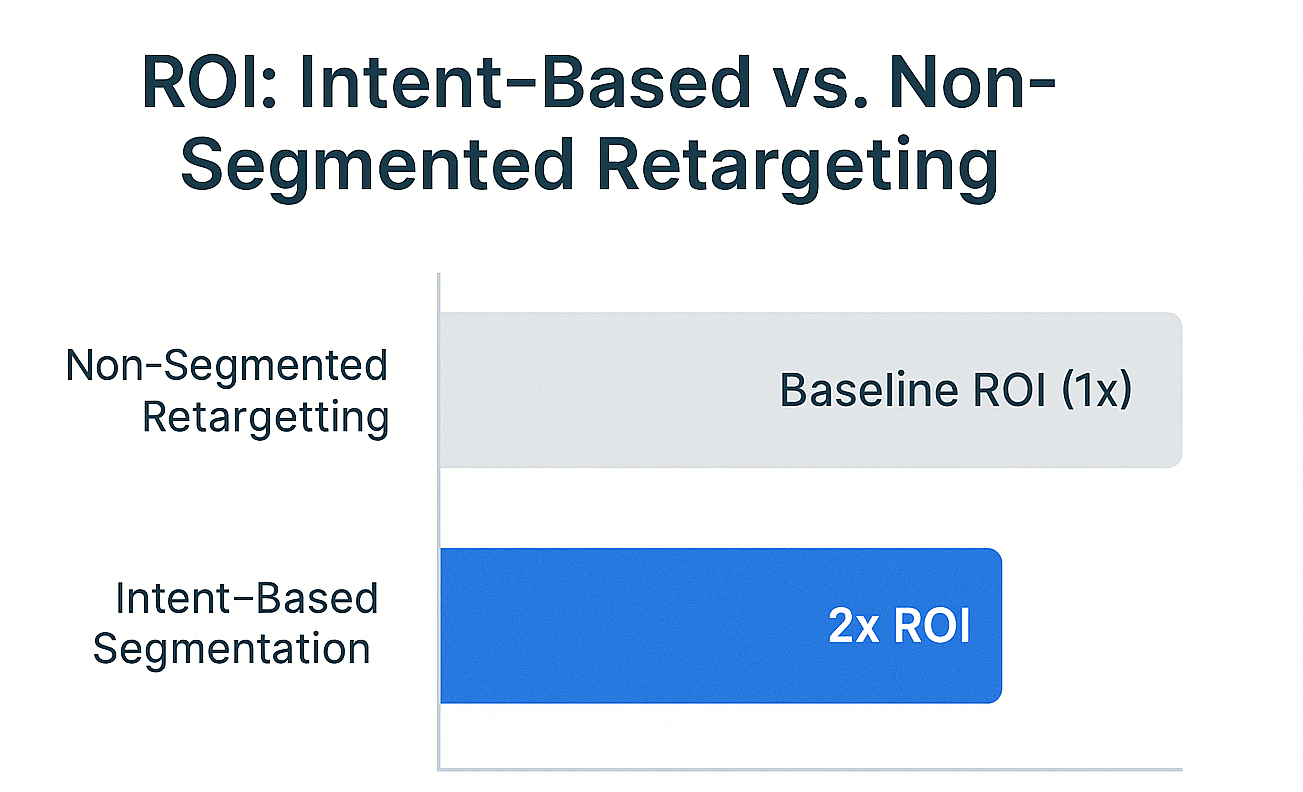
Retargeting campaigns segmented by user intent generate up to twice the ROI of non-segmented campaigns
Each segment needs a message that aligns with intent. For example, awareness-stage users respond better to storytelling, while decision-stage users need urgency-driven CTAs. Campaigns with intent-aligned messaging achieve 30–40% better click-through rates on average.
4. Use Frequency Capping and Timing
Avoid overwhelming your audience. Keep ad frequency between 3–5 impressions per week and adjust timing based on engagement. Users closer to conversion can be retargeted more frequently within shorter time windows.
5. Leverage Dynamic Product Ads
Dynamic creatives automatically adapt to user behavior — showing products a shopper viewed, added to cart, or left behind. Dynamic retargeting can reduce cart abandonment by up to 26% and significantly improve ad relevance.
6. Exclude Low-Intent Audiences
Not all users are worth retargeting. Exclude visitors who bounced in under five seconds or haven’t engaged after multiple touchpoints. Refining your audience saves budget and improves performance metrics.
7. Analyze and Refine Regularly
Segmentation isn’t static. Review campaign performance weekly and reassign users as their behavior evolves. Consistent optimization ensures you stay aligned with real-time intent signals.
Key Takeaway:
Segmentation by user intent allows brands to deliver precise, context-driven ads that speak directly to each customer’s mindset. When you target smarter, you spend less and convert more.
Further Reading: