Call-based campaigns can be deceptive.
A campaign may generate clicks, taps, or call attempts, but that does not automatically mean it is producing qualified prospects. For many service businesses, local advertisers, agencies, and B2B lead-gen teams, the phone call is where intent becomes clear.
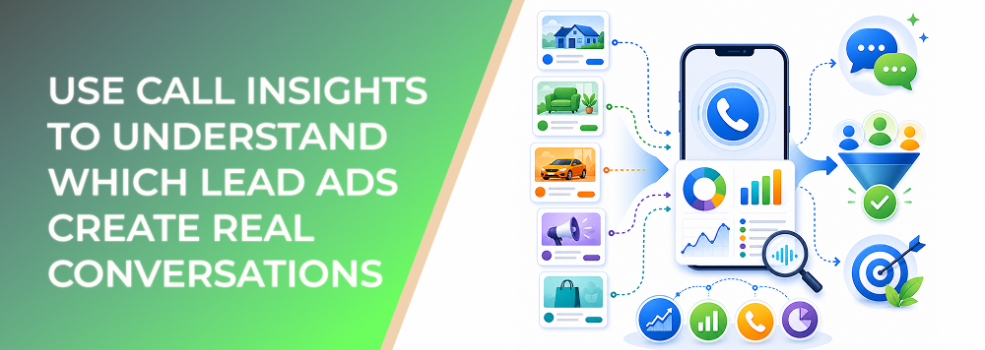
That is why Call Insights in Meta Business Suite can be useful. They help advertisers evaluate calls generated through Meta campaigns and understand whether those calls are actually supporting the sales process.
The opportunity is simple: stop treating every call interaction as equal.
The issue: call volume does not equal lead quality
Many advertisers measure call campaigns too shallowly.
They look at cost per call or total call count and assume the lower number wins. But call quality varies widely. Some calls are serious prospects ready to book. Others are wrong-number inquiries, support requests, unqualified users, or people who misunderstood the offer.
If you optimize only for call volume, you may train your campaign toward cheap calls rather than valuable conversations.
Call insights should be used to answer deeper questions:
- Which campaigns generate calls worth returning?
- Which audiences produce qualified conversations?
- Which ads create confusion?
- Which calls convert into quotes, bookings, demos, or sales?
- Which call flows waste the most staff time?
Business impact on CPA, CAC, and ROAS
Call insights can improve paid performance by connecting ad activity to real conversation outcomes.
Without call visibility, advertisers often misread campaigns. A campaign with a low cost per call may still create a high CAC if most calls do not convert. A campaign with fewer calls may actually perform better if those calls are more qualified.
Better call analysis can support:
- Lower CPA by identifying which ads generate useful calls.
- Improved CAC by reducing spend on low-intent audiences.
- Higher ROAS when call quality connects to revenue outcomes.
- Better sales efficiency because teams spend less time on poor-fit calls.
- More accurate budget allocation because decisions are based on call quality, not just call count.
The core principle: optimize for call outcomes, not call starts.
Typical scenarios where call insights matter
Local service businesses
Plumbers, dentists, salons, home services, clinics, and repair businesses often rely on phone calls to book appointments or quotes.
High-consideration purchases
If buyers need reassurance before converting, calls may be a critical step in the journey.
B2B lead generation
Phone conversations can reveal company size, urgency, budget, and fit faster than a form.
Agencies reporting to clients
Call insights help agencies explain whether campaigns are generating commercially useful conversations or just surface-level engagement.
Campaign testing
When comparing audiences or creatives, call quality can reveal which campaign is worth scaling.
Risks and considerations
Call insights can create blind spots if they are reviewed without context.
A call may be short because the lead was poor, but it may also be short because the buyer got exactly what they needed. A longer call may indicate strong interest, or it may indicate confusion. Avoid judging quality from one metric alone.
Another risk is weak staff handling. If calls are missed, answered inconsistently, or handled without a clear script, ad performance may look worse than it really is. In that case, the problem is not only targeting or creative. It is sales operations.
Privacy and customer communication expectations also matter. Teams should handle call information responsibly and avoid using sensitive information in ways that violate platform rules or customer trust.
Prerequisites and dependencies
To use call insights effectively, advertisers should have:
- A campaign designed to generate calls or call-based leads.
- A clear definition of a qualified call.
- A follow-up process for missed calls.
- A way to connect call outcomes to bookings, quotes, demos, or purchases.
- Consistent staff handling of inbound calls.
- Audience and campaign naming that makes reporting readable.
Call insights become much more valuable when your team can connect them to business outcomes.
How LeadEnforce helps
LeadEnforce helps improve the audience quality behind call-based campaigns.
Call campaigns can become expensive when they reach users who are curious but not commercially relevant. LeadEnforce helps advertisers build audiences from more specific signals, including Facebook groups, Instagram profiles, followers, engagers, LinkedIn professional data, and custom social-profile data.
For example, a B2B service provider can build an audience around professional segments instead of generic interests. A local business can target people connected to relevant communities or local Instagram profiles. An agency can test niche audiences before scaling broader campaigns.
Better audience inputs can improve the likelihood that call-based ads reach people who are closer to the actual buying need.
Practical recommendations
Define what counts as a qualified call
Do this before reviewing performance. A qualified call might depend on location, service need, budget, urgency, or decision-maker status.
Compare call quality by audience
Do not judge campaigns only by cost per call. Compare which audiences produce useful conversations.
Review creative for confusion
If many calls are irrelevant, the ad may be unclear. Make the offer, eligibility, service area, and next step more specific.
Track missed-call recovery
Missed calls are not just an operations issue. They can turn paid media spend into lost opportunity. Create a process for quick callback.
Use call insights before scaling
Before increasing budget, confirm that calls are turning into qualified next steps. Scaling call volume without quality control can increase CAC.
Final takeaway
Call insights help advertisers move beyond surface-level campaign metrics.
A low cost per call is useful only if those calls produce real business value. By reviewing call quality, audience source, creative clarity, and follow-up performance, marketers can reduce wasted spend and make better budget decisions.
For call-based campaigns, the best optimization question is not “How many calls did we get?” It is “Which calls were worth paying for?”
You can test more relevant call-campaign audiences by joining the free 7-day LeadEnforce trial period.
Related LeadEnforce Articles
- How to Use Facebook’s Lead Ads Features for Effective Lead Generation — Useful for understanding native Meta lead-generation options, including low-friction lead capture.
- How to Leverage Meta Advantage+ Lead Campaigns for Higher-Quality Leads — Helps advertisers balance automated campaign setup with lead-quality controls.
- How to Pre-Qualify Leads in Ad Campaigns Before Sending Them to Sales — Relevant for defining which calls are worth sales follow-up.
- Facebook Lead Generation: How to Qualify Leads Without Losing Conversions — Explains how to qualify leads while preserving conversion flow.