Performance marketers often chase short-term wins: lower CPAs, higher click-throughs, and faster funnel velocity. But if you're running Facebook or Instagram ads without building brand memory, you’re likely overpaying for every result.
Brand recall — the ability of people to remember your brand later — is an undervalued but essential piece of any sustainable ad strategy. It influences who users search for, what they click next time, and who they buy from when they’re finally ready.
What Brand Recall Actually Means
Brand recall isn’t just name recognition. It’s about mental availability — how easily your brand comes to mind when someone thinks of your category, problem, or product type.
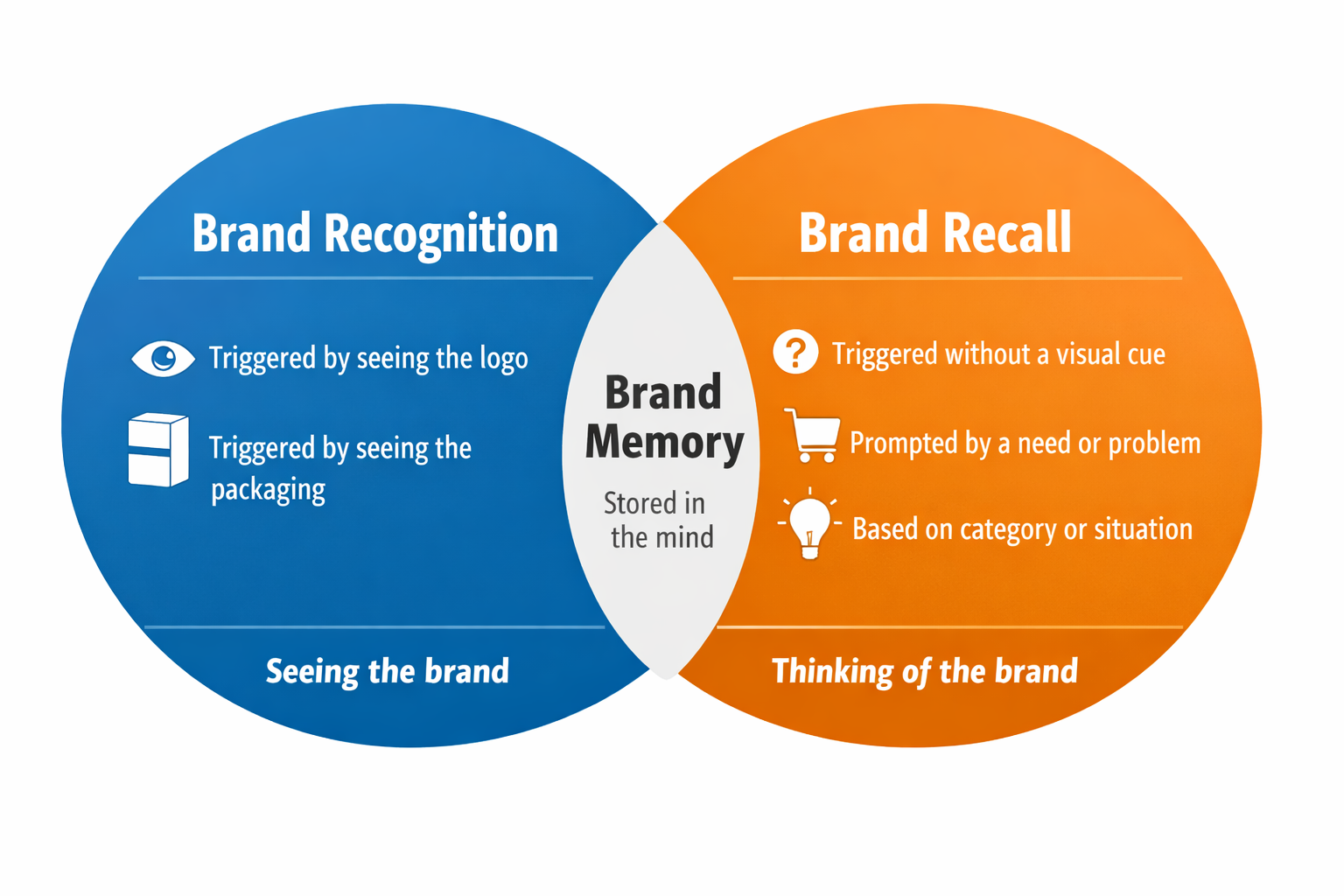
If someone sees your ad today and remembers your brand three weeks from now — without seeing your logo again — that’s successful brand recall. And in a platform like Meta, where users scroll quickly and rarely convert on first touch, that kind of memory is a real asset.
Why Brand Recall Deserves a Spot on Your Dashboard
You may not see it in Ads Manager, but brand recall directly supports your paid performance over time.
Here’s why it matters — especially when you're working with limited budget, signal loss, or rising CPMs.
1. It Increases Efficiency Over Time
When your audience remembers you, future campaigns become cheaper and more effective.
For example:
-
If someone saw your February ad and then searched your brand name in March — that’s a brand-led conversion you didn’t need to re-acquire.
-
If your direct traffic grows after a campaign, that’s a signal people are coming back on their own.
-
If your remarketing pool performs better over time, that often comes from increased familiarity, not just targeting tweaks.
These effects don’t show up in a single-session ROAS model, but they’re real — and measurable.
2. It Provides Stability in an Unstable Tracking Landscape
With Meta’s pixel signal getting weaker — thanks to iOS restrictions and user privacy tools — brand recall is one of the few things you still fully own.
Think of it this way:
-
You can’t control how much visibility your retargeting audience has anymore,
-
You can’t rely on third-party cookies to re-engage lost traffic,
-
But if people remember your name and search for it later, that still works.
That makes recall one of the most future-proof metrics you can optimize for.
You’ll find additional strategies in Why Awareness Campaigns Can Lead to Lower Conversion Costs Over Time.
3. It Supports Product and Pricing Power
People trust what they remember. When your brand sticks, your offer feels more credible — even if it’s more expensive.
Consider two Instagram ads for similar health supplements. One brand has been in your feed for months, uses consistent design, and mentions the same core benefits. The other just popped up with a deep discount.
Chances are, you’ll buy from the one you’ve seen before. That’s not just familiarity. That’s brand memory guiding the outcome.
How to Measure Brand Recall (Even Without Formal Studies)
You don’t need to guess whether your ads are memorable. Meta offers tools for measurement — and there are indirect signals you can track when running smaller campaigns.
Use Meta’s Built-In Brand Lift Studies
If you’re spending at least a few thousand dollars per campaign, consider running a Brand Lift Test. It segments your audience into a test and control group, then surveys them to see if they remember your ad.
It helps answer questions like:
-
How many people exposed to your ad remembered the brand afterward?
-
Did recall improve among the audiences you were targeting most?
-
Which creatives, placements, or formats contributed to the lift?
You can dig deeper into this process in Facebook Brand Lift Studies: What They Reveal About Ad Effectiveness.
Monitor High-Signal Behaviors That Suggest Recall
For smaller advertisers without access to lift studies, watch for behaviors that reflect brand memory.
| Signal | What it Suggests | Tools to Track |
|---|---|---|
| Branded Search Spike | Users remember the name | Google Search Console |
| Return Visitors | Memory without retargeting | GA4, CRM |
| Saved Posts | Intention to revisit brand | Meta Insights |
Some examples:
-
Branded search queries rising during or after your campaign (tracked via Google Search Console);
-
Return visits from new users who didn’t convert initially but come back days or weeks later;
-
Saves, shares, and comments on your top-of-funnel ads — these signal attention and interest, not just impressions.
If your ad only drives clicks but no post-view interest, it’s likely not sticking.
How to Improve Brand Recall in Your Ad Strategy
This isn’t about slapping your logo everywhere. Improving brand memory requires deliberate planning — especially on visual platforms like Instagram and Facebook, where attention is short and competition is high.
Let’s break down a few focused ways to improve recall within your current campaigns.
1. Develop Distinctive, Reusable Creative Assets
The most memorable brands don’t constantly reinvent the wheel. They identify a few key elements and use them consistently.
This can include:
-
A repeatable visual style — such as color palettes, framing, or set design (e.g., using black-and-white product shots with a bold red call-to-action);
-
Branded motion or transitions in video (e.g., every product demo ends with the same zoom-out or sound cue);
-
Consistent presence of your product in context (e.g., showing your coffee brand always on a morning desk, not in random lifestyle scenes).
The more often users associate your brand with these patterns, the easier it is to remember — even if they don’t click right away.
2. Focus on One Message Per Creative
Trying to communicate five value props in one ad may check internal boxes, but it hurts memory. Users don’t retain lists — they retain single, specific ideas.
- Instead of running an ad that says: “We’re the fastest, most affordable, eco-friendly shipping option for DTC brands,”
- Say something like: “Next-day shipping, even for small DTC brands.”
Then, run another ad that focuses on your sustainability angle. Give each idea space to stick.
3. Reinforce Across Multiple Placements — Without Losing Cohesion
People move between Feed, Stories, Reels, and Explore. If each format looks completely different, you’re starting from scratch each time.
To avoid that:
-
Keep key visual anchors consistent — logo, tone, and color treatments shouldn’t change with the format;
-
Use sequencing — start with a 15-second Reels video for intrigue, then retarget viewers with a carousel that explains the offer;
-
Make use of dynamic creative to test variations without losing core brand signals.
Sequencing is especially powerful. For a deeper look at how to plan and execute it effectively, read The Role of Ad Sequencing in Building Brand Recall.
When to Prioritize Brand Recall in Your Campaign Planning
Not every campaign should chase recall. But in certain scenarios, it's a clear priority — and trying to optimize only for clicks will give you misleading results.
Launches or Market Entry Campaigns
If your audience has never heard of you, conversions will be low at first. Focus instead on getting remembered.
Examples:
-
Launching a new software tool in a niche B2B vertical;
-
Entering a new geographic market with a consumer product;
-
Introducing a category-creating product that needs education.
Start by measuring reach, video completion, or brand search. Then layer in performance.
Products With Long Consideration Cycles
For higher-priced or non-impulse items, users won’t convert on the first visit. In these cases, memory is essential.
Example categories:
-
Health, beauty, and fitness subscriptions;
-
Premium home goods or tech devices;
-
Professional services like coaching or software.
Ads should build recognition before you push for conversion.
Final Thoughts
Brand recall isn’t a branding luxury. It’s a practical tool for improving paid performance — especially when you’re spending money on top-of-funnel reach.
If someone remembers you without being reminded, that’s worth more than a single cheap click.
As Meta platforms evolve, the brands that win will be the ones users already think about before the ad even loads.