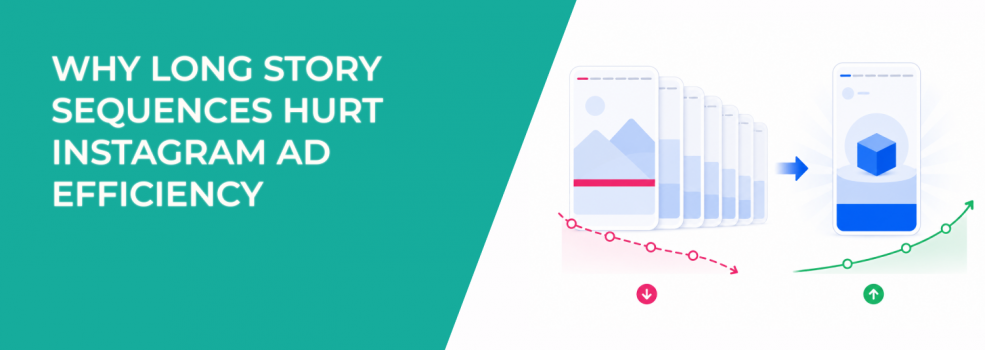
The core problem with long Instagram Story ads is that they create too many opportunities for users to leave before the offer becomes clear.
Most Story viewers do not watch ads from beginning to end. They decide continuously whether the next scene deserves attention. Every additional second increases the chance that the user taps away before the CTA appears.
That behavior creates a major efficiency problem inside Meta campaigns. The ad may still generate impressions and partial video views, but the campaign loses qualified attention before conversion intent develops.
Long Story sequences usually delay the important information
Many advertisers structure Story ads like traditional video commercials. They introduce the brand slowly, build visual atmosphere, then gradually explain the offer near the middle or end of the sequence.
That approach rarely works well inside Stories.
A viewer scrolling through Stories expects immediate context. If the ad spends too much time on setup footage, lifestyle clips, or visual branding before explaining the value proposition, retention drops quickly.
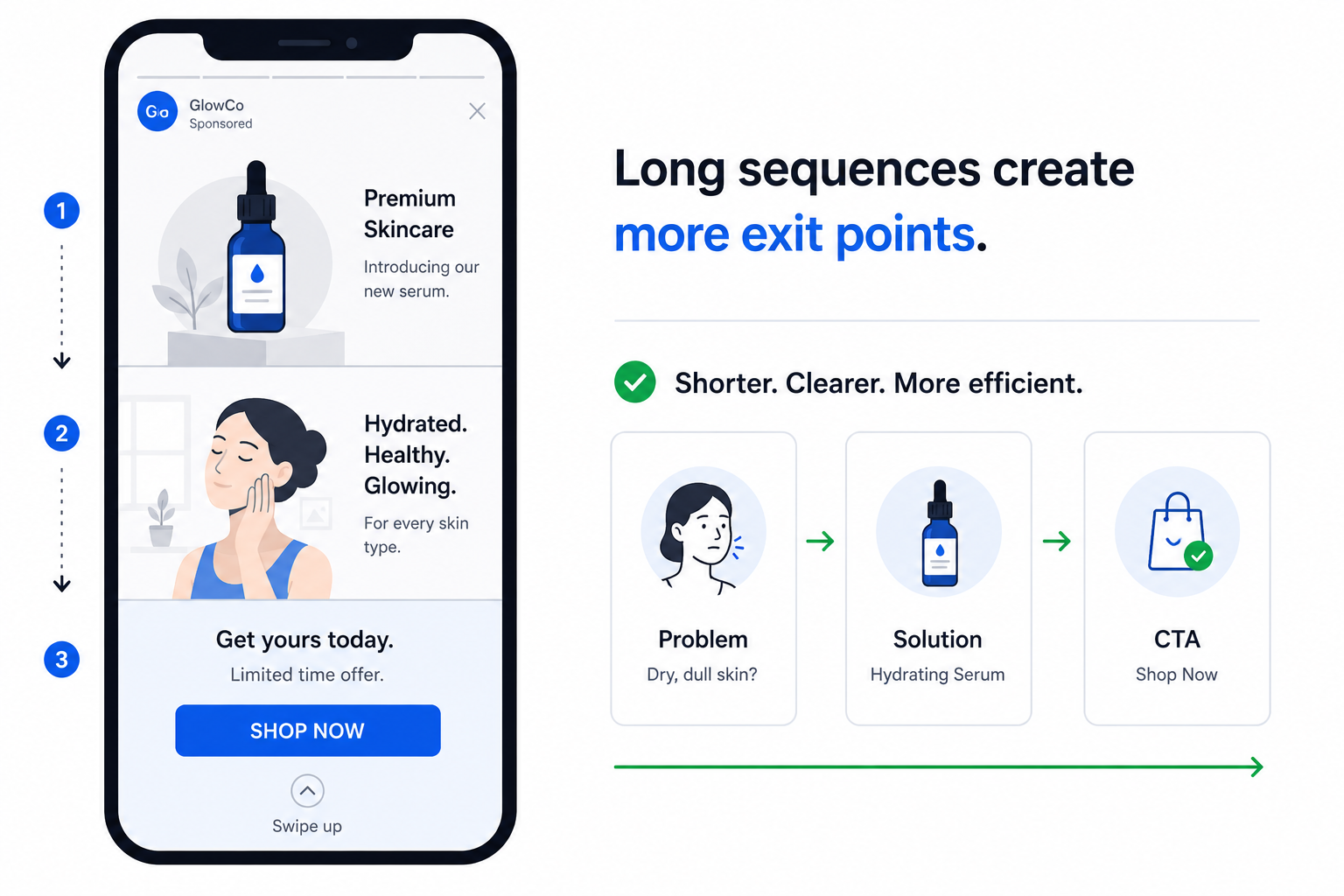
This often happens in e-commerce campaigns that prioritize aesthetics over communication speed. A skincare ad may spend eight seconds showing cinematic product footage before explaining the actual benefit. A SaaS ad may slowly introduce dashboard animations before revealing the workflow problem it solves.
By the time the message finally appears, a large percentage of users have already exited.
Long sequences reduce CTR even when view counts look healthy
One reason this problem is difficult to diagnose is that Story ads can still accumulate views despite weak efficiency. The campaign appears active, but the important engagement signals decline underneath the surface.
You can usually spot this pattern through:
- High Story impressions with weak outbound CTR.
- Decent watch metrics combined with low conversion rates.
- Increasing CPC after the first learning phase cycle.
- Large gaps between video engagement and landing page activity.
The ad keeps attention long enough to generate passive viewing behavior, but not long enough to create strong intent.
That distinction matters because Meta optimizes around behavioral signals. Weak intent patterns eventually reduce delivery efficiency during scaling.
The same attention problem is discussed in why attention loss affects conversions later in the funnel because engagement alone does not guarantee conversion quality.
Story ads work better when the communication feels compressed
Shorter Story structures usually perform better because they compress the informational journey. The user reaches the product, benefit, and CTA faster. That creates a more efficient relationship between attention and action.
This does not mean every Story ad should be extremely short. Complex products still require explanation. The real issue is unnecessary sequence length.
A more efficient Story structure usually includes:
- Earlier value communication.
The core benefit should appear within the opening seconds. - Fewer repetitive scenes.
Multiple shots communicating the same idea slow pacing without improving understanding. - Faster progression toward the CTA.
Every scene should move the viewer closer to action.
This is why many high-performing Story ads feel direct. They remove unnecessary visual buildup and focus on communication density instead.
Longer sequences become more expensive during scaling
Warm audiences sometimes tolerate slower Story structures because they already recognize the brand or category.
Cold audiences behave differently. They leave faster because there is no existing relationship supporting attention retention.
This is one reason campaigns often lose efficiency during scaling. The creative itself may not change, but the audience becomes less patient once Meta expands delivery into colder inventory pools.
Long Story sequences usually struggle most in:
- Broad targeting campaigns.
- Competitive e-commerce categories.
- High-frequency retargeting environments.
- Mobile-first cold acquisition campaigns.
The ad simply asks too much attention from users who have very little incentive to continue watching.
Efficient Story ads communicate faster, not louder
Many advertisers try to solve retention problems by increasing visual intensity. They add more scenes, more movement, and more transitions.
That usually makes the sequence feel even longer.
The stronger solution is tighter communication. Faster value delivery, cleaner progression, and shorter informational cycles consistently improve Story efficiency without requiring aggressive editing styles.
You can also study short versus long video ad performance and Instagram ads that get views but weak engagement to improve Story retention patterns further.