
If you want to optimize your campaigns, landing pages, or creatives, your testing framework matters as much as the ideas you test. Two of the most widely used methods—A/B testing and multivariate testing—serve different purposes, require different traffic levels, and influence how quickly you can roll out improvements.
This article breaks down how each method works, when to use it, and what results you can expect.
What Is A/B Testing?
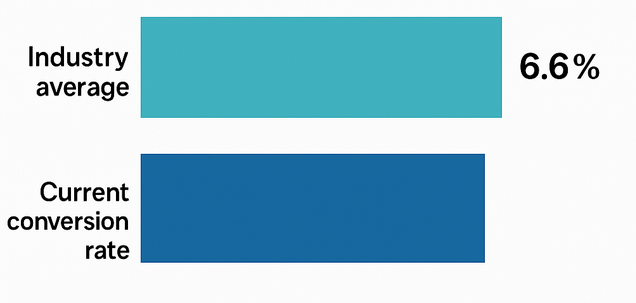
Average landing-page conversion rate across industries — 6.6%
A/B testing compares two (or sometimes a few) versions of the same element to determine which one performs better. You isolate a single variable—like a headline, call‑to‑action (CTA), or hero image—and measure the difference in performance.
Why A/B Testing Works
-
Simple setup and quick results
-
Requires relatively low traffic
-
Ideal for validating a hypothesis
Key Statistic
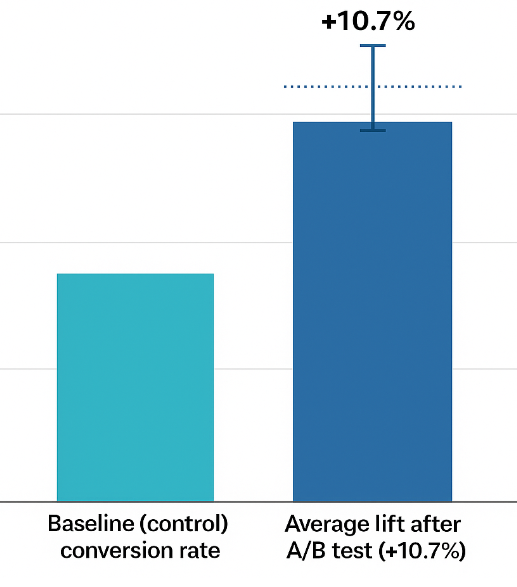
Average conversion-rate lift from successful A/B tests: ~10.7%
Marketers say A/B testing can improve conversion rates by 10–30%, depending on the optimization area.
What Is Multivariate Testing?
Multivariate testing (MVT) evaluates multiple elements and variations at the same time. Instead of testing one variable, you test combinations—for example, different headlines, button colors, and CTA placements all together.
Why Multivariate Testing Works
-
Shows interactions between multiple page or creative elements
-
Helps identify the best-performing combination
-
Prevents you from scaling a single change that may not work well with others
Key Statistic
Effective multivariate tests generally require 3–5× more traffic than A/B tests to reach statistical significance.
A/B vs Multivariate: When to Use Each
Choose A/B Testing When:
-
You want fast, directional insights
-
Traffic or impressions are limited
-
You are testing a major change (e.g., new layout, new offer)
-
The goal is to confirm or reject one idea quickly
Choose Multivariate Testing When:
-
You have high traffic volume
-
Your goal is to refine and optimize multiple small elements
-
You want to understand interactions between page or creative components
-
You’re beyond fixing fundamental issues and ready for deeper optimization
Common Pitfalls to Avoid
Testing too many variations with too little traffic
One of the biggest MVT mistakes is launching tests that can never reach significance. If your daily sample size is small, stick to A/B.
Declaring winners too early
Regardless of testing type, wait until you reach a minimum confidence level of 90–95% to avoid false winners.
Changing traffic sources mid-test
Shifts in audience quality can skew results. Keep traffic stable until the test ends.
Conclusion
A/B testing and multivariate testing are not competitors—they are sequential tools in an optimization workflow. Start with A/B tests to validate foundational ideas, then move to multivariate testing to refine and improve performance at scale. The right test depends entirely on your traffic, your goals, and how precise your optimization needs to be.
