Online advertising is driven by data, yet many advertisers still follow outdated or oversimplified advice. While it may feel safe to rely on “best practices” passed around in forums or across teams, many of these rules actually restrict growth and inflate costs.
This article breaks down the most persistent Facebook and Instagram ad optimization myths and replaces them with actionable, expert-backed strategies that align with Meta’s current ad ecosystem.
Why Debunking Optimization Myths Is Critical
Myths in advertising don’t just cost money — they create systemic performance issues by:
-
Feeding the algorithm with weak or inconsistent signals;
-
Driving inefficient spend toward tactics that no longer work;
-
Creating confusion over what’s truly moving the needle.
Modern advertising on Meta platforms (Facebook, Instagram, Messenger, Audience Network) relies on machine learning, predictive modeling, and creative testing—not rigid tactics.
If you’re scaling, also read How to Optimize Facebook Ads for Continued Success After Scaling for growth-stage strategies.
Myth #1: “You Should Change Ads Often to Prevent Ad Fatigue”
Why This Causes Instability
Changing creatives too often resets the Learning Phase, where Meta’s algorithm tests and identifies the best audience and placement combinations.
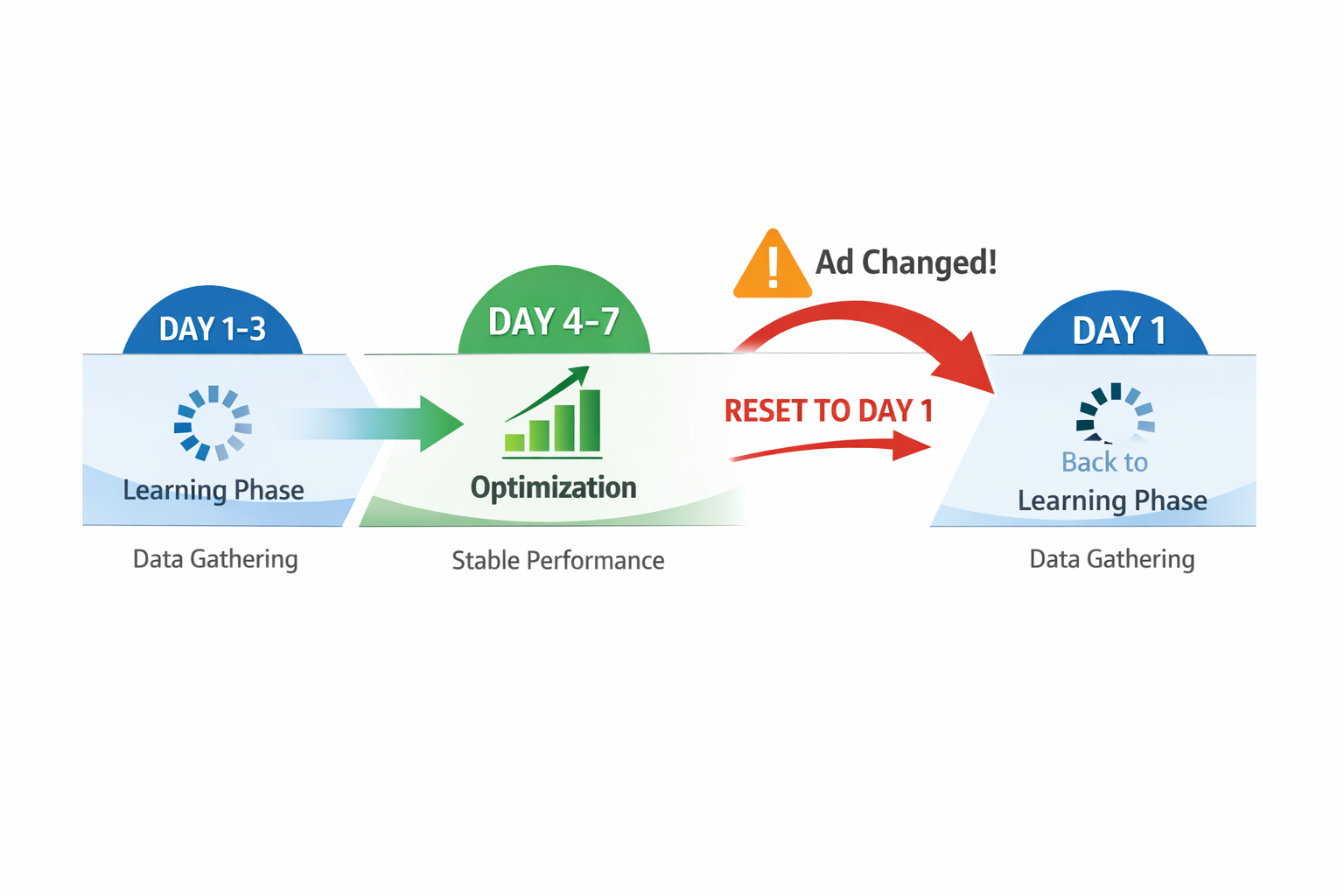
Too many changes cause:
-
Disrupted learning cycles, which increase cost per result;
-
Limited conversion history, which lowers optimization quality;
-
Missed opportunities from potentially scalable ads.
Expert Strategy
Unless you observe clear indicators of fatigue — like CTR decline, frequency spikes, or stagnant ROAS—let ads run uninterrupted for 5–7 days. If you’re targeting younger segments, tailor your creatives accordingly. See How to Optimize Your Facebook Ad Targeting for Gen Z and Millennials.
Myth #2: “High Relevance Scores Guarantee Success”
What Marketers Get Wrong
Relevance metrics like Quality Ranking, Engagement Rate Ranking, and Conversion Rate Ranking offer insight but they are not stand-alone success indicators.
An ad with a top Engagement Ranking may still:
-
Attract low-intent users;
-
Generate high click volume with minimal conversion;
-
Deliver traffic that doesn’t monetize.
Expert Strategy
Make optimization decisions based on business outcomes like CPA, ROAS, and LTV — not just relevance scores. Supplement these metrics using AI-powered analysis; check out How to Optimize Facebook Ads with AI Tools for advanced workflows.
Myth #3: “Broad Targeting Wastes Budget”
Why Narrow Isn’t Always Better
Meta’s machine learning system thrives on broad data sets. Narrow targeting (e.g., stacking interests, age brackets, or geographies) often restricts delivery and increases CPMs.
Common issues include:
-
Audience exhaustion within days;
-
Overlapping ad sets that compete against each other;
-
Lack of reach for scaling successful ad sets.
Expert Strategy
Start with broader targeting, then narrow based on performance patterns. If your campaign is designed for younger cohorts like Gen Z or Millennials, read our in-depth guide: How to Optimize Your Facebook Ad Targeting for Gen Z and Millennials.
Myth #4: “Manual Placements Provide Better Control”
Why This Restricts Results
Many advertisers select placements manually, thinking it improves control. This often limits delivery and reduces performance.
Manual placements:
-
Inflate CPMs;
-
Restrict algorithmic efficiency;
-
Limit exposure to high-performing surfaces like Reels or Marketplace.
Expert Strategy
Use Advantage+ Placements. Meta will automatically allocate your spend toward the most efficient surfaces. Then assess performance by placement to make data-driven exclusions, not assumptions.
Myth #5: “Raising Budgets Too Quickly Breaks Campaigns”
Why This Is Context-Dependent
Scaling budget can impact performance — but the real problem is how the budget is increased.
Without structure, sudden increases:
-
Trigger new Learning Phases;
-
Cause unstable delivery;
-
Disrupt established optimization.
Expert Strategy
Use incremental increases (20–30% every few days) or duplicate high-performing ad sets. For stability, leverage Advantage Campaign Budget to let Meta allocate spend across winning ad sets dynamically.
Want to go deeper? Explore How to Optimize Facebook Ads for Continued Success After Scaling.
Myth #6: “One Winning Creative Is Enough”
Why This Is Risky
Even your best creative has a shelf life.
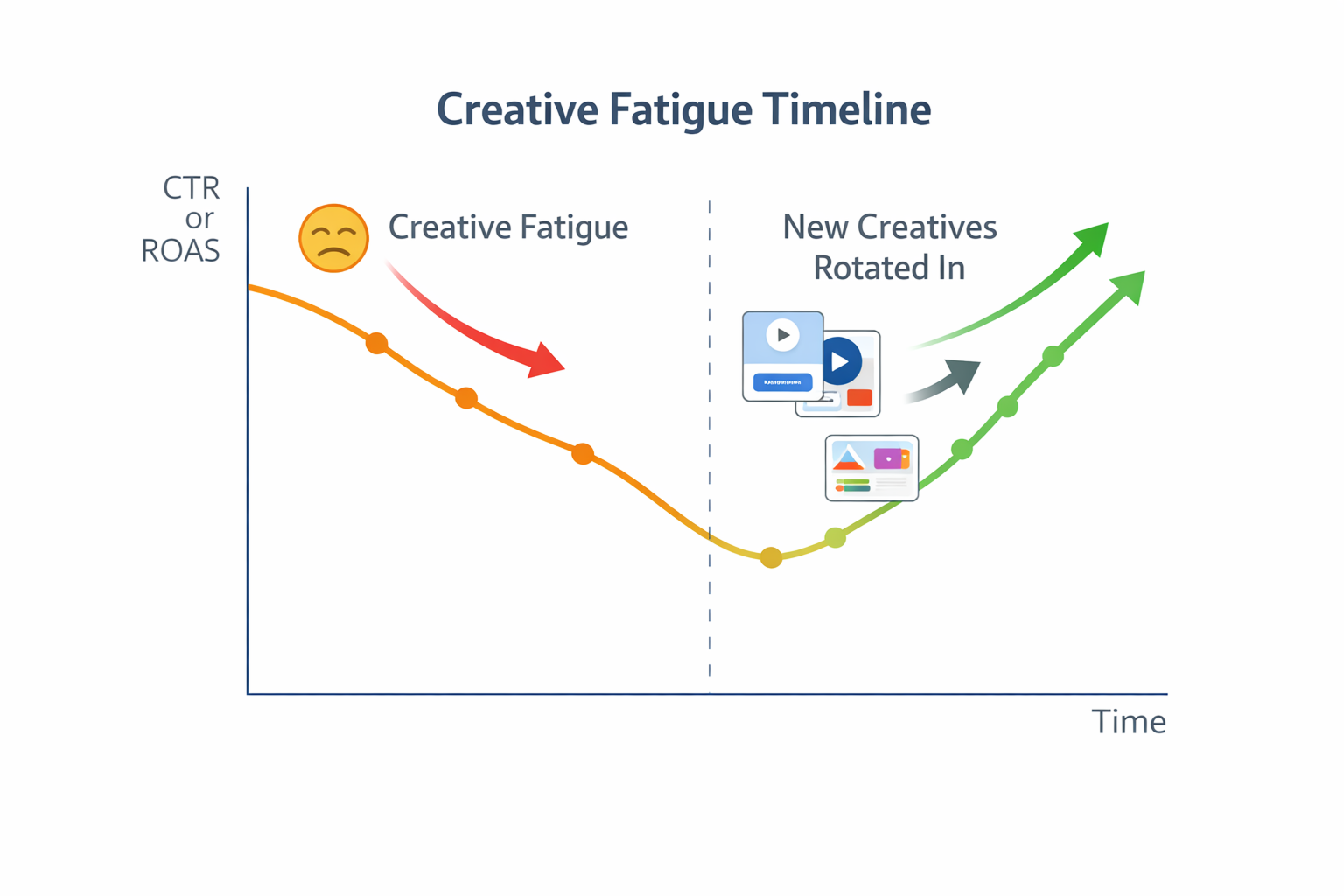
Without rotation, you'll face:
-
Ad fatigue;
-
Decreasing CTRs and ROAS;
-
Fewer learning signals for Meta's algorithm.
Expert Strategy
Always have 3–4 creative variations live. Test angles, hooks, and formats (video, carousel, static). Combine this with AI-enhanced creative audits — see How to Optimize Facebook Ads with AI Tools for frameworks.
Myth #7: “The ore Metrics, the Smarter the Optimization”
Why This Backfires
Overloading your dashboards with metrics leads to vanity KPIs and distraction. Not every metric matters.
Examples of misleading focus:
-
CTR without considering conversion rate;
-
Page views over lead quality;
-
Relevance scores without ROAS tracking.
Expert Strategy
Focus on outcome-based KPIs:
-
Cost per Purchase or Lead;
-
ROAS segmented by funnel stage;
-
Conversion rates from click to final action.
Use supporting metrics only to troubleshoot — not to lead your strategy.
Final Thoughts: Optimize With Precision, Not Assumptions
Success on Meta isn’t about following outdated playbooks — it’s about aligning with how the platform works today. That means:
-
Trusting machine learning where it thrives;
-
Investing in creative testing;
-
Anchoring decisions in business outcomes, not superficial metrics.
The most effective advertisers combine automation, AI, and human judgment to unlock performance at scale.