

Facebook and Instagram ads can drive thousands of leads. But if those leads don’t convert into sales, your ROI suffers.
Improving your lead-to-sale conversion rate is one of the highest-impact levers in digital advertising. It requires more than clever creative — it demands strategic alignment between targeting, messaging, nurturing, and conversion mechanics.
In this article, we break down the real reasons leads don’t convert — and what performance-focused advertisers must do to fix it.
What Is Lead-to-Sale Conversion Rate?
At its core, this metric measures how efficiently you turn leads into paying customers.
Formula: (Number of closed sales ÷ Number of leads generated) × 100
Let’s say your campaign generates 1,000 leads in a month. If 50 of those leads become customers, your lead-to-sale conversion rate is 5%.
On Facebook and Instagram — where lead ads and landing page forms are common — advertisers often celebrate a low CPL. But without tracking what happens after the form submission, performance data is incomplete and misleading.
Why Your Conversion Rate May Be Lower Than It Should Be
Many advertisers generate plenty of leads, but few customers. Why? Most campaigns break down after the click.
Common reasons lead-to-sale conversion fails:
-
Lack of segmentation: Everyone gets the same messaging, regardless of intent or funnel stage.
-
Disjointed journey: Ad creative, landing page, and sales approach aren’t aligned.
-
Insufficient follow-up: Leads are collected but not nurtured.
-
Friction in the process: Complex steps, slow load times, or vague CTAs stop users in their tracks.
-
Timing mismatch: Sales teams respond too late or too early with the wrong message.
To fix this, we need to treat conversion as a full-funnel process — not just a media buying metric.
Step 1: Align Ad Creative With the Buyer Journey
Why Message Match Matters
Facebook ads don’t operate in a vacuum. If your ad promises one thing and the landing page or sales experience delivers something else, users lose trust instantly.
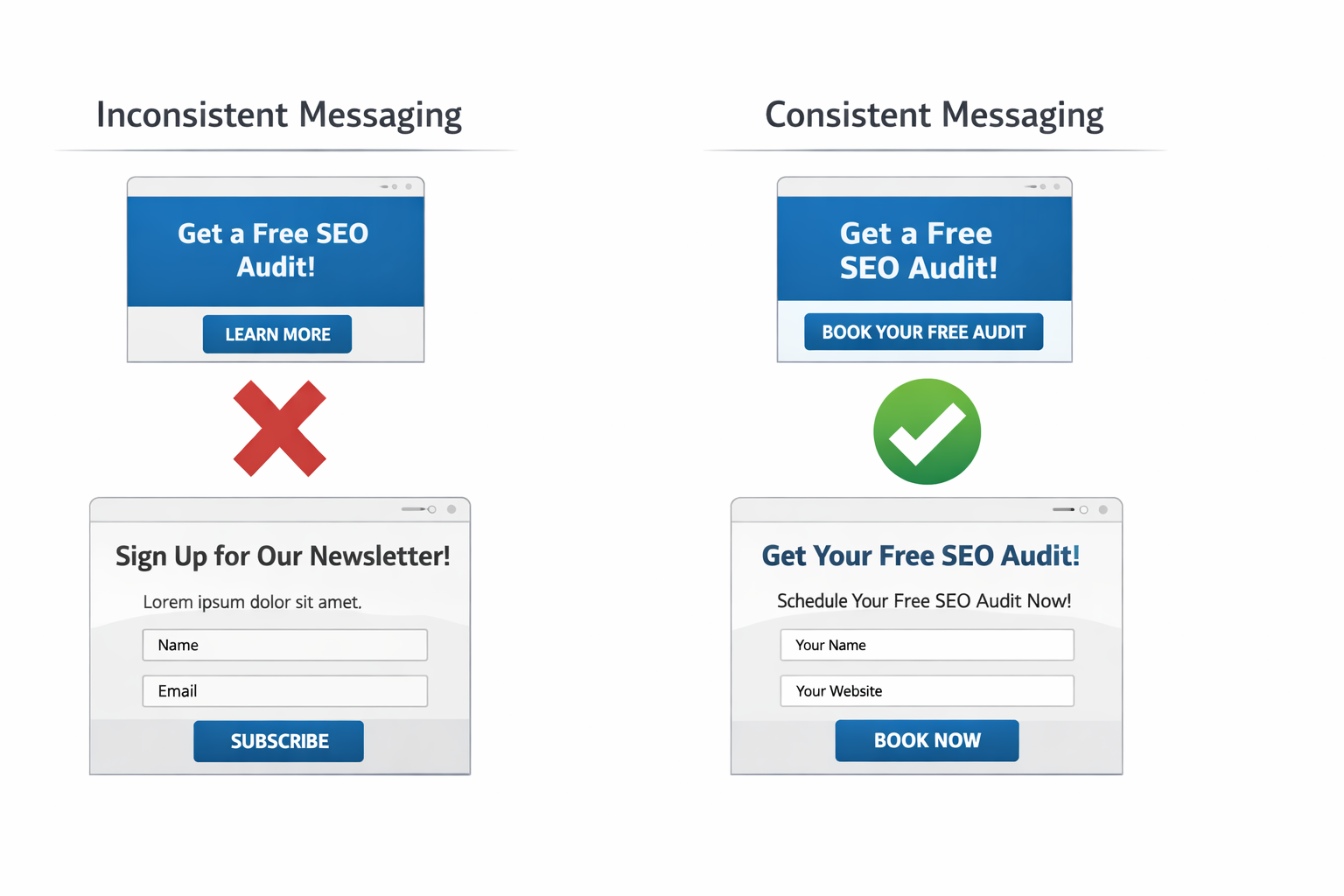
Tactical checklist:
-
Mirror your ad headline in the landing page H1.
-
Use the same tone, color scheme, and visual style to create continuity.
-
Ensure the value proposition from the ad is fulfilled above the fold.
Example: an ad promising a “Free SEO Audit” shouldn’t link to a generic contact form — it should land on an audit booking page.
Segment Creatives by Funnel Stage
Not all users are ready to buy. Show different creatives based on funnel progression:
-
Cold audiences: Focus on pain points, problem-awareness, or relatable situations.
-
Warm audiences (retargeting): Offer comparisons, testimonials, or case studies.
-
Hot audiences (high intent): Use urgency, social proof, and clear offers.
Use Facebook’s Engagement Custom Audiences to segment users based on prior behavior.
Step 2: Qualify Your Leads — Don’t Just Capture Them
Low-cost leads aren’t valuable if they don’t convert. To increase sales, focus on lead quality, not just quantity.
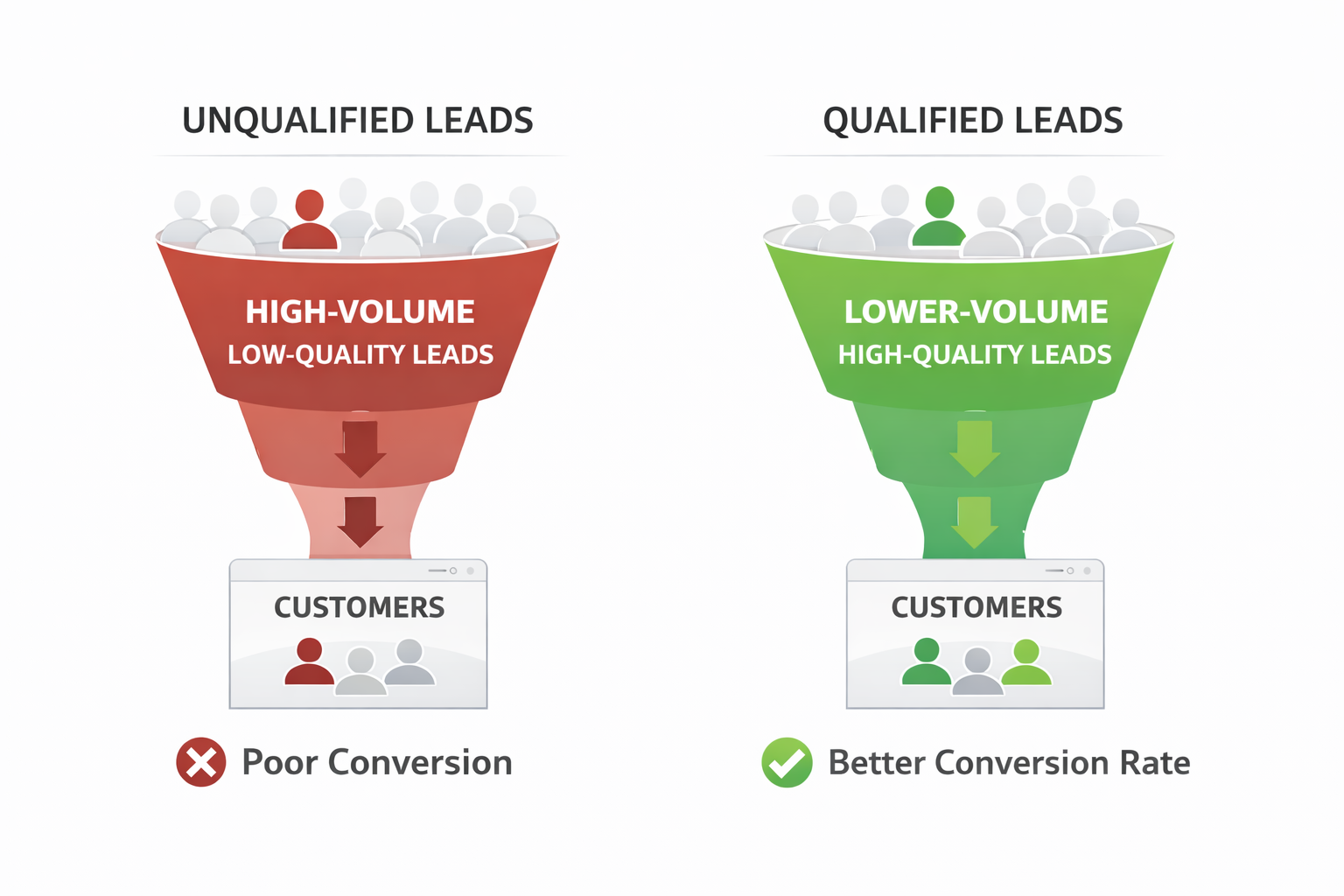
How to improve lead quality:
-
Refine targeting: Use Custom Audiences, lookalikes based on paying customers, and exclusion lists.
-
Qualifying fields: Add questions like “Company size,” “Monthly budget,” or “Biggest challenge” to weed out weak prospects.
-
Lead magnet relevance: Avoid generic freebies. Use gated content that signals buyer intent (e.g., “Pricing Guide,” “ROI Calculator”).
Pro tip: Use Facebook Lead Ads’ “Higher Intent” option — it adds a review step before submission.
Step 3: Build a Nurture Sequence That Moves the Needle
Many leads need education or reassurance before they’re ready to buy. That’s why strong lead nurturing is essential.
Set up automated email or Messenger flows:
-
Email #1: Welcome + Next Steps. Tell them what to expect.
-
Email #2: Case Study. Show how others got results.
-
Email #3: Value-based content. Teach them something useful (guide, video, checklist).
-
Email #4: Direct pitch. Offer a demo, consultation, or product.
Use behavior triggers to adjust pacing — someone who clicks twice in 24 hours shouldn’t wait days to hear from you.
Retargeting Ads That Reinforce Nurture
Set up sequential retargeting based on time and action. Examples:
-
Day 1–3: Show product benefit videos or how-tos.
-
Day 4–10: Display testimonials or expert endorsements.
-
Day 11–20: Add urgency with limited-time offers or “last chance” reminders.
Facebook's ad sequencing can be structured using Engagement Custom Audiences and time-based exclusions.
Step 4: Optimize the Sales Experience
Once a lead clicks to buy — or schedules a call — your job isn’t done. This is where many advertisers lose deals.
Diagnose and fix sales-page friction:
-
Speed matters: Pages should load in under 3 seconds on mobile.
-
Clear CTA: Use buttons that say “Book My Demo” or “Start Free Trial,” not just “Submit.”
-
Proof and trust: Add client logos, reviews, media mentions, or security badges.
Simplify the conversion process:
-
Avoid multi-step forms unless absolutely necessary.
-
Offer calendar integrations for booking (Calendly, HubSpot Meetings, etc.).
-
If payment is involved, provide frictionless checkout (Apple Pay, PayPal, one-page checkout).
Insight: many Facebook advertisers see leads drop off at this exact point — especially when transitioning from mobile ad to desktop-centric checkout experience.
Step 5: Structure Your Campaigns to Align With Intent
Your campaign setup directly impacts the quality of your leads and how efficiently you convert them.
Match campaign objectives to user readiness:
-
Awareness stage: Use “Video Views” or “Reach” to build top-of-funnel interest.
-
Consideration stage: Choose “Traffic” or “Lead Generation” to collect information.
-
Decision stage: Run “Conversions” or “Sales” campaigns for hot leads.
Tip: Don’t lump all users into one conversion campaign — segment campaigns based on the buyer journey.
Leverage time-based retargeting windows:
-
1–3 days since last visit: High intent. Focus on offer clarity and urgency.
-
4–14 days: Mid-funnel. Reinforce value and differentiation.
-
15–30 days: Fading interest. Use new angles, content, or re-engagement incentives.
Structure ad sets accordingly and exclude overlapping time frames to avoid cannibalization.
Step 6: Track Conversion Outcomes — Not Just Lead Volume
Tracking leads isn’t enough. You need to understand which campaigns actually drive closed deals.
Set up proper attribution:
-
Integrate your CRM (e.g., HubSpot, Salesforce, Pipedrive) with Facebook offline events or Zapier.
-
Pass lead source data (UTMs, campaign IDs) to every new contact.
-
Assign lifecycle stages — so you can track leads from entry to closed sale.
Identify conversion bottlenecks:
Analyze metrics across the funnel:
-
Lead → Booking rate: Are users scheduling sales calls?
-
Booking → Show-up rate: Are they attending those calls?
-
Show-up → Close rate: Is your offer converting live?
Use this data to focus your improvements where they’ll make the biggest impact.
Final Thoughts
Improving your lead-to-sale conversion rate is less about making one big change and more about tightening the entire funnel.
From ad creative to landing page, follow-up, and sales process, every step must work together.
Focus on:
-
Aligning creative with buyer intent.
-
Attracting better-qualified leads.
-
Automating intelligent nurture flows.
-
Reducing friction and improving trust signals.
-
Tracking down-funnel sales — not just leads.
These aren’t hacks — they’re systems. And they’ll drive performance long after your ad spend is gone.
