It’s easy to chase high click-through rates or low cost-per-click. But those numbers don’t always mean your business is growing. If you want ads that truly help your company, you need to focus on business outcomes — not just ad platform performance.
In this article, we’ll explain why metrics like ROAS can mislead you, which numbers matter more, and how to shift your tracking and decisions toward long-term growth.
Why ad metrics can give you the wrong picture
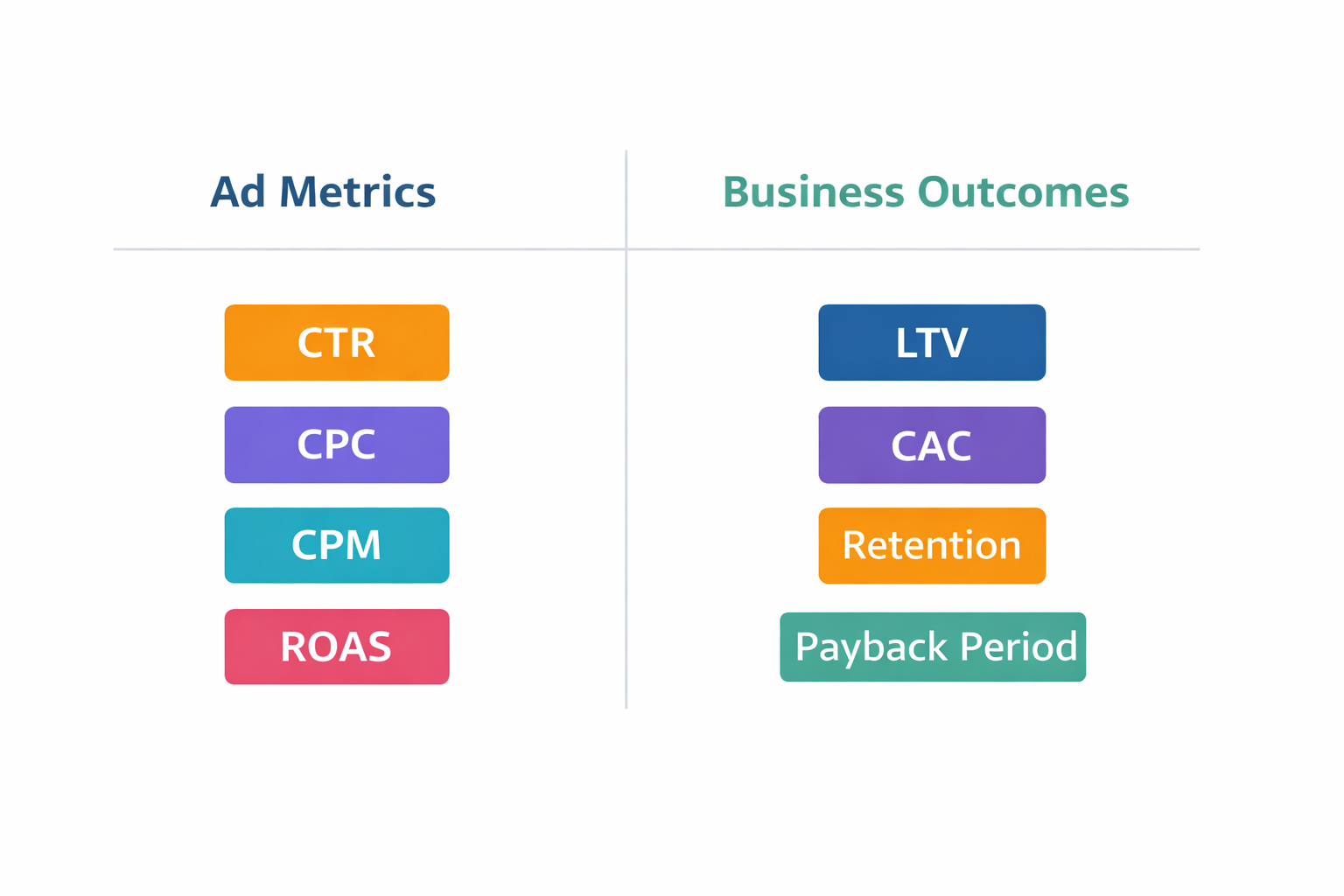
Ad platforms focus on engagement, not quality
Meta, Google, and TikTok want your ads to perform well — on their terms. They reward clicks, views, and conversions. But they don’t care if those results lead to valuable customers.
Here’s what can go wrong:
-
A video ad gets a great CTR — but the traffic bounces in seconds;
-
A giveaway lowers your cost-per-lead — but the leads never buy;
-
Broad targeting increases reach — but attracts people who won’t convert again.
These are all signs that your ads are optimized for platform goals, not business results. That’s a problem — especially when using automated tools that scale quickly.
When you rely too much on surface-level data, you might double down on campaigns that look great but actually waste your money.
After all, getting a click is cheap. Getting a customer who buys again and again — that’s what matters.
For more on why flashy metrics don’t always mean business growth, see Ad Metrics That Lie: When Good Numbers Hide Bad Performance.
Attribution often hides what really works
If you track conversions only inside the ad platform, you’re not seeing the full picture. Most buyers don’t take a straight path from click to purchase: they search, they switch devices, they wait.
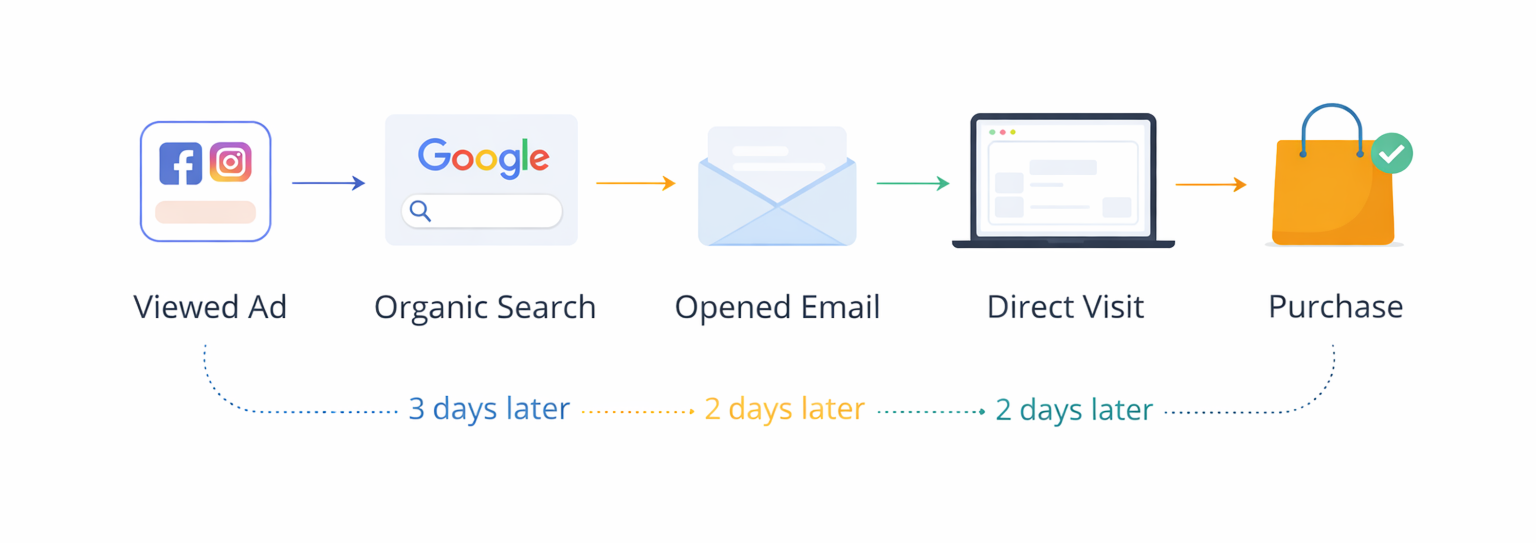
What your current reports might be missing:
-
Someone who saw your ad on Instagram — but bought a week later after a Google search;
-
A customer who clicked on mobile — but checked out on desktop;
-
A new client who was referred by a friend — then got retargeted by your ad.
In all of these cases, the ad platform may claim credit for the sale — even if it only played a small part.
This leads to bad decisions. You may pause the wrong ads, scale the wrong campaigns, or misjudge your real cost to acquire a customer.
To fix this, you need better tracking — and more than one source of truth. Here's a helpful breakdown: Why Relying Only on Last-Click Attribution Hurts Ad Strategy.
What real business outcomes look like
Look beyond ad metrics
If you want to grow profitably, measure things that show how your business is really doing. That includes:
-
Customer acquisition cost (CAC): How much you spend to get a new paying customer;
-
Customer lifetime value (LTV): How much that customer spends with you over time;
-
Payback period: How long it takes to earn back your ad cost;
-
Retention rate: How many customers come back again;
-
Incrementality: How many purchases happened because of your ads — not just after them.
These numbers help you see if your marketing is sustainable. You don’t just want cheap clicks or fast sales. You want customers who are worth more than they cost.
A quick example
Let’s say you run two ad campaigns.
Campaign A:
-
CAC is $20;
-
ROAS is 2.5x;
-
80% of traffic bounces;
-
Few people buy again.
Campaign B:
-
CAC is $35;
-
ROAS is 1.8x;
-
Visitors spend time on site;
-
40% of them make a second purchase.
Campaign A looks better inside Meta. But Campaign B brings better customers. If you only look at ROAS, you might scale the wrong one.
This is why business outcomes matter. They help you choose the ads that lead to real growth — not just short-term wins. If you’ve been burned by misleading ROAS, read The ROAS Trap: Why High ROAS Isn’t Always Profitable.
How to link ads to real business results
1. Set up better tracking
Good tracking lets you follow customers from the ad click to the purchase — and beyond. Relying on the ad platform alone won’t do that.
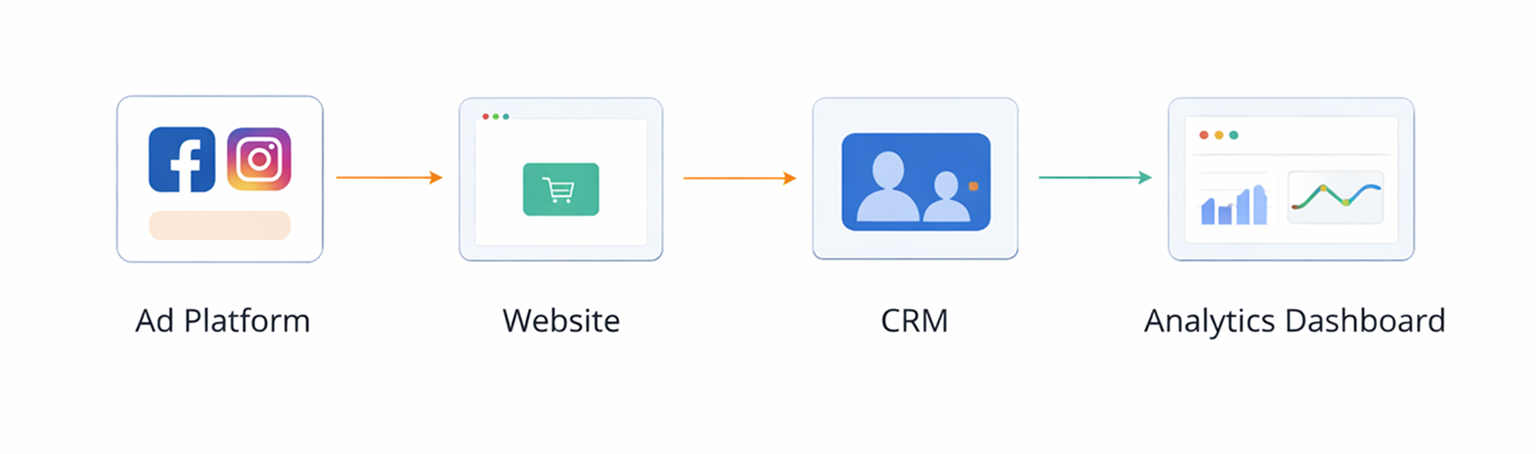
Start with these basics:
-
Add UTM tags to your links — include campaign, audience, and creative info;
-
Send ad data into your CRM or backend — so you can see who buys and how often;
-
Group your customers by campaign — and compare average spend and repeat purchase rates;
-
Look at total revenue per campaign — not just clicks or conversions.
When you combine ad data with customer behavior, you learn what actually works — not just what looks good in Meta Ads Manager.
2. Measure customer quality, not just volume
You don’t just want to know how many conversions you got. You need to know who those conversions are.
Key things to track by campaign:
-
Average order value: Are certain ads bringing bigger spenders?
-
Time to repeat purchase: Are you acquiring customers who come back?
-
Refunds or returns: Are some creatives leading to unhappy buyers?
-
Support tickets: Are you attracting customers who need extra help?
These patterns help you cut wasted spend and improve how you target. Instead of just trying to lower your cost-per-purchase, focus on attracting customers who are easier to keep.
Over time, this leads to better margins — even if your top-line metrics don’t change much.
3. Train your automations the right way
Automated campaigns like Meta’s Advantage+ can be powerful. But they only work if you give them good signals.
If you feed bad data — like purchases that result in returns or one-time buyers — the algorithm will learn the wrong things.
Here’s how to improve automation:
-
Use custom conversions that track deeper actions — like second purchases or completed onboarding;
-
Exclude poor-quality customers from lookalikes and seed audiences;
-
Upload offline conversions — with labels like “high LTV” or “churned”;
-
Remove low-margin products from your catalog — so the algorithm doesn’t push the wrong SKUs.
When you do this, your automated campaigns won’t just go after the cheapest conversions. They’ll aim for the ones that help your business grow. For expert tips, check out How to Optimize Campaign Performance with Meta Advantage+.
Final takeaways
If your ads look great in the dashboard but your business isn’t growing, something’s off. Great performance metrics don’t guarantee great customers.
Here’s what to focus on:
-
Look at customer value, not just cost;
-
Connect ad clicks to actual revenue and retention;
-
Use better tracking and data to guide decisions;
-
Train automation with smart signals — not just volume;
-
Question high ROAS if those customers never come back.
The best marketers don’t chase the cheapest results. They build systems that grow the business over time.