Meta’s algorithm updates in 2026 are forcing advertisers to rethink how they approach Facebook and Instagram ads. This isn’t just a tweak — it’s a structural shift in how Facebook ranks, delivers, and evaluates ad performance.
For marketers and business owners who rely on paid social, understanding what changed — and what to do about it — is now essential.
What’s Different About the 2026 Facebook Algorithm?
Facebook’s core focus this year is quality of engagement, not just volume. This means your campaign performance depends more on what people do after they click, and how consistently your ads stay relevant over time.
This shift builds on patterns we've already seen with Meta’s ad delivery system. If your ads have suddenly stopped getting reach, you’re not alone — we broke down why Meta algorithms stop delivering your ads in a separate guide.
Here’s a closer look at the most important 2026 changes.
1. Post-Click Activity Now Matters More Than Ever
Facebook is rewarding ads that lead to high-value actions after the click. Simple likes or views aren’t enough anymore.
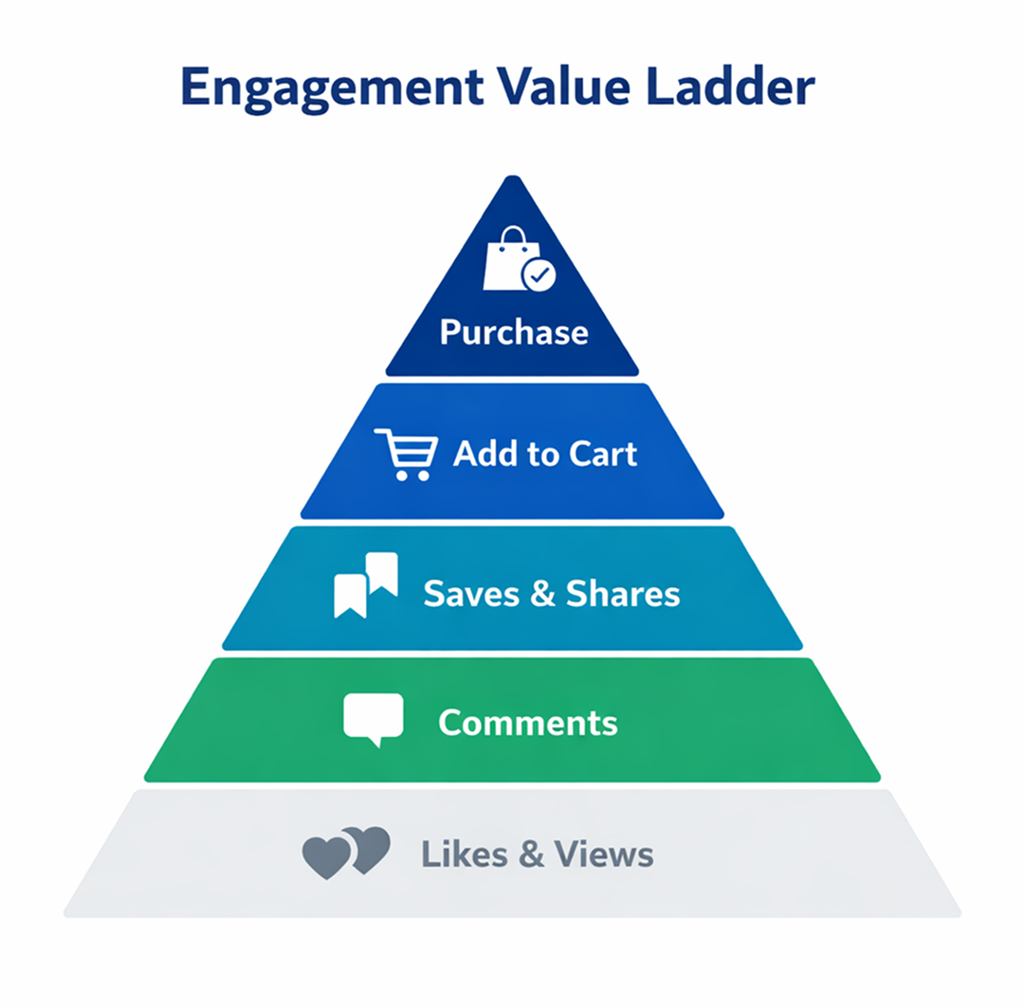
This includes:
-
Saves and shares. Ads that users bookmark or pass on to others signal long-term interest.
-
Time on site. If your landing page keeps people engaged, it reflects positively on the ad.
-
Deeper actions. Initiating checkout, subscribing, or using interactive tools (like product finders) boosts delivery priority.
Want to understand how the system evaluates all of this? See how Facebook's algorithm decides who sees your ads.
2. Ad Fatigue Is Detected — and Penalized — Much Faster
The system now identifies overexposed creatives more quickly. When people see the same ad repeatedly without acting, your delivery cost goes up and your reach drops.
You can counter this by:
-
Shortening your creative lifespan. Plan to rotate core creatives every 7–10 days.
-
Varying your hooks and angles. Keep the visual structure, but change the core message or theme.
-
Tracking fatigue metrics. Monitor the decline in CTR and rise in CPM to catch fatigue early.
Relying on “evergreen” ads is riskier than it used to be.
3. Meta’s AI Handles More — and Expects You to Let It
Meta is expanding its use of machine learning to determine which creatives show to whom. That means static setups or overly controlled campaigns can underperform.
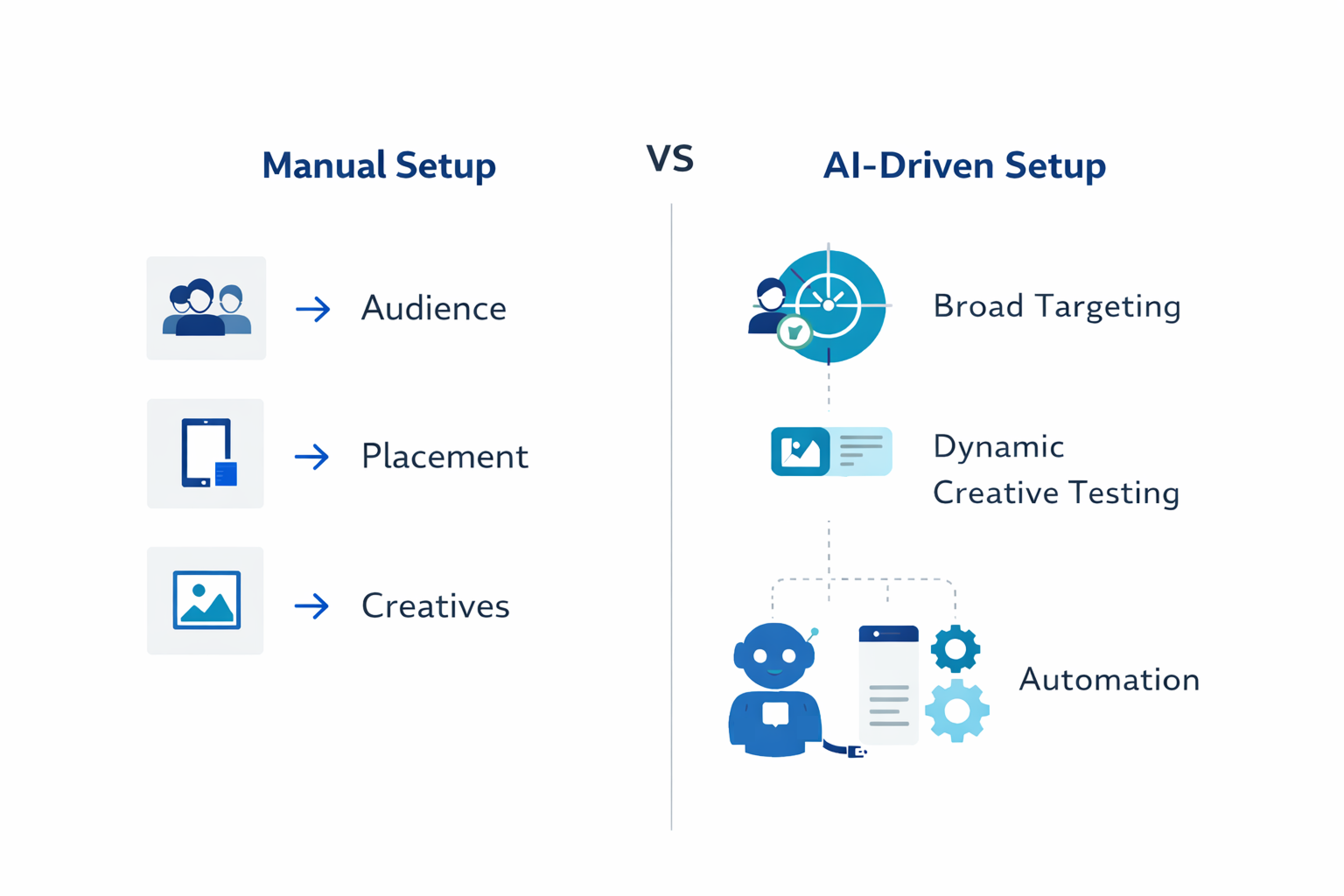
To adapt, use:
-
Dynamic creative testing. Upload multiple versions of images, headlines, and descriptions to let the system find the best combo.
-
Advantage+ campaigns. Especially for catalog or DTC brands, these reduce manual setup and optimize based on real outcomes.
-
Auto-placement and budget distribution. Manual overrides often slow down learning and cost efficiency.
For a full breakdown of how to get better results with Meta’s evolving toolset, check out How to Improve Facebook Ads with Meta Advantage.
How to Adjust Your Strategy in 2026
It’s not just about using new tools. It’s about aligning your campaigns with what Facebook now optimizes for.
Let’s break down where to focus and why.
Design for Engagement That Feeds the Algorithm
Today, engagement is only useful if it connects to intent. Ads that feel useful or solve a problem tend to do better than ones that just entertain.
To build these signals into your campaign:
-
Start with a clear, practical takeaway in your creative. That might be a tip, a checklist, or a demo.
-
Build landing pages that are interactive or exploratory. Product quizzes, feature comparisons, and bundles help users stay longer.
-
Track what users do after clicking. Meta now weighs early funnel actions — like time on site or scrolling depth — as indicators of quality.
Avoid gimmicks. The algorithm is trained to look past surface-level engagement.
Rebuild Your Creative Strategy for Speed and Scale
Many advertisers are still running ads that look polished but are slow to adapt. In 2026, speed to iteration beats perfection.
Here’s how to keep pace:
-
Batch-create assets. Shoot content in sets (10–20 variations) for quick rotation.
-
Mix in low-fi formats. Casual UGC-style videos or screen recordings often perform better in-feed than high-gloss ads.
-
Use versioning logic. Keep the layout consistent, but swap out copy and visuals weekly to maintain freshness.
You don’t need more budget to compete — you need more versions of what already works.
Build for Faster, Cleaner Conversions
Since Facebook now relies more on short-term feedback loops, long funnels with delayed results are harder to optimize for.
To align your campaigns:
-
Remove unnecessary steps between the click and the action. If you’re asking for an email before showing pricing, rethink that.
-
Test product pages that offer bundles or one-click add-to-cart options. Fewer decisions lead to faster conversions.
-
Set up your Conversions API correctly. Pixel-only tracking is no longer enough. You’ll miss key events and hurt your data quality.
And looking forward, Facebook's infrastructure is continuing to evolve. Meta’s Andromeda project is a major part of that — promising more personalization and AI-led optimization. Learn what’s ahead in Meta Andromeda and the Future of Facebook Ads.
Common Mistakes That Will Hurt Performance in 2026
Many brands are seeing their CPMs climb without knowing why. In most cases, the issue is structural — not just creative.
Watch out for:
-
Over-targeting. Facebook’s AI learns better with broader audiences. If you’re still layering multiple interests, you’re limiting scale.
-
Creative misfit. Ads that feel like ads perform worse in Story or Reels placements. Use native formats and aspect ratios.
-
Ignoring placement-level data. An ad that crushes in Feed may bomb in Reels. Split creative by placement when needed.
You don’t have to chase every new format, but you do need to respect how users interact differently in each one.
Final Takeaway: Align With the Platform, Not Just Your Plan
The most successful advertisers in 2026 are the ones who stop trying to control every detail and start optimizing for how Facebook actually works.
Here’s what that means in practice:
-
Let the system learn from real data — not assumptions.
-
Deliver creative that earns attention through usefulness, not gimmicks.
-
Shorten the path from ad to outcome, and track what matters at each step.
Advertising on Facebook and Instagram isn’t harder this year. It’s just different. And the brands that adapt faster will see the rewards first.