When your ad campaign doesn’t perform, it’s easy to assume the creative is the issue. Maybe the image isn’t strong enough. Maybe the headline needs a tweak.
But sometimes, the problem isn’t the ad at all. It’s the offer behind it.
This is a common pattern we see in accounts where ads look polished but still fail to drive sales. We’ve covered this exact situation in more detail in our breakdown of why Facebook ads can look great but still don’t sell.
If your offer isn’t clear or valuable, even the best-looking ads won’t save you. Let’s look at how to figure out what’s actually holding back your results — and how to fix it.
What Ads Do (and What They Don’t)
Before you jump into testing 15 new creatives, it’s important to understand the actual job of your ad.
What a Good Ad Should Do
Your ad’s role is simple: stop someone from scrolling and get them to care. That’s it. The rest happens after the click.
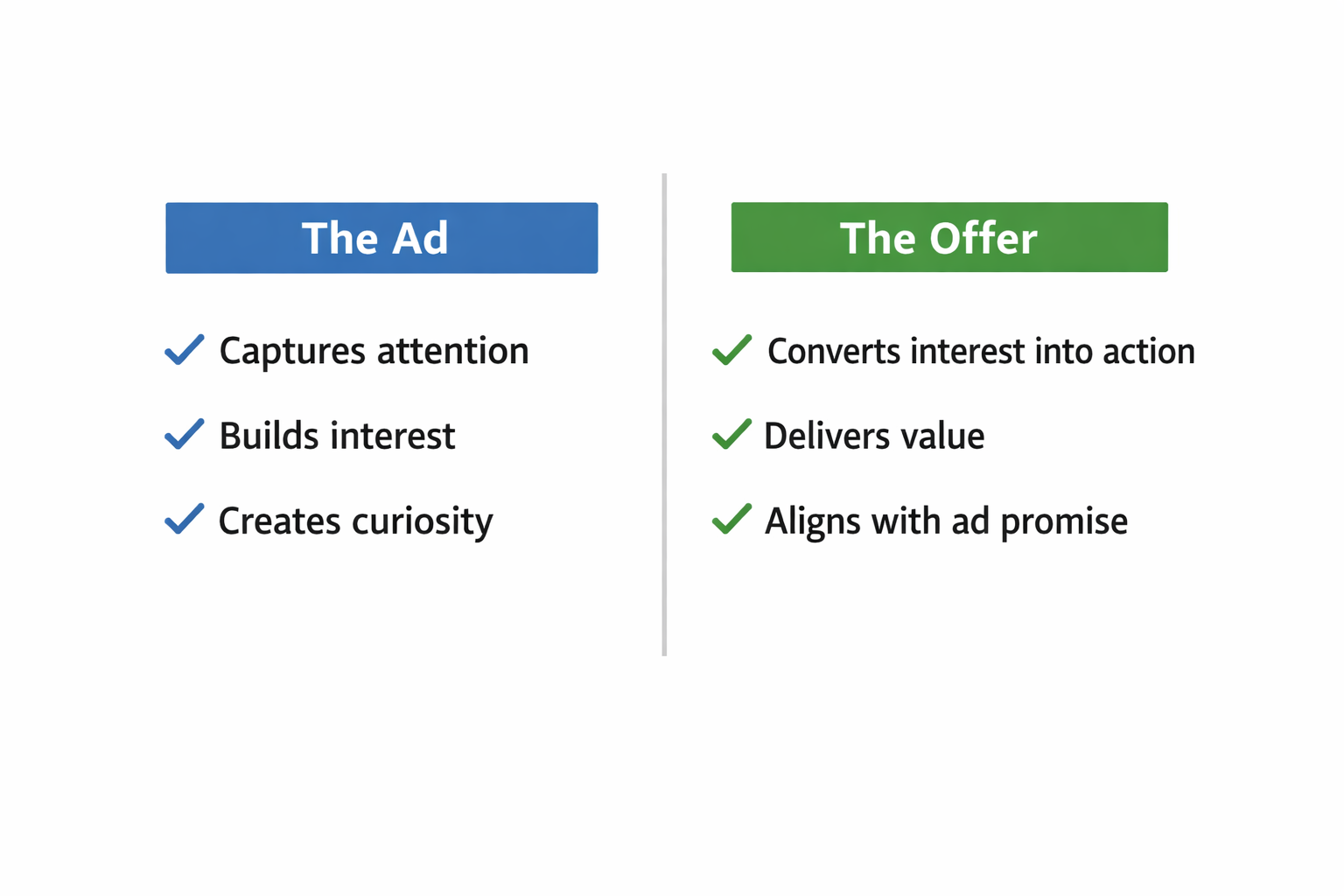
Here are the three main things a strong ad should accomplish:
-
Grab attention quickly. This could be a bold visual, a short video, or a hook that speaks to something the viewer is already thinking about. For example, asking a question like “Still wasting time on manual reports?” makes someone stop and think.
-
Create curiosity or desire. A good ad doesn’t try to explain everything. Instead, it shows just enough to make people want to know more. This could be a short demo clip or a visual showing the result of using your product.
-
Speak to people in a passive mindset. Remember, users on Facebook and Instagram aren’t actively searching. Your ad needs to spark interest, not just answer existing demand.
What Your Offer Has to Do
The offer is where the conversion happens. It’s what you’re asking people to say yes to after they click.
A good offer is specific, clear, and has real value. Let’s break that down:
-
It’s easy to understand. Vague promises like “grow your business” or “save time” won’t cut it. Instead, give people something solid. For instance: “Get 10 qualified leads in 10 days or it’s free.”
-
It matches the ad. If your ad teases a bold result but your landing page is just a generic form, people will leave. This misalignment often shows up when the campaign objective doesn’t match the offer. We explain this in detail in our guide on aligning your offer with the right Facebook ad campaign objective.
-
It feels timely. If there’s no reason to act now, people won’t. Offers that include urgency or exclusivity, such as limited bonuses or free audits, usually perform better than open-ended ones.
How to Spot an Offer Problem (Not an Ad Problem)
Even when ads look fine, the offer behind them might be weak. Here are three clear signs to watch for.
You’re Getting Clicks, but No Conversions
This is one of the biggest red flags. If people are clicking but not taking the next step, the offer may not be convincing.
Ask yourself:
-
Does the landing page make it immediately clear what they get?
-
Is the headline strong enough to keep them reading?
-
Are there any reasons to act right away, or can they just come back later?
If your page doesn’t load fast, or the message changes tone from the ad, people will bounce. This click-without-sales pattern is often tied to deeper audience or offer misalignment, which we break down further in why ads get clicks but no sales.
You’re Attracting Leads That Don’t Convert
If you’re getting traffic and even form fills, but no sales, the problem might be in how the offer is positioned.
You can fix this by:
-
Making your offer more specific to the right audience;
-
Using filters or questions to qualify leads;
-
Avoiding generic giveaways that attract freebie hunters, not buyers.
People Like or Save the Ad, but Don’t Click
Sometimes you’ll see high engagement — likes, shares, even saves — but almost no clicks. This means the ad looks good, but the offer underneath doesn’t feel worth taking action on.
That could be because:
-
The benefit is unclear;
-
The offer seems too far away, like a long sign-up process;
-
The user doesn’t understand what happens after the click.
In short, interest is there, but there’s no clear next step.
Should You Change the Ad — or the Offer?
You’ll save time and money if you answer this question early.
Start by Testing the Offer Itself
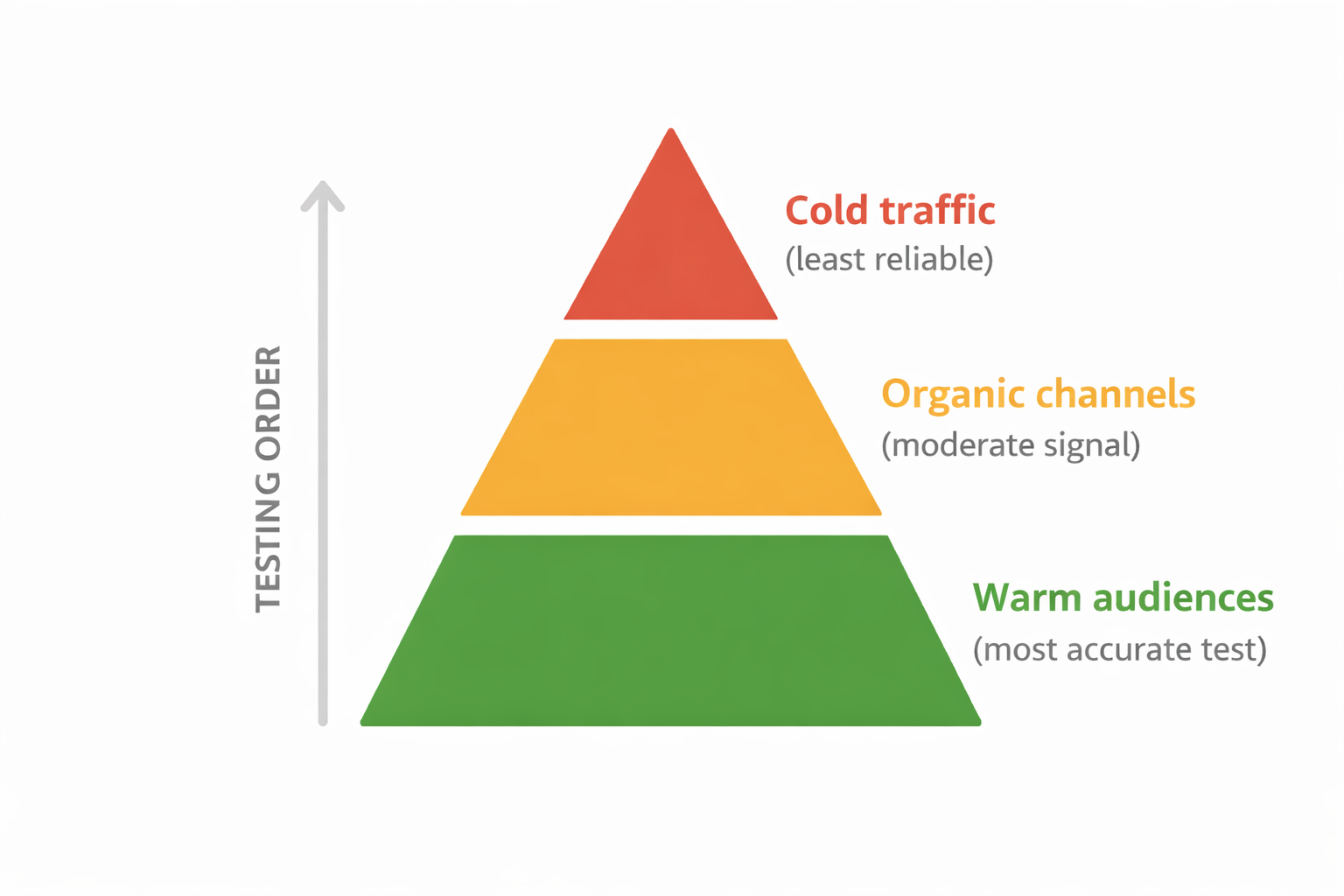
Before changing your ad creative, try validating the offer in other ways.
-
Send traffic from warm audiences. If people who already know your brand don’t convert, cold traffic definitely won’t. Building and testing against strong warm segments is critical, which is why we recommend using properly structured custom audiences. You can learn how to do this in our guide to creating high-converting Facebook custom audiences.
-
Share the offer organically. Post it on your social channels or in email campaigns. If nobody bites, the offer needs work, not a better headline.
Once you’ve confirmed the offer is valuable, then build your ad around it.
Rebuild the Ad to Fit the Offer
When the offer is solid, your ad just needs to make people want it. Focus your creative tests on the top of the funnel:
-
Try different angles, such as questions, bold stats, or relatable problems.
-
Test formats like reels, carousel posts, and static images to see what gets the most attention.
-
Adjust your CTA to match the action. “Book a Call” and “Try Free” work for very different audiences.
Keep the journey smooth. Every step — ad, page, offer — should feel like part of the same story.
Final Takeaway: Don’t Fix the Wrong Problem
Ad managers only show surface-level results: impressions, clicks, cost per lead. They don’t tell you why things aren’t converting.
If your campaign isn’t working, don’t immediately jump to rewriting your ad or swapping out images. Start by looking at the offer. Is it clear? Is it valuable? Does it feel worth acting on now?
If the offer works, you can build winning ads around it. But no amount of clever copy or good design can fix an offer that doesn’t hit the mark.