
Every advertiser eventually reaches a growth ceiling. Once retargeting and core audiences are exhausted, expansion becomes necessary.
However, many advertisers see performance drop right after expanding. Costs rise, engagement falls, and ROAS declines. This is not a coincidence.
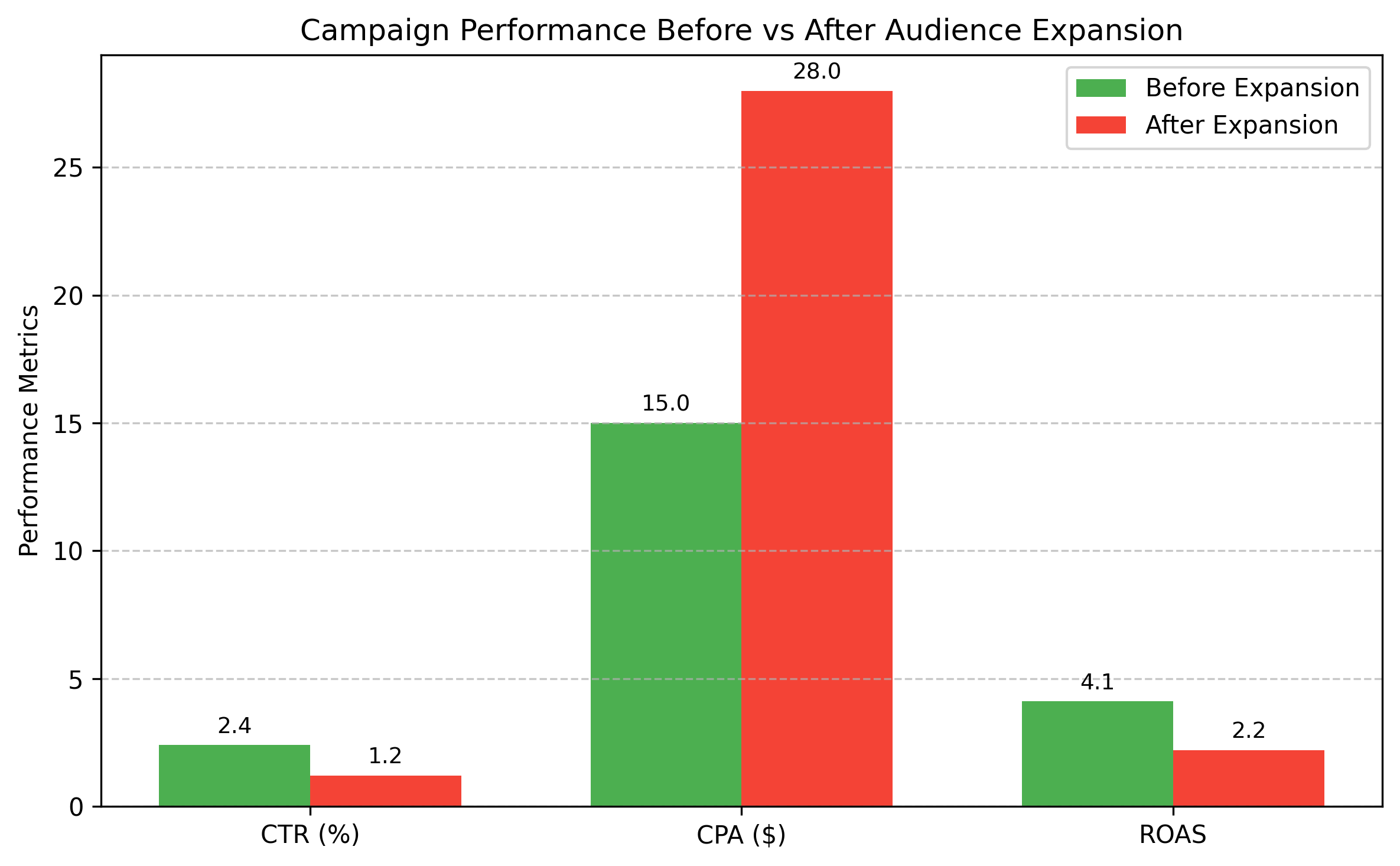
Audience expansion often fails because it weakens relevance signals. As explained in Why Audience Expansion Sometimes Lowers Facebook Ads ROI, broader reach can confuse Meta’s delivery system when not structured properly.
The goal is not to reach more people. The goal is to reach more relevant people — without breaking what already works.
Establish a Strong Signal Before You Expand
Before expanding, your campaigns must send clear and consistent signals. Meta can only find the right users if it understands who converts now.
Weak signals lead to poor expansion. If conversions fluctuate or quality is inconsistent, scaling will amplify those problems.
A solid foundation usually includes:
-
Stable conversion volume over at least 7–14 days, showing predictability.
-
Consistent cost per result, indicating efficient delivery.
-
Clean exclusions, such as purchasers and recent site visitors, to protect cold traffic testing.
Without this structure, Meta expands blindly. That’s when relevance erodes and efficiency disappears.
Let Meta Explore — With the Right Expansion Framework
Meta increasingly favors automation over rigid targeting. Tools like Advantage+ audience expansion allow the algorithm to explore users beyond your defined segments.
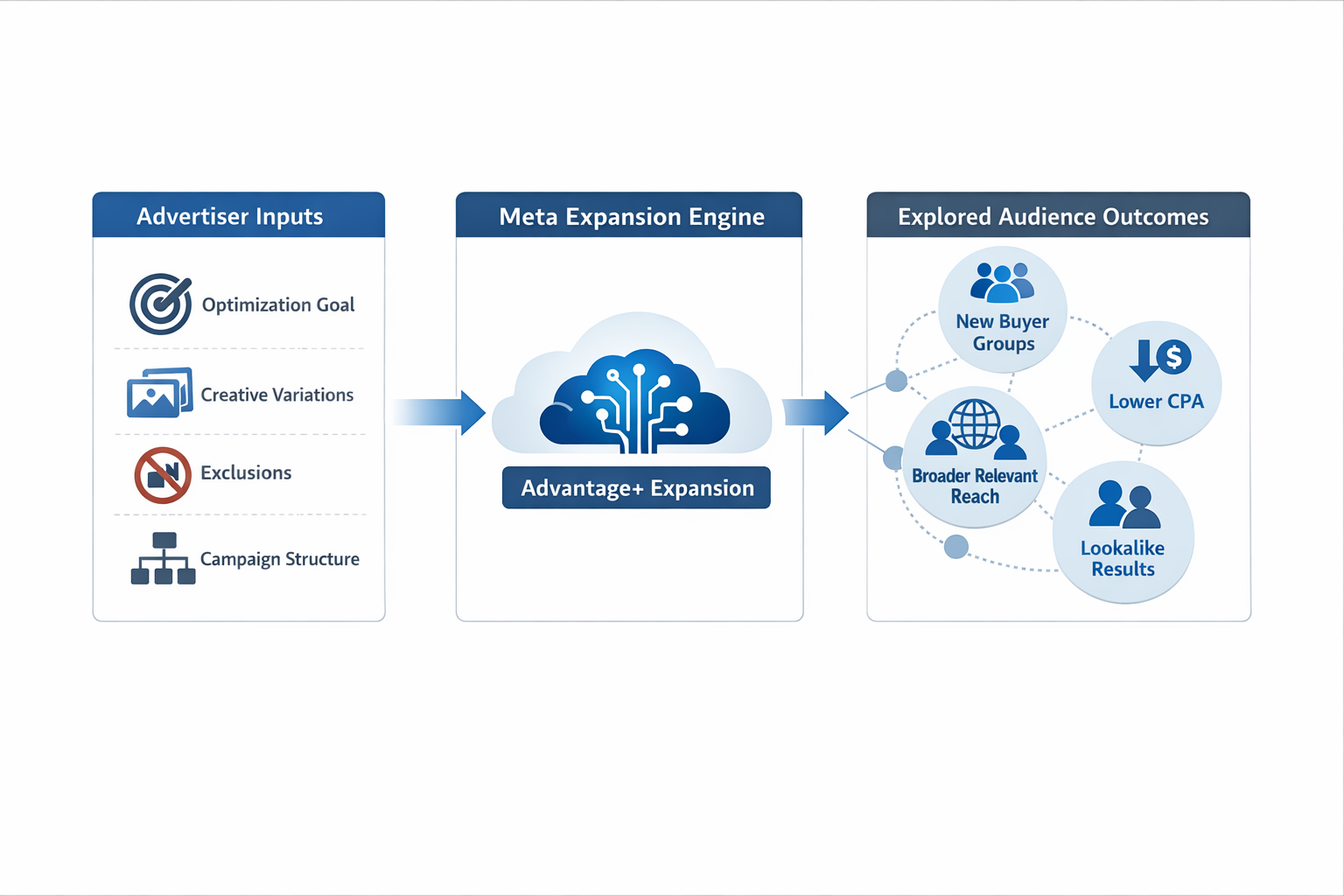
This approach works best when paired with clear guidance. You still control optimization events, exclusions, creative, and structure.
When using expansion features, focus on:
-
Conversion-based optimization, so Meta prioritizes buyers, not browsers.
-
Sufficient creative variety, which helps the algorithm match messages to users.
-
Minimal restrictions, allowing exploration without removing guardrails.
A deeper breakdown of this approach is covered in Tap Into New Audiences With the Power of Advantage Expansion.
Expansion tools don’t replace strategy. They amplify it — for better or worse.
Creative Anchors Preserve Relevance at Scale
As audiences expand, familiarity disappears. Your creative must carry clarity, context, and credibility on its own.
Broad audiences respond best to “anchors” — elements that quickly communicate value.
Effective creative anchors include:
-
A specific hook, addressing a clear problem or outcome, not a generic promise.
-
Visual context, showing the product or service in real use, not abstract branding.
-
Immediate proof, such as reviews, testimonials, or visible results.
These anchors help Meta understand who engages meaningfully. They also protect relevance as your reach grows and audience intent varies.
Without strong creative anchors, expansion relies on chance. With them, relevance becomes scalable.
Expansion Requires Context, Not Just Reach
Audience expansion changes who sees your ads. That means your messaging must evolve with the audience stage.
Cold users need education and clarity. Warm users need reassurance and proof.
A simple way to maintain relevance is to align messaging by funnel stage:
-
Top of funnel: Lead with problems, curiosity, or awareness. Avoid hard selling.
-
Mid funnel: Introduce benefits, differentiation, and light proof points.
-
Bottom of funnel: Emphasize testimonials, urgency, and clear calls to action.
When expansion fails, it’s often due to message mismatch. Broad reach with bottom-funnel messaging pushes people away instead of pulling them in.
Avoid Overlap That Distorts Performance
As you scale, overlapping audiences become harder to detect. The same users may see multiple ads from different ad sets.
This overlap inflates performance metrics and increases internal competition. It also makes optimization decisions unreliable.
To keep expansion clean:
-
Exclude warm audiences from cold expansion campaigns.
-
Use Meta’s overlap tools to check audience intersections.
-
Consolidate similar campaigns to reduce delivery conflict.
Clean structure keeps your data honest. Honest data leads to smarter scaling decisions.
Measure Relevance Before Making Drastic Changes
Expansion often changes metrics — and not all changes are negative. A slight drop in CTR does not always mean failure.
What matters is efficiency and signal quality over time.
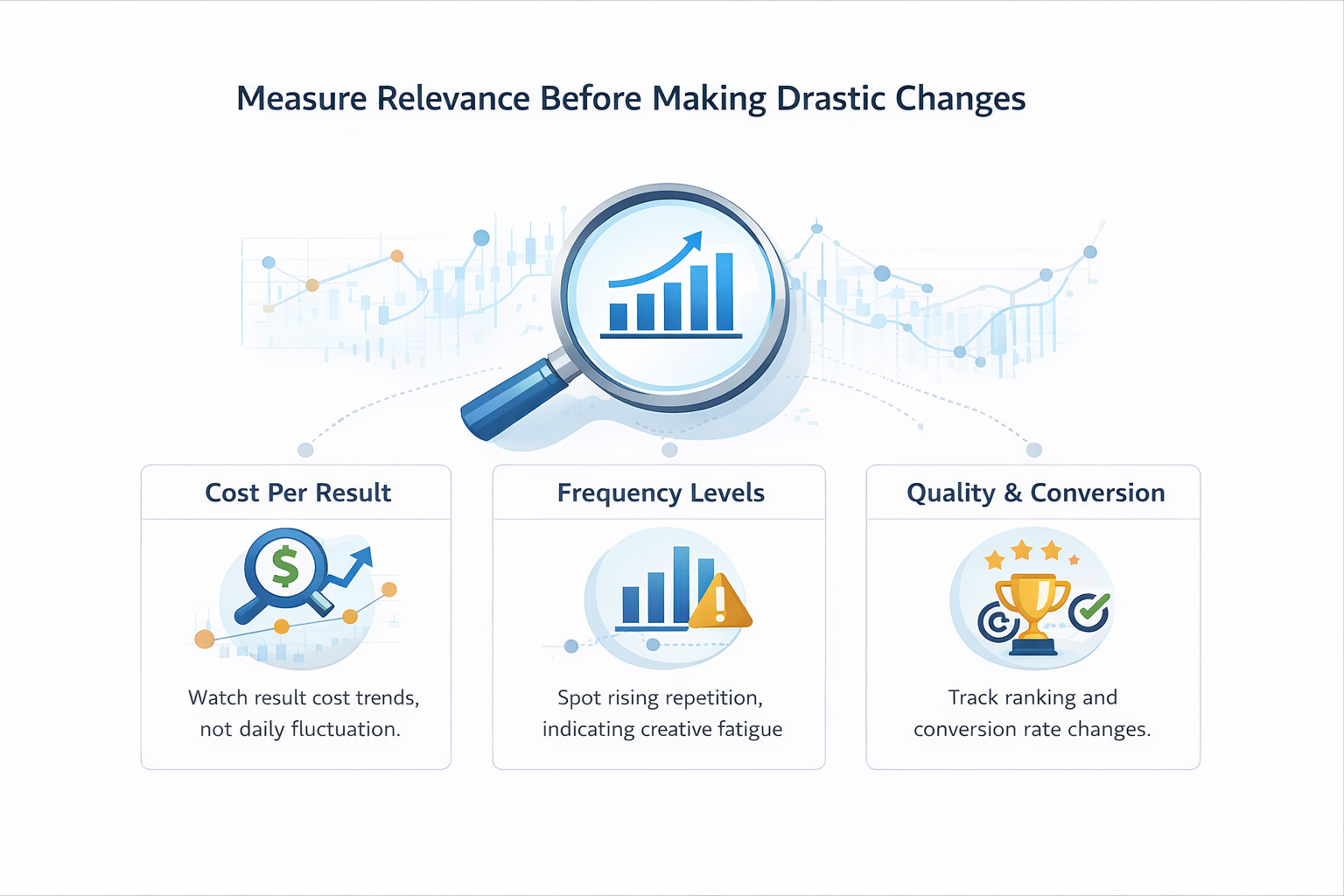
Watch these relevance indicators closely:
-
Cost per result trends, not daily fluctuations.
-
Frequency levels, which signal creative saturation.
-
Quality ranking changes, reflecting audience response.
-
Conversion rate stability, showing traffic intent.
As outlined in Why Audience Expansion Sometimes Lowers Facebook Ads ROI, reacting too quickly often causes more damage than the expansion itself.
Scaling requires patience and interpretation — not panic.
Final Thoughts: Expansion Works When Relevance Leads
Audience expansion is essential for growth. But relevance must scale with reach, not fall behind it.
When advertisers rely on structure, signals, and creative clarity, expansion becomes predictable. When they rely on size alone, performance erodes.
Key principles to remember:
-
Expand only after establishing strong conversion signals.
-
Use Meta’s expansion tools with clear goals and clean inputs.
-
Anchor creative in clarity, proof, and context.
-
Align messaging with audience awareness.
-
Measure relevance trends, not surface metrics.
Audience expansion is not about letting go of control. It’s about applying it where it matters most.