Running high-volume lead generation campaigns on Meta platforms can work incredibly well — if done right. But when you’re spending big and collecting thousands of leads, small mistakes get expensive fast.
The goal isn’t just to get as many leads as possible. It’s to get the right leads — without wasting ad spend, exhausting audiences, or clogging your CRM with low-intent contacts.
This guide gives you practical, less-obvious strategies to improve lead quality, reduce fatigue, and scale with confidence.
Make your top-of-funnel work harder
Many high-volume campaigns fail at the top. If your entry point is weak, everything else suffers: poor leads, wasted budget, and low conversion rates.
Use stronger pre-qualifying content
When targeting cold audiences, don’t lead with “Book a demo” or “Get a quote.” These offers work better for warm leads. Instead, start with a piece of value or content that attracts the right type of user.
Examples:
-
“Which CRM is right for your business?” — interactive quiz to qualify SaaS buyers;
-
“Free Ad Budget Calculator” — only serious advertisers will use this;
-
“The 5 types of Facebook audiences — and how to use each one” — useful for marketers, not casual browsers.
These entry points don’t just capture attention — they filter for interest, intent, and relevance.
For more, see How to pre-qualify leads in Facebook ads without adding friction.
Avoid generic retargeting
A common mistake in high-volume campaigns is retargeting everyone the same way. But people engage with your ads and site differently — and that should shape your follow-up.
Segment based on behavior
You can group people by how they interacted with your content or website, and serve tailored ads.
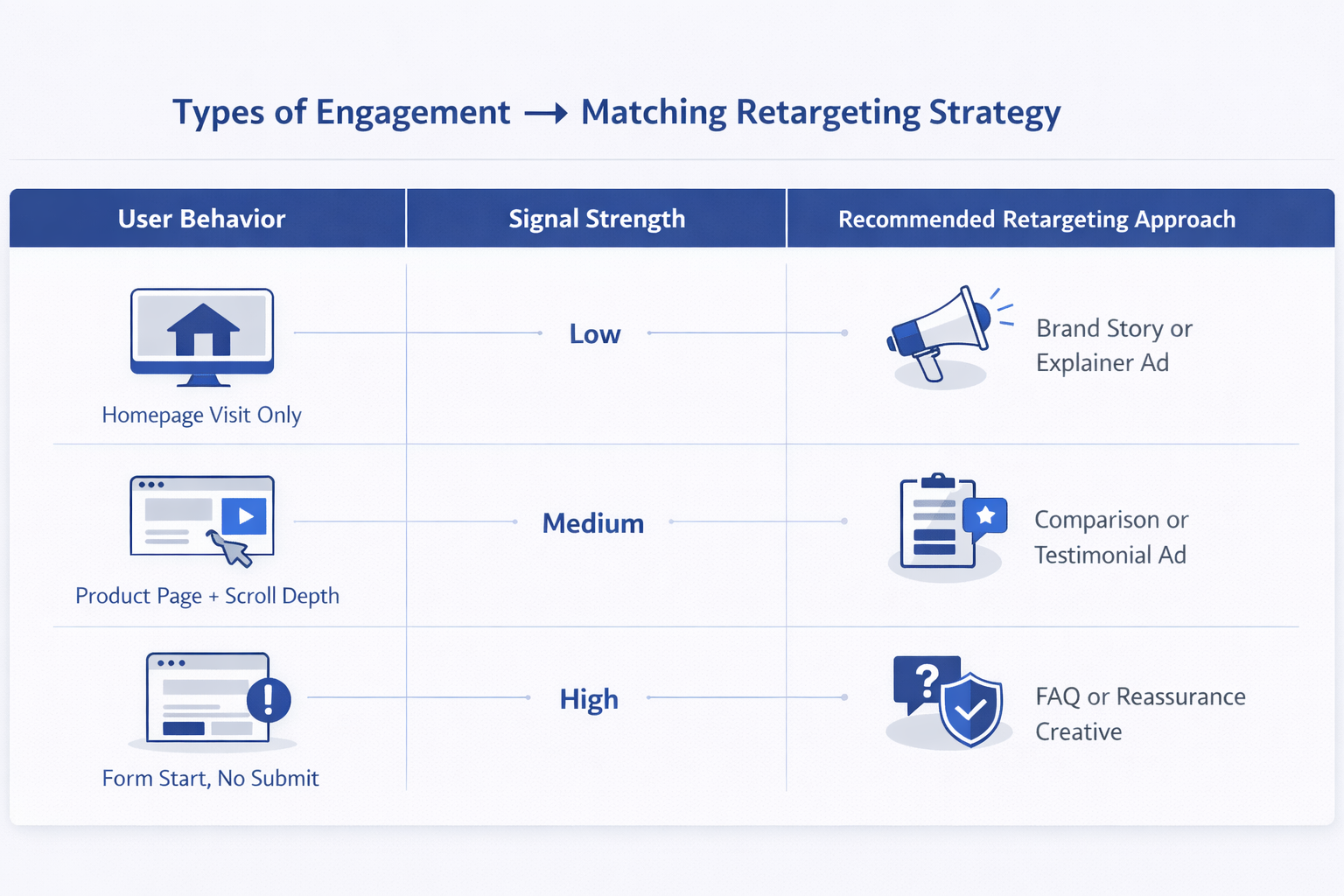
For example:
-
Light engagement — people who only saw your ad or visited your homepage;
→ Show a friendly intro ad with a brand story or light education. -
Mid-funnel behavior — people who viewed product pages or spent time reading;
→ Serve comparison ads, use cases, or customer stories. -
High intent — people who started filling a lead form but didn’t finish;
→ Show ads with reassurance, like a testimonial or quick FAQ.
For deeper strategies, check out Behavior-based Facebook targeting: The secret weapon of top e-commerce brands.
Rotate creatives fast — with a smart system
In high-volume campaigns, your ads will burn out fast. Frequency builds quickly, and users start ignoring your content. That’s why creative rotation isn’t optional — it’s essential.
Build modular creative pieces
Instead of making new ads from scratch each time, create reusable building blocks that can be mixed and matched.
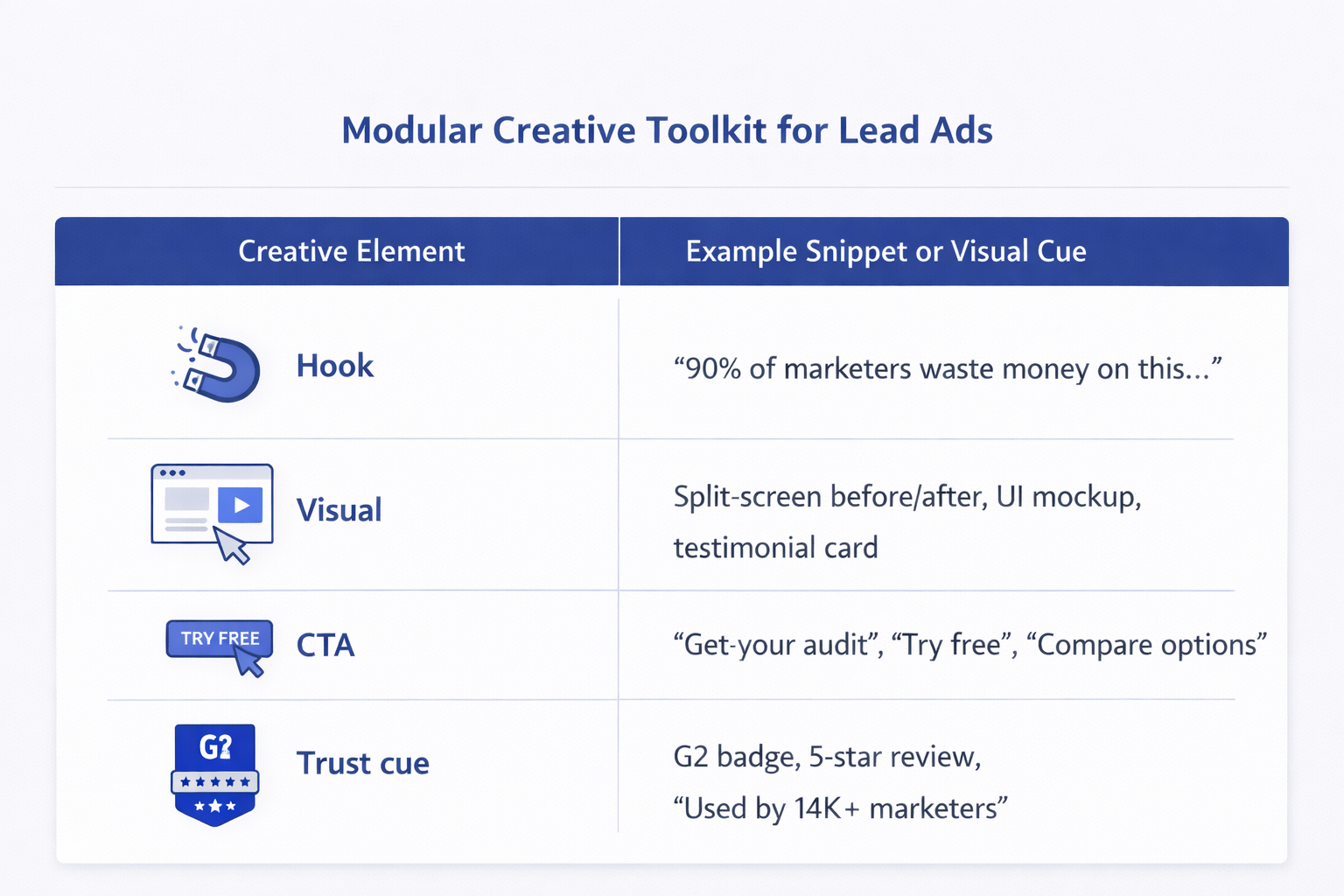
Here’s how to structure it:
-
Hooks — short lines that grab attention.
Example: “Still targeting cold leads the hard way?” -
Visuals — explainer graphics, product screenshots, or before-and-after examples.
Flat design keeps it quick and clean. -
Trust inserts — client logos, reviews, quotes, or social proof badges.
These build credibility instantly. -
Calls to action — try it free, compare now, get your plan, see pricing.
Rotate often and test post-click behavior.
Need a framework for what to test first? Start with Creative testing with limited budget: What’s worth prioritizing.
Watch your frequency per segment — not just overall
Many advertisers track frequency at the campaign level and call it a day. But a 7-frequency average hides a lot. Some segments may be at 2 — others at 12.
Track frequency by audience type
Break your audiences into smaller slices and monitor how often they see your ads.
For example:
-
Cold interest-based audiences — might tolerate higher frequency (5–8);
-
Warm website visitors — could burn out faster (3–5);
-
LeadEnforce audiences — based on followers of specific groups/accounts, may need tailored pacing.
When frequency climbs and performance drops, refresh creative or exclude fatigued segments for a cooldown.
Fix your post-lead process
One of the biggest problems with high-volume campaigns is what happens after the lead fills out a form.
Leads drop off. No-shows increase. Sales teams complain that “the leads are bad.” But often, it’s the handoff that’s broken.
Make your lead follow-up immediate and relevant
Ask yourself:
-
What happens within the first 30 minutes after someone submits a form?
-
Do they get an email, a calendar invite, a call — or nothing?
-
Does the follow-up message feel personal and reflect the original ad?
Tips:
-
If your ad offered a free audit — send a scheduling link right away, not a generic “Thanks.”
-
If someone downloaded a guide — follow up with a question or tip based on the content.
-
Use personalization — like their job title or pain point — when possible.
Fast, specific follow-up turns cold leads warm before they go cold again.
Use smarter sources for lookalikes
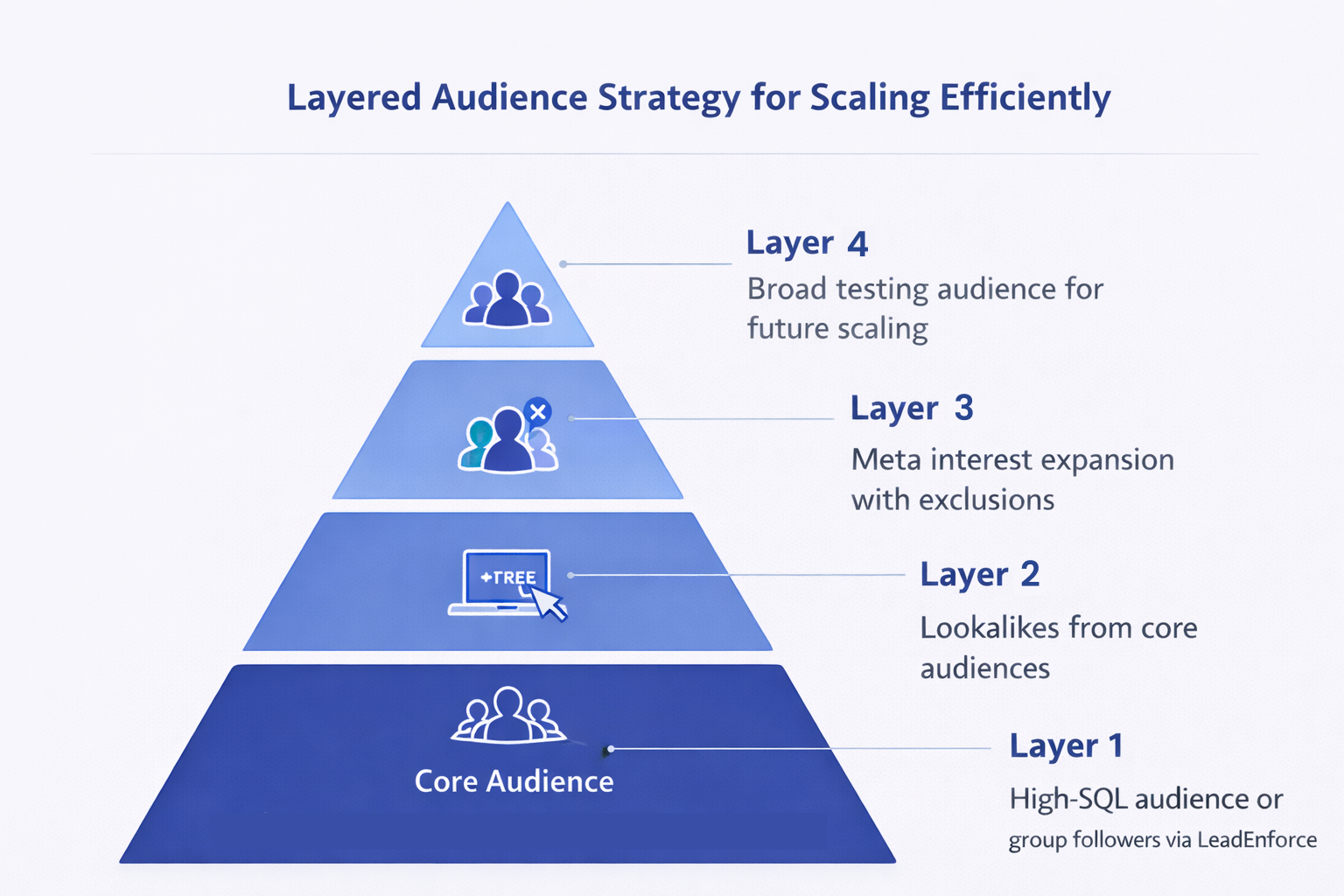
Lookalike audiences can scale your results — but only if the seed audience is clean and qualified. Too many advertisers use broad or low-intent lists.
Use high-intent signals for better modeling
Start with:
-
Leads who downloaded pricing or submitted a long-form request;
-
Leads who became sales-qualified or booked a demo;
-
Custom audiences from LeadEnforce — built from Instagram or Facebook group followers who reflect your best buyers.
For more on this, read Lookalike audiences: How to seed, train, and scale.
Go beyond Meta’s native targeting
Meta’s built-in interest targeting has limits. It can miss nuance — especially in niche or local markets.
Combine Meta with external audience sources
LeadEnforce lets you create more precise Custom Audiences based on:
-
Followers of niche Instagram accounts;
-
Members of relevant Facebook groups.
Use these to:
-
Target people directly (e.g., group members);
-
Build stronger lookalikes with better signal;
-
Combine signals for hyper-specific layered audiences.
You’re no longer stuck with generic interest targeting — or praying Meta’s algorithm understands your niche.
Final thoughts
Scaling lead generation isn’t about spending more. It’s about improving every layer of your campaign — audience, creative, targeting, follow-up, and post-click flow.
Start with high-intent entry points. Segment retargeting based on actual behavior. Rotate creatives fast. Track frequency by audience slice. And never let leads go cold after the form.
The best campaigns aren’t just big — they’re smart, efficient, and deeply aligned with how your best buyers behave.