Running Facebook or Instagram ads can drive strong traffic. But without filtering, you risk filling your pipeline with the wrong leads.
That’s where AI chatbots come in. They help you quickly identify high-intent prospects, while saving time for your team and improving campaign ROI. And when used correctly, they become one of the most effective tools for qualifying leads without adding friction.
What is lead pre-qualification, and why does it matter?
Pre-qualification is the process of asking a few targeted questions to find out whether a lead is a good fit. In digital campaigns, especially paid ones, this helps you spend more time on real buyers — and less on cold traffic.
For example, a well-qualified lead might meet one or more of these criteria:
-
Has budget: Over $1,000 monthly ad spend;
-
Has intent: Actively running or planning a campaign;
-
Has urgency: Needs a solution in the next 30 days;
-
Has authority: Can make or influence purchase decisions.
Filtering for these traits early lets you route strong leads to sales fast — and nurture weaker ones with content until they’re ready. If you're running high-volume traffic, consider pairing this strategy with AI-powered lead scoring tools to improve decision-making at scale.
Why AI chatbots work especially well for Meta ad campaigns
Chatbots are a natural fit for Instagram and Facebook ad flows. Meta's platforms are designed for mobile interaction, and users are comfortable engaging in Messenger or DMs.
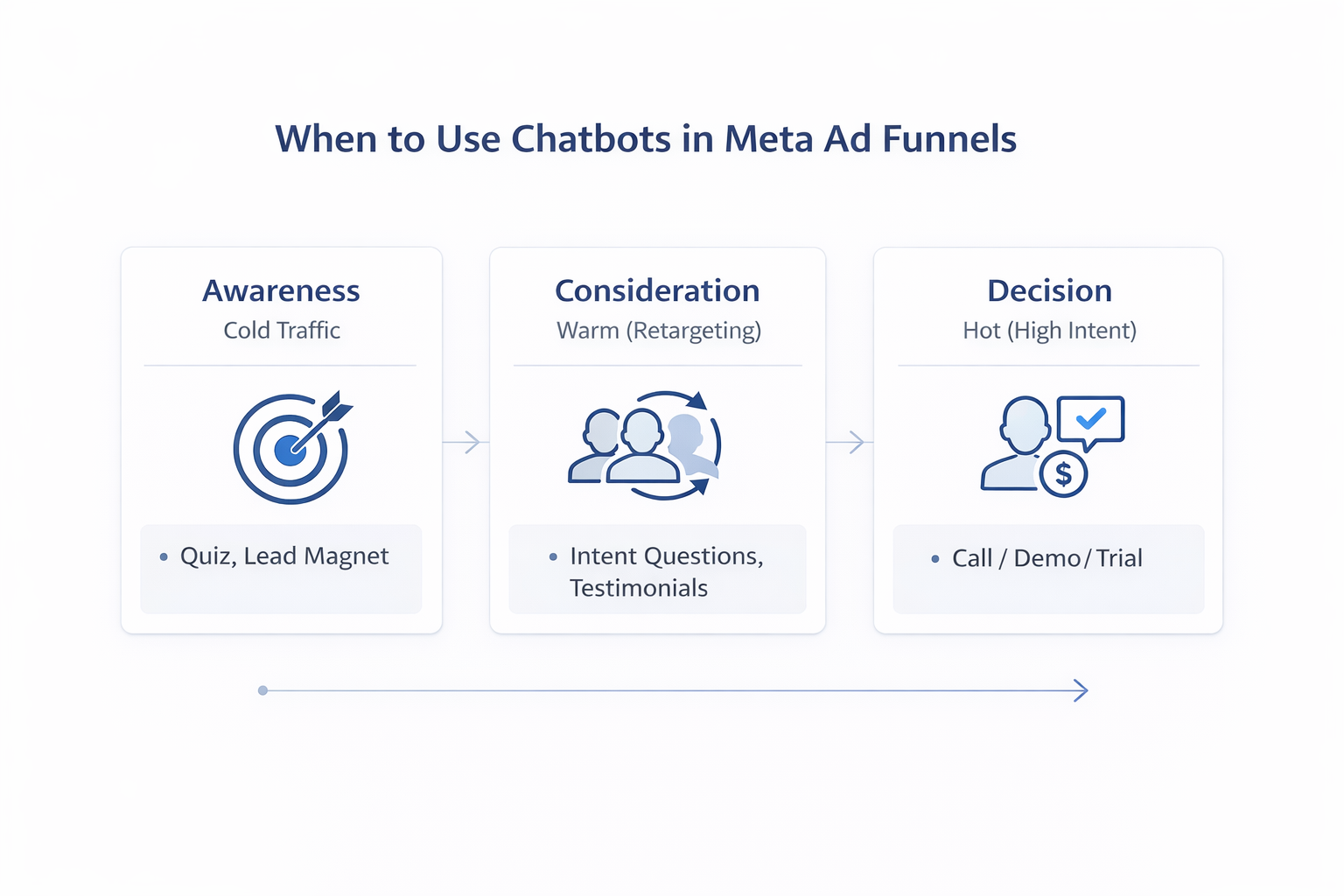
Here are the key benefits of using AI chatbots to qualify leads after an ad click:
-
Instant response: No wait times — the chatbot engages immediately;
-
Scale: Handles hundreds of conversations at once, with no human needed;
-
Better UX: No long forms — just tap, reply, and move forward;
-
Structured data: Collects consistent inputs for CRM and segmentation;
-
Multi-lane routing: Responds differently based on lead quality.
These benefits are especially useful when combined with other lead capture tools like Facebook Lead Ads or high-performing quiz funnels.
Smart placements for chatbot lead capture
AI chatbots can be used in multiple places across your funnel. The best placement depends on your ad type and lead generation goals.
Common high-performing placements include:
-
Messenger or Instagram DMs: Use click-to-chat ads to trigger chatbot flows instantly after a user taps “Send Message”;
-
Landing pages: Replace static forms with a chatbot widget to increase mobile conversion rates;
-
Instagram Stories or post comments: Trigger a chatbot when someone replies to a story or comments on a post — especially useful for giveaways, quizzes, and contests.
What to include in your chatbot flow
To qualify leads effectively, your chatbot must go beyond greetings and FAQs. It should lead users through a structured, helpful sequence.
Start with these essential components:
-
Clear introduction: Let users know what to expect and how long it will take;
-
Smart qualifying questions: Focus on fit, budget, urgency, and goals;
-
Quick replies and buttons: Guide answers to improve response quality and speed;
-
Routing logic: Determine next steps based on how the lead responds;
-
Call-to-action or handoff: Offer booking, download, or follow-up based on their answers.
These steps create a cleaner, frictionless journey — a big upgrade over static forms or email-only follow-ups. For additional ideas, explore LeadEnforce's insights on building a lead magnet funnel with Facebook Ads.
Sample chatbot flow for a Facebook ads agency
Let’s say you run an agency and offer free audits to attract leads. Your chatbot might guide users like this:
-
"Hey! Want your free ad audit? I’ll just need a few quick details."
-
“Are you running Facebook or Instagram ads right now?”
-
Yes;
-
No.
-
-
“What’s your typical monthly ad spend?”
-
Less than $500;
-
$500–$2,000;
-
Over $2,000.
-
-
“What’s your biggest challenge with ads?”
-
High cost per lead;
-
Poor conversions;
-
No time to manage campaigns.
-
-
Based on their answers, the chatbot gives a next step. For example:
-
If they spend over $2,000: "You're eligible for a full audit. Want to book a quick call?"
-
If they spend under $500: "Thanks! Here's a free guide to help lower costs. Want us to check in next month?"
-
This structure works particularly well when paired with Meta click-to-message ad formats.
Mistakes to avoid when using chatbots to qualify leads
A chatbot is only as good as its setup. Many advertisers make the mistake of using generic or incomplete flows that frustrate users and waste traffic.
Avoid these common missteps:
-
Too many questions: Long sequences lead to drop-offs. Aim for three to five steps;
-
No routing logic: Treating all leads the same cancels out the value of pre-qualifying;
-
Generic or robotic tone: Use real, helpful language. Match your tone to the ad promise;
-
Disconnected from CRM: Don’t let lead data sit in the chatbot. Sync answers to your sales or email system.
If you're dealing with high drop-off rates, revisit your ad promise and chatbot tone. More tips here: Why your Facebook lead generation campaign isn’t converting.
What to ask: smart qualifying questions that reveal intent
Don’t just ask for name, email, and phone. Use your chatbot to learn if someone is actually worth contacting now — or later.
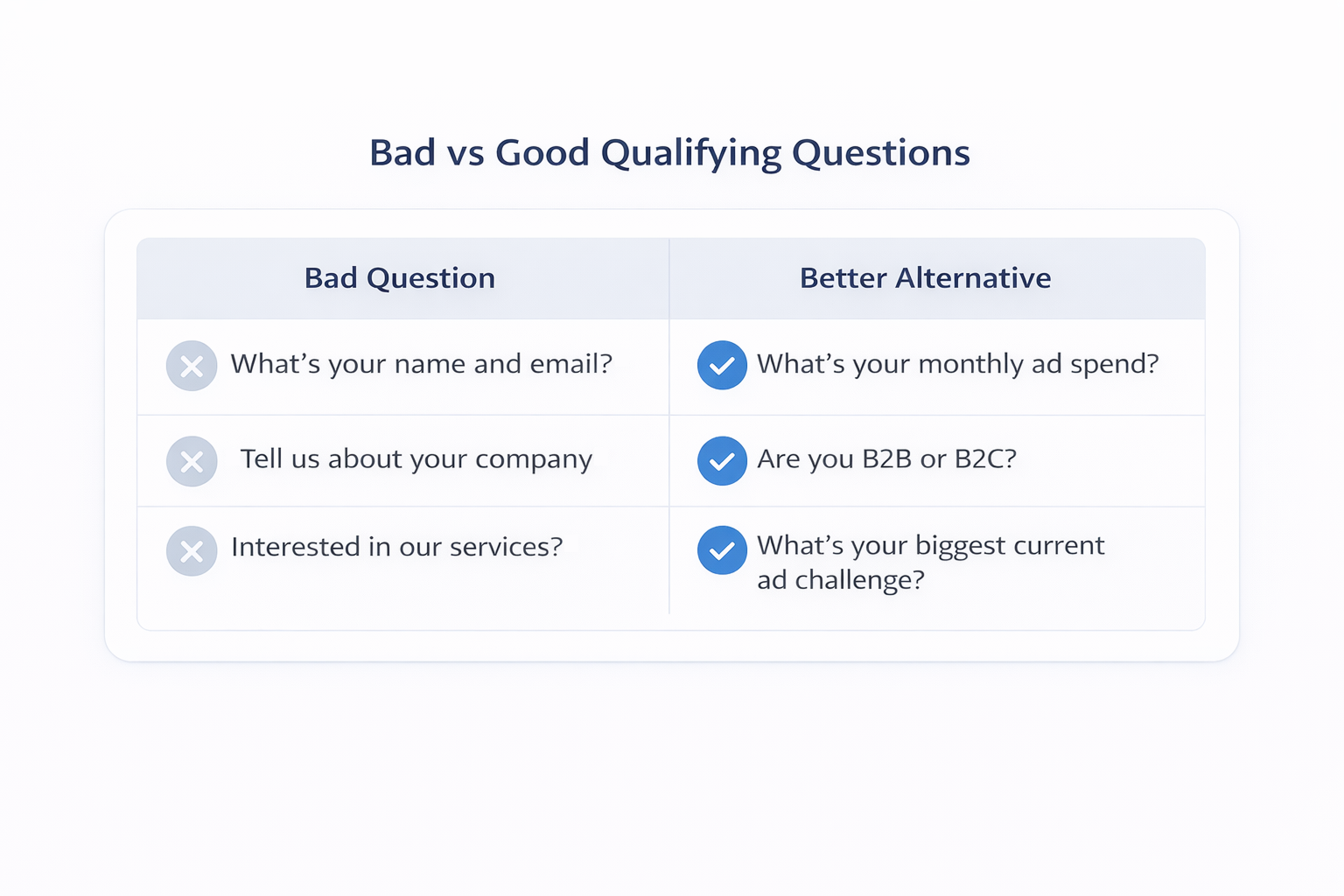
Here are useful qualifying questions you can adapt:
-
“What type of business do you run?”
Helps you segment B2B vs. B2C or industry type; -
“What’s your current monthly ad budget?”
Filters for ability to pay and helps match offers; -
“When are you looking to get started?”
Reveals urgency, which helps prioritize follow-up; -
“What’s your biggest challenge with ads?”
Uncovers the user’s pain points for sales conversations; -
“Have you worked with an agency or tool before?”
Provides insight into their experience level and expectations.
These kinds of questions align well with the principles outlined in this article on reducing CPL while improving quality.
Tools that make chatbot pre-qualification easier
You don’t need to build your chatbot from scratch. Plenty of tools integrate directly with Facebook and Instagram ads.
Here are reliable options to consider:
-
Manychat: Ideal for Messenger and Instagram DMs. Supports automated replies to comments and story mentions;
-
Chatfuel: Known for easy rule-based flows and quick button setups;
-
MobileMonkey: Offers strong CRM integration, live chat handoff, and OmniChat functionality.
All of these tools allow you to:
-
Build flows visually;
-
Set triggers based on Meta ad campaigns;
-
Route leads based on their responses;
-
Sync answers into your CRM or email platform.
For additional recommendations, check out AI tools marketers are using to improve lead generation.
Tactics to improve chatbot performance over time
Once your chatbot is live, don’t forget to optimize it based on results. Even small changes can improve lead quality and reduce drop-offs.
Here are helpful ideas to test and refine:
-
A/B test your first question: The opening line impacts how many users finish the flow;
-
Personalize the script by ad campaign: Use UTM data to tailor your chatbot copy for different audiences;
-
Use lead magnets strategically: Offer different resources based on the user’s answers (e.g., checklist, demo, case study);
-
Retarget based on engagement level: Add users who drop off mid-chat to a Meta retargeting audience with a reminder CTA;
-
Send re-engagement messages: If users don’t complete the flow, follow up in 15–30 minutes with a helpful nudge.
To take it further, consider pairing chat engagement with behavioral retargeting flows that reinforce your message.
Conclusion
Using AI chatbots to pre-qualify leads from Facebook and Instagram ads helps you reduce manual filtering, improve conversion rates, and get better ROI from your paid traffic.
Instead of pushing everyone to a static form, give users a guided experience that filters them based on what matters — budget, intent, urgency, and fit.
A good chatbot doesn’t just ask questions. It creates a smooth bridge between ad click and conversion.
If you're already running Meta ads, consider optimizing what happens after the click. Your best leads are already coming in — it’s time to catch them before they bounce.