For years, marketers have debated whether brand or performance deserves more budget, more attention, and more credit for growth. But real-world results consistently show that neither discipline can drive sustainable success alone. The strongest-performing companies use a strategic mix: brand to build future demand, performance to convert existing demand.
Below is a practical framework on how to approach this balance, supported by data and actionable recommendations.
Why the Debate Exists
Brand campaigns build familiarity, trust, and preference — but often take months to show measurable returns. Performance campaigns drive clicks, leads, and sales — but can become expensive and plateau without a strong brand behind them.
A balanced strategy resolves this tension: brand builds the pipeline, performance activates it.
The Cost of Ignoring Brand
Brand building directly influences conversion rates, return on ad spend, and pricing power.
A study of multi-channel advertisers shows that companies with high brand awareness enjoy up to 3x higher conversion rates compared to those with low recognition. This means performance channels become cheaper and more effective over time.
Another well-known benchmark suggests that 60% of marketing-driven sales come from long-term brand effects, while 40% stem from short-term activation.
Why Performance Alone Plateaus
Even well-optimized campaigns hit diminishing returns. As frequency rises and audiences saturate, CPAs increase.
Data from multiple industries shows:
-
Customer acquisition costs have risen 60% in the past five years.
-
Paid channels without strong brand support experience conversion drop-offs of up to 45% after initial peak performance.
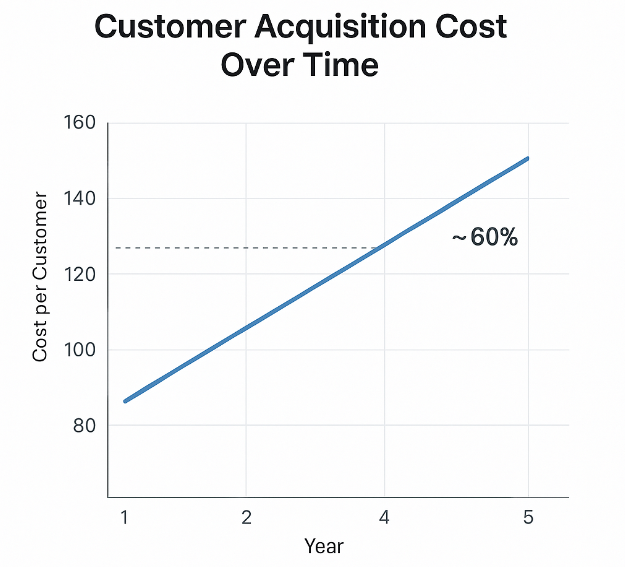
Customer acquisition costs have increased ~60% over five years across industries
Performance without brand becomes a treadmill — you must keep spending more to produce the same results.
The Ideal Budget Split
While every industry is different, several meta-analyses point toward a 60/40 split in favor of brand building for long-term growth.
However, for emerging companies or those in highly competitive niches, a 50/50 balance often delivers a healthier combination of sustainable demand and measurable short-term wins.
How to Build Brand Without Slowing Down Revenue
Brand marketing does not have to be vague or unmeasurable. Today, brands build fast with:
-
Consistent storytelling across channels
-
High-quality creative that’s visually distinct
-
Frequent top-of-funnel presence
-
Content that builds trust, such as testimonials and case studies
Brand metrics to track include search volume, direct traffic, repeat visits, and engagement with non-conversion content.
How to Strengthen Performance Without Overspending
Performance campaigns work best when supported by:
-
Clean audience segmentation
-
Creative testing
-
Compelling offers
-
Fast landing pages
-
Clear attribution
Strong brand awareness can reduce CPCs and CPAs by double-digit percentages while improving ROAS across channels.
Brand Strength Multiplies Performance Results
When brand and performance work together, both benefit:
-
Higher trust boosts conversion rates
-
Higher recognition lowers acquisition costs
-
Greater loyalty reduces churn
-
Consistent messaging improves the whole funnel’s efficiency
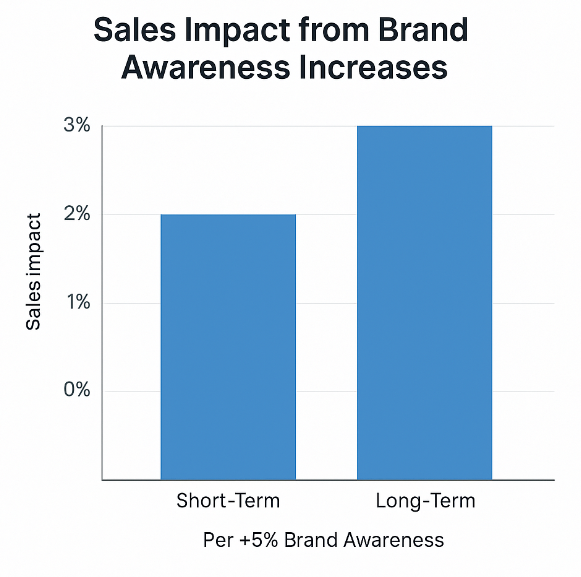
Each 1% increase in brand awareness lifts short-term sales by ~0.4% and long-term sales by ~0.6%
The final result: companies grow faster and spend less to do it.