Scaling spend without confirming lead quality often results in higher acquisition costs, wasted budgets, and overestimated revenue forecasts. Studies show that up to 61 percent of marketers struggle with generating high-quality leads, and companies that consistently audit their lead pipelines report up to 34 percent higher conversion rates from lead to customer.
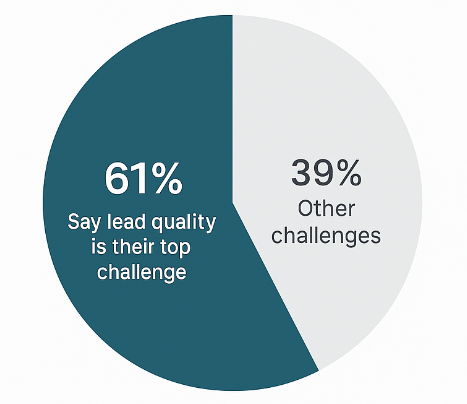
6 out of 10 marketers say generating quality leads — not just lead volume — is their biggest challenge
Before increasing investment, organizations should conduct a thorough analysis of lead behavior, data reliability, and funnel efficiency.
1. Validate Data Accuracy and Completeness
Successful scaling depends on clean, structured data. Inaccurate or incomplete information forces sales teams to spend unnecessary time verifying records and increases the likelihood of disqualified prospects.
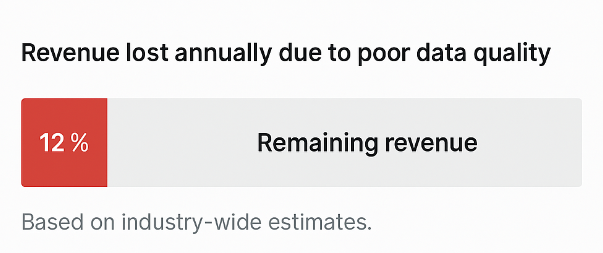
Poor data quality can silently erode up to 12% of annual revenue — a hidden drain on budgets
Key checks include:
-
Contact information validity
-
Deduplication rates
-
Field completeness for segmentation
-
Correct attribution to campaigns or channels
Reports show that poor data hygiene can cost organizations up to 12 percent of their total revenue each year, making this step essential before any budget expansion.
2. Measure Lead Engagement Quality
Beyond the quantity of leads, engagement indicators reveal true buying intent. Analyze:
-
Email open and response rates
-
Ad interactions over time
-
Landing page dwell time
-
Frequency of return visits
High-intent leads typically show at least 2.5 times more engagement actions compared to low-intent leads. If engagement is low, scaling spend may amplify inefficiencies instead of outcomes.
3. Evaluate Lead-to-Opportunity Conversion Rates
A reliable baseline conversion rate is critical before increasing ad spend. If the current rates are unstable or trending downward, additional investment will not compensate for funnel issues.
Benchmarks suggest that strong lead management processes can improve lead-to-opportunity conversions by 20 percent or more. Assess whether your funnel performance aligns with these standards.
4. Review Sales Feedback Loops
Sales insights are vital for validating the true quality of leads. Analyze feedback patterns such as:
-
Lead readiness for conversation
-
Accuracy of lead scoring
-
Objections and recurring qualification problems
Organizations with tight marketing-to-sales alignment experience up to 36 percent higher customer retention and 38 percent higher win rates.
5. Confirm Scalable Target Audience Segments
Before increasing spend, ensure your targeting criteria can scale without sacrificing quality. Verify:
-
Audience size growth potential
-
Overlap between segments
-
Performance across lookalike or interest-based expansions
Scaling works best when high-performing segments can be expanded with minimal degradation in engagement or conversion metrics.
6. Conduct a Controlled Budget Test
Rather than scaling all at once, implement small, incremental tests. Monitor:
-
Cost per lead trends
-
Engagement consistency
-
Early conversion signals
Data indicates that incremental scaling can reduce cost volatility by up to 27 percent during budget expansion periods.
Recommendations for Further Reading
Explore more insights in these related articles:
-
Audience Targeting Strategies to Increase Campaign Efficiency (available on LeadEnforce.com)
-
How to Build Custom Audiences for Better Advertising Results (available on LeadEnforce.com)
-
Improving Ad Performance with Data-Driven Segmentation (available on LeadEnforce.com)
Conclusion
Before scaling advertising budgets, teams should rigorously validate data accuracy, engagement quality, conversion performance, and audience scalability. These checks ensure resources are allocated efficiently and maximize the return on every dollar invested.