Managing paid social campaigns without a system in place leads to scattered efforts and inconsistent results. As ad platforms evolve, it’s no longer enough to rely on one-off launches or occasional creative refreshes.
What you need is a repeatable operating rhythm. One that keeps your campaigns healthy, testing active, and budget aligned with performance. This article breaks down how to build a lean, scalable routine for Facebook and Instagram ads, whether you’re running $1K or $100K per month.
A scalable routine also makes it easier to diagnose issues early. When performance drops, you can tell whether the problem is structure, creative, or execution — instead of guessing. This ties closely to how your campaigns are structured, as shown in How to Structure Facebook Campaigns for Rapid Testing and Iteration.
Why Routines Outperform Campaign Sprints
Most advertisers focus on launch moments. They spend days preparing a new campaign, go live, and then wait. That works for one-time promotions, but not for growth.
| Aspect | Campaign Sprints | Routine-Based Campaigns |
|---|---|---|
| Timing | Irregular launches, reactive changes | Weekly schedule with clear checkpoints |
| Creative Testing | Done in bursts, often skipped | Baked into weekly process |
| Optimization | Based on gut or delayed results | Based on weekly reviews and logs |
| Scaling | Sudden budget jumps, risky | Gradual and planned, with backups ready |
| Team Workload | Chaotic, high-stress | Predictable, focused |
| Result Patterns | Spiky, unpredictable | Smoother, compounding gains |
A routine, by contrast, offers:
-
Predictable learning cycles. You know when new creatives are tested and when performance is reviewed.
-
Faster problem solving. You’re never stuck wondering what went wrong — you have a system for diagnosis.
-
Less burnout. You avoid scrambling to fix performance under pressure because testing is ongoing.
The goal is to create structure without adding complexity. Let’s break it down step by step.
Step 1: Build a Weekly Operating Rhythm
Your weekly workflow should include just enough structure to keep you consistent, without becoming rigid. Avoid overcomplicating things with daily reporting or large testing batches. Instead, focus on light but reliable checkpoints.
A simple weekly flow might look like this:
- Monday:
Review performance for all active campaigns. Flag anything underperforming for at least 3 days. Mark creatives to pause or rotate. - Tuesday:
Launch new creative tests or audience variations. Limit to one variable per test so results are easy to interpret. - Thursday:
Shift budgets toward top-performing ad sets or creatives. Reduce spend on anything lagging behind target KPIs. - Friday:
Document what you learned. Draft new creative ideas or angles to test next week.
This rhythm works best when campaign structure supports clean data. If ad sets overlap or objectives are mixed, even a solid routine breaks down. That’s why scalable accounts follow clear structural rules, like those in The Ideal Campaign Structure for Scaling Facebook Ads Safely.
Step 2: Create a Lightweight Creative Pipeline
Many advertisers slow down not because of budget — but because they run out of things to test. Creative fatigue hits fast, especially on Instagram and Facebook, where frequency builds quickly.
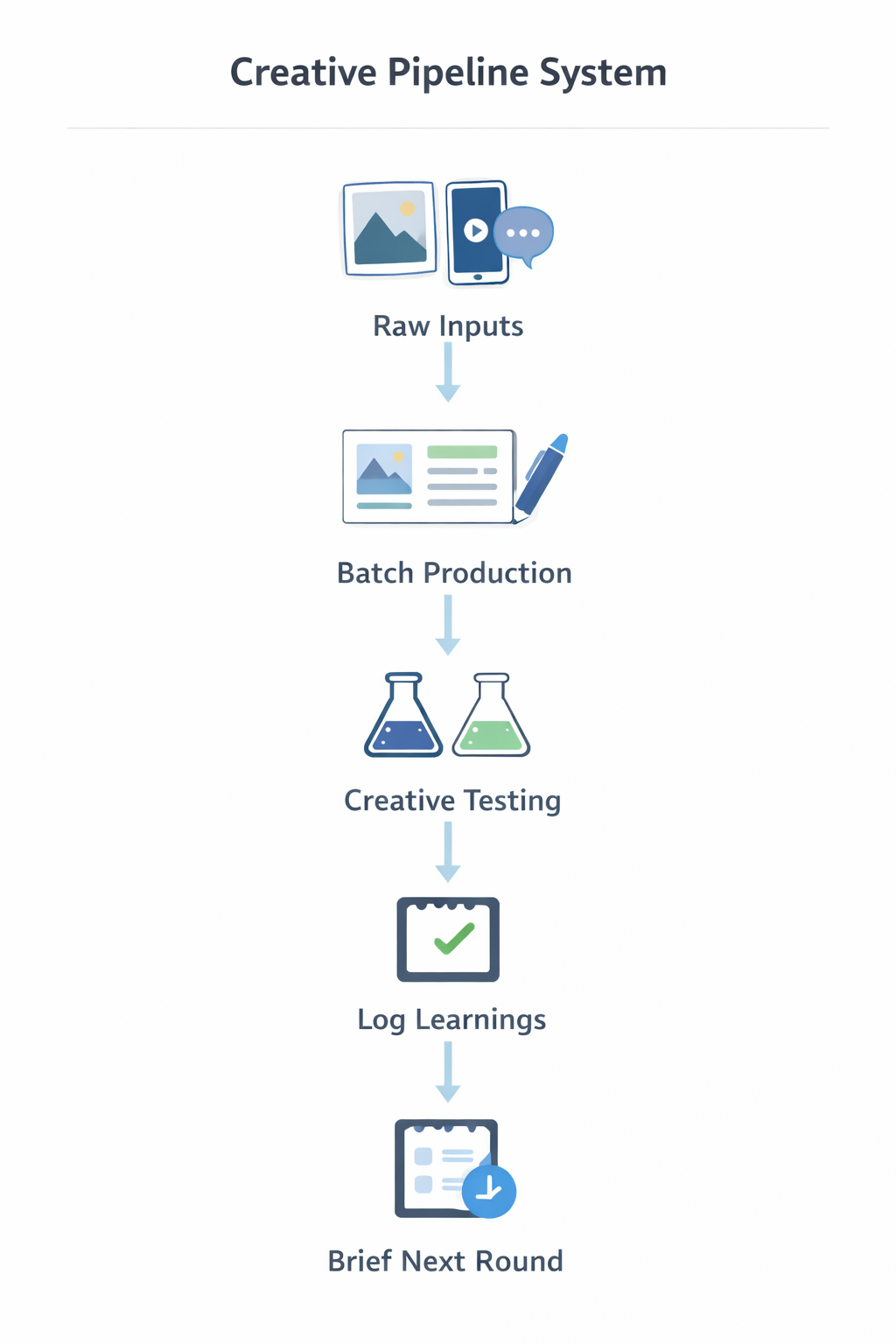
You don’t need a large team to stay ahead. What you need is a system.
Here’s how to keep your pipeline moving:
-
Collect raw materials regularly. These can include product images, customer reviews, support screenshots, founder quotes, and behind-the-scenes videos.
-
Batch creation. Once per week, turn those raw materials into 3 to 5 ad-ready creatives. Use templates to speed things up.
-
Track fatigue cycles. Log when each creative was launched and when performance drops. This helps you anticipate when to refresh.
Consistent creative testing is what keeps this pipeline alive. Without a clear testing approach, advertisers often rotate assets blindly. A structured method like the one in Secrets Behind High-Performing Creative Testing Campaigns turns creative production into a repeatable process.
Even a few new ads per week can keep your campaigns fresh if you're rotating consistently and targeting different stages of the funnel.
Step 3: Keep Campaign Structure Clean and Scalable
When scaling campaigns, structure matters more than most advertisers think. A cluttered account leads to overlapping audiences, mixed signals, and wasted budget.
Here’s a practical setup for most growth-stage accounts:
-
1 to 2 campaigns per goal (e.g., prospecting, retargeting).
-
Each campaign using CBO (Campaign Budget Optimization), with 2 to 3 ad sets — each targeting a distinct audience type, such as lookalikes, interests, or broad.
-
3 to 5 ads per ad set, rotated weekly or bi-weekly to avoid fatigue.
-
Clear naming conventions — for example, “Top_3%_Video_Test_01_15” or “Retarget_ViewContent_Static_UGC_01_15”.
Avoid splitting tests across too many campaigns. Instead, consolidate volume so you can reach statistically valid conclusions faster. This also reduces learning resets and helps campaigns exit the learning phase more reliably.
Step 4: Use a Consistent Feedback Loop
Scaling doesn’t happen through big wins. It comes from identifying patterns and improving small elements week by week.
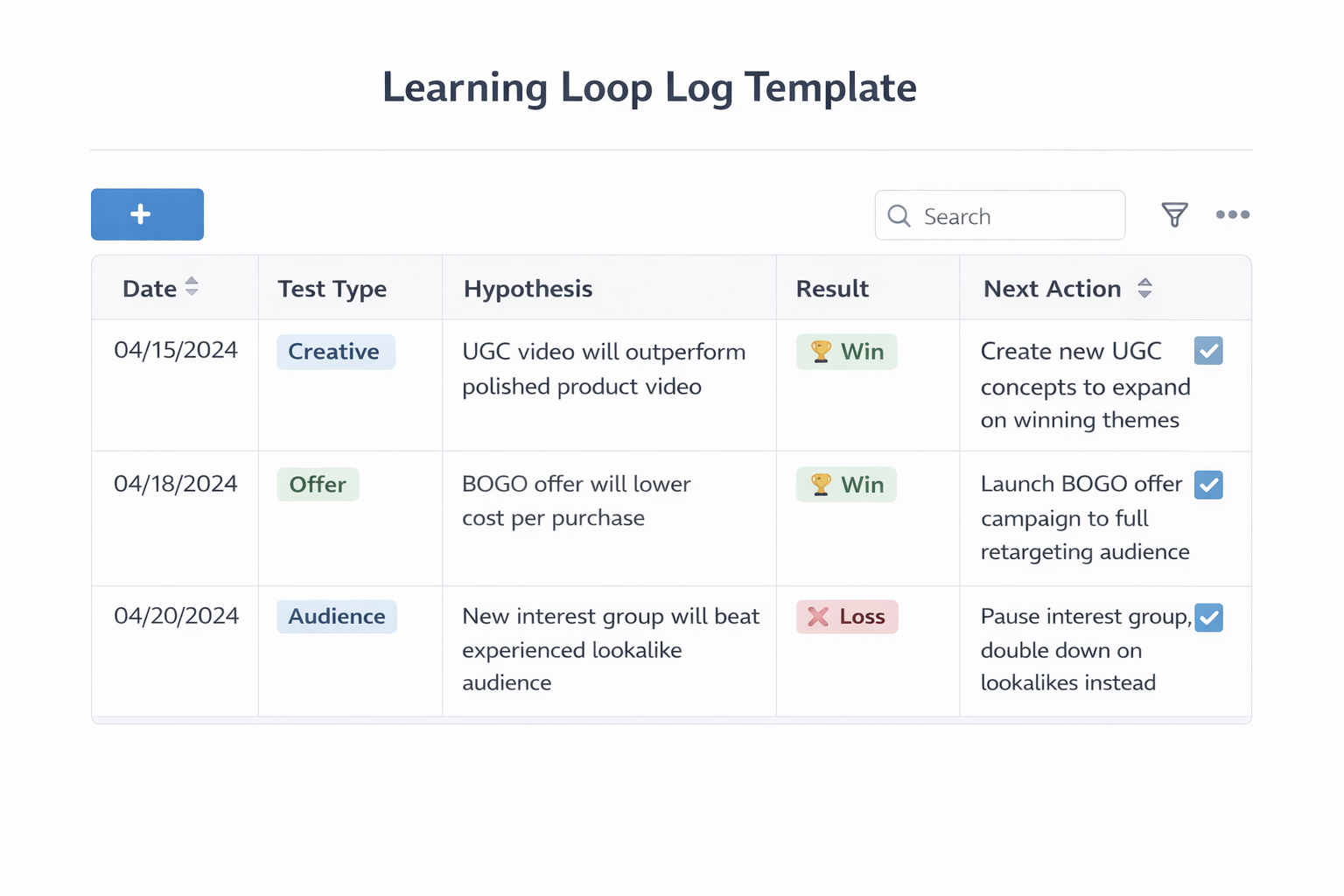
Set up a process for reviewing what’s working and why:
-
Track results in a shared dashboard every week. Focus on metrics like CTR, CPC, ROAS, and CPA. Don’t just rely on platform-reported ROAS — look at actual downstream metrics from your CRM or analytics tools.
-
Note creative patterns. Is short-form UGC outperforming polished video? Are testimonials beating offer-focused ads?
-
Flag underperformance fast. If a new creative drops below baseline metrics within 3 days and 500 impressions, pause and move on.
Looking beyond surface-level metrics is key here. CTR and CPC alone rarely explain performance. A deeper analysis method, like the one in How to Analyze Facebook Ad Performance Beyond CTR and CPC, helps connect ad data to real business outcomes.
Over time, this feedback loop compounds learning and reduces wasted spend.
Step 5: Prepare for Scaling Before Performance Spikes
Many advertisers scale reactively. A campaign starts performing, they increase budget suddenly, and results crash.
Instead, plan your scaling path ahead of time.
Use these guidelines:
-
Increase budgets gradually. If performance is solid, raise budgets by no more than 20–30% every 2 to 3 days.
-
Duplicate before you scale aggressively. Rather than increasing a single campaign from $100 to $1,000 per day, duplicate it and test scale separately.
-
Have backup creatives ready. Plan for fatigue. If an ad is working, have 1 or 2 variants ready in advance so you can rotate in fresh versions before performance drops.
Scaling should feel like part of your routine, not a separate event. This mindset aligns with long-term strategies like those in The Science of Scaling Facebook Ads Without Killing Performance.
Closing Thoughts
Facebook and Instagram ads reward consistency. While trends and formats shift quickly, the fundamentals of paid social success haven’t changed.
The best advertisers don’t win by being reactive. They build systems that allow them to test faster, scale smarter, and learn with every dollar spent.
Start by setting a weekly rhythm. Document what works. Keep your pipeline active. And treat your paid social campaigns like a process — not a project.