Most marketers still build audiences the old way: age ranges, job titles, location filters.
But let’s be honest — those filters don’t tell you much about why someone buys.
Just because someone is a 32-year-old marketing manager in New York doesn’t mean they need your product. What does matter? Whether they’re dealing with a problem your offer solves.
Demographics are easy — but lazy
It’s tempting to pick the usual checkboxes. Facebook makes it easy. But if your targeting relies only on surface-level traits, you’ll end up paying for reach, not relevance.
Here’s the truth: demographics describe people. Problems connect them.
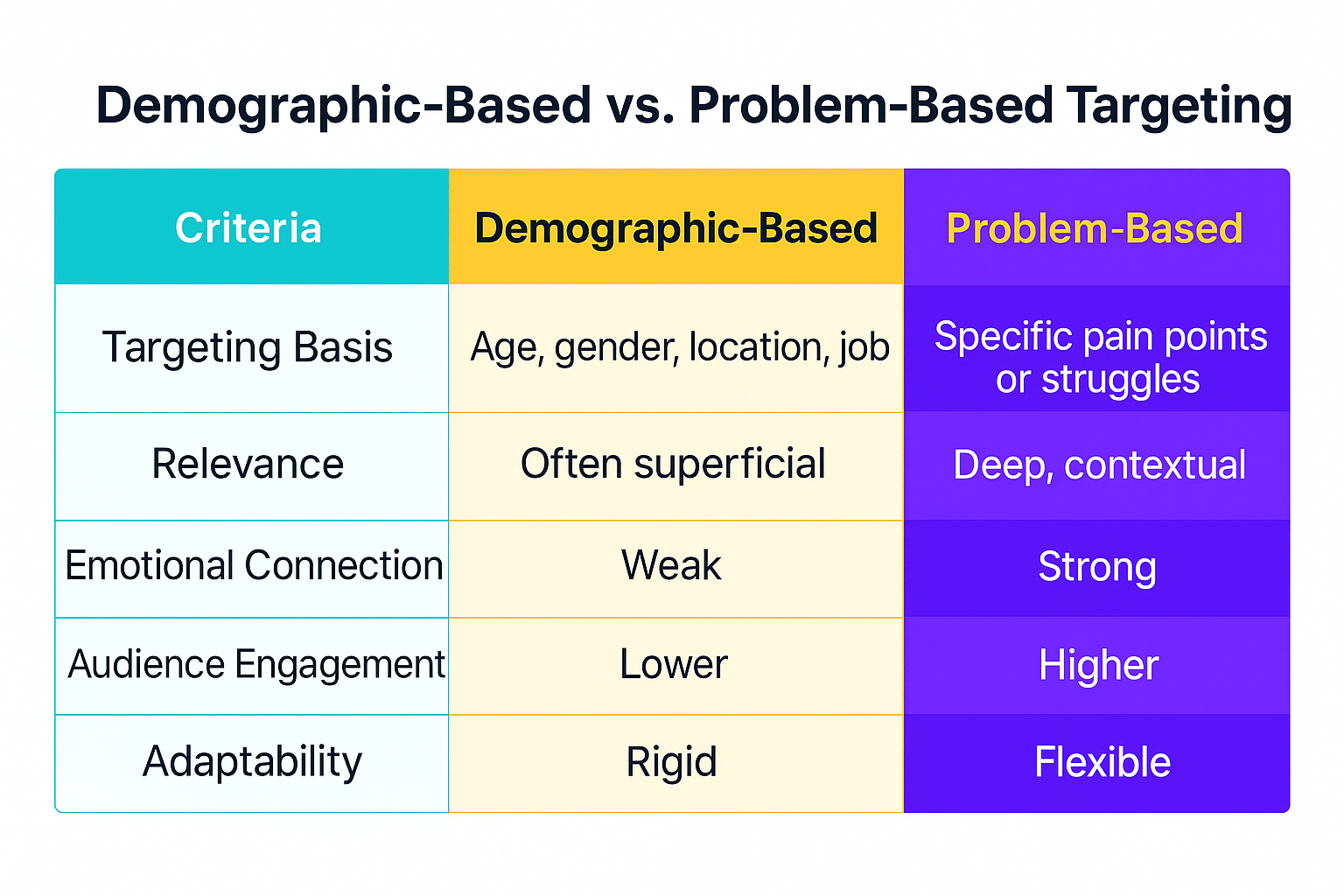
Instead of asking, “Who is this person?” ask, “What are they struggling with right now?”
Because buying decisions are driven by urgency and emotion — not age, income, or job title.
If this resonates, you’ll find this step-by-step guide to defining a target audience useful as you shift from assumptions to actual needs.
What does “problem-based audience” mean?
Think of it like this: you're not looking for a group of 25–45-year-old women. You're looking for people frustrated by a specific issue — like spending hours on admin work, struggling to grow their client base, or failing to get traction on social media.
So you shift your targeting logic. Instead of asking, “What does my ideal customer look like?” you ask, “What are they actively trying to fix, avoid, or improve?”
You start mapping audiences to emotional pain points or operational challenges — not just roles or resumes.
Examples: how shared problems reveal better audiences
Let’s say you sell a tool that automates client reporting for small agencies. The old demographic approach might target:
-
Digital marketers,
-
Aged 25–40,
-
Located in urban areas,
-
Interested in “Marketing.”
But that’s far too broad. Instead, build your audience around this shared problem: “Reporting takes too long and hurts profitability.”
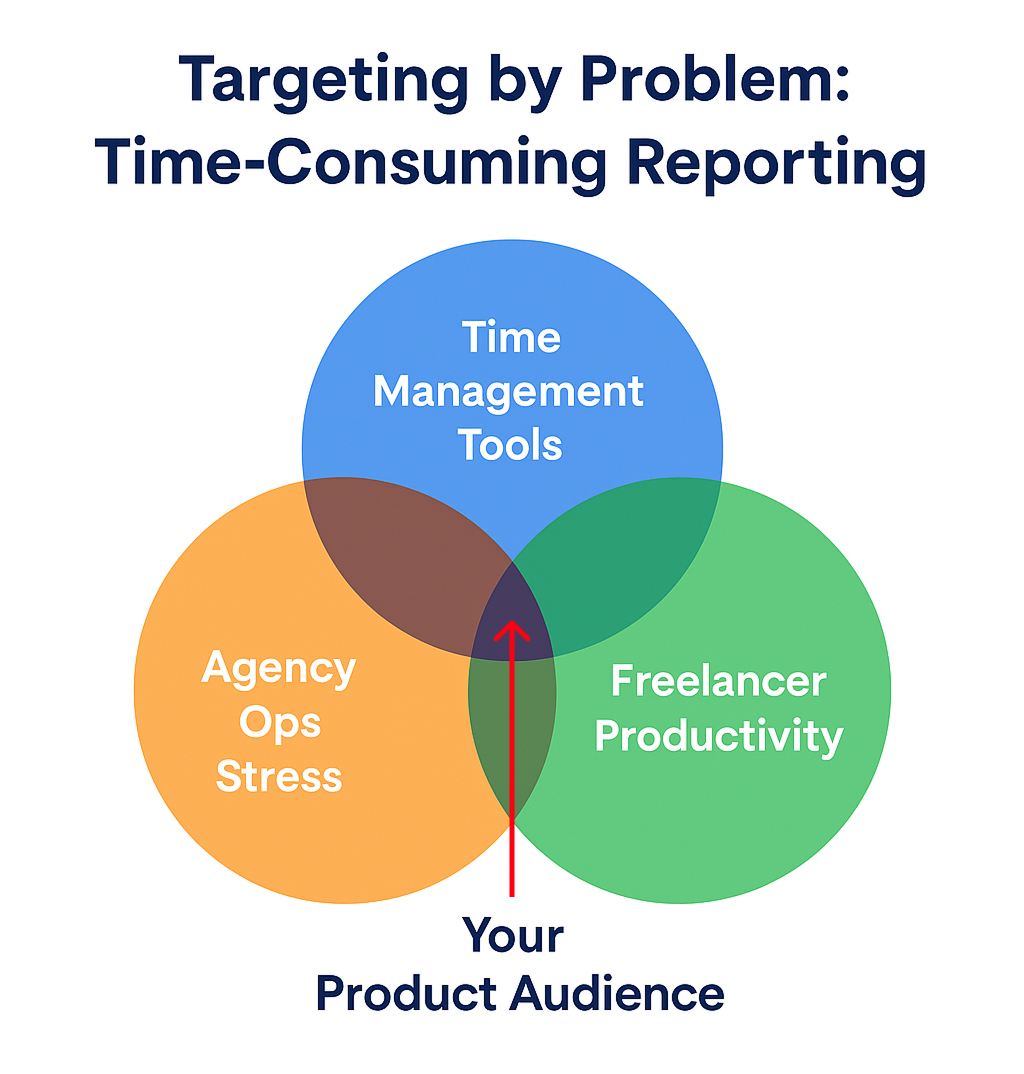
Now you're targeting people who:
-
Follow Facebook groups about agency growth and operations,
-
Like pages related to project management stress,
-
Engage with content about “scaling without burnout,”
-
Read posts about billable versus non-billable hours.
This method is especially helpful when you're troubleshooting why your Facebook ad set might get zero reach — usually a sign your audience definition is off.
How to actually build problem-based audiences
Here’s a simple framework for turning pain points into targeting logic:
1. Identify 3 to 5 core problems your product solves.
Be brutally specific. “Time management” is vague. “Spending 3 hours formatting a report” is clear.
2. List the behaviors, tools, communities, or influencers tied to those problems.
Ask yourself: What would someone search, follow, or engage with if they were dealing with this issue?
3. Use Facebook’s detailed targeting — or LeadEnforce — to match those behaviors.
LeadEnforce helps you go beyond interest-based suggestions. It lets you target people based on the Facebook groups and Instagram pages they actually follow.
4. Write ads that speak directly to the problem.
Be clear, not clever. Make the pain real — and show how you solve it.
Need help reaching hyper-specific audiences? You might want to explore how to layer Facebook targeting for better segmentation.
Why this approach works (and keeps working)
Targeting based on problems creates natural alignment between your message and your audience’s mindset. You're not forcing relevance — you're showing up at the right moment with the right message.
This type of audience also holds up over time. Unlike job titles or interests that change, problems tend to stick around until they’re solved.
And because relevance drives engagement, Facebook rewards these campaigns with lower CPMs and better ad placement.
Start small, then scale what resonates
You don’t need a massive campaign to test this approach. Start with one shared problem. Build one audience around it. Launch a simple, direct message. Measure what happens.
Often, your best-performing audience isn’t who you thought it was — but who your product quietly serves best.