Many advertisers build lookalike audiences from all past buyers and expect stable results. At small budgets, that approach may work. As spend grows, performance often weakens because the source audience does not reflect true long-term value.
If you want Meta to find better customers, you need to define what “better” means in your data. High-LTV customers give the algorithm a clear signal because they represent repeat revenue, stronger intent, and lower churn.
If you need a refresher on the fundamentals, review What Is Lookalike Targeting and How It Boosts ROI.
Why High-LTV Customers Make Better Seeds
Meta builds lookalikes by analyzing patterns inside your source audience. It studies behavior, purchases, engagement, and consistency, then searches for users who resemble those patterns.
High-LTV customers usually share clear characteristics:
-
They generate higher total revenue over time, not just a single large purchase.
-
They complete multiple purchases within a defined period.
-
They buy without relying only on heavy discounts.
-
They rarely request refunds or chargebacks.
-
They interact with your brand before purchasing, such as visiting product pages or engaging with ads.
Higher total revenue signals long-term alignment with your offer. Multiple purchases confirm satisfaction and repeat intent. Lower refund rates suggest stable customer relationships.
When these traits define your seed audience, Meta searches for similar users who are more likely to become profitable customers rather than one-time buyers.
For a deeper explanation of why audience quality drives results, see Why Audience Quality Matters More Than Size for Facebook Ads.
Why “All Buyers” Often Leads to Average Results
Using all buyers may increase audience size, but it also blends very different customer profiles into one group.
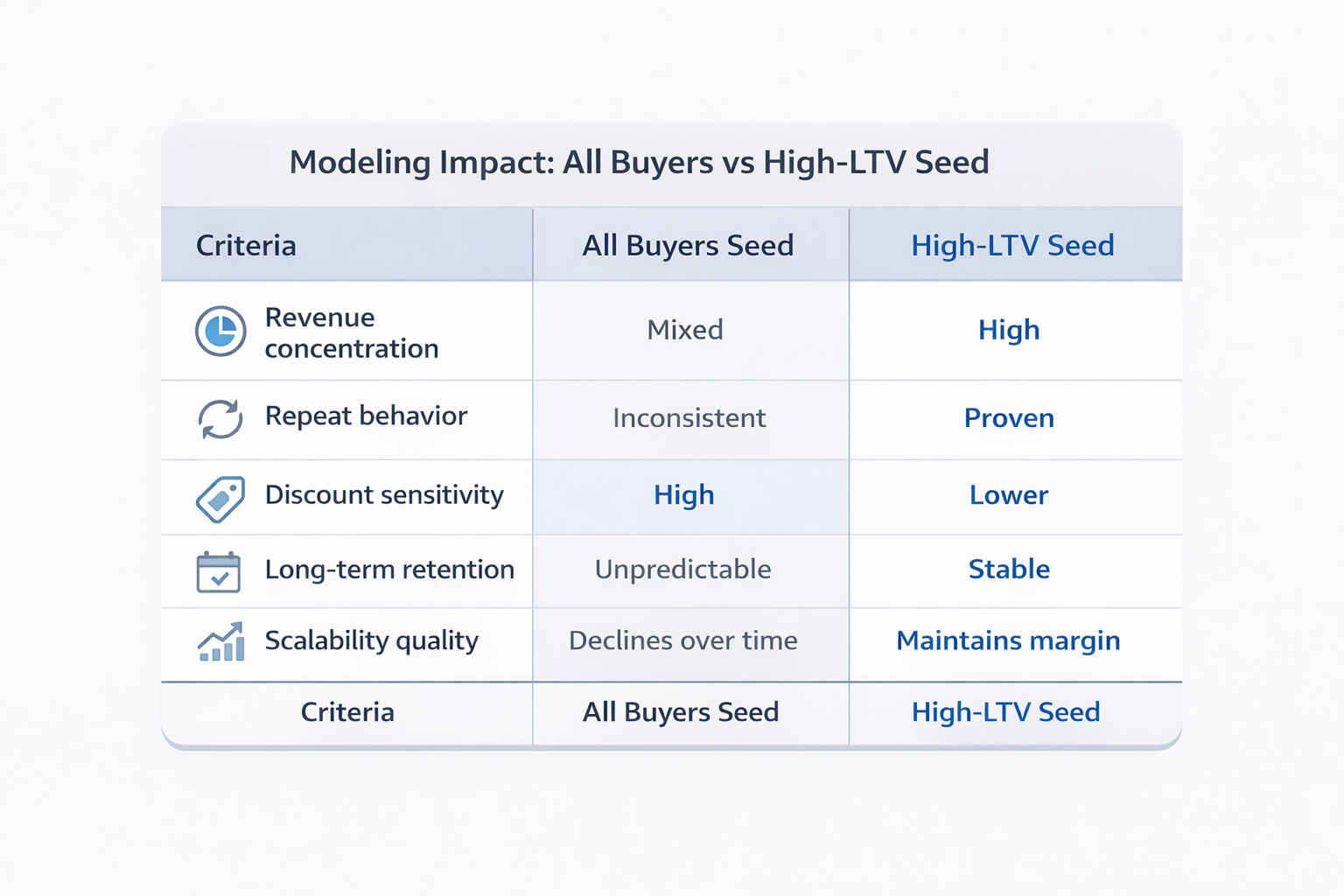
Inside that list, you may have:
-
One-time promotional buyers.
-
High-margin repeat customers.
-
Seasonal shoppers.
-
Buyers who later requested refunds.
-
Customers with unusually long gaps between purchases.
When these profiles are combined, the algorithm models the average customer instead of your most valuable segment. As budgets increase, acquisition often shifts toward lower-value users because they are easier to replicate at scale.
The symptoms usually appear as:
-
Stable cost per purchase but declining average order value.
-
Lower repeat purchase rates.
-
Greater sensitivity to discounts.
-
Reduced long-term profitability.
If your lookalikes underperform, review common pitfalls in Top Mistakes Facebook Advertisers Make With Lookalike Audiences.
How to Define High-LTV in a Clear and Practical Way
Lifetime value must be defined using objective rules. Guesswork leads to unstable modeling.
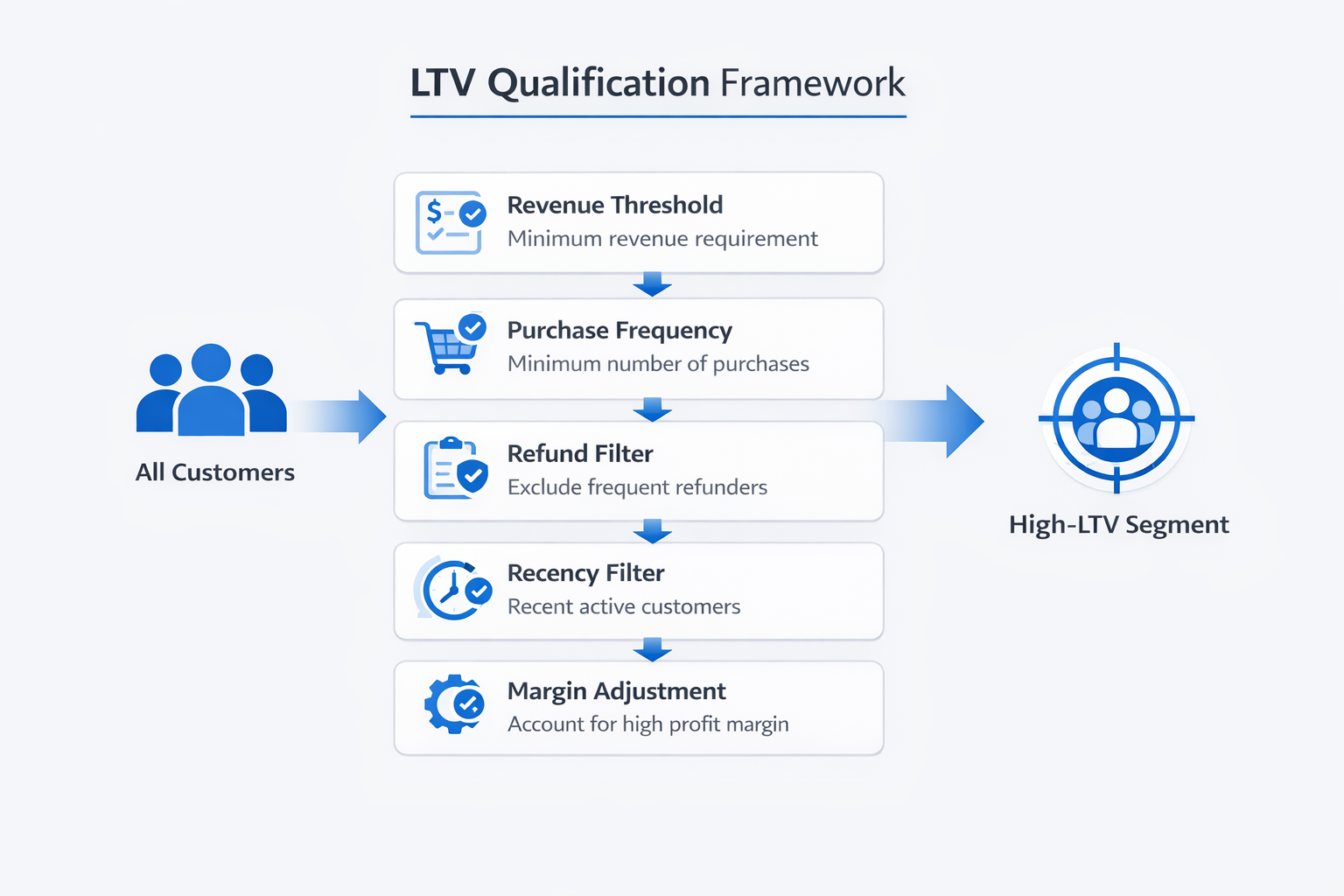
You can define high-LTV customers using filters such as:
-
Top 25 percent of customers by total lifetime revenue.
-
Minimum of two completed purchases.
-
No refunds within the first 30 days.
-
Activity within the last six to twelve months.
-
Optional margin adjustments if product profitability varies.
Using percentiles instead of fixed numbers adapts the definition to your pricing structure. A purchase minimum ensures that one large order does not distort the segment.
Excluding early refunds removes unstable profiles. Recency filters keep the audience aligned with your current offer and pricing.
For more on using LTV in targeting decisions, see Leveraging Customer Lifetime Value (LTV) for Facebook Ads Targeting.
How to Use Value-Based Lookalikes
When you upload revenue values with your customer list, Meta can give more weight to higher-spending customers. This allows the algorithm to prioritize patterns linked to stronger revenue contribution.
Value-based lookalikes work best when:
-
Order values vary significantly across customers.
-
You sell subscriptions with different pricing tiers.
-
A small percentage of customers generates most of your revenue.
-
Upsells and cross-sells drive profitability.
Before uploading your file, make sure:
-
Revenue values use consistent formatting and currency.
-
Duplicate emails or phone numbers are removed.
-
Refund amounts are excluded if you calculate net revenue.
-
Identifiers are mapped correctly inside Ads Manager.
Clean and consistent data improves match rates and strengthens modeling accuracy.
Structuring Lookalikes for Better Control
Instead of building one high-LTV audience, create structured tiers so you can compare performance across segments.
You might build lists such as:
-
Top 10 percent of customers by revenue.
-
Top 25 percent of customers by revenue.
-
Subscription-only customers.
-
Customers with three or more purchases in the last year.
A top 10 percent seed usually delivers lower volume but higher downstream value. A top 25 percent seed often provides more scale with moderate efficiency.
Testing these tiers separately helps you identify which segment produces better retention and higher long-term revenue, not just lower cost per purchase.
Expanding Carefully Without Losing Quality
Start with a 1 percent lookalike to preserve similarity. This group contains users most closely aligned with your high-LTV segment.
After validating repeat purchase rate and revenue over 60 to 90 days, expand gradually:
-
1 percent for tightly matched acquisition.
-
2 to 3 percent for controlled growth.
-
Larger percentages only after confirming retention stability.
Expanding too quickly often increases volume while lowering customer value.
Segmenting by Country or Market
If you operate in multiple regions, build separate high-LTV lists for each country. Purchasing behavior varies by income level, logistics, and competition.
Country-specific seeds preserve consistent behavioral patterns. A global blended list often weakens modeling accuracy because it combines incompatible signals.
Measuring Beyond First Purchase ROAS
A lookalike audience may generate low-cost conversions while attracting customers who never return.
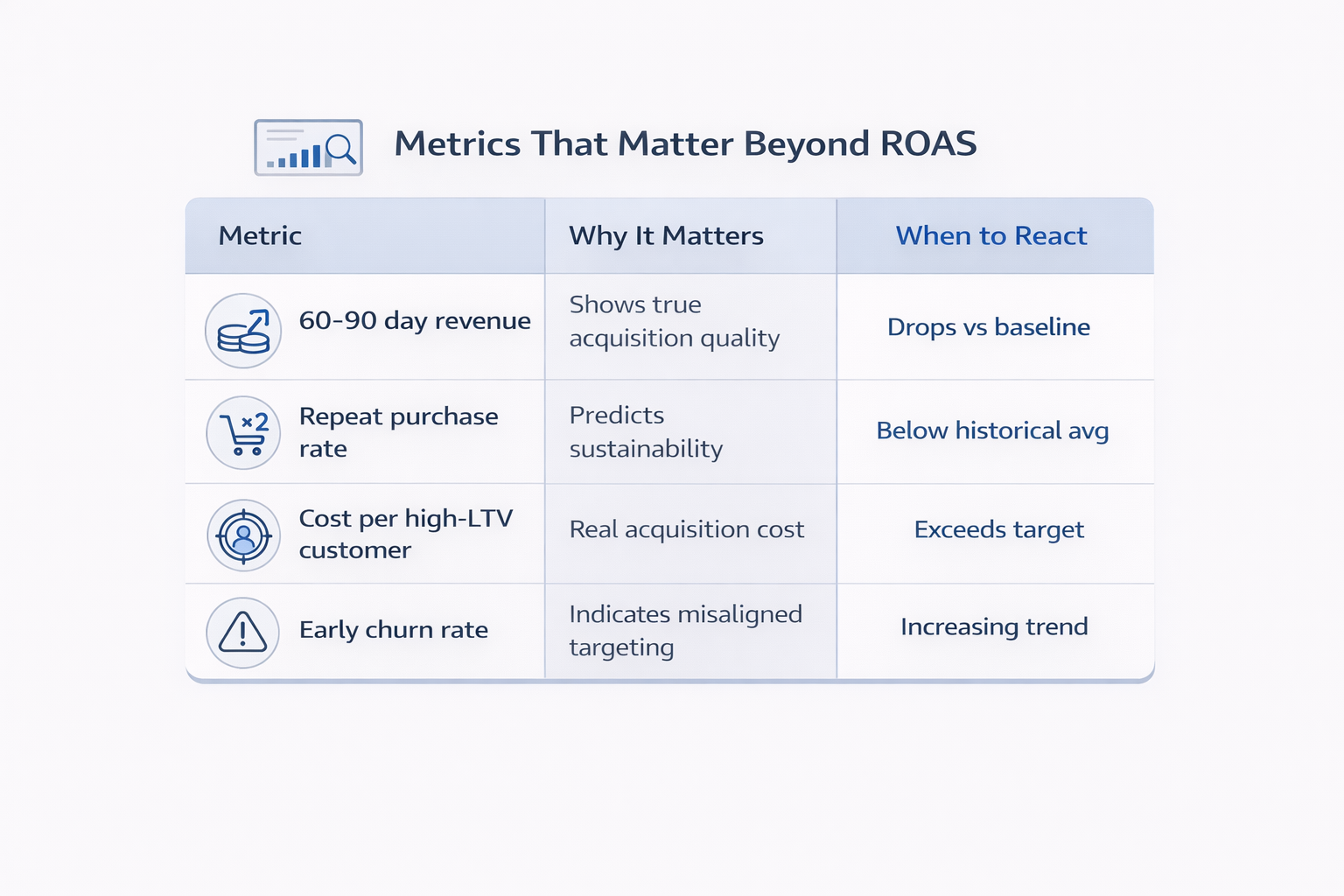
To assess real performance, track metrics such as:
-
Revenue generated within 60 to 90 days.
-
Repeat purchase rate by audience tier.
-
Average order value of new customers.
-
Cost per newly acquired high-LTV customer.
-
Early churn or refund rate.
If retention weakens, tighten your LTV definition before changing creatives or bidding strategies.
When to Refresh Your High-LTV Lists
Your customer base changes as you launch new products or adjust pricing. A high-LTV list built months ago may no longer reflect your best customers.
Refresh your seed every one to three months depending on acquisition volume. Rebuild lookalikes after major product launches or pricing changes to keep the algorithm aligned with current profitability.
Final Thoughts
Lookalike audiences replicate the patterns inside your source data. If that data represents average buyers, you will scale average outcomes.
When you clearly define high-LTV customers, structure your tiers thoughtfully, maintain clean data, and measure long-term revenue instead of only first purchases, lookalikes become a reliable engine for profitable growth rather than short-term volume.