Many Meta campaigns underperform because targeting decisions rely on assumptions rather than evidence. A data-driven ICP defines exactly which customers generate meaningful revenue and long-term value.
An Ideal Customer Profile is not just a demographic outline. It is a structured definition of the customers who convert, stay, and contribute the most profit over time. When built correctly, it improves targeting accuracy, reduces wasted spend, and stabilizes scaling.
Why Most ICPs Fail in Paid Social Campaigns
Many businesses build ICPs based on internal opinions or surface-level metrics. They focus on age ranges and interests while ignoring revenue distribution and retention data.
This leads to predictable problems:
-
Optimizing for lead volume instead of lead quality.
-
Treating all conversions as equal in value.
-
Ignoring churn and refund behavior.
-
Using engagement data without linking it to revenue.
A strong ICP must reflect how profit is generated, not just how traffic behaves. For a deeper breakdown of targeting fundamentals, read Facebook Ad Targeting 101: How to Reach the Right Audience.
Start With Revenue, Not Audience Size
Large audiences look scalable, but scale without value destroys efficiency. The foundation of a reliable ICP is revenue concentration.
Export at least six to twelve months of customer data and sort customers by total revenue. Instead of analyzing all converters together, isolate the highest-value segment and study it separately.
Segment customers using variables such as:
-
Lifetime value.
-
Average order value.
-
Purchase frequency.
-
Refund rate.
-
Time to first purchase.
High-value customers often share acquisition patterns. They may respond to specific offers or convert through distinct funnel paths.
Identify Your Top Revenue Segment
Sort customers by lifetime revenue and isolate the top ten percent. This group often drives a disproportionate share of total profit.
Analyze which campaigns acquired them and how their behavior differs from average buyers. If you want to structure audiences around first-party data, review Facebook Custom Audiences Guide: Everything You Need to Know.
When you understand how your best customers enter and move through the funnel, your ICP becomes grounded in measurable patterns.
Focus on Behavioral Signals, Not Just Demographics
Demographics describe who your customers are. Behavior shows how close they are to buying.
Meta’s system responds strongly to intent signals. Engagement depth often matters more than age or gender.
Track signals that indicate funnel progression:
-
Video watch percentage.
-
Scroll depth on key pages.
-
Add-to-cart frequency.
-
Repeat product views.
-
Time between first click and purchase.
For a practical approach to using intent data, see How to Use Behavioral Data to Improve Ad Performance.
Separate Early Engagement From High Intent
Someone who watches ten percent of a video shows light interest. Someone who watches most of it and visits the pricing page shows stronger intent.
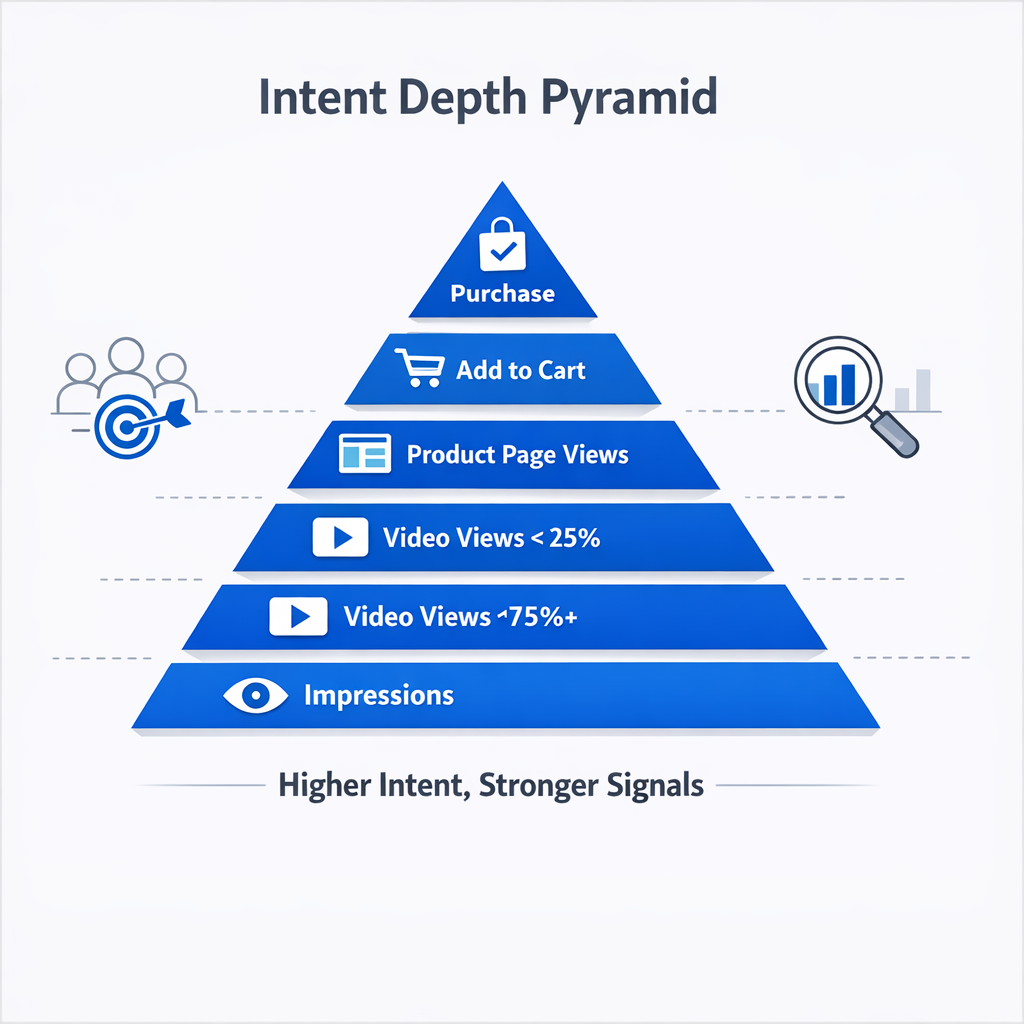
Group users by engagement depth and compare downstream results. High-intent clusters should correlate with stronger revenue and retention metrics.
Your ICP should reflect the behaviors that consistently lead to profitable outcomes.
Connect CRM Data With Meta Targeting
Ads Manager metrics show surface performance. CRM data reveals customer quality.
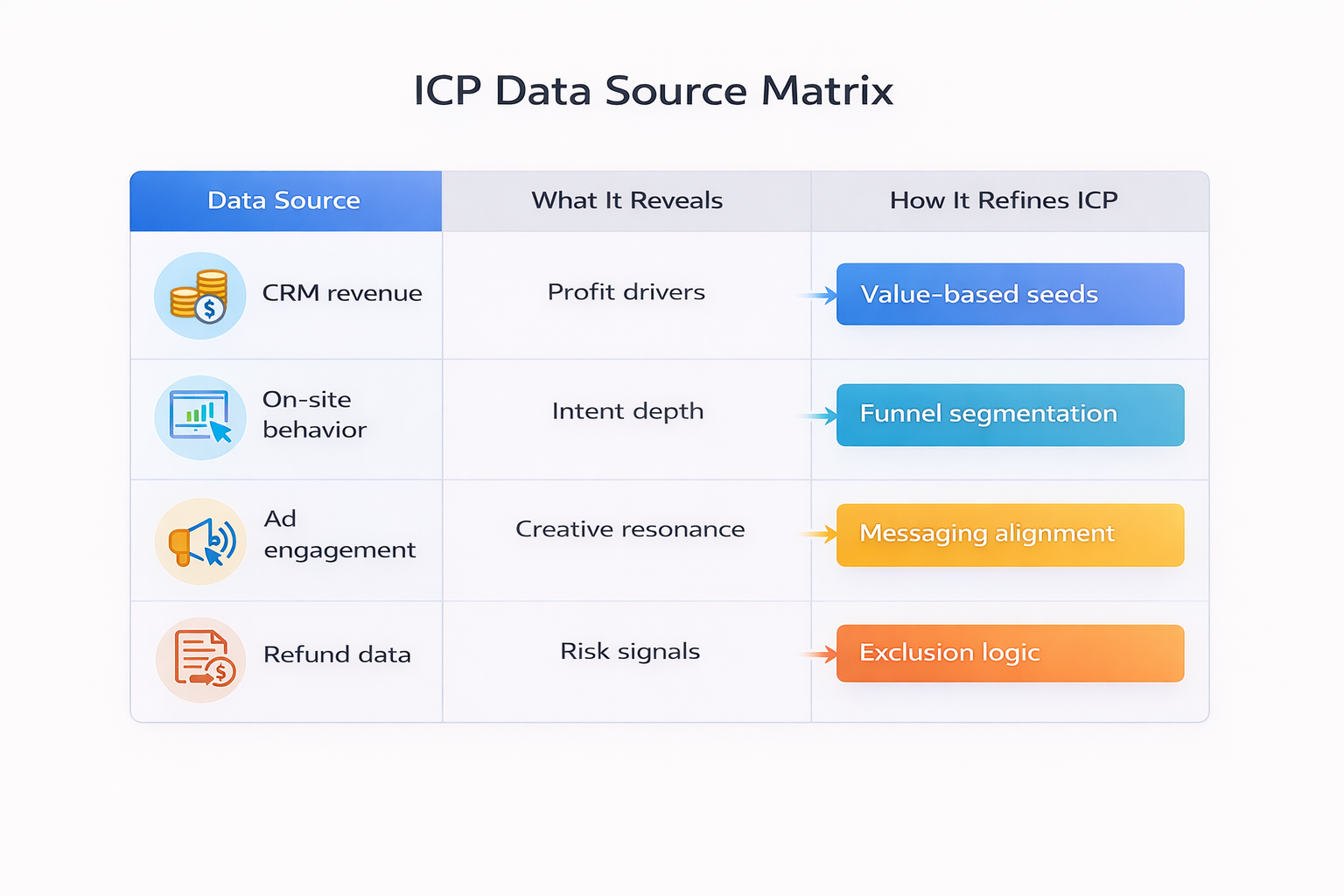
Export customer-level data that includes revenue, product category, upsell behavior, subscription status, and retention duration. Then map this information back to acquisition source.
This process often reveals that some campaigns generate fewer leads but higher revenue per customer.
Build Value-Based Lookalike Audiences
Upload your high-LTV customer list into Meta and use value-based lookalikes instead of general conversion lookalikes. This trains the algorithm to prioritize users who resemble your most profitable customers.
To understand how to structure and scale lookalikes properly, review Lookalike Audiences: How to Seed, Train, and Scale.
Your seed list should include recent, verified buyers and exclude refunded or churned customers. Clean inputs improve targeting stability.
Validate the ICP With Structured Testing
An ICP is a working model that requires validation. You should test segments under controlled conditions before scaling.
Isolate one variable at a time, such as industry segment, community-based audience, or lookalike size. Keep budgets stable and evaluate performance using revenue per lead or sales-qualified outcomes.
If a segment lowers cost per lead but reduces downstream revenue, it does not belong in your ICP.
Use Negative Data to Refine Precision
Defining who is not your ideal customer improves targeting accuracy. Many advertisers ignore exclusion data and allow weak segments to influence models.
Identify low-LTV buyers, high-refund customers, weak retention regions, and unqualified lead sources. Exclude these groups from seed audiences and active targeting.
Removing low-quality signals prevents the algorithm from optimizing toward short-term results that hurt profitability.
Apply the ICP Across Campaign Structure
Once validated, your ICP should shape campaign structure, creative messaging, landing pages, and retargeting logic.
High-value customers often respond to specific problem framing and value propositions. Align creative themes with the motivations identified in your revenue analysis.
When targeting, messaging, and data signals align, performance becomes more predictable and easier to scale.
Conclusion
A data-driven ICP connects revenue data, behavioral signals, and targeting decisions into one system. It replaces assumptions with measurable evidence and aligns Meta optimization with real business outcomes.
Precise targeting does not begin inside Ads Manager. It begins with a clear, evidence-based definition of your most valuable customer.