Most B2B campaigns don’t fail because of targeting — they fail because the creative attracts the wrong type of engagement.
You can hit your CPL targets and still end up with weak pipeline. The issue usually sits in the creative: what you say, how clearly you qualify, and who feels like the message is meant for them.
If you’ve ever seen campaigns where clicks look strong but deals don’t follow, you’re dealing with the same problem described in Why Your Ads Get Clicks But No Sales.
Why Creative Shapes Lead Quality
You can keep targeting identical and change only the creative — lead quality will shift within days.
Platforms don’t understand your ICP directly. They react to behavior. If certain users click and convert more, the system expands toward those patterns. Creative is what drives that behavior in the first place.
This creates a simple tradeoff:
-
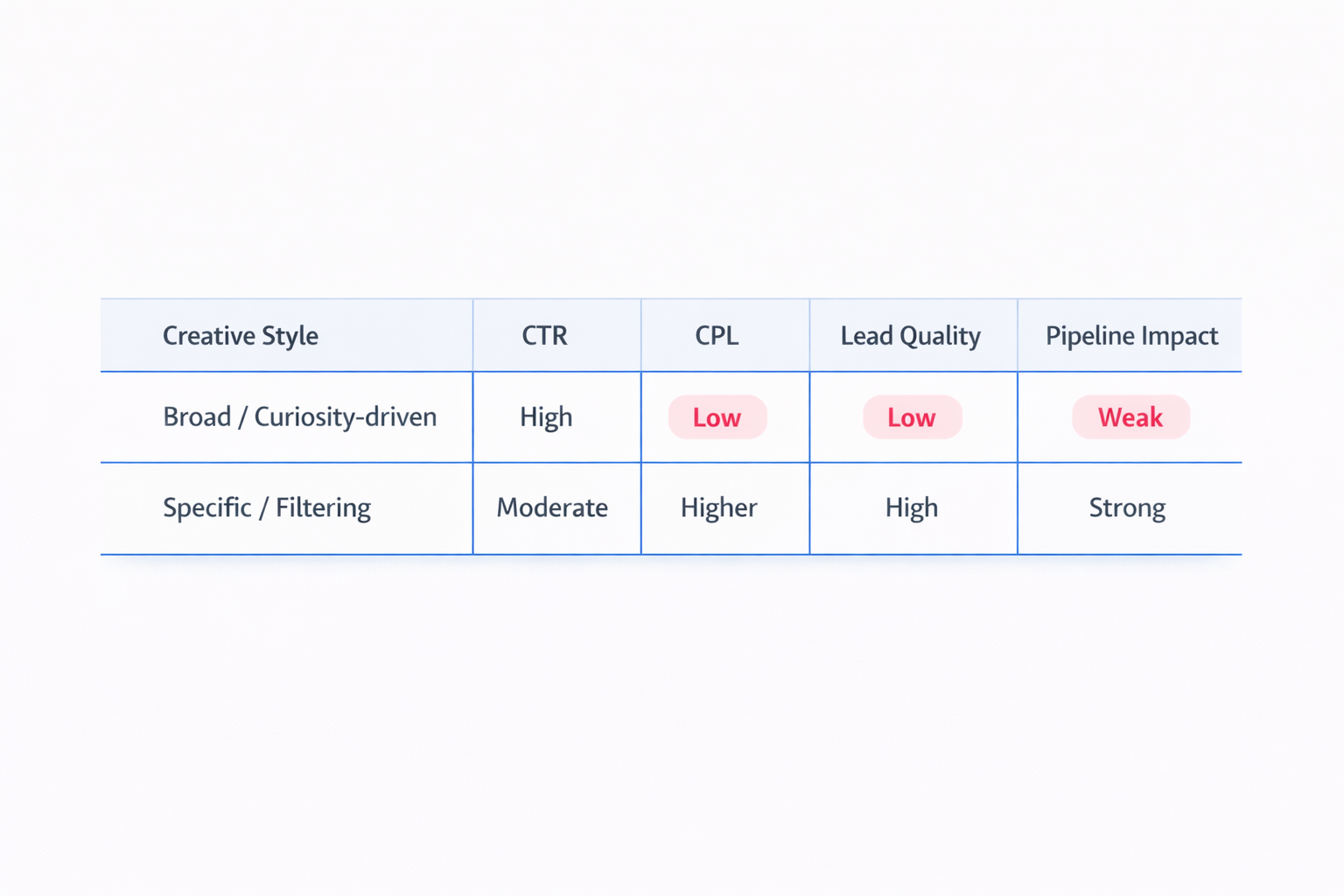
Broad messaging brings more volume but weaker signals.
-
Specific messaging reduces volume but improves intent.
The Real Mistake: Optimizing for Attention
Many campaigns improve on paper before they decline in reality.
You’ll typically see:
-
CTR increases after simplifying the message.
-
CPL drops due to higher engagement.
-
Sales starts flagging low-quality leads.
-
Pipeline conversion drops later.
The cause is consistent — the creative stopped filtering.
This is closely tied to CTR vs Conversions: Why High CTR Doesn’t Always Mean More Sales. More clicks don’t mean better buyers.
Strong Creative Filters Early
Good B2B creative doesn’t try to appeal to everyone. It creates clarity early, even if that reduces clicks.
The most effective filtering usually comes from:
-
Constraints — defining who the offer is for.
-
Specific problems — relevant only to real buyers.
-
Economic signals — pricing or ROI framing.
This approach aligns with what’s explained in How to Pre-Qualify Leads in Ad Campaigns Before Sending Them to Sales.
Matching Creative to the Buying Stage
Using the same creative across the funnel is one of the most common reasons campaigns underperform.
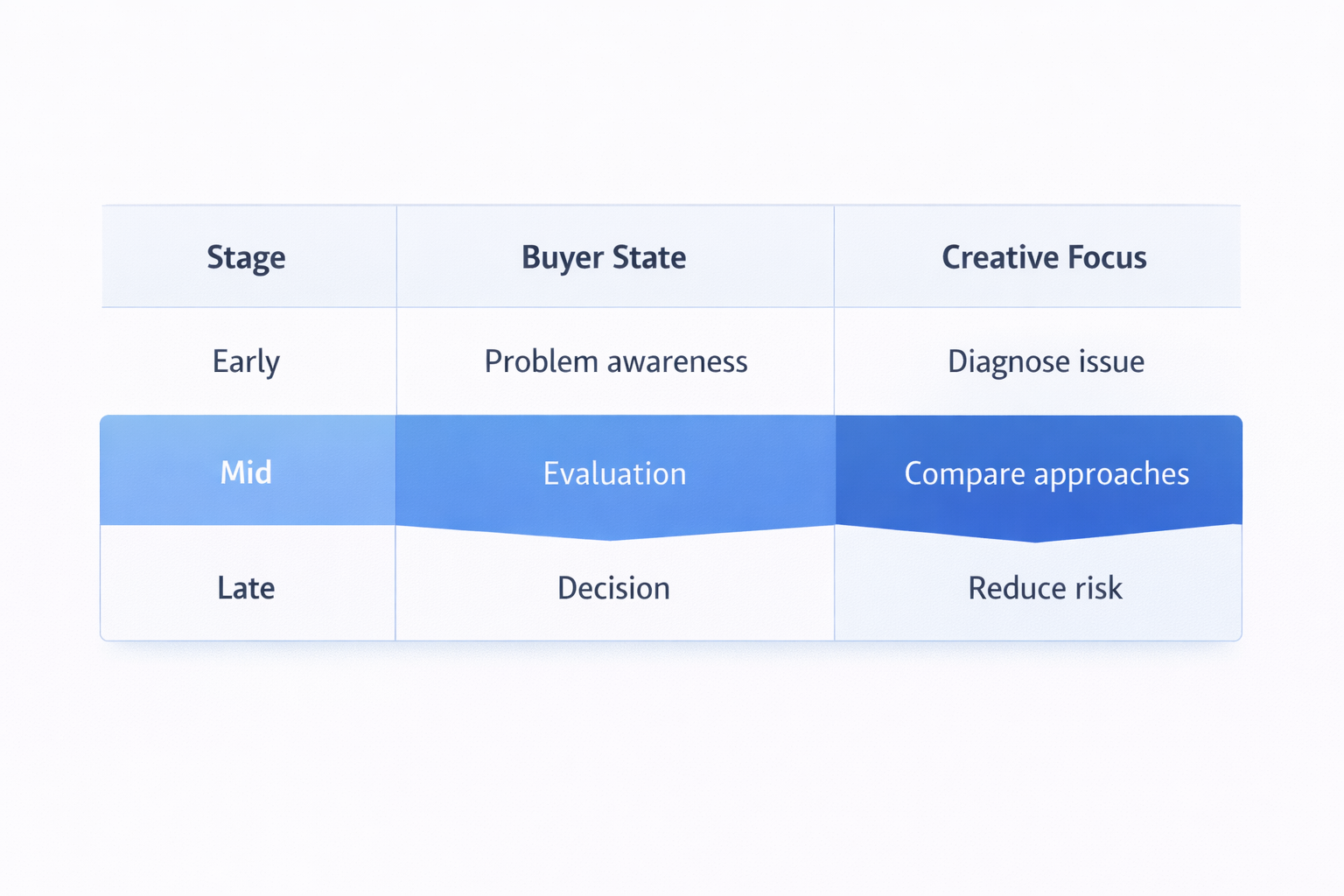
- Early-stage buyers are diagnosing problems.
- Mid-stage buyers compare approaches.
- Late-stage buyers evaluate risk.
When you ignore these differences, you attract the wrong intent level.
A deeper breakdown of this can be found in How to Match Ad Messaging to Buyer Awareness Levels on Facebook.
Early Signals That Reveal Creative Quality
You don’t need to wait for CRM data to know if your creative is working.
Watch for:
-
Repeat visits — strong indicator of intent.
-
Time to conversion — longer paths often mean better leads.
-
Form behavior changes — sudden spikes can signal weaker quality.
What Actually Works
Creative performance depends on structure more than format.
The most effective approaches:
-
Break down real problems.
-
Compare approaches instead of listing features.
-
Challenge weak KPIs like CPL.
-
Show how results actually happen.
The Role of Friction
Removing friction often weakens B2B performance.
-
Detailed forms improve lead quality.
-
Pricing signals filter early.
-
Technical language attracts the right audience.
More leads doesn’t mean better outcomes.
Practical Takeaway
Creative is not just messaging — it’s a targeting mechanism.
If performance looks strong but pipeline weakens, the issue is usually not reach, but the type of users your creative attracts.
A better question:
What kind of user does this creative encourage to convert? That shift usually fixes both performance and revenue quality.