Facebook and Instagram are powerful platforms for attracting new patients — especially for clinics and practices that serve local communities. These ads let you reach people based on location, age, and behavior, and help you stay top-of-mind when someone needs care.
But running healthcare ads on Meta requires a careful approach. You have to follow platform rules, avoid personal language, and create messaging that feels safe and trustworthy.
This article shows how to build effective Facebook ad campaigns for healthcare — with strategy, structure, and examples.
Why Facebook ads are effective for healthcare
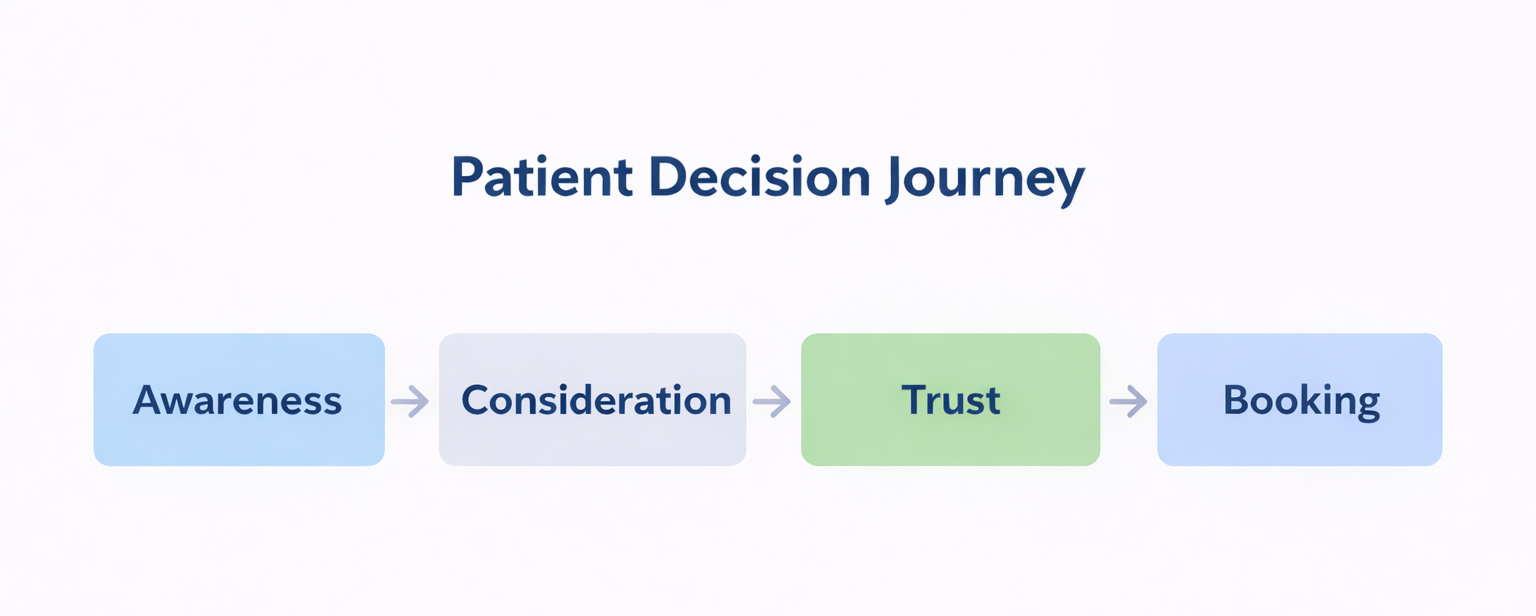
Most patients don’t choose a doctor the same way they choose a product. They take time to research, compare, and ask questions. Facebook helps you enter that process early — when they’re still deciding where to go.
Here’s what Facebook ads let you do:
-
Reach people based on real traits — You can target people by age, gender, location, and even recent life events, like moving to a new area.
-
Stay in touch with interested users — If someone visits your website or interacts with your page, you can show follow-up ads to guide them toward booking.
-
Explain services in a visual way — Many clinics use videos or carousels to show facilities, staff, and what patients can expect.
Hypothetical example: A small dental office targets people aged 30–60 within 10 km of their location. Their ad features a short video tour of the clinic and promotes a free consultation. The goal is to make the space feel approachable and familiar — especially for people who might delay care out of anxiety.
For a broader strategy approach, see How to Use Facebook Ads to Attract New Patients to Your Clinic.
Follow Meta’s rules for healthcare ads
Meta has strict rules for medical advertising. These are in place to protect users from misleading claims and unwanted attention around personal health topics.
Some rules you must follow:
-
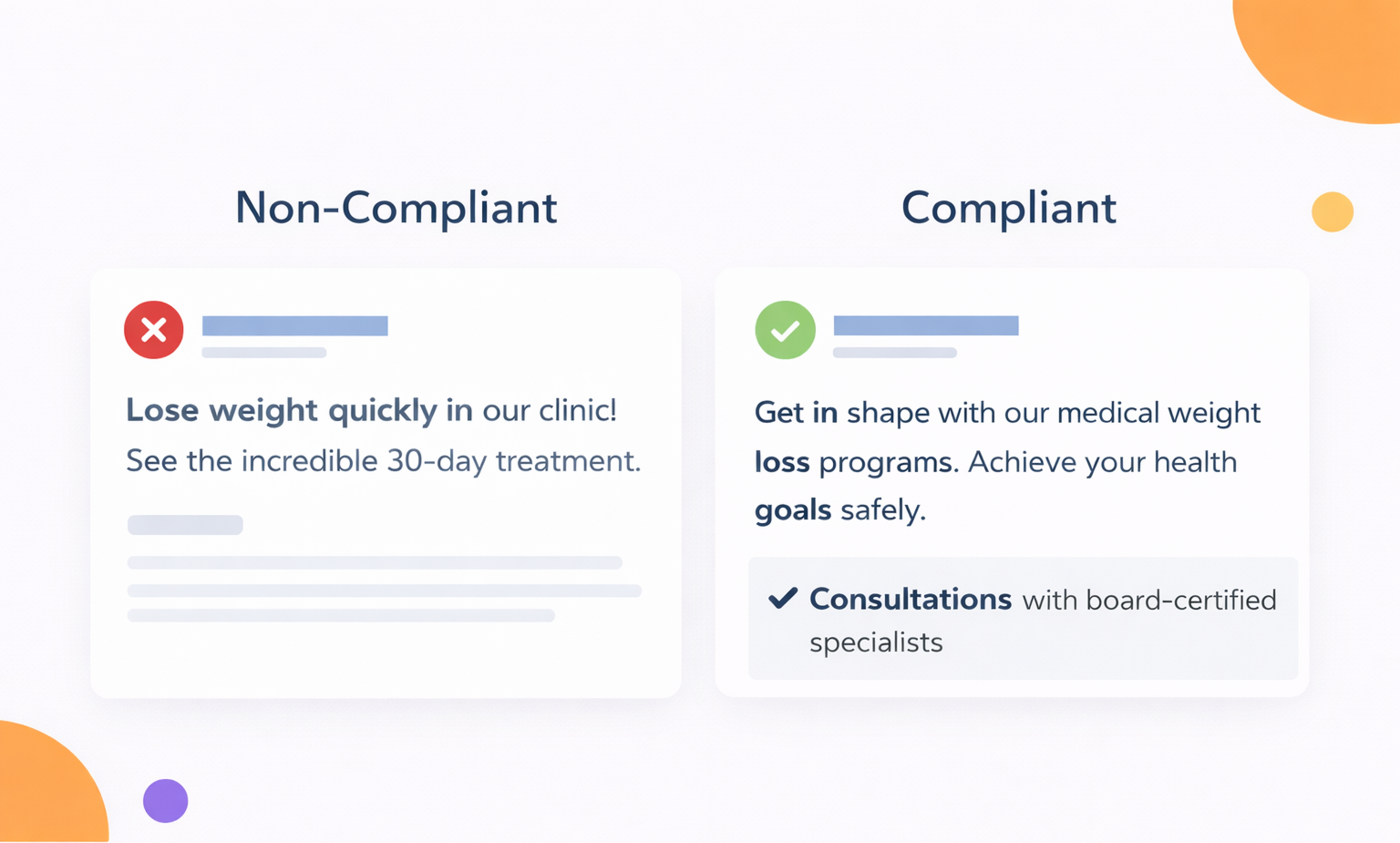
No direct reference to personal health. Don’t say things like “Struggling with back pain?” — even if it’s common. Instead, say “Our clinic provides support for back and joint discomfort.”
-
No before-and-after photos. Transformation-style visuals — like skin improvements or weight loss — are not allowed.
-
Avoid naming specific conditions. Don’t use terms like “treat arthritis” or “get rid of eczema.” Say “Specialist consultations available for joint care and dermatology.”
For a full breakdown of ad rules and best practices, see How to Navigate Meta’s Ad Policies for Health and Medical Services and Facebook Ad Compliance Tips for U.S. Regulated Industries.
Tip: Always write in general, neutral terms. Focus on your services, not the patient’s condition.
The best ad formats for medical practices
Some formats perform better than others — especially for clinics where trust and simplicity are important.
Four formats that work well:
1. Lead ads
Let people book appointments or request info without leaving Facebook. Great for reducing friction.
Example: A physiotherapy clinic runs a lead ad offering a free 10-minute phone consultation. The form pre-fills the user’s name and contact info.
2. Video ads
Introduce your staff or show your space in 20–30 seconds. Builds comfort and confidence.
3. Carousel ads
Let users explore multiple services in one swipe — like general checkups, diagnostics, and therapy.
4. Messenger ads
Good for practices offering live support or quick answers via chat.
For format-specific guidance, read The Best Facebook Ad Formats for U.S.-Based Healthcare Clinics.
How to target the right audience
Healthcare ads work best when they are local, relevant, and aligned with the stage of life or concern someone might have.
Smart targeting strategies:
-
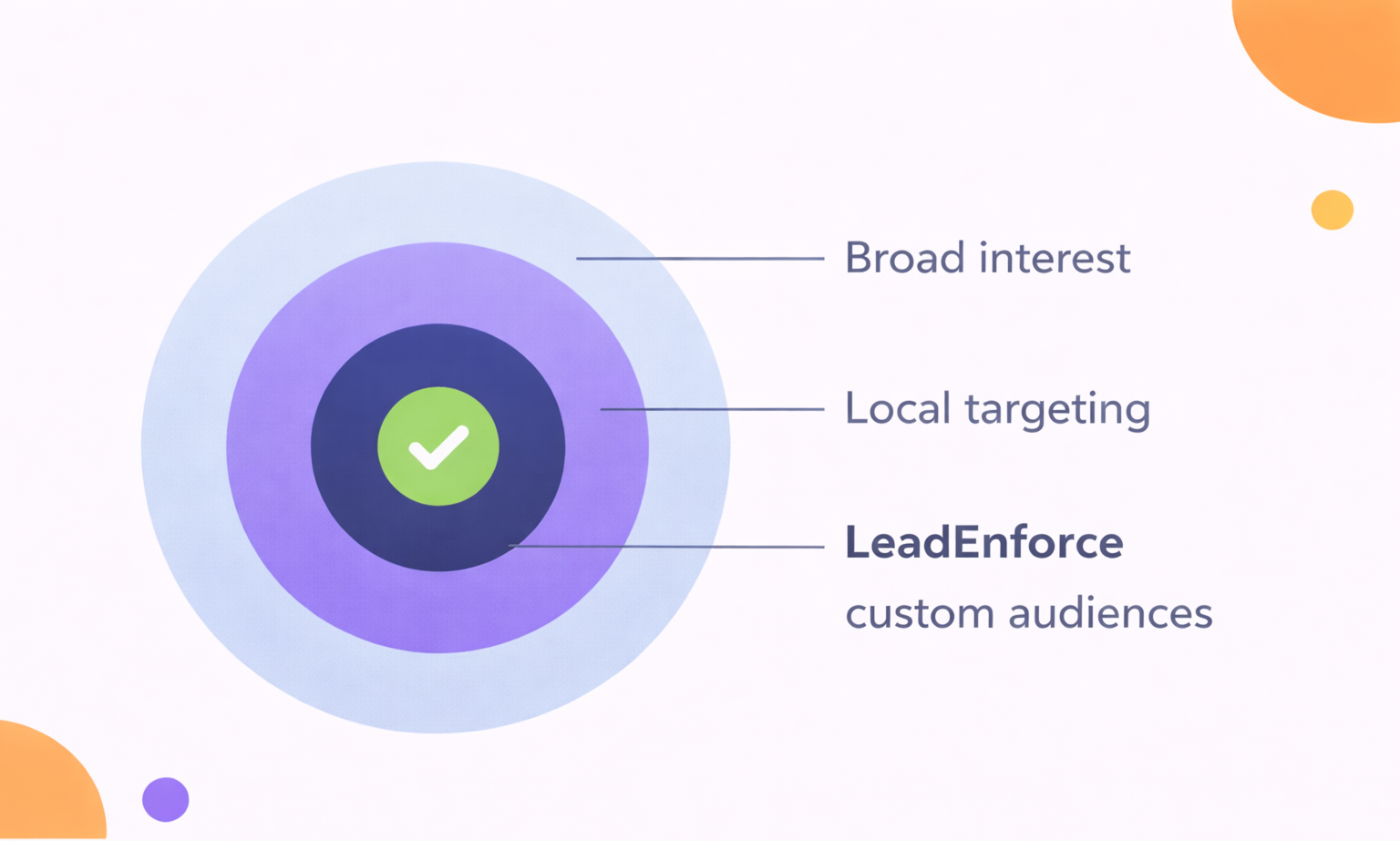
Location radius targeting — Set a 5 to 15 km radius around your clinic to reach nearby users.
-
Website retargeting — Use Meta’s pixel to show ads to people who visited your site but didn’t book.
-
Lookalike audiences — Upload a list of past patients or leads (with consent) to build similar audiences.
-
Group-based audiences using LeadEnforce — Build custom audiences from followers of specific health-related groups.
Need more ideas? See How LeadEnforce Helps Local Businesses Reach the Right Customers.
Writing ad copy that builds trust
People often feel nervous or hesitant about booking medical services. Clear, friendly copy can reduce that hesitation.
Tips for better copy:
-
Be specific — “Same-day appointments available. Accepting major insurance plans.”
-
Avoid hype — Instead of “Top-rated,” say “Board-certified specialists. 3,000+ patients seen.”
-
Give a clear next step — “Click to schedule online” or “Call now for a free consult.”
For copywriting help, check out How to Write Copy That Sells in Static Facebook Ads.
Mistakes to avoid in healthcare ads
Not every campaign works well the first time. Many issues are avoidable if you know what to look for.
Common mistakes:
-
Using fear or urgency — Avoid anything that could feel alarming or manipulative.
-
Over-segmenting campaigns — Too many small ad sets can confuse the algorithm and slow results.
-
Skipping retargeting — Bring back people who showed interest but didn’t convert.
-
Ignoring mobile optimization — Most users will see your ads on phones.
See Top Facebook Ad Mistakes That Drain Your Budget.
A sample ad funnel for a local clinic
Let’s say you run a podiatry clinic. Here’s one possible ad funnel:
Step 1: Awareness
-
Video ad: Doctor explains common foot pain causes
-
Target: Adults 40+ within 15 km
Step 2: Consideration
-
Carousel ad: Show services — custom orthotics, diabetic foot care, injury recovery
Step 3: Conversion
-
Lead ad: “Book a free 15-minute consultation”
-
Retarget: Users who visited your booking page but didn’t finish
Want to build your own? See The Facebook Ad Funnel That Works Even If You Have No Email List.
Final thoughts
Facebook ads can work well for medical clinics — but only if done with care. The right strategy combines clear messaging, compliant ad formats, local targeting, and tools like LeadEnforce to find the right people.
Stay focused on helping patients understand who you are, what you offer, and how to take the next step. That’s how you turn clicks into real bookings — and build long-term trust in your community.