Many tutors rely on word-of-mouth or local visibility. But that limits your reach. Facebook and Instagram ads help you grow faster — reaching parents and students who are actively looking for help or simply need a nudge.
Whether you're a solo tutor or run a large test prep business, paid social can bring you steady leads at a lower cost than search ads. But to succeed, you need to understand the platform, your audience, and how to match the message to the moment.
Why Facebook and Instagram work for education services
You're advertising where people already spend time
Most students and parents check Facebook or Instagram every day — not Google for "SAT tutor near me." With paid social, you meet them where they scroll.
You can speak directly to decision-makers
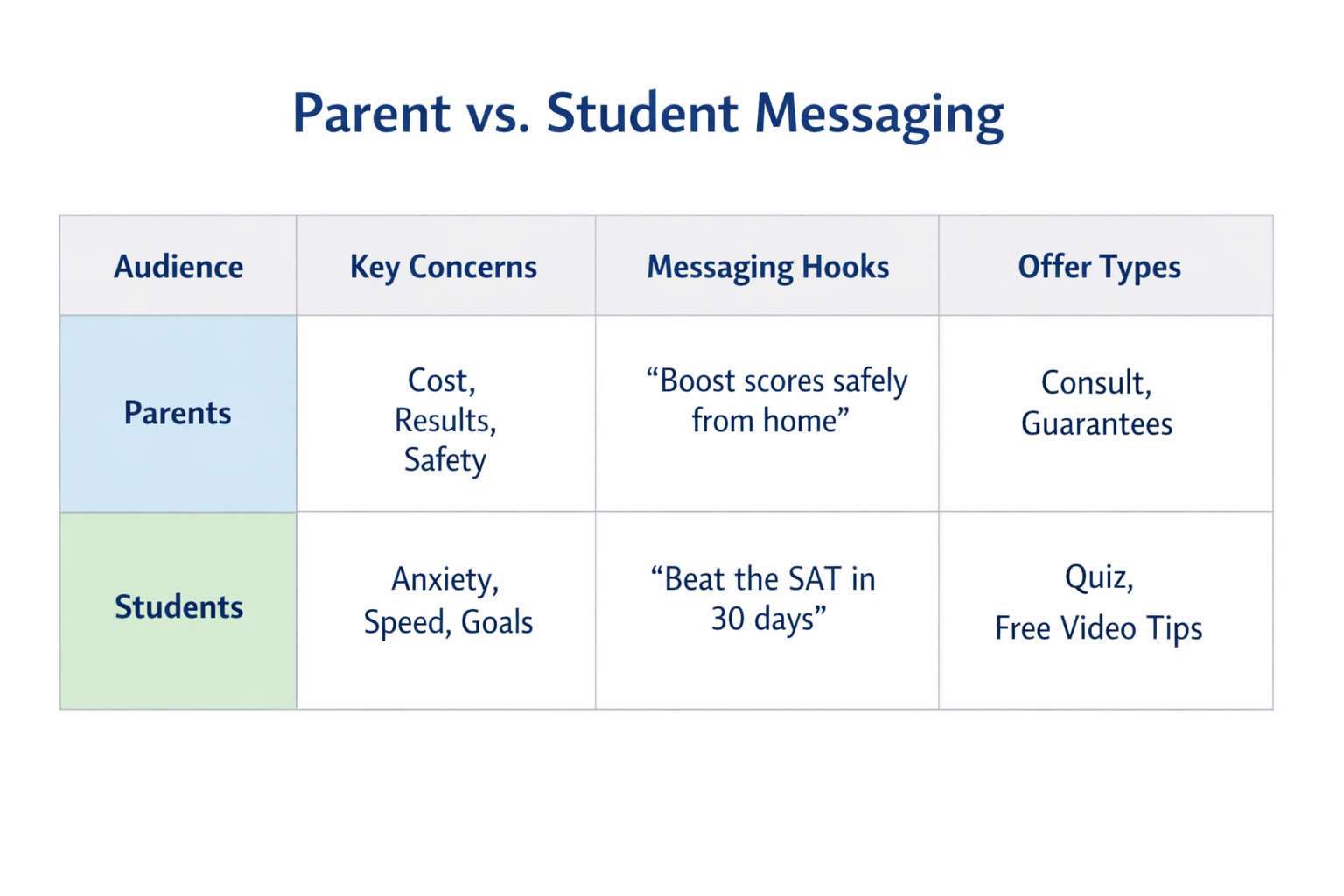
The parent may pay. The student may choose. You need to target both — but with different messages.
For example:
-
Parents: worry about college admission, deadlines, and value for money.
-
Students: care about test anxiety, peer pressure, and personal goals.
Facebook lets you segment your ads to show each group what matters to them. This makes your messaging more effective and helps you drive better leads at lower cost.
Build a funnel that matches how people buy tutoring
Students and parents don’t usually hire tutors on the first click. They need time to consider, compare, and decide. That’s why your campaign needs a structure — not just a few scattered ads.
Awareness: start with relevance
Speak to the real problems students and parents face. Your goal is to make people stop scrolling and pay attention.
Try messages like:
-
"Is your teen stressing about the ACT or SAT?"
-
"Finals are coming. Is your child ready for math and science?"
Pair these with short videos, Reels, or simple carousels. This stage is about planting the seed, not closing the deal.
Consideration: show how you help
Now that they know your name, it’s time to earn trust. This is where testimonials, videos, and proof matter most.
Good ad types include:
-
Score improvement graphs or timelines;
-
Quotes from students or parents;
-
Explainer videos showing your tutoring approach.
You’re helping them understand why you’re a better choice — not just a cheaper one.
Action: guide them to a low-friction next step
This stage is where real conversions happen. Focus on simple offers, clear CTAs, and reasons to act now.
Effective options:
-
"Book a free consult";
-
"Download our SAT checklist";
-
"See our pricing and schedule."
Use ads that reduce decision anxiety — highlight flexible scheduling, clear pricing, or a money-back guarantee.
For a more detailed view, see Facebook ads funnel strategy: from audience identification to conversion.
Audience targeting tips for tutors
Facebook’s built-in education interests are too vague. To find high-intent leads, you need smarter audience strategies.
Start with high-quality custom audiences:
-
Website visitors: Reach people already exploring your offers.
-
Instagram and Facebook engagers: Retarget post viewers and commenters.
-
Lead form openers: Even if they didn’t submit, they showed interest.
-
Email list uploads: Keep showing up in front of past leads or unsubscribers.
Custom audiences let you focus on people who already know you. That’s a big advantage in a trust-based service like tutoring.
Build high-converting lookalikes
Once you have a solid custom audience, create a lookalike audience to scale. Use your best students or highest-converting leads as the seed group.
Lookalikes help you reach new people who are similar to those who already converted. This reduces waste and improves campaign performance over time.
For education professionals, this can be especially useful when targeting specific test prep niches like SAT, ACT, or AP exams. Learn more from Facebook ad targeting for niche professionals.
Target Facebook groups and Instagram followers
With tools like LeadEnforce, you can go beyond interests. Build audiences from:
-
Followers of tutoring and test prep accounts on Instagram;
-
Members of local high school or parent groups;
-
Competitor followers (test prep apps, other tutoring centers).
These people are already tuned in to tutoring content, which makes your targeting more precise — and your spend more efficient.
For a full breakdown, check everything you need to know about Facebook ads audiences.
Creative that converts in tutoring and test prep
Even perfect targeting won’t work without compelling ad creative. You need messages that grab attention, build trust, and move people to act.
Hooks: stop the scroll with specifics
Use your first line or video frame to grab attention. Be direct and speak to common problems or goals.
Examples:
-
“Struggling with ACT Reading? Try this quick fix.”
-
“From 1150 to 1350 — here’s how Emily did it.”
Use short-form video, animated text, or dynamic carousels to keep eyes on the screen.
Value: explain what makes you different
Avoid generalities like “personalized support.” Instead, show what you actually offer.
Say this:
-
"We use real past exams to prepare students."
-
"All sessions are 1:1 and tailored to your student’s weak spots."
Explain benefits clearly and concisely — and always speak to outcomes.
Proof: trust is earned
Tutoring is personal. Use social proof that feels authentic.
-
Show actual score jumps or graphs;
-
Feature first-name testimonials from students or parents;
-
Use real photos or clips (no stock images).
Build creative that helps the audience picture their own success story.
Offers: give them something valuable to act on
Avoid pushing “Book Now” too early.
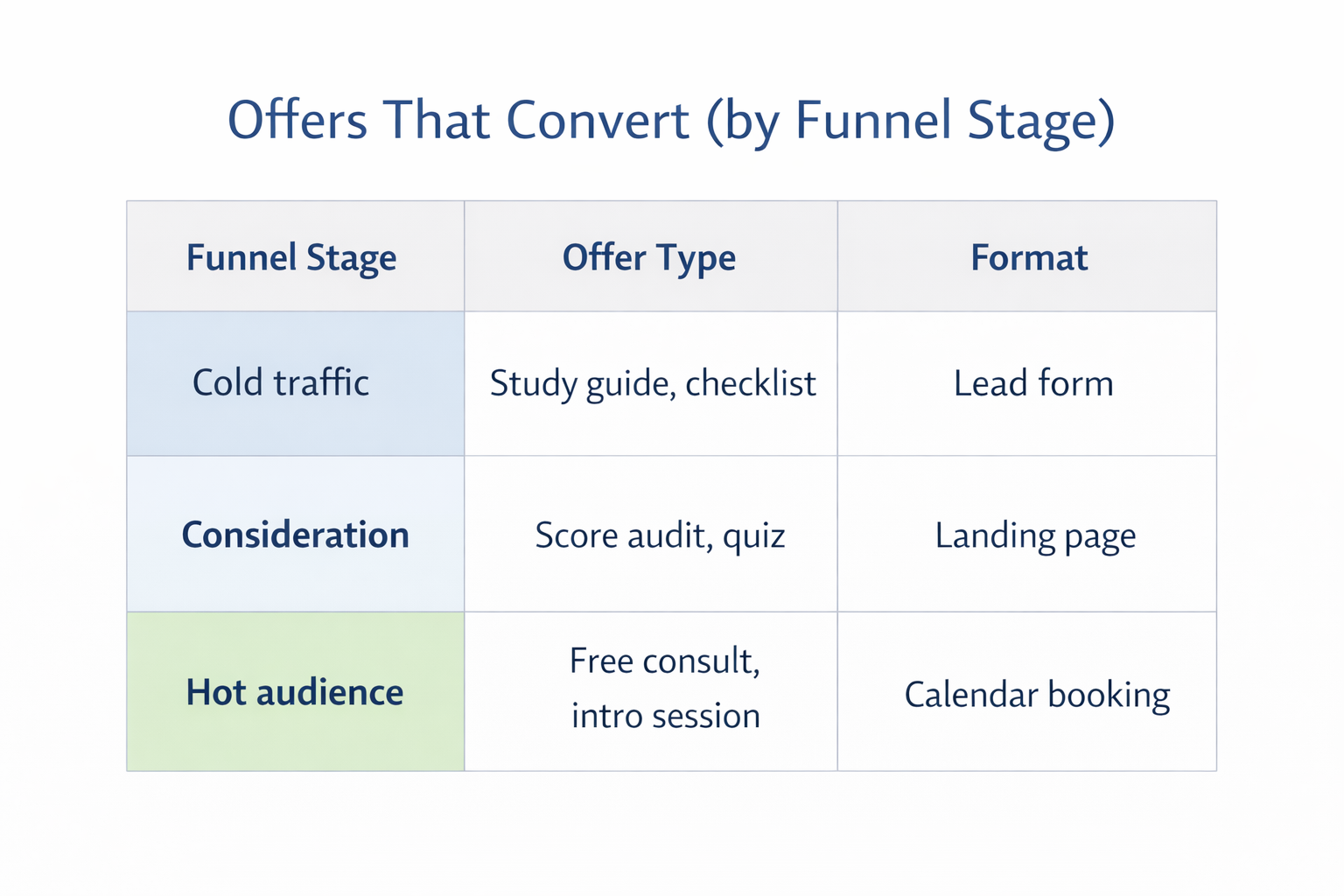
Try low-friction offers like:
-
Free consults;
-
Study calendars;
-
Quick diagnostics or quizzes.
These soft CTAs make it easier for users to take a first step without feeling pressured.
Practical ways to get better results
Use school timelines for smarter scheduling
Run seasonal campaigns when interest peaks:
-
January–March: Test prep season for ACT/SAT.
-
May–June: Finals and end-of-year tutoring.
-
August–September: Back-to-school learning gaps.
Sync your messaging with what students and parents are already focused on.
Test formats: landing page vs. lead form
Lead forms often convert better on mobile. Use them for:
-
Free consult signups;
-
Content downloads (study guides, calendars);
-
Waitlist offers or quiz-based lead magnets.
Test both and compare lead quality and cost per conversion.
Monitor frequency and creative fatigue
Running the same ad too long leads to lower engagement. Use creative rotation and audience capping to stay fresh.
Update:
-
Hooks every 1–2 weeks;
-
Offers each month;
-
Proof/testimonials quarterly.
Even small changes can restore results.
Final takeaway: great tutoring ads aren't just ads
Tutoring is a high-trust, high-stakes decision. Parents and students want to feel confident before they commit. Facebook and Instagram give you the space to build that trust over time.
Start by helping. Target precisely. Offer value. Then, make it easy to take the next step.
When you align strategy, creative, and targeting, Facebook ads become one of the most cost-effective ways to grow your tutoring business.
Let me know if you'd like help creating visuals for this article.