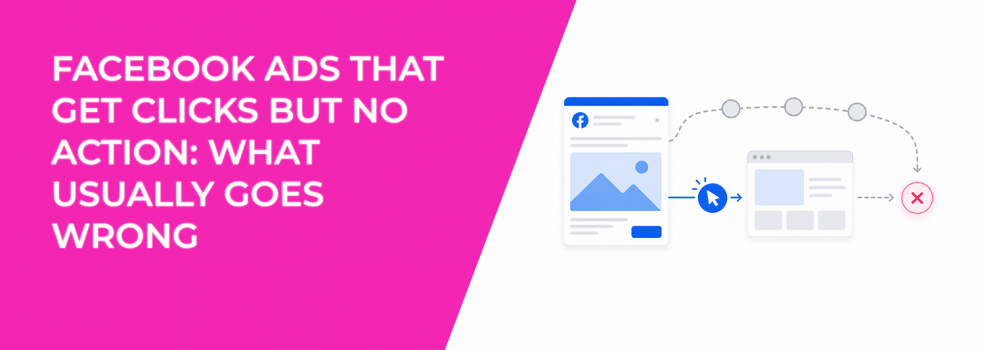
One of the most frustrating Facebook Ads situations is getting traffic without results.
The ad generates clicks. CTR looks healthy. CPC may even fall below expectations. But conversions stay flat while CPA keeps rising.
This usually confuses advertisers because the campaign appears “active” inside Ads Manager. The platform shows engagement, traffic, and reach, yet very little business impact follows.
In many cases, the problem is not the click itself. The problem is that the click came from weak intent.
The ad successfully attracted attention but failed to attract people genuinely ready to take action.
Why Click Volume Can Be Misleading
Facebook optimizes for behavior patterns.
If a campaign generates easy clicks, Meta often keeps finding more people likely to click. That does not automatically mean those users want the product, trust the offer, or understand the value.
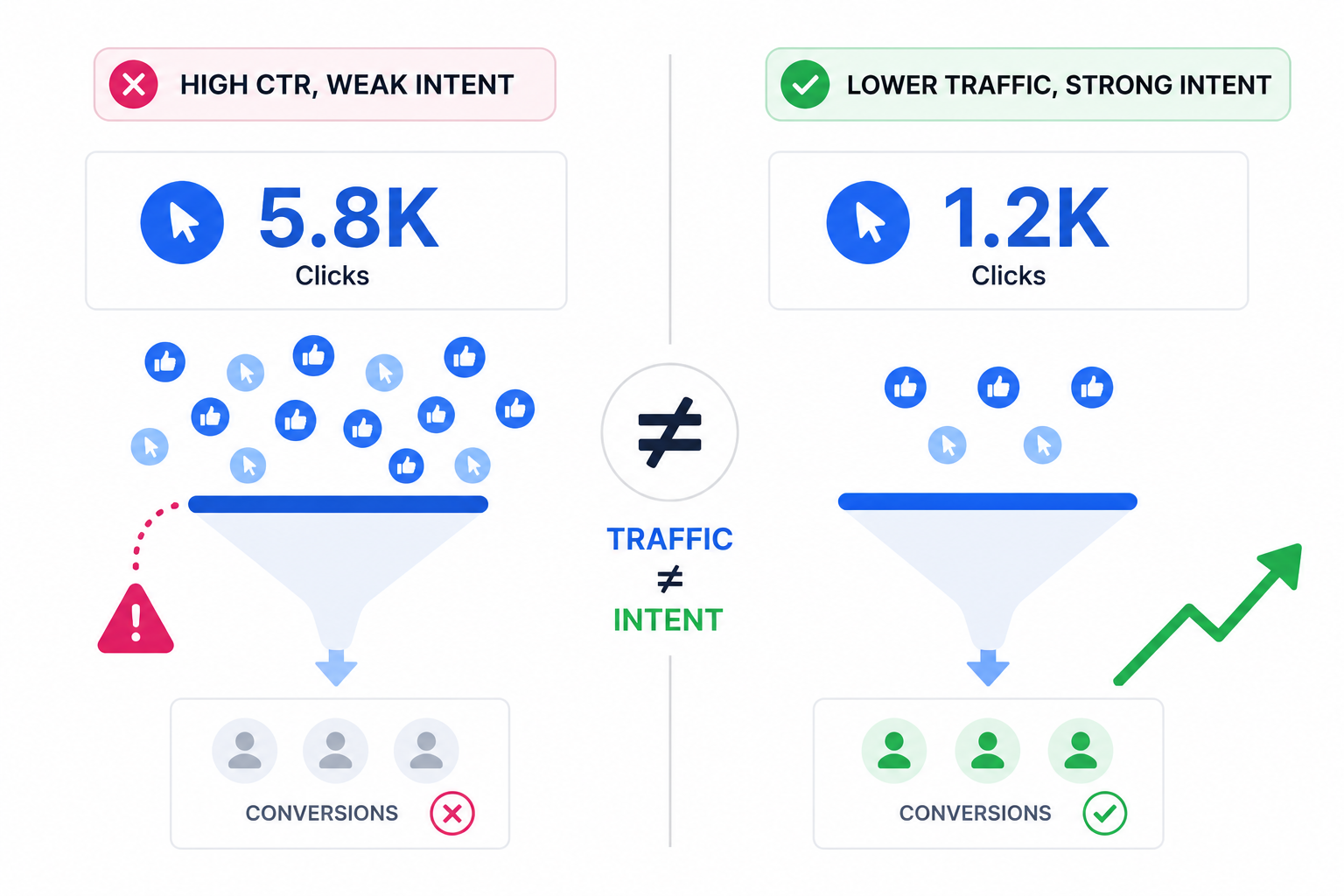
This is why some campaigns produce:
- strong CTR;
- low CPC;
- high engagement;
- weak sales.
The platform found users willing to interact with the ad, but not necessarily users willing to convert. This happens often when creatives rely heavily on curiosity, emotional interruption, or overly broad messaging.
For example, an ad may use:
- dramatic claims;
- highly emotional visuals;
- vague promises;
- curiosity-driven headlines.
Those elements increase clicks, but they also attract users with inconsistent intent.
Advertisers dealing with this issue should also understand why clicks do not always mean buying intent because high click volume can easily hide weak traffic quality.
The Most Common Reasons Users Click But Do Not Convert
Most click-without-action problems come from a few recurring issues.
Here are the most common ones:
- The ad creates curiosity but not buying intent.
Users click because the creative interrupts them, not because they actually want the offer. - The landing page feels different from the ad.
The user expected one thing but encountered a different message, tone, or offer after clicking. - The audience is too broad.
Broad targeting often increases traffic volume while lowering intent quality. - The next step feels too difficult.
Long forms, confusing pages, or unclear CTAs create friction immediately after the click. - The ad attracts the wrong type of user.
For example, educational creatives sometimes attract researchers instead of buyers. - The offer itself lacks urgency or clarity.
Users understand the ad but still do not see a strong reason to act now.
Most of these issues reduce conversion momentum after the click instead of preventing the click entirely.
Why Low CPC Can Quietly Hurt Campaign Quality
Many advertisers celebrate low CPC automatically.
That can become dangerous.
Low CPC sometimes means the ad is attracting lightweight engagement instead of strong commercial intent. Meta often finds cheaper traffic faster than it finds high-converting traffic.
For example, a broad ecommerce campaign may produce:
- cheap clicks;
- high traffic volume;
- strong engagement metrics.
But purchase rate stays weak because the ad appeals to casual browsers instead of serious buyers.
This is especially common with:
- vague “before and after” messaging;
- highly emotional hooks;
- entertainment-style creatives;
- overly broad lifestyle positioning.
The campaign appears efficient on the surface while profitability quietly deteriorates underneath.
That is why advertisers should regularly review low CPC but weak conversion performance instead of judging campaigns primarily through click-based metrics.
Why the Landing Page Often Breaks the Funnel
Many campaigns lose momentum immediately after the click.
The ad creates one expectation, but the landing page introduces friction, confusion, or overload.
Common examples include:
- the ad feels simple while the page looks complicated;
- the ad promises speed while the form feels long;
- the ad targets beginners while the landing page uses technical language;
- the ad promotes one product while the page introduces multiple competing offers.
Users stop because the transition feels inconsistent.
Strong Facebook campaigns usually maintain the same message structure from the ad to the landing page. The user should never feel like they entered a different funnel after clicking.
Advertisers struggling with this issue should review how to optimize the post-click experience because many conversion problems start after the click, not before it.
Why Broad Traffic Often Produces Weak Action Rates
Audience quality strongly affects post-click behavior.
A broad audience may generate cheap traffic, but cheaper traffic is not always better traffic.
For example, a B2B software campaign targeting large interest groups may attract:
- students;
- competitors;
- researchers;
- low-budget users;
- people outside the buying process.
Those users may still click because the ad looks interesting.
But they rarely convert consistently.
This is where LeadEnforce can help advertisers improve signal quality. Instead of relying entirely on broad targeting, advertisers can build audiences using Facebook groups, Instagram followers, and engaged social communities.
That usually produces:
- more relevant traffic;
- stronger intent;
- better lead quality;
- more stable CPA during scaling.
Users already connected to relevant communities often require less persuasion because the topic already matches their interests or business problems.
How to Diagnose the Real Problem Behind Weak Conversions
A useful diagnostic approach is comparing click behavior against post-click behavior.
If CTR looks strong but conversions remain weak, review:
- landing page bounce rate;
- time on page;
- form completion rate;
- scroll depth;
- add-to-cart rate;
- lead quality.
Those signals usually reveal where intent breaks down.
For example:
- high bounce rate often means expectation mismatch;
- strong page engagement with low conversion rate often means weak offer structure;
- low-quality leads usually point toward audience mismatch;
- low add-to-cart rate may indicate weak product positioning.
The important point is this:
Clicks alone do not explain campaign quality.
The real signal appears after the user enters the funnel.
Final Takeaway
Facebook ads that generate clicks but no action usually suffer from intent problems, not traffic problems.
The campaign successfully attracts attention, but the user either:
- does not fully understand the offer;
- lacks buying intent;
- encounters friction after clicking;
- or loses trust during the transition into the funnel.
The solution is not simply increasing traffic or lowering CPC further.
The solution is improving alignment between:
- audience intent;
- ad messaging;
- CTA clarity;
- landing page experience;
- and funnel structure.
When those parts work together, clicks turn into meaningful business actions instead of empty traffic.