If you’re running Facebook or Instagram ads, you’ve probably used the same campaigns across both platforms.
That’s a common shortcut — but it’s one that costs performance.
Even though Facebook and Instagram run through the same Ads Manager, the way people use each platform is very different. To run effective ads, you need to understand user intent — the reason someone opens the app in the first place.
This article breaks down how user intent works on Facebook vs. Instagram, and how to shape your ad strategy around it.
Why Intent Matters More Than You Think
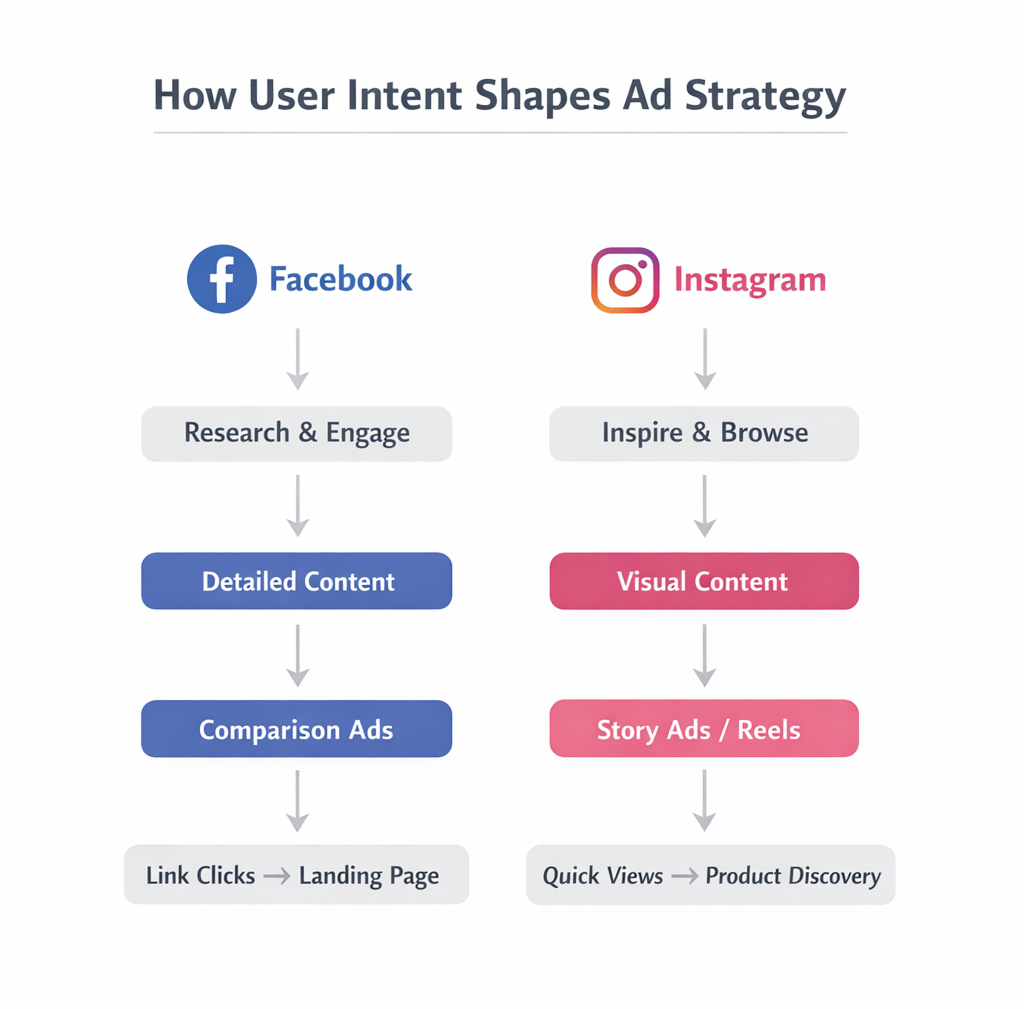
User intent affects everything about how someone reacts to your ad.
It influences:
-
What kind of creative gets attention;
-
What type of message feels relevant;
-
What stage of the funnel your ad should target.
Many campaigns fail because they don’t match what users are doing on the platform. The more your ads align with intent, the better your performance — and the lower your costs.
If you're not sure your funnel is aligned with how users move from scroll to sale, check out this guide to full-funnel strategy on Facebook and Instagram.
Facebook: People Scroll With a Purpose
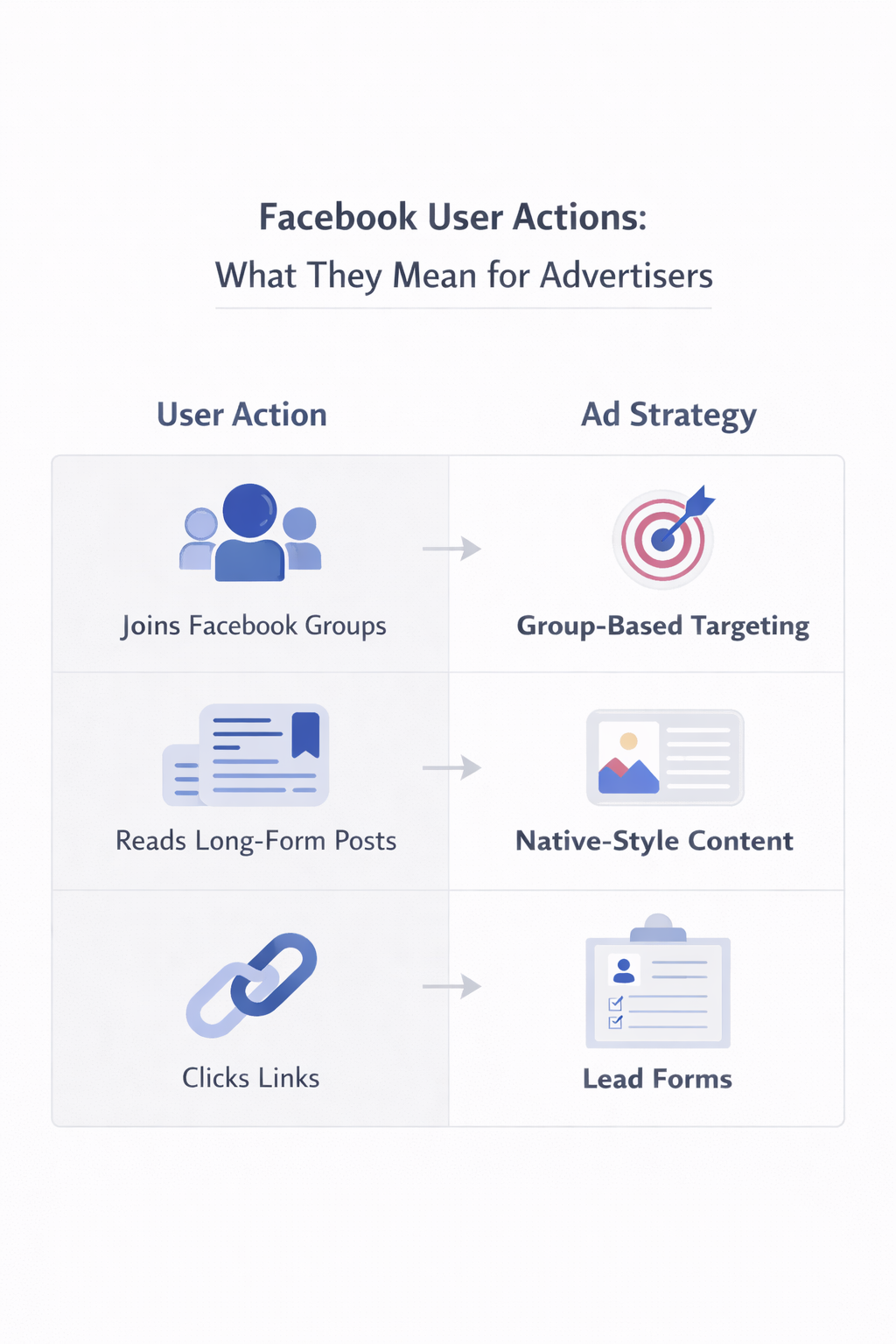
Facebook users often come with a goal. They’re checking groups, looking at events, or catching up on updates. They’re more willing to read, click links, or interact with longer posts.
This makes Facebook better for campaigns that need a bit more explanation or depth.
What People Expect on Facebook
Facebook users usually:
-
Want more information — product details, comparisons, or stories;
-
Engage with communities — especially inside Facebook groups;
-
Take action — like clicking to your site, signing up, or asking questions.
They’re not just killing time. They’re browsing with intention, which gives you more room to work with.
Want to reach Facebook group members directly? This article shows you how to find and target Facebook Groups relevant to your offer.
Instagram: Fast, Visual Browsing
Instagram is all about quick, visual content. Users open the app to scroll, get inspired, or check trends — not to read or click links.
You’re working with short attention spans, so your creative has to do the heavy lifting.
What People Expect on Instagram
Instagram users tend to:
-
Respond to visuals first — not headlines or detailed copy;
-
Scroll fast — stopping only when something stands out;
-
Stay in the app — they rarely click out to websites.
They’re in a different mindset — relaxed, passive, and quick to move on.
Comparing User Behavior
| Factor | ||
|---|---|---|
| User mindset | Purposeful — looking for something | Passive — just browsing |
| Content type | Text and links are common | Visuals and videos dominate |
| Engagement style | Comments, shares, clicks | Likes, saves, quick taps |
| Funnel stage fit | Consideration and conversions | Awareness and discovery |
| External actions | More likely to click to a site | More likely to stay in-app |
How to Adjust Your Ads to Match the Platform
Your ads should feel like they belong on the platform they’re on. That means adjusting both your creative and your messaging.
On Facebook
-
Use longer captions — give some context or explain the offer clearly;
-
Include strong CTAs — like “Compare Plans” or “Get the Free Guide”;
-
Retarget based on actions — such as post engagement, group activity, or video views.
You can also get great results using Facebook’s desktop placements and group-based targeting — especially with tools like LeadEnforce.
On Instagram
-
Lead with the visual — the image or video has to earn the click;
-
Design for mobile — vertical videos, short captions, bold design;
-
Focus on the vibe — show the product in use, not just a logo and a headline.
Targeting Differences: Same System, Different Use
Facebook and Instagram both use Meta’s ad platform, but how you target audiences on each should depend on the content and behavior you expect.
On Facebook
-
Use custom audiences built from deeper engagement;
-
Focus on interest layering or group-based signals;
-
Don’t ignore desktop — it still plays a role in high-consideration funnels.
Explore the benefits of behavior-based Facebook targeting for e-commerce and service businesses.
On Instagram
-
Visual engagement is your best signal;
-
Use Reels views, saves, and profile taps to build intent-based audiences;
-
Product-focused and trend-driven campaigns do especially well.
When to Use Each Platform (Or Both)
Use Facebook if:
-
You want to explain something or educate;
-
You’re driving traffic to a longer landing page;
-
Your offer needs a bit more context.
Use Instagram if:
-
You have strong visuals or product demos;
-
You’re trying to build brand awareness fast;
-
You want to reach a younger or trend-driven audience.
Use both if:
-
You’re building a full-funnel campaign;
-
You want to test platform performance side by side;
-
You're working with tools like LeadEnforce to build high-intent, cross-platform audiences.
If you're not seeing results, it's worth asking: Why do your Facebook ads fail to engage?
Final Thought: Start With Intent, Then Build Your Strategy
Facebook and Instagram may look similar on the surface — but underneath, the user intent is completely different. What works on one won’t always work on the other.
When you build your ads around the way people actually use each app, your message becomes more relevant — and your results start to reflect that.