

Paid media environments change constantly: algorithms evolve, audiences shift, and costs fluctuate. Decisions based on intuition alone often lead to wasted budget, inconsistent performance, and strategies that cannot be replicated.
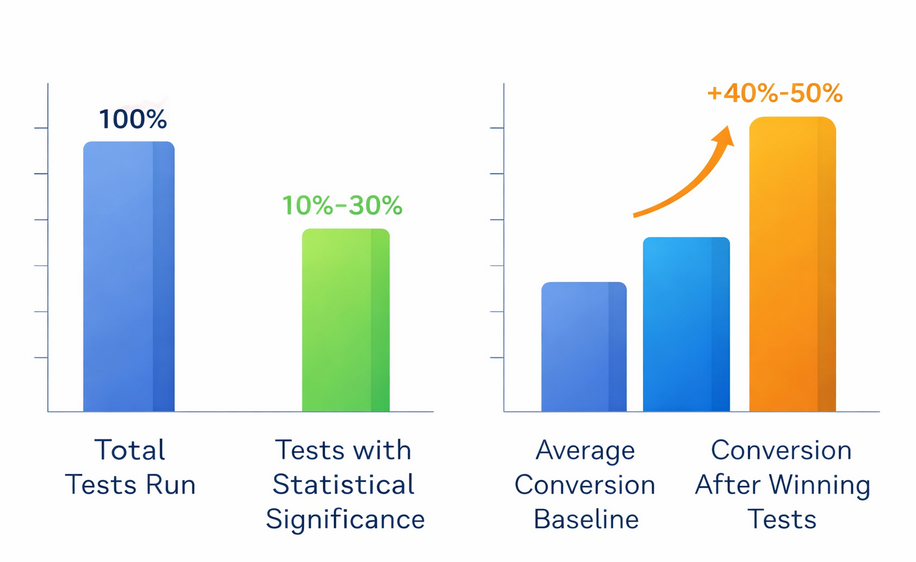
Only a small proportion of A/B tests reach statistical significance, but those that do can deliver major conversion improvements
Industry data consistently shows that advertisers who rely on structured testing and performance analysis outperform those who optimize purely on assumptions. According to aggregated market studies, only about 10–30% of A/B tests reach statistical significance, yet winning tests often generate conversion lifts of up to 40–50%. This gap highlights why evidence—not opinions—must guide optimization.
From Assumptions to Evidence
Evidence-based paid media decisions are built on three pillars:
1. Controlled Experimentation
Testing variables such as creatives, audiences, bidding strategies, and landing pages allows advertisers to isolate what actually drives results. Without structured experimentation, performance improvements are often accidental and difficult to scale.
Key insight: while most tests fail to produce meaningful results, the few that do can deliver disproportionate gains. This makes disciplined testing essential rather than optional.
2. Reliable Attribution Models
Last-click attribution oversimplifies reality and often misrepresents the true value of channels and campaigns. Evidence-driven teams rely on attribution models that account for multiple touchpoints, time decay, and incremental impact.
Research across digital advertising platforms indicates that multi-touch attribution can reallocate 10–20% of spend toward higher-performing campaigns, improving overall efficiency without increasing budgets.
3. Consistent Measurement Frameworks
Metrics must be defined before campaigns launch. Clear success criteria—such as cost per qualified lead, conversion rate lift, or revenue per impression—prevent teams from chasing vanity metrics and ensure decisions remain objective.
Using Data to Scale What Works
Scaling paid media is not about increasing budgets blindly. It is about identifying repeatable patterns backed by data.
Advertisers who scale only proven combinations of:
-
Creative format
-
Audience segment
-
Placement and bidding strategy
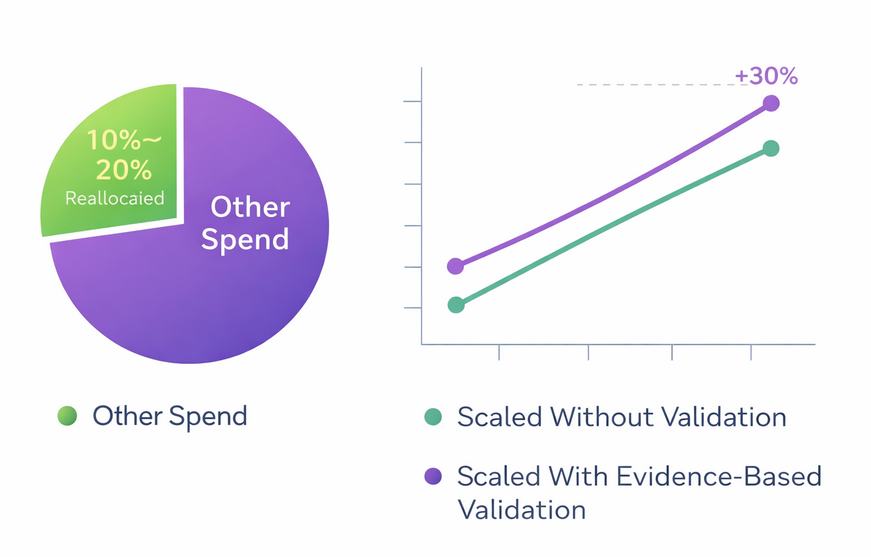
Attribution insights can shift budget toward better performers, and scaling with validated evidence preserves up to 30% more efficiency
are significantly more likely to maintain performance stability. In fact, performance benchmarks show that campaigns scaled after validated testing retain up to 30% more efficiency compared to campaigns scaled without prior validation.
Common Evidence-Based Decisions That Outperform
Evidence-led teams consistently prioritize:
-
Cutting underperforming segments early based on statistically valid data
-
Investing more heavily in creatives that demonstrate sustained lift
-
Reallocating spend weekly or biweekly based on performance trends rather than daily fluctuations
This approach reduces emotional decision-making and replaces it with repeatable, defensible logic.
Building a Culture of Evidence
Evidence-based paid media is not just a tactic—it is a mindset. Teams that document tests, analyze failures, and share insights internally improve faster over time. Over months, this creates a knowledge base that compounds performance gains.
Organizations that adopt structured testing and analytics processes report 15–25% faster optimization cycles, allowing them to respond more effectively to market changes.
Related Articles You May Find Useful
Final Thoughts
Paid media success is rarely about discovering a single breakthrough idea. It is about making hundreds of small, evidence-backed decisions that collectively drive sustainable growth. When data replaces guesswork, performance becomes predictable—and scalable.
