Profit hides in plain sight — but only if you know where to look.
Most advertisers focus on ROAS, cost per purchase, or click-through rates. And while those are important, they don’t always tell the whole story. Because if the product you’re promoting barely leaves you with anything after costs, what’s the point of scaling?
Let’s talk about high-margin advertising — the kind that actually puts money in your pocket.
What Is a High-Margin Product?
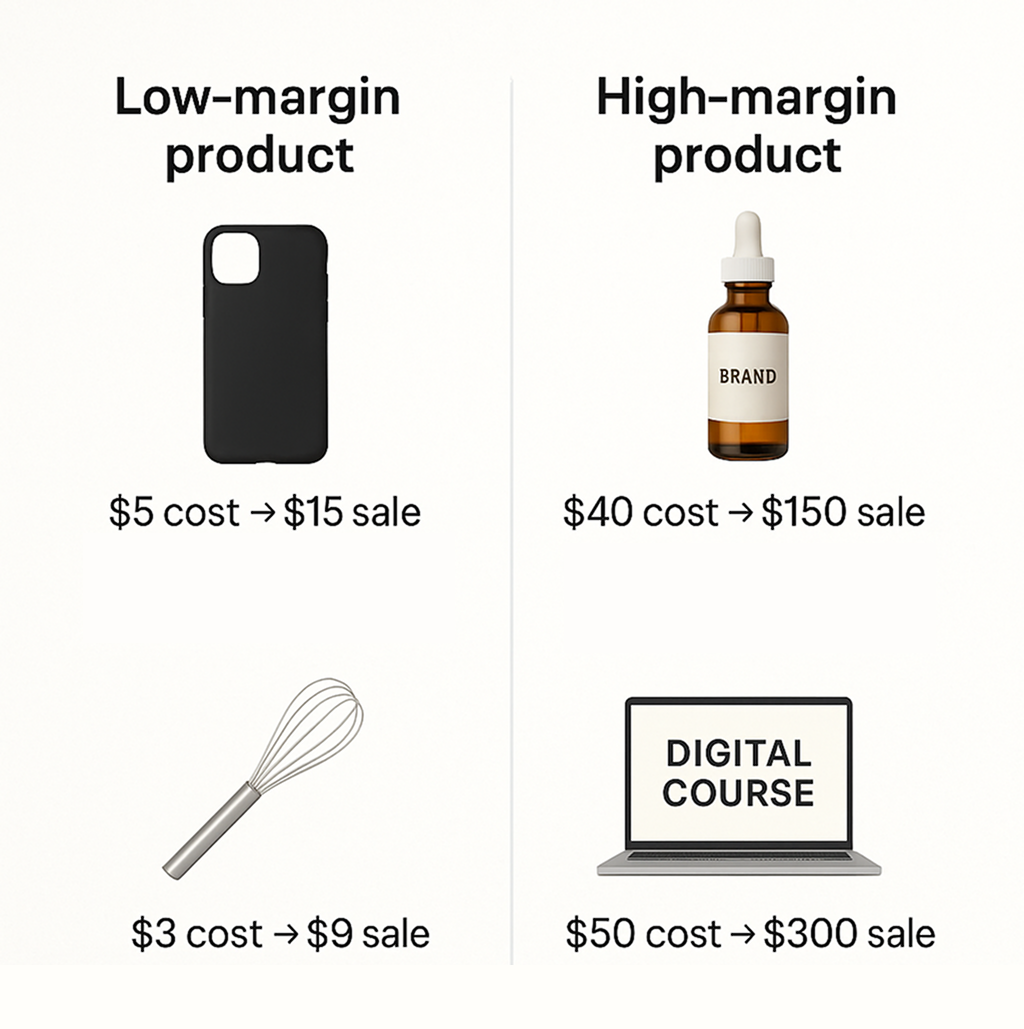
A high-margin product gives you room to advertise without eating up your profit. It’s not just about having a low cost of goods.
It’s about having:
-
A healthy markup, often 3x or more;
-
Scalable fulfillment, like digital or low-overhead physical goods;
-
And low return or support issues.
Think digital products, luxury skincare, premium accessories, or bundles where perceived value outweighs cost.
But here’s the kicker — advertising high-margin products isn’t as simple as turning on a campaign and watching the cash roll in. You need to craft your ads differently, position your offer with care, and make sure your funnel matches the buying mindset.
Why Most Advertisers Waste Budget on Low-Margin Offers
You’ve probably seen it before: someone pouring thousands into ads, chasing scale — but barely breaking even.
When your product leaves you with $5 profit per sale, a $4.80 cost per acquisition looks fine on paper. But scale that up and suddenly, your margins vanish with every refund, support ticket, or fluctuation in CPMs.
Chasing low CPA isn't the same as chasing real profit. High-margin ads flip the equation. You can afford higher CPAs and still make real money.
To make that work, you also need to avoid common campaign pitfalls. If you're seeing messages like “Ad Set May Get Zero” in your Meta Ads Manager, here’s why it happens — and how to fix it.
Step 1: Match Your Funnel to the Margin
High-margin products often take longer to sell. The price tag may be higher, the perceived risk greater — so your funnel needs to build value before asking for the sale.
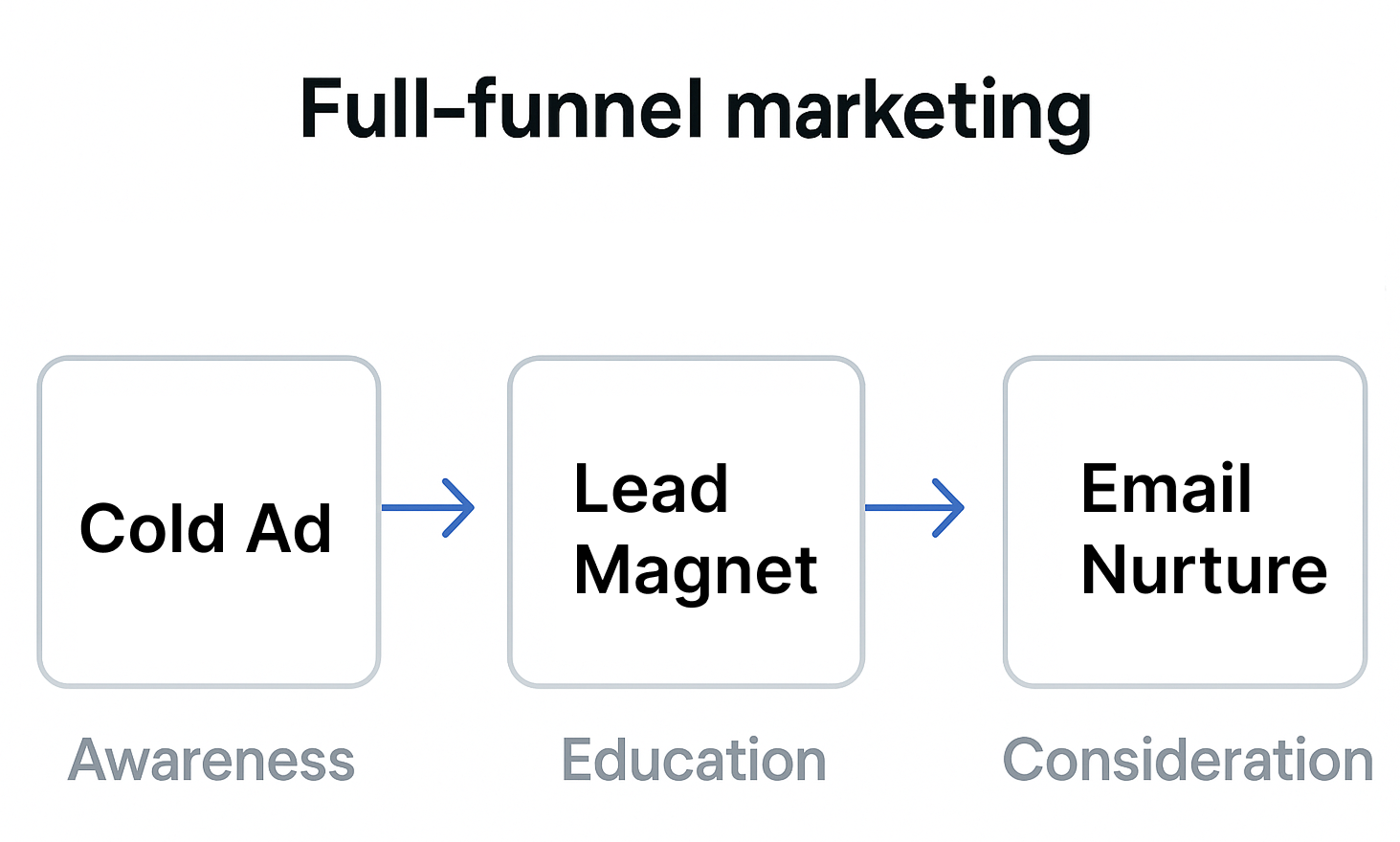
Instead of direct-to-purchase ads, try:
-
Lead generation first: Capture email or phone for nurturing.
-
Quiz funnels: Help them “discover” the best option for them.
-
Video sequences: Showcase product benefits, transformations, or use-cases.
For a step-by-step breakdown of how to structure these campaigns, check out this Facebook ads funnel strategy guide.
Step 2: Focus on Perceived Value, Not Features
You’re not just selling a premium toothbrush or a course — you’re selling what it means to own it.
Ask yourself:
What transformation does this product represent?
Instead of just listing specs, focus on the outcome:
-
Luxury skincare becomes confidence without makeup.
-
Business software becomes less stress and more time.
-
Digital courses become financial independence or freedom.
If your ads look good but still don’t convert, there’s a good chance your ad strategy isn’t aligned with the product value. Fixing this gap is critical for high-margin campaigns.
Step 3: Use Strong Creative Hooks That Justify the Price
Higher prices need stronger storytelling. The scroll-stopper matters even more.
Some high-performing creative angles for high-margin products:
-
“I thought it was overpriced… until I used it.”
-
“Here’s why this $90 moisturizer replaced my $20 one.”
-
“Most [niche] tools suck. This one doesn't.”
Want to test variations faster without burning budget? Learn how to A/B test Facebook ad creative effectively.
Step 4: Structure Your Offer for Higher AOV
You already have profit margin on your side. Now amplify it.
Try these offer enhancements:
-
Bundling: Combine products to increase perceived value.
-
Anchor pricing: Show the regular price first, then reveal a “deal.”
-
Bonus stacking: Add limited-time extras that cost you little but feel high-value.
If you’re promoting bundles, this guide to Facebook bundle ads walks through smart copy and targeting examples that drive AOV up — without killing ROAS.
Step 5: Segment Your Audiences Intelligently
Running high-margin ads to broad, cold audiences is like handing out Rolexes at a flea market.
You need to warm up your targeting:
-
Retarget high-intent visitors with upsells or limited offers.
-
Build value-based lookalikes using high LTV purchasers.
-
Layer interest stacks to match premium buyer personas.
If you’re unsure how to refine your targeting, start with Facebook Ad Targeting 101 — then build toward more advanced segmentation.
Step 6: Don’t Just Track ROAS — Track Margin
A 3x ROAS on a 10% margin product? That’s a loss.
A 1.5x ROAS on a 70% margin product? That’s a win.
Get in the habit of measuring:
-
Contribution margin per campaign.
-
Lifetime value vs. acquisition cost.
-
Cost per profitable purchase (CPP).
Not all metrics give you the full picture. Learn which Facebook ad metrics actually predict profitability before scaling.
Final Thoughts
Running ads for high-margin products isn’t about playing it safe — it’s about playing smart.
You can afford longer funnels, bolder creative, and higher acquisition costs when each sale leaves room for real growth. But it takes discipline. You have to think beyond clicks and impressions and get serious about value per conversion.