Advertising does more than generate clicks. It creates impressions — mental ones — that shape how people perceive your brand over time.
Whether or not a campaign leads directly to sales, it influences how your brand is seen, remembered, and judged. That perception builds across dozens or even hundreds of exposures.
If the signals you're sending are inconsistent, unclear, or poorly executed, you’re not just wasting budget — you're damaging long-term growth.
Why Brand Perception Fuels Long-Term ROI
People don’t evaluate every purchase decision from scratch. They rely on prior impressions, associations, and trust built through repeated exposure.
Brands with strong perception enjoy more efficient advertising. They face less resistance, attract more loyalty, and require less explanation in-market.
Here’s how some of the most recognized brands use advertising to reinforce perception:
-
Coca-Cola doesn’t advertise product features. It leans into emotion, memory, and shared experience. Its ads strengthen the association between the brand and happiness or togetherness — not taste or ingredients.
-
Apple uses minimalist advertising to reinforce values like innovation, clarity, and control. Even when promoting specific products, the tone and visuals maintain brand consistency. This allows Apple to charge premium prices while still appearing accessible.
-
Adidas blends performance and culture. Whether through celebrity partnerships, event tie-ins, or product launches, its ads position the brand as both athletic and expressive — without ever needing to say it outright.
These companies don’t rely on each ad to do all the work. Instead, each campaign fits into a longer narrative that gradually shapes consumer belief.
For businesses with smaller budgets or limited recognition, this still applies — and often matters more. You can't afford to confuse or bore your audience.
Every Ad Sends a Signal — Even Without a Click
Audiences absorb more than they consciously process. When someone sees your ad, even briefly, their brain logs something — tone, mood, style, credibility.
This is especially important when users don’t click. Just seeing your brand repeatedly builds familiarity and creates mental shortcuts for future decisions.
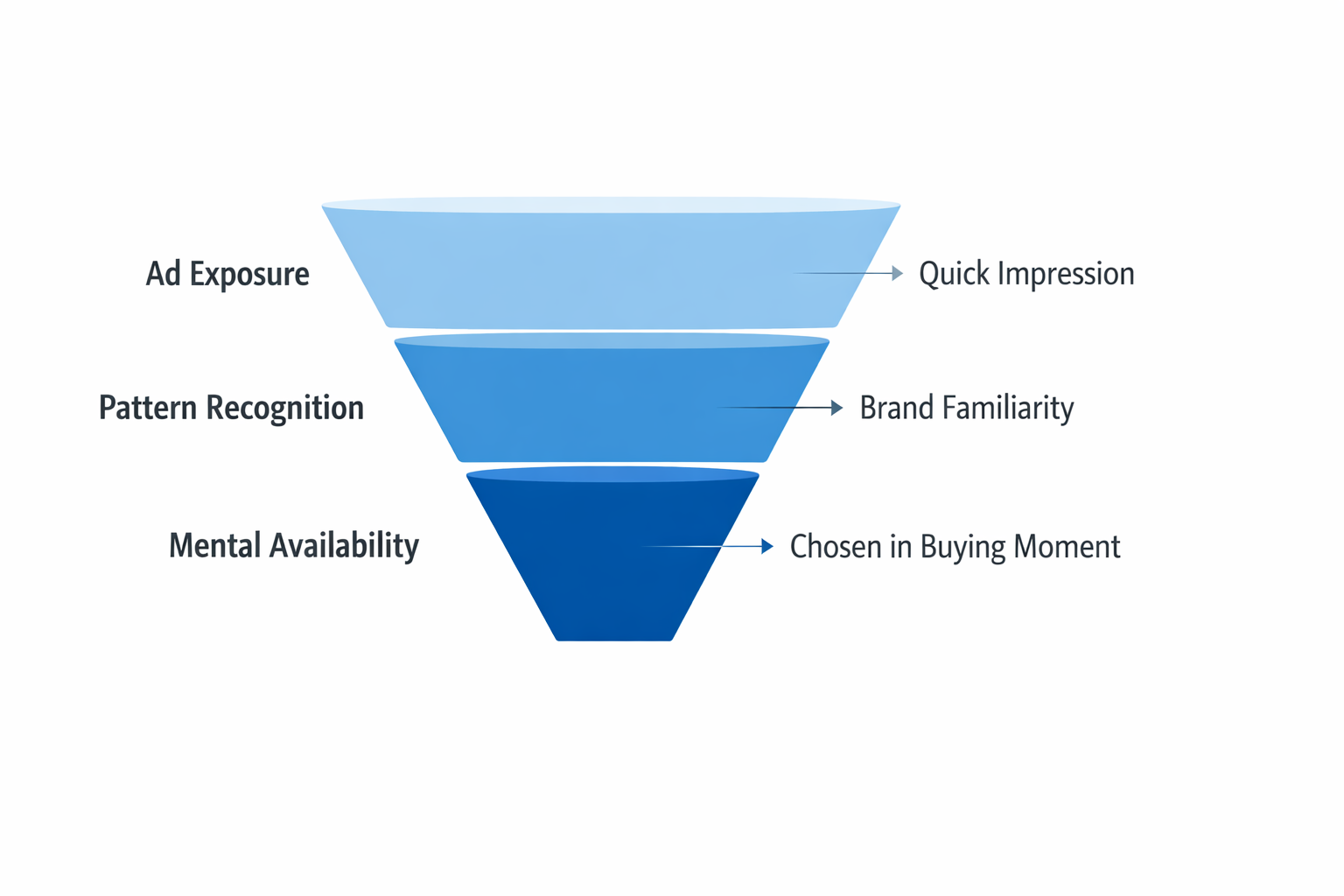
What are those signals?
-
Design quality: Low-effort visuals suggest a low-effort product. Clean, thoughtful design implies attention to detail.
-
Tone of voice: Words like “fast,” “serious,” or “playful” don’t just describe a product — they shape brand personality.
-
Visual consistency: A brand that constantly shifts styles is harder to recognize. Inconsistency can feel unstable or unserious.
If your ads aren’t converting but look great, the issue may be with brand clarity or emotional mismatch. Learn how to spot that in Why Your Facebook Ads Look Great But Still Don’t Sell.
Repetition Builds Familiarity — But Only When Aligned
Seeing the same brand repeatedly can build trust. But repetition without alignment causes confusion.
A series of disjointed ads — even if well-produced — creates mixed messages. People remember the parts, but not the brand.
Repetition works best when:
-
The message is stable. For example, a brand that always leads with “sustainability” builds stronger associations than one cycling between trends.
-
The visuals support the message. If the value is speed, show it visually — with motion, brevity, and fast-paced formats.
-
The offer matches the brand tone. Selling premium products with bargain-bin language undercuts credibility, even if it drives clicks.
You don’t need to repeat the same ad. But each variation should reinforce the same idea.
Mixed Messages Break Trust
When users can’t tell who you are or what you stand for, they default to indifference — or worse, skepticism.
Ads that contradict each other create friction. You may still get traffic, but the brand becomes harder to trust.
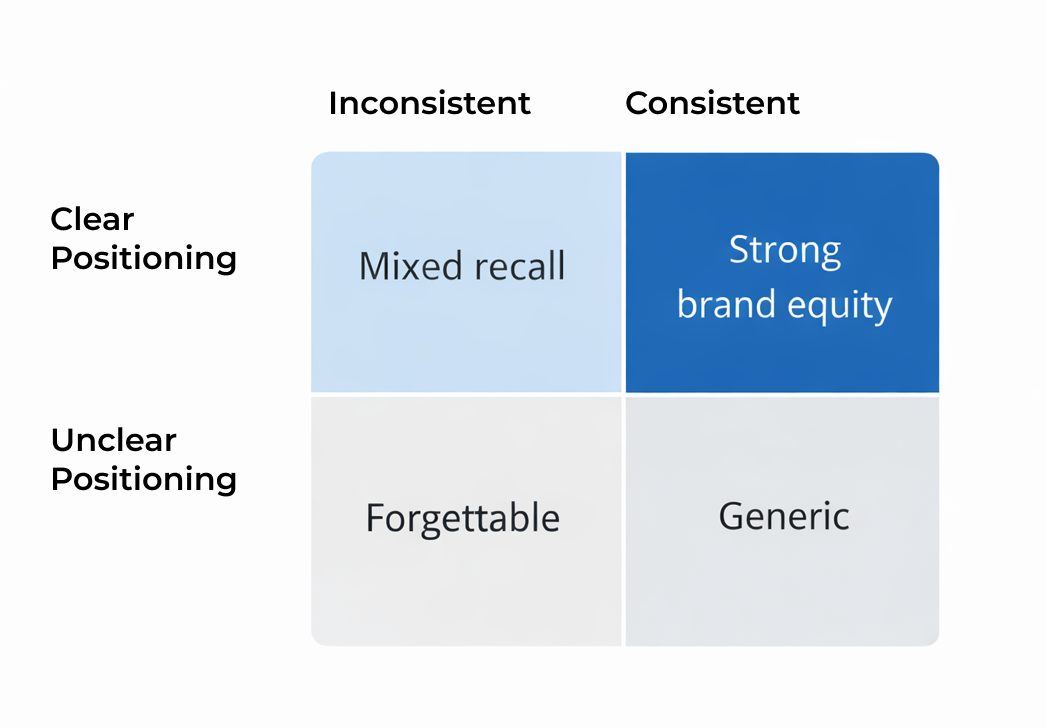
Common issues include:
-
Frequent tone shifts: If one ad is serious and another is silly, the brand lacks a center.
-
Conflicting audiences: Trying to speak to everyone can dilute your message. Users feel you’re not really speaking to them.
-
Visual inconsistency: Switching from glossy, premium visuals to low-budget user videos (without a bridge) weakens recognition.
You can vary creative — but only within a defined range that reflects your brand.
How to Shape Brand Perception Intentionally
Perception can’t be controlled fully — but it can be guided. To do that, your advertising needs to serve a purpose beyond immediate conversions.
1. Define What You Want to Be Known For
If someone saw ten of your ads over six months, what ideas should stick?
Start by choosing a few brand attributes to reinforce across all campaigns. These might include:
-
“Premium, efficient, discreet” for a tech brand;
-
“Simple, affordable, supportive” for a wellness product;
-
“Bold, unconventional, fun” for a CPG brand.
Write these down and use them as a filter for creative review.
If you’re unclear on how to connect these traits to actual business outcomes, read How to Balance Short-Term Sales and Long-Term Brand Building.
2. Build Creative That Reflects Those Traits
Creative isn’t just execution. It’s where your brand meaning becomes visible.
That includes:
-
Layouts and color choices;
-
Visual hierarchy and pacing;
-
Word choice and sentence structure;
-
Voiceover tone and sound design.
If your ads don’t reflect your values, the audience won’t either.
3. Use Metrics That Reflect Memory and Meaning
Clicks and conversions matter. But they’re short-term indicators. If you’re shaping perception, you also need to track memory signals.
Look at:
-
Branded search volume over time;
-
Direct and return traffic to your site;
-
Saves, shares, and engagement patterns that show intent;
-
Customer feedback and survey recall post-campaign.
Brand-focused campaigns should also build trust signals. For tips on how to approach that, see Make Your Facebook Ads a Trust-Building Machine.
Final Thoughts
Every ad is either adding to — or subtracting from — your brand’s perceived value.
If your advertising is consistent, clear, and emotionally aligned, it makes future decisions easier for your audience. When they finally need your product, they’ll already know who to choose.
But if your ads are chaotic, unfocused, or forgettable, you're just spending to stay invisible.
Advertising isn’t just a cost of doing business. It’s how you build meaning over time — meaning that pays off long after the campaign ends.