In online advertising, not every click or conversion defines success. Sometimes, the real impact of an ad appears much later — when a customer remembers your brand at the moment of purchase.
That is the power of brand recall, and for many advertisers, it is a stronger growth driver than short-term performance metrics.
This article explains when and why brand recall should be a strategic priority, how to measure it, and how to design campaigns that strengthen it on platforms like Facebook and Instagram.
Why Brand Recall Is the Foundation of Long-Term Growth
Most advertisers optimize for immediate metrics such as click-through rate (CTR), cost per acquisition (CPA), or return on ad spend (ROAS). These metrics are useful, but they only capture direct response behavior.
Brand recall, on the other hand, focuses on mental availability — how easily a person remembers your brand when they enter the buying phase. This is what determines who gets chosen once the need arises.
To understand how recall complements short-term metrics, read The Difference Between Brand Marketing and Performance Marketing (And Why You Need Both).
The Role of Memory in Buying Decisions
Purchases rarely happen the same moment an ad appears. They often occur days, weeks, or even months later, depending on the product and category. During that delay, the strength of memory becomes the deciding factor.
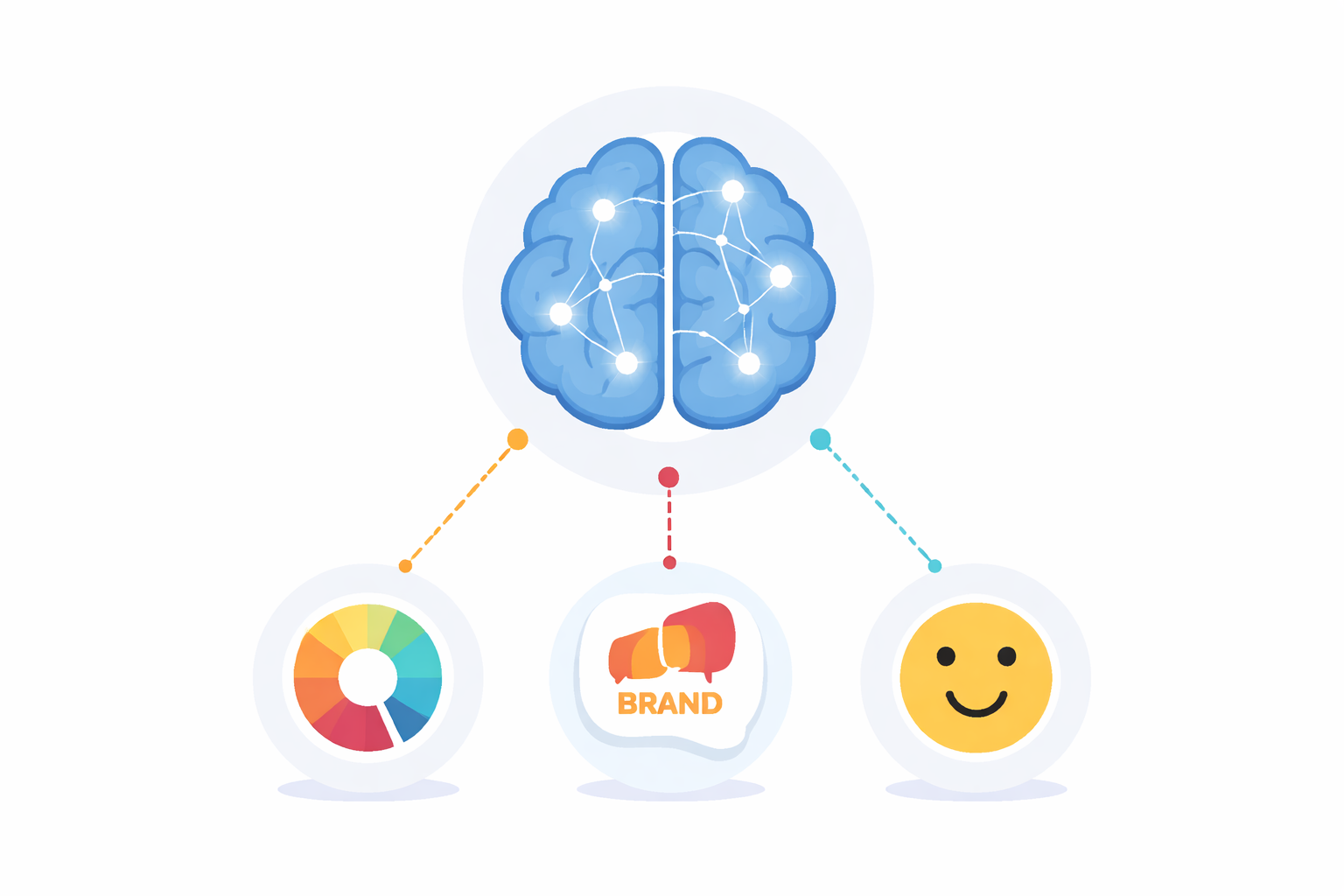
Your ad’s job, therefore, is to:
-
Create familiarity by using consistent brand cues, such as color palette, logo placement, and messaging style;
-
Build positive associations through relatable emotion, tone, or storytelling that connects to your audience’s goals;
-
Stay top-of-mind with steady exposure and coherent creative identity across channels.
When campaigns are focused only on clicks or conversions, they often fail to reinforce these mental signals — leaving competitors with stronger recall to capture the eventual sale.
For additional insights on how to track and interpret brand memory, explore What Brand Recall Metrics Really Tell You About Campaign Effectiveness.
Brand Recall vs. Brand Recognition
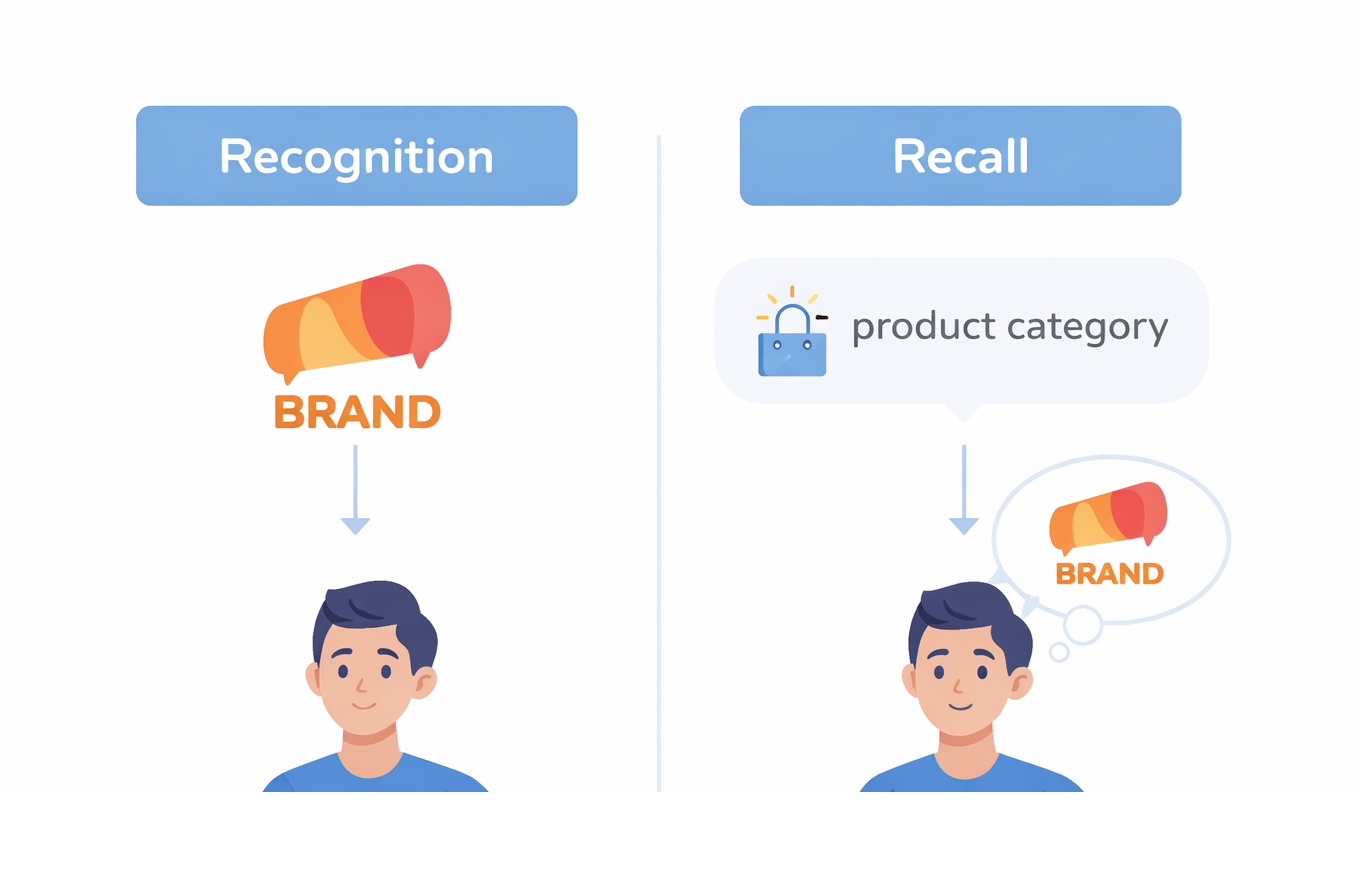
These two concepts are often confused, but they measure very different outcomes.
-
Recognition occurs when people see your brand name, logo, or product and can identify it as familiar. It relies on external cues.
-
Recall happens when people think of your brand without any cues. For example, when someone thinks “project management software” and immediately names “Asana” or “Trello.”
Recognition means people have seen you before. Recall means you occupy mental real estate in your category.
The stronger your recall, the more likely customers are to search for your name, recommend you, or choose your offer over another.
You can learn how storytelling reinforces memory in The Role of Ad Sequencing in Building Brand Recall.
When Brand Recall Should Be the Primary Objective
Brand recall is not always the top priority, but in several strategic scenarios, it drives greater return over time.
1. Early-Stage Funnel Campaigns
When you are reaching new audiences, conversions are rarely the first step. Most people need several exposures before they trust or even remember your brand.
In this stage, focus on visual and verbal consistency. Use clear logos, distinctive color systems, and repeated phrasing in your ads. The goal is to build recognition that compounds with each impression.
2. Highly Competitive or Crowded Markets
In saturated categories such as fashion, fitness, or SaaS, direct response ads often get lost in identical messaging.
Brand recall strategies — such as emotional storytelling, unique creative angles, and repetition across placements — create a memory advantage that performance-only campaigns cannot achieve.
Check out Stand Out and Stay On-Brand with Stunning Facebook Ad Creatives for best practices on maintaining design and tone consistency.
3. Long Sales Cycles or Considered Purchases
If your audience takes time to decide, recall becomes essential. Real estate, finance, and B2B software buyers may see your ads months before purchase. The goal is not a click today but mental availability when the decision moment arrives.
How to Build Brand Recall Through Meta Ads
Facebook and Instagram are designed for repetition, storytelling, and reach — the three elements most critical to memory formation. Use these features strategically to improve recall.
1. Strengthen Brand Cues Across Creatives
Every visual element should connect back to your identity. Keep logo placement consistent, apply the same tone across captions, and use a defined visual language. Even small inconsistencies can weaken your brand’s recognizability over time.
2. Use Frequency and Variation Intelligently
People rarely remember an ad after a single exposure. Effective recall happens after multiple encounters that reinforce the same message in slightly different contexts.
Use Meta’s Advantage+ placements or broad targeting to maximize exposure diversity while maintaining message coherence. Rotate variations that echo the same key ideas rather than unrelated creatives.
To manage repetition effectively and prevent burnout, review How to Avoid Ad Fatigue and Keep Optimal Ads Conversion Rate.
3. Build Sequential Storytelling
Ads that connect into a narrative are more memorable than disconnected posts. Design a sequence such as:
-
Ad 1: Introduce the problem your audience faces;
-
Ad 2: Present your brand’s distinctive solution;
-
Ad 3: Show the emotional or practical outcome of success.
Sequential storytelling activates associative memory, helping viewers retain both your brand and message longer.
4. Track the Right Indicators of Recall
Clicks and conversions measure short-term response. To assess recall, monitor indirect behavioral signals that indicate mental presence:
-
Branded search volume increases, visible in Google Search Console;
-
Repeat or direct website visits, found in GA4 or your CRM;
-
Saved or shared social posts, measured in Meta Insights.
These behaviors suggest that your brand is remembered without needing a paid prompt — a reliable sign of strong recall.
Balancing Immediate Results with Long-Term Impact
Strong marketing systems integrate both objectives: performance today and memory tomorrow.
Run direct response ads that convert warm audiences, but maintain always-on brand campaigns that nurture recognition and trust.
This creates a self-reinforcing loop:
-
Consistent brand campaigns grow familiarity;
-
Familiarity increases conversion efficiency and lowers acquisition costs;
-
Improved performance justifies higher spend, which in turn strengthens brand memory.
To learn how to balance these two forces, read Brand vs Performance: Balance That Works.
Final Takeaway
Immediate action metrics will always matter, but they represent only the visible layer of marketing performance. Brand recall operates beneath the surface — shaping how customers think, remember, and decide long after an ad impression fades.
The next time you evaluate your campaigns, ask not only who clicked but who will remember. Because in a competitive digital market, being remembered is often more profitable than being noticed.