In many Meta Ads accounts, campaigns do not fail because of strategy. They fail because the person responsible cannot access the asset they need.
A media buyer may be part of the business portfolio, but without access to the ad account, Page, or Instagram profile, they cannot launch or adjust campaigns. This creates a gap between responsibility and execution.
Asset access is what turns roles into actual campaign activity.
What assigning business assets actually means
Inside Meta Business Suite, business assets include the core components required to run and manage campaigns. These typically include ad accounts, Pages, Instagram accounts, and other connected tools such as catalogues or datasets.
Assigning assets defines what each person can do with those resources. It determines whether they can manage campaigns, view performance, or make structural changes.
You can assign assets at two different points:
-
When adding a new person to the business portfolio.
-
After the person has already been added.
This article focuses on the second case, where users already exist but need access to specific assets to perform their tasks.
How asset assignment works in practice
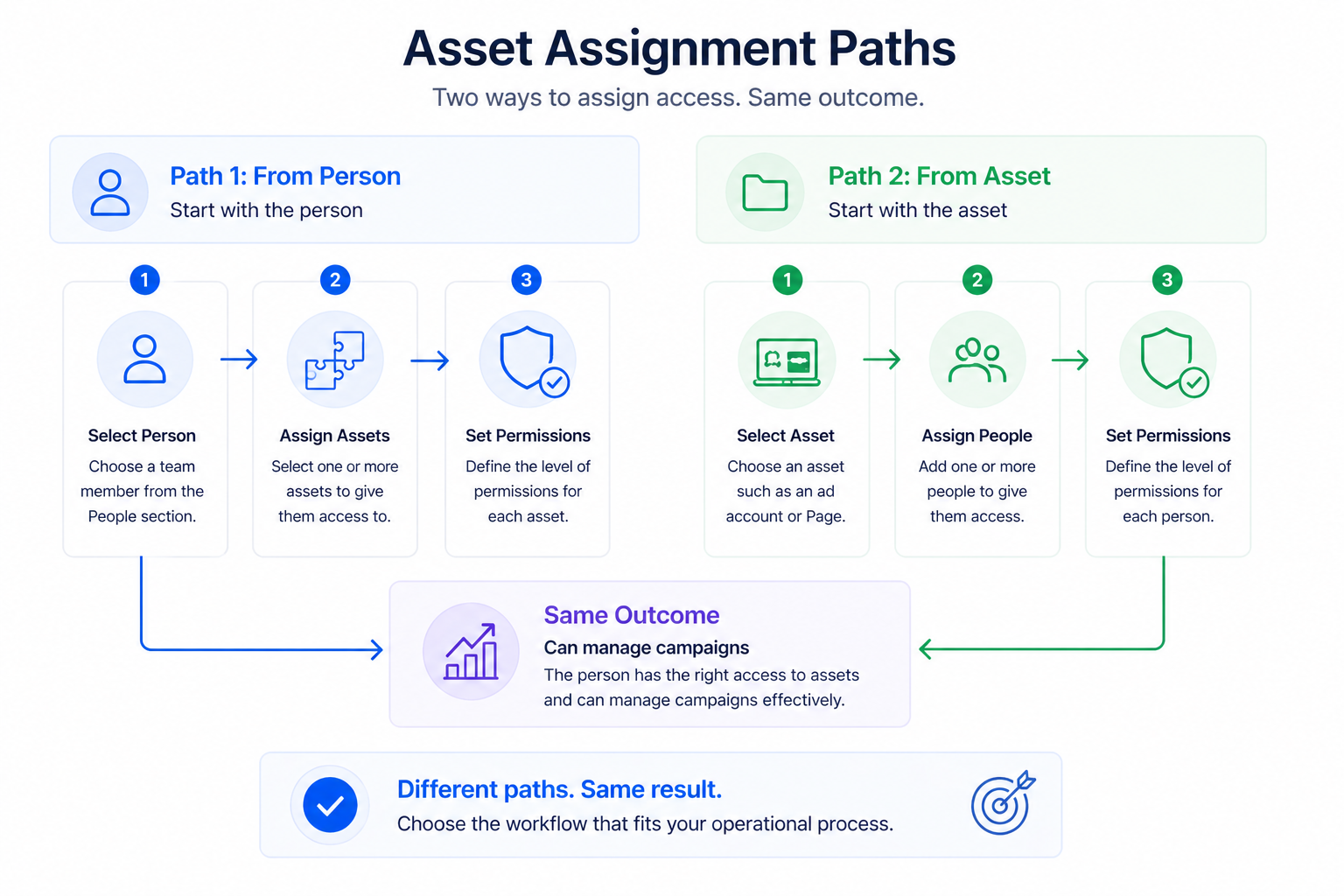
Meta Business Suite provides two ways to assign access, depending on how your workflow is structured.
The first approach starts with the person. This is typically used when onboarding team members:
-
Select a person from the People section.
-
Assign one or more assets to them.
-
Define the level of permissions for each asset.
The second approach starts with the asset. This is more common when new assets are added:
-
Select the asset (for example, an ad account or Page).
-
Assign one or more people to it.
-
Define the permissions for each person.
Both approaches achieve the same outcome, but they reflect different operational situations.
Why this affects campaign performance
Meta campaigns depend on continuous adjustments. When performance changes, teams need to act quickly.
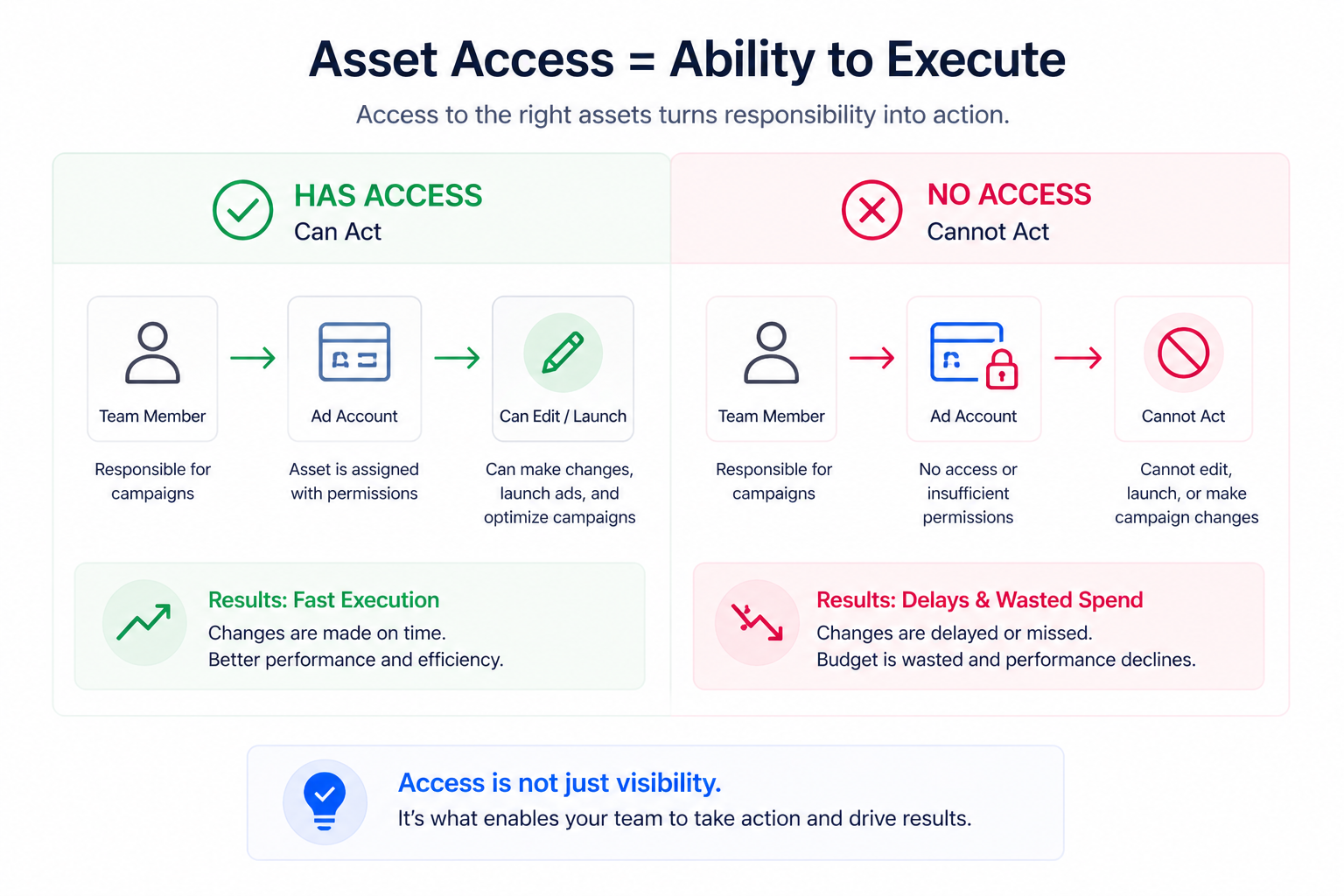
If asset access is missing or incomplete:
-
Campaign updates are delayed.
-
Budget adjustments are not applied in time.
-
New creatives cannot be launched.
The system continues spending during these delays. This results in inefficient budget usage and slower optimization cycles.
These effects are visible in Ads Manager as ongoing spend without corresponding improvements in results. In many cases, teams attempt to fix this by changing targeting or creatives, while the real issue is execution friction.
This type of misdiagnosis is common in accounts struggling with performance, as outlined in Why Your Facebook Ads Aren’t Generating Leads and How to Fix It.
Business impact
Asset access issues create consistent inefficiencies rather than isolated problems.
When the right people cannot access the right assets:
-
Cost per acquisition increases due to delayed optimization.
-
Return on ad spend declines because scaling decisions are postponed.
-
Campaign learning becomes less stable due to inconsistent management.
These issues often go unnoticed because campaigns continue running. However, they directly affect cost efficiency and scalability.
Requirements before assigning assets
Asset assignment depends on several structural conditions being met.
In most cases:
-
You must have full control of the business portfolio.
-
The asset must already be added to the portfolio.
-
The person must already be part of the portfolio.
For certain asset types, such as Pages or Instagram accounts, you must also have full control of the asset itself.
If these conditions are not met, assignment will either fail or result in limited permissions.
External limitations from partners
In some setups, asset access is influenced by external partners.
If an agency or partner shares an asset with your organisation, your permissions are limited to what they assigned. This may prevent you from granting full control to internal team members.
This constraint is structural and cannot be solved internally. It requires coordination with the partner managing the asset.
Security and access control considerations
Assigning asset access also affects account security.
To maintain control while enabling execution:
-
Assign only the permissions required for each role.
-
Limit full control access to a small number of users.
-
Enable two-factor authentication where possible.
This approach reduces risk without slowing down campaign operations.
Common issues with asset assignment
Even when the process is followed, access problems can still occur.
Typical issues include:
-
The person cannot see or access the assigned asset.
-
Permissions are too limited for the required tasks.
-
Additional approval is needed from another admin.
Another frequent issue occurs when users try to assign assets without having full control of the business portfolio. In this case, key sections in Meta Business Suite may not be accessible at all.
Practical recommendations
Asset access should match how campaigns are actually managed.
Campaign managers need direct access to the assets they are responsible for. If they depend on others for routine actions, execution slows down and performance suffers.
It is also important to review asset access regularly. As teams grow or campaigns expand, outdated permissions create friction or risk.
Clear asset structure also improves overall account organization. When assets are aligned with teams and campaigns, reporting becomes more reliable and decisions are easier to implement. This is closely related to maintaining structured accounts at scale, as explained in How Agencies Structure Facebook Campaigns for Scalable Growth.
In accounts managing multiple brands or markets, this becomes even more critical. Without clear access structure, teams struggle to coordinate work across assets, which leads to inefficiencies. This is a common issue in complex setups, similar to challenges discussed in How to Stay Organized When Managing Multiple Ad Accounts or Brands.
Final takeaway
Assigning business assets is what enables real campaign execution.
Without the right asset access, even experienced marketers cannot manage campaigns effectively. When access is structured correctly, teams can act faster, reduce wasted spend, and maintain consistent performance across Meta Ads accounts.