Digital advertising is essential for businesses today, and automation has become a powerful tool for streamlining campaigns. It helps save time and effort by handling repetitive tasks like adjusting bids, testing ads, and optimizing targeting.
However, while automation can make your job easier, it can also hide problems with ad performance if you're not careful. In this article, we’ll explore how automation can mask issues and how you can spot and fix them to improve your ad results.
The Hidden Risks of Automated Ads
1. Over-Reliance on Automated Metrics
Automation platforms provide convenient performance metrics like clicks, conversions, and impressions. However, relying solely on these numbers can give you a false sense of security.
Sometimes, these numbers look good but don’t tell the whole story.
For example:
-
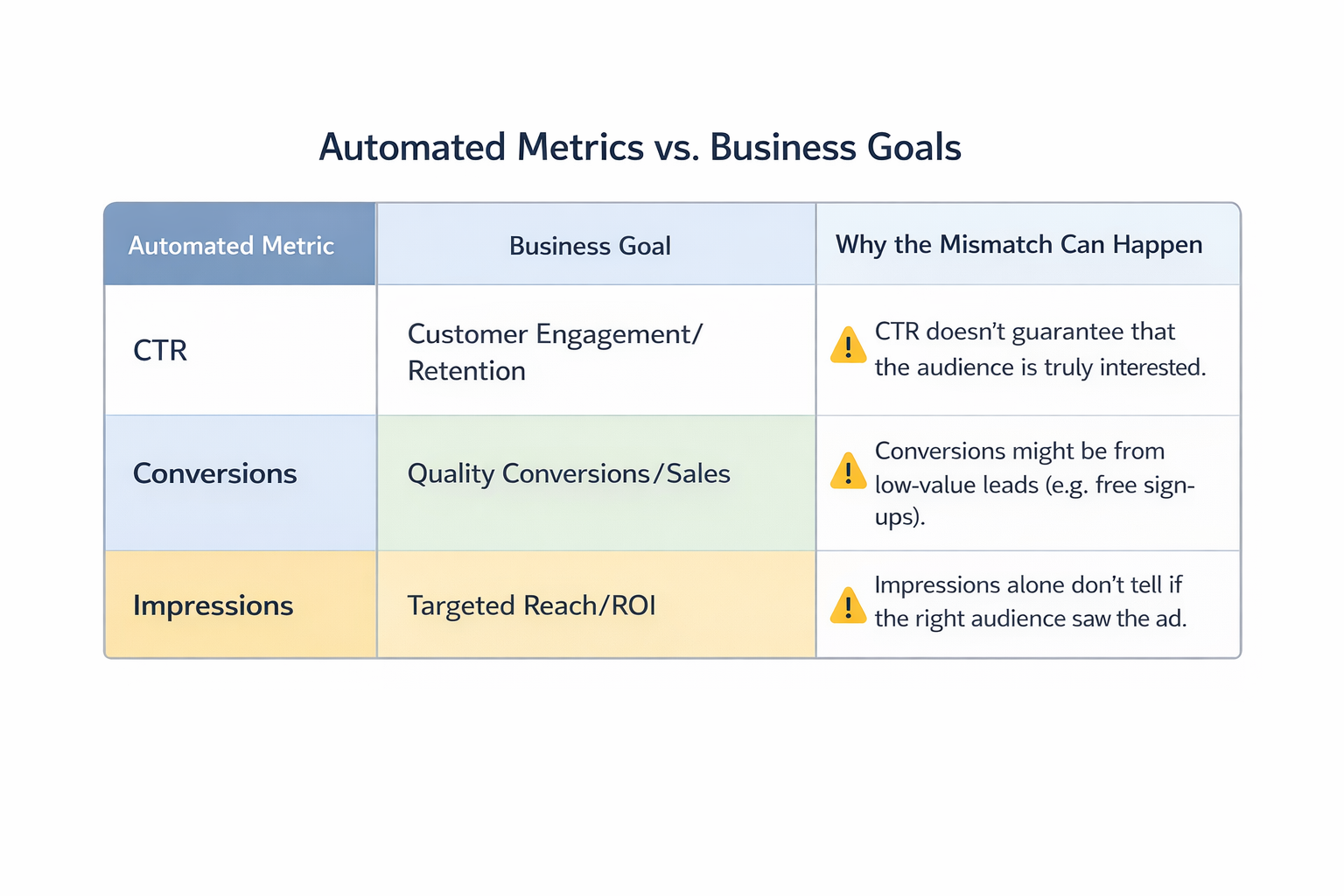
Click-through rate (CTR): A high CTR means people are clicking your ads, but it doesn’t tell you if they’re actually interested in what you’re offering. The clicks may come from users who aren’t your ideal customers.
-
Conversions: Conversion rates are essential, but without context, they can be misleading. Are your conversions from real buyers or just people signing up for a free trial? It’s important to understand the quality of the conversion.
-
Impressions: You might see high impressions, meaning many people saw your ad. But, are these the right people? Impressions alone don’t indicate whether your ad is reaching your target audience effectively.
These numbers are automated and optimized by algorithms, but they can hide underlying issues if not analyzed properly.
To dive deeper into attribution and understand how metrics like CTR and conversions should be viewed within the context of your business goals, check out How to Use Facebook Ads Attribution.
2. Lack of Context in Automated Decisions
Automation tools work by analyzing past data and optimizing future campaigns based on that data. While this saves time, it doesn’t always consider the full picture.
Automation doesn’t account for the unique circumstances of your current campaign.
For instance:
-
Seasonality: If you run ads around holidays or special events, automation might not adjust the strategy to reflect changing consumer behavior during these periods.
-
Budget shifts: If you increase your budget, the automation system might simply increase ad frequency without analyzing whether there’s enough demand to support the increase.
-
Ad fatigue: Over time, ads can lose their effectiveness. Automation might keep showing the same ad to the same people, even when it’s no longer generating engagement. Without manual intervention, this issue can go unnoticed.
Automated systems often continue running campaigns based on old data, and this can make issues harder to identify and fix.
If you want to learn more about avoiding ad fatigue and how to manage it, refer to How to Avoid Ad Fatigue and Keep Optimal Ads Costs.
Automation and Tracking Issues
1. Misaligned Attribution Models
Attribution models are how you track the effectiveness of your ads. They help determine where your conversions are coming from.
Many automated systems rely on default attribution models that may not match your business needs.
For example:
-
Delayed conversions: If your sales cycle is long, you may not see immediate results from your ads. Automation might look at a short attribution window, such as 1 day, and fail to account for purchases that happen days later.
-
Overemphasis on last-click attribution: If automation gives too much credit to the last interaction before a conversion, it could ignore the other touchpoints that led to a purchase.
Misaligned attribution can lead to misguided decisions, such as pausing a campaign that’s actually working but takes longer to show results.
To learn more about how misaligned attribution can impact your results, read How to Use the Facebook Attribution Tool to Optimize Your Facebook Ad Performance.
2. Focusing on the Wrong Metrics
Automation systems often focus on metrics that look good but don’t reflect the overall success of your campaigns.
For example, automated platforms may prioritize engagement (likes, comments, shares) or reach (how many people saw your ad).
But, these metrics don’t always align with your business goals, such as generating sales or building long-term customer relationships.
Here’s where automation can be misleading:
-
Engagement optimization: Automation might optimize for engagement (e.g., likes, comments, shares), but these actions don’t necessarily lead to sales or customer loyalty.
-
View-through conversions: Automated systems might give too much weight to view-through conversions (when someone sees your ad but doesn’t click on it) without considering whether those views ultimately lead to a purchase.
These optimizations can make it seem like your ads are doing well when they might not be meeting your true business goals.
To further explore metrics beyond CTR and how to focus on what really drives success, check out How to Analyze Facebook Ad Performance Beyond CTR and CPC.
Signs That Your Automated Ads Aren’t Performing
1. A Sudden Drop in Conversion Quality
If your conversions are dropping in quality, this may not be immediately obvious with automated reporting.
To spot this, keep an eye on how people are behaving on your website:
-
Bounce rates: Are people quickly leaving your landing page after clicking on your ad? This might indicate that the ad isn’t relevant to them.
-
Abandoned carts: Are customers adding products to their cart but then not completing the purchase? Automation doesn’t always spot this issue, but it’s crucial to track it manually.
If conversions look good on paper but the quality isn’t there, automation might be masking a deeper problem.
2. Audience Overlap
Automation can sometimes show ads to the same people repeatedly.
This can waste your budget and make your campaign less effective.
To avoid this:
-
Audience insights: Check if automation is targeting similar people across multiple ad sets. This overlap could hurt your performance.
-
Performance by audience: If one group of people is consistently underperforming, it might be because your ad sets are competing against each other for the same audience.
Automated systems don’t always adjust ad targeting effectively, so keeping track of your audience is essential.
3. Lack of Adaptation to Changes
The digital landscape is always changing, and automation may not respond quickly enough to these shifts.
For example:
-
New competitors: If a competitor launches a major campaign, your automated system might not adjust to counter it.
-
Shifting customer preferences: If your target audience changes or if trends shift, automation tools might not adapt fast enough.
Manual intervention can help you spot these changes and adapt your campaigns more effectively.
How to Fix and Improve Your Automated Ads
1. Regularly Review Performance Metrics
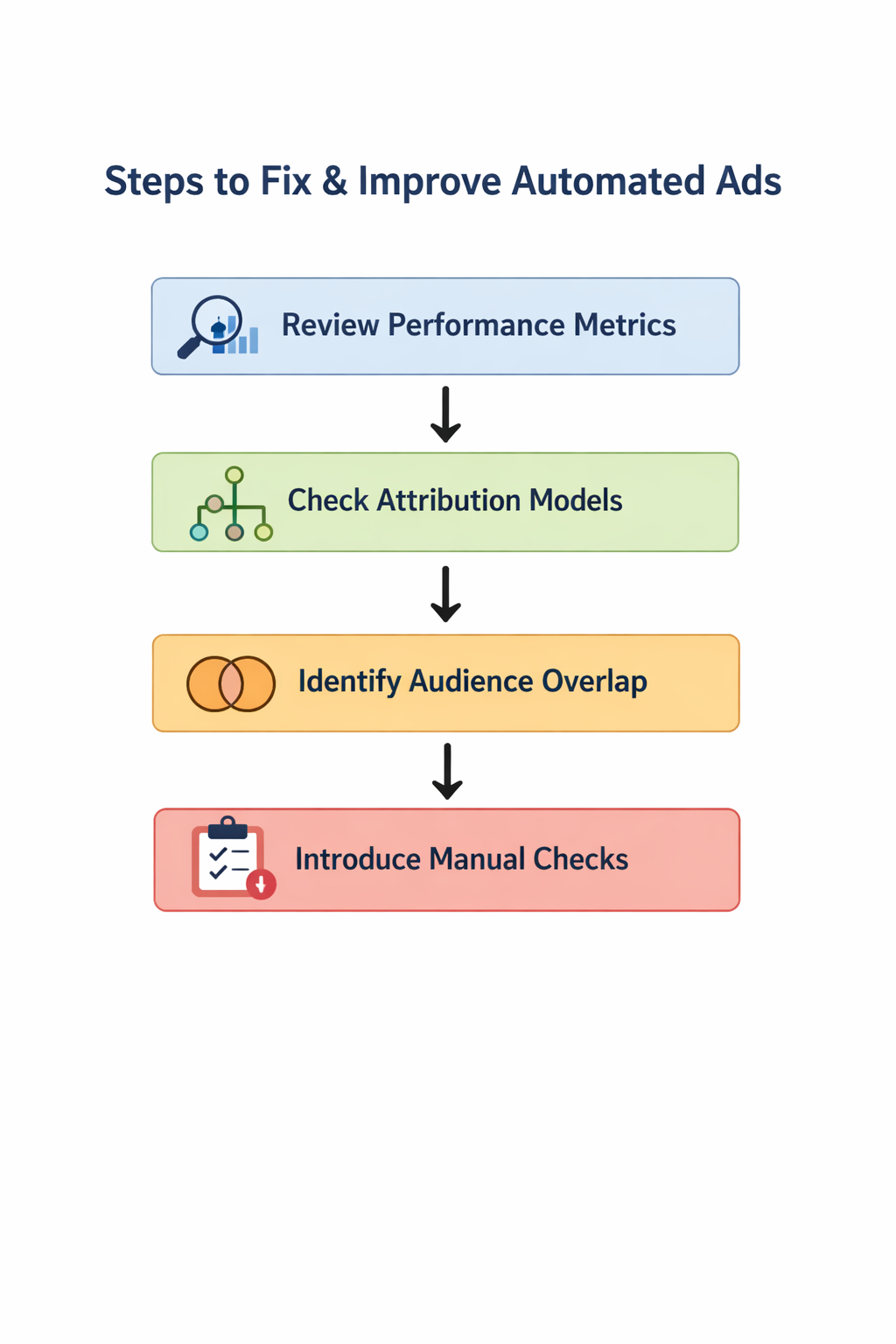
Don’t rely only on the automated insights provided by the platform. Set aside time to manually check your key performance metrics to see if they align with your business goals.
Regular review helps you identify problems before they grow too big.
2. Adjust Attribution Models
Review the attribution models in your automation system. For campaigns with longer sales cycles, consider adjusting the attribution window to better reflect how your customers make purchasing decisions.
3. Introduce Manual Checks
Even with automation, human oversight is crucial. Periodically check your campaigns for any unusual trends or performance drops.
Manual adjustments can often catch issues that automated systems miss.
Conclusion
Automation is a great tool for improving efficiency in ad campaigns, but it’s not perfect. If you rely too heavily on automated metrics without looking at the full picture, you may miss important performance issues.
By understanding the risks and monitoring your campaigns, you can spot problems early on.
Making adjustments when necessary ensures that automation enhances your ad performance rather than hiding potential issues. It’s crucial to keep a balance between automated optimization and human oversight.
This approach will help you get the best results from your campaigns.