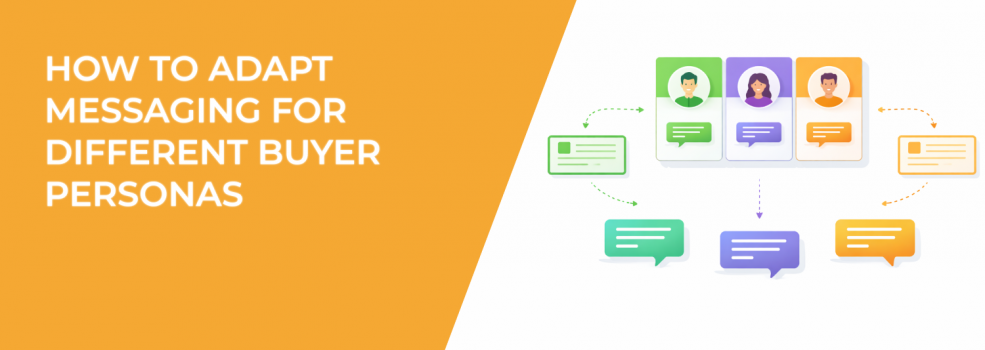
Most campaigns don’t break at the targeting level — they break at the message level.
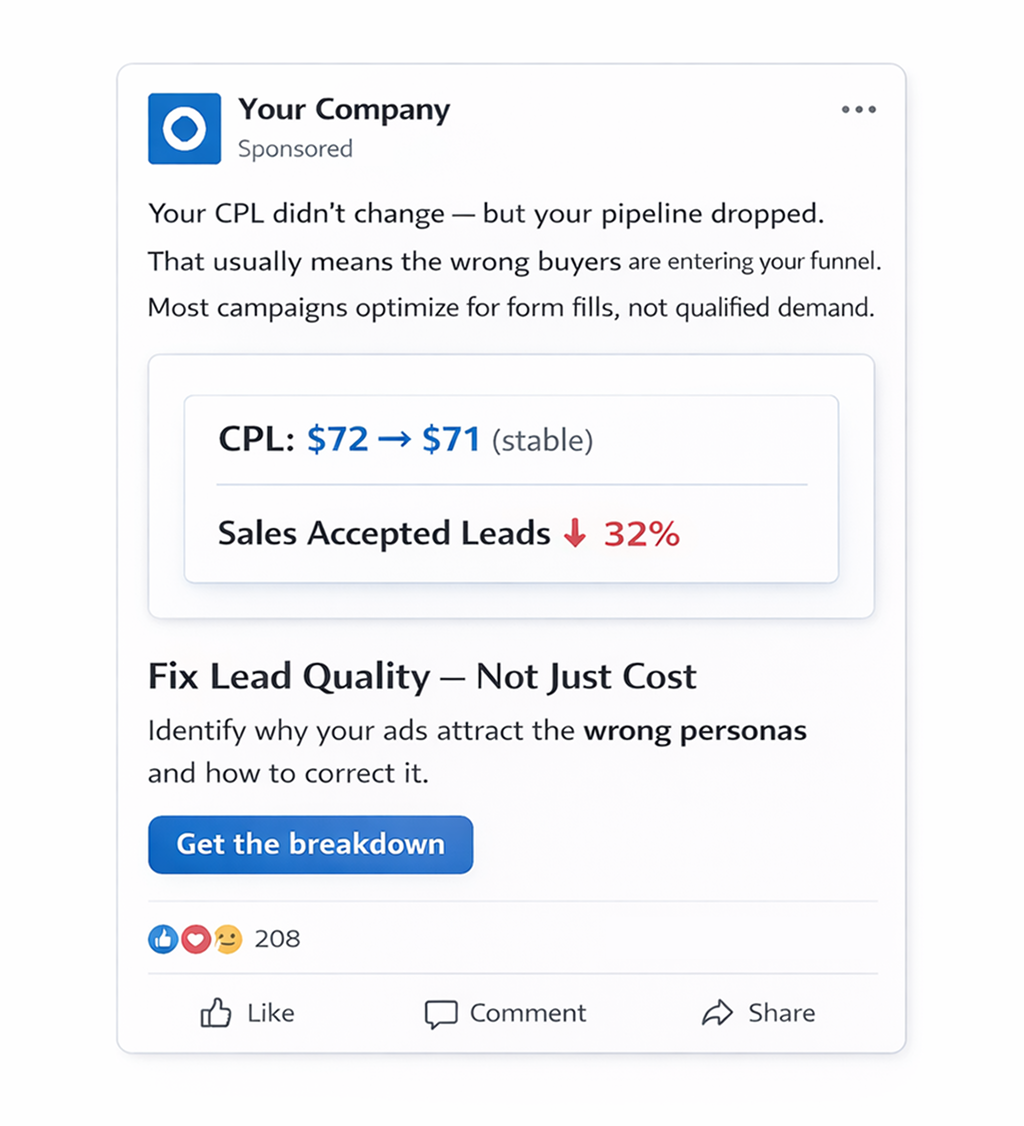
You can see it in Ads Manager. CTR holds steady, CPL looks acceptable, but sales rejects leads or deals stall after the first call. That disconnect usually comes from one issue — multiple buyer personas are entering the funnel through the same message.
Ad platforms don’t interpret intent the way you do. They cluster users based on behavior patterns. If your messaging doesn’t align with those underlying motivations, the algorithm optimizes toward the easiest engagement instead of the most valuable outcome.
Why One Message Doesn’t Work Across Different Buyers
When a single message is shown to multiple personas, the system blends their signals. Over time, it starts optimizing toward the most responsive group — not necessarily the one that converts.
You’ll typically notice:
-
High CTR but weak pipeline contribution.
The message attracts attention, but not the right intent. Users click out of curiosity rather than need. -
Stable CPL with declining lead quality.
More leads come in, but sales rejects a higher percentage. The message is too broad, so it pulls in low-fit personas. -
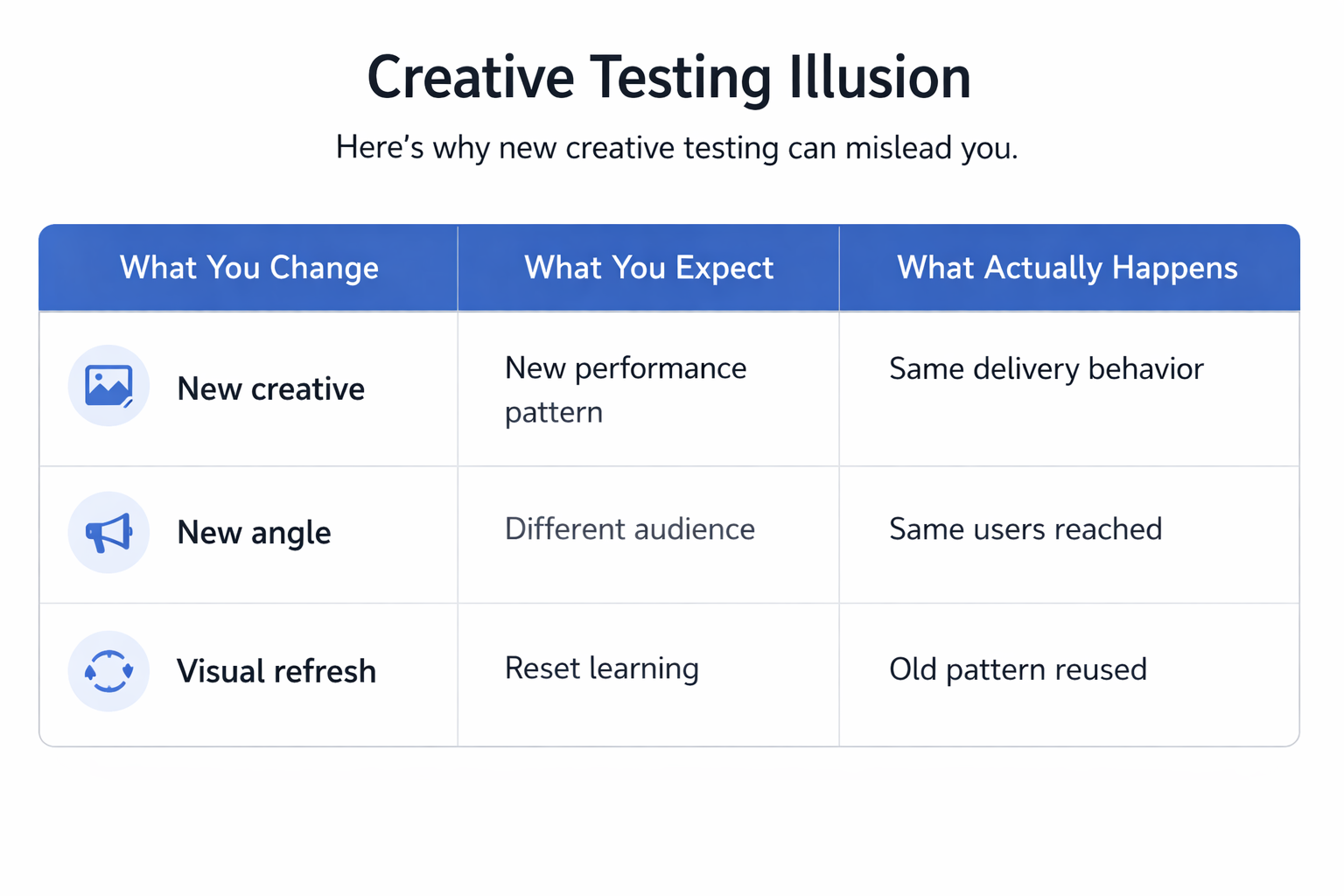
Creative testing that doesn’t move results.
New ads generate similar performance because they still appeal to the same behavioral cluster.
This is the same pattern described in Why Your Ads Get Clicks But No Sales: Fixing the Audience Misalignment. Clicks can increase while actual demand stays flat.
At this stage, optimization won’t fix the issue. The problem is structural.
Define Personas by Buying Triggers, Not Job Titles
Most teams build personas using roles or industries. That rarely translates into better messaging.
Two people with the same title can respond to completely different value propositions depending on their situation.
A more useful way to define personas is by what triggers action:
-
Problem-aware buyers.
They are actively trying to fix something. They respond to direct outcomes and clear resolution paths. -
Solution-aware buyers.
They already understand the category and compare approaches. They look for differences, not explanations. -
Status quo buyers.
They are not actively searching. They need a reason to question their current setup. -
Operator-level buyers.
They already run similar systems. They care about efficiency, tradeoffs, and performance mechanics.
If you don’t separate these groups, your messaging becomes generic. It may attract traffic, but it won’t filter intent.
This is closely tied to how audience definition works in practice — not just theory — as outlined in How to Define a Target Audience for Marketing: a Step-by-Step Guide.
Where Messaging Breaks in Real Campaigns
Persona mismatch shows up clearly if you know where to look.
Typical signals:
-
Strong ad engagement, weak landing page performance.
Different personas click for different reasons, but only one finds alignment on the page. -
Inconsistent sales conversations.
Prospects come in expecting different things because the message is interpreted differently. -
Frequency increases without conversion lift.
One segment keeps seeing your ads, while others never engage.
These are often misread as creative or funnel issues. In reality, they come from unclear messaging.
If a campaign looks healthy on the surface but doesn’t generate revenue, it usually falls into the category explained in Why Your Facebook Ads Look Great But Still Don’t Sell.
Build Messaging Around Decision Context
Once personas are defined, messaging should reflect how each group makes decisions.
This is where most campaigns fail — they describe the product instead of framing the decision.
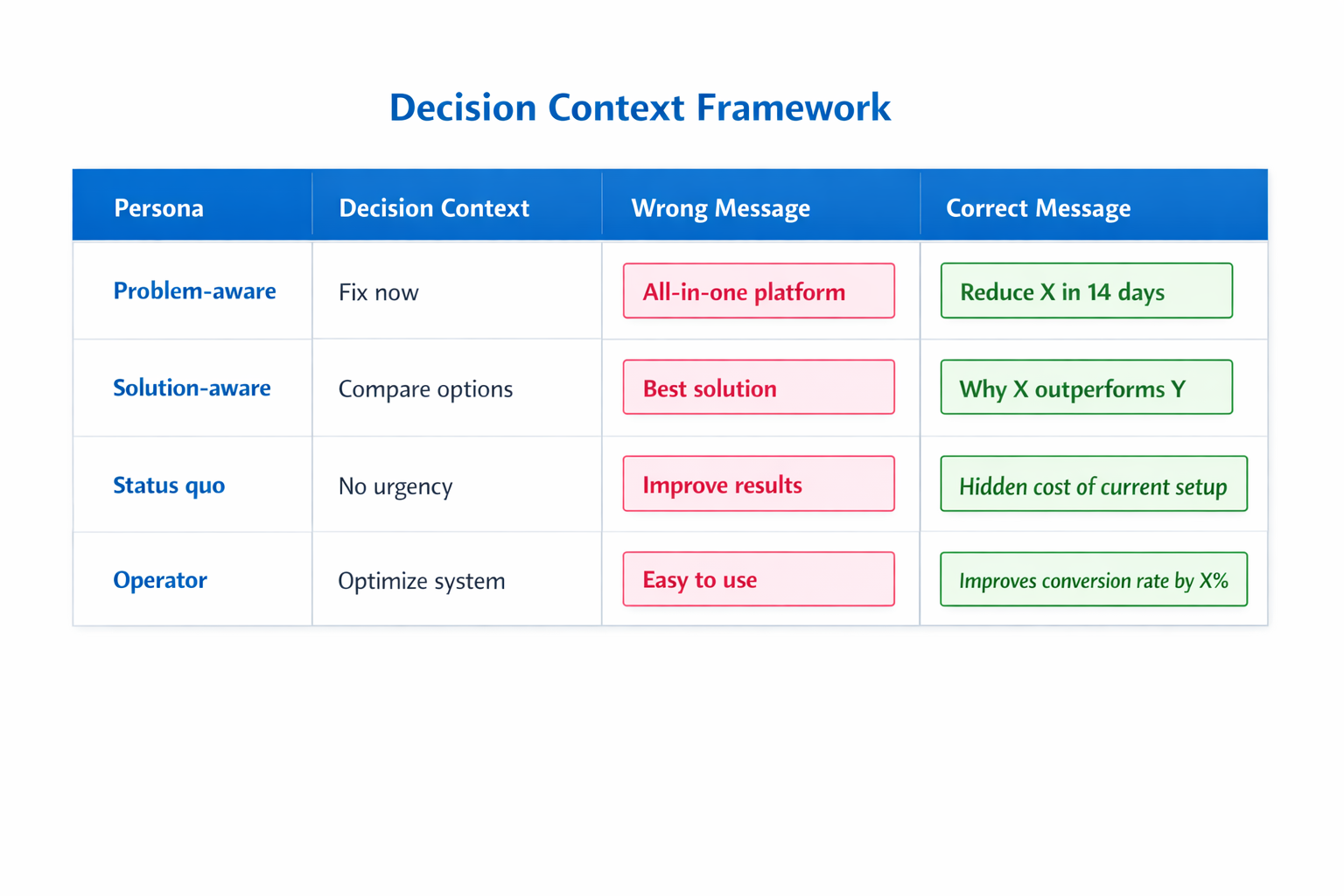
Each persona evaluates differently:
-
Problem-aware buyers → certainty
They want to know what changes and how quickly. Messaging should remove risk and focus on outcomes. -
Solution-aware buyers → comparison
They are choosing between options. Messaging should clarify what makes your approach different. -
Status quo buyers → disruption
They are not looking to change. Messaging should highlight inefficiencies or missed opportunities. -
Operator-level buyers → mechanics
They understand the system. Messaging should explain how performance improves and what drives it.
If you use the same message across all of them, each group interprets it differently. That creates inconsistent intent and weaker conversions.
A similar principle applies here: How to Align Ad Copy With Audience Awareness Levels.
Structuring Campaigns for Persona-Specific Messaging
Ad platforms won’t separate personas automatically. You need to enforce that separation.
In practice, this means:
-
Split campaigns by messaging angle.
Each campaign should represent one persona and one value proposition. This keeps optimization signals clean. -
Use specificity to filter engagement.
A message about “reducing CAC volatility” attracts a different audience than “getting more leads.” -
Match the landing page to the message.
If the page shifts to a generic pitch, you lose alignment immediately. -
Track downstream metrics.
Acceptance rate and opportunity rate reveal whether the right persona is entering the funnel.
Without this structure, campaigns mix signals and optimize toward the lowest-friction users.
Testing Messaging Without Creating Noise
Most teams test messaging inside the same campaign. That rarely produces useful insight.
The system keeps delivering to the same users, so results don’t change in a meaningful way.
A more reliable approach:
-
Isolate one persona per test.
Separate campaigns or ad sets prevent signal overlap. -
Measure behavior, not just conversions.
Time on page and completion rates show whether the message matches intent. -
Watch delivery shifts.
Changes in CPM or reach often indicate that a new audience cluster is being reached. -
Use sales feedback as validation.
When messaging aligns, conversations become more consistent.
If you test messaging without changing the audience context, you’re not really testing messaging.
The Real Objective: Clear Signals
Adapting messaging to personas is not about personalization. It’s about clarity.
When each campaign communicates a clear value proposition to a specific buyer type:
-
the algorithm learns faster,
-
delivery becomes more stable,
-
lead quality improves.
When messaging is broad, the platform optimizes for engagement volume instead of business outcomes.
Practical Takeaway
If your campaigns generate leads but struggle to convert them into pipeline, start with messaging.
Break campaigns into persona-specific segments. Build each message around a clear decision context. Then evaluate results based on what happens after the click.
You’re not just changing copy — you’re improving how the system interprets demand.