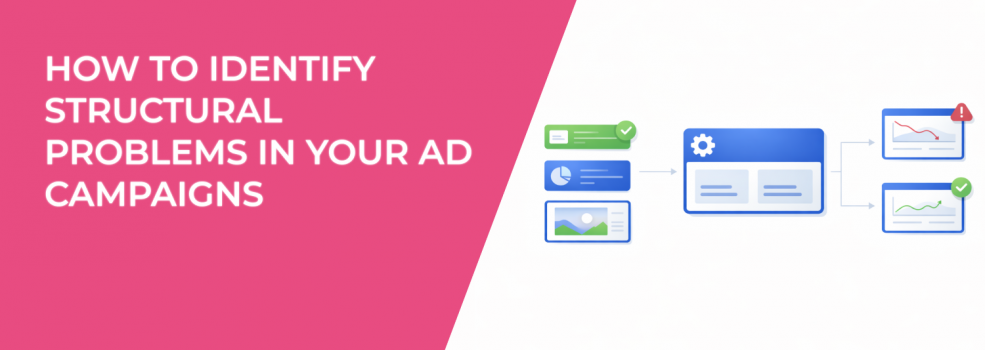
At some point, a campaign stops reacting.
You change creatives, adjust budgets, test audiences — and nothing really moves. Performance shifts slightly, but the overall pattern stays the same.
That’s usually not an optimization problem. It’s structural.
The key signal: lack of movement
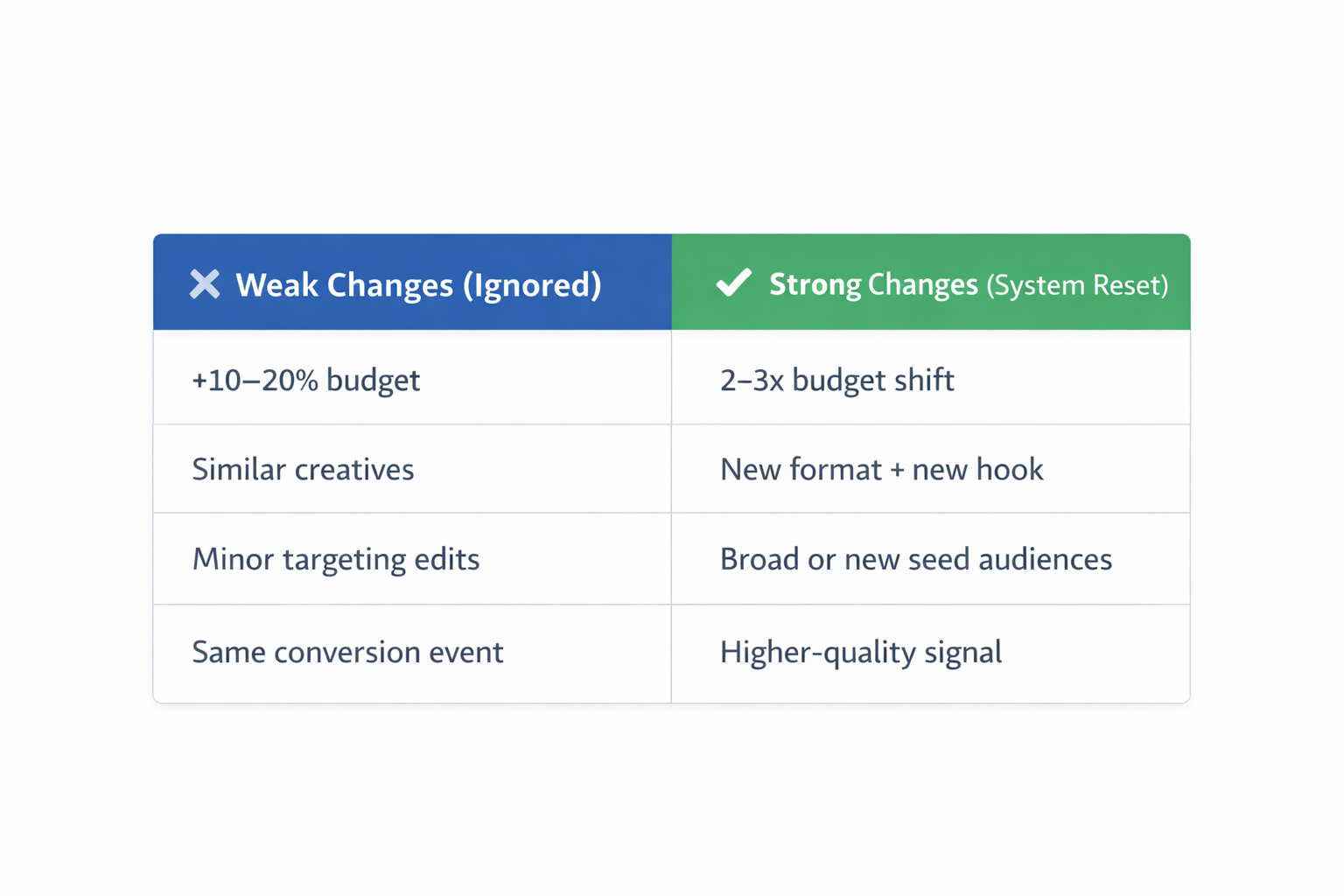
A campaign that can still improve reacts to change.
-
New creative — different CTR or CPM
-
Budget increase — more reach before frequency rises
-
Targeting change — new conversion patterns
When those reactions disappear, the system has already settled.
You’re no longer influencing delivery — you’re reinforcing it.
This is where many advertisers get stuck. The pattern is explained well in Why your Facebook ads strategy isn’t working (and how to fix it).
When conversions come from the same users
Some campaigns keep converting but stop learning.
At first glance, performance may look stable. But if you look closer, you’ll usually notice:
-
The same type of user converts repeatedly
-
Frequency slowly increases
-
Reach grows very little
This means the algorithm has narrowed its focus.
Instead of exploring, it keeps returning to what already works. Over time, that makes scaling harder and testing less useful.
Budget increases that don’t scale
Increasing budget should expand reach. When it doesn’t, the structure is limiting you.
You’ll typically see:
-
Spend increases
-
Reach stays almost flat
-
Frequency and CPM rise
That means the campaign isn’t entering new auctions. It’s competing harder in the same ones.
This often happens when:
-
the audience is already saturated;
-
targeting is too restrictive;
-
optimization focuses on a very narrow group.
When new creatives don’t change results
If every new creative performs the same, it’s rarely random.
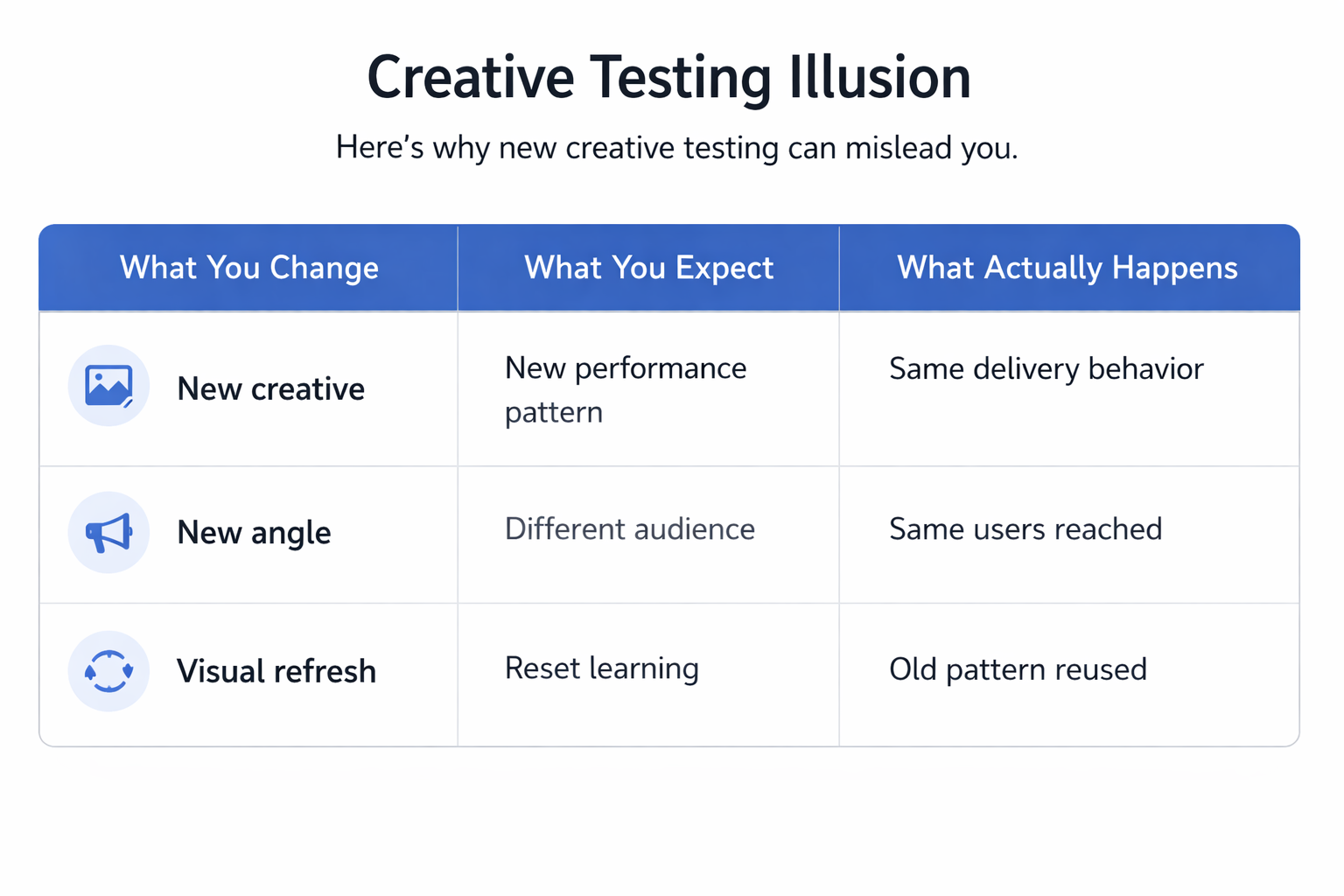
You’ll usually see:
-
similar CPM across ads;
-
similar CTR ranges;
-
identical delivery patterns.
At that point, the ad set is already trained.
New creatives don’t reset anything — they inherit the same delivery logic. Unless the change is significant, the system treats them as variations of the same input.
The problem with tight targeting
Highly detailed targeting often limits performance instead of improving it.
When you stack filters, you reduce the number of auctions the system can enter. That leads to:
-
higher CPM;
-
unstable delivery;
-
slower learning.
Broad setups often perform better because they allow the system to explore. This is covered in Facebook ad targeting 101: how to reach the right audience.
When the issue is outside the ad account
Sometimes the campaign isn’t the problem.
You might see:
-
strong CTR;
-
steady traffic;
-
solid engagement.
But conversions don’t follow.
That usually means the funnel is breaking the signal.
Common signs include:
-
users click but don’t convert;
-
leads increase but quality drops;
-
drop-offs happen at the same step.
In this case, the algorithm optimizes for easy actions, not valuable ones. That disconnect is explained in Facebook Ads Not Converting: How To Fix It.
Quick structural check
You don’t need a full audit. A few checks are enough:
-
Increase budget slightly — does reach grow or just frequency?
-
Look at conversions — are they coming from the same segment?
-
Test in a new setup — does performance change?
-
Compare broad vs narrow — is restriction helping or hurting?
-
Check the funnel — where do users drop off?
These simple checks reveal most structural issues.
Final takeaway
When a campaign stops reacting, optimization is no longer the solution.
At that point:
-
more budget increases cost, not scale;
-
more creatives don’t change delivery;
-
more tweaks don’t create new outcomes.
The only way forward is to change the structure.
That means giving the system new signals, more room to explore, and a cleaner path to conversion. Otherwise, it will keep repeating the same pattern — just at a higher cost.