
On platforms like Facebook and Instagram, users scroll fast and judge even faster. That’s why credibility matters more than ever.
Without trust, even your best ad will struggle to work. People click less, convert slower, and are quick to move on.
But when your content feels real, helpful, and honest — it builds trust that can turn into lasting growth.
If you want to explore why credibility also improves campaign results, see Make Your Facebook Ads a Trust-Building Machine.
What Credible Content Actually Looks Like
Great marketing content doesn’t just push a product. It helps people feel confident in your brand. That’s what makes it credible.

Signs of credible content:
-
Clear, backed-up claims — like “10,000+ 5-star reviews” or “Used by 40,000 businesses.” Avoid vague promises like “Everyone loves it.”
-
Clean, on-brand visuals — no blurry photos, off-brand colors, or messy layouts. Design should look intentional and polished.
-
The right tone for your audience — friendly and simple for B2C; confident and expert for B2B. Stay human, not robotic or hype-heavy.
-
No hidden terms — if you offer a free trial, say “Free 7-day trial — no card needed.” Be upfront about what users get.
How to Build Trust With Your Content
1. Start With a Clear Message
People trust brands that know who they are and who they’re for. That starts with your positioning.
Define these first:
-
What do you help people do? For example: save time, grow revenue, reduce stress.
-
Who is your product for? Be specific — small business owners, skincare beginners, ad managers, etc.
-
What’s your voice? Are you helpful and friendly? Straightforward and bold? Choose one tone and use it everywhere.
When your message is clear, every ad you run will feel more focused and more believable.
2. Show, Don’t Just Sell
People believe what they can see. That’s why the best content doesn’t just tell — it shows.
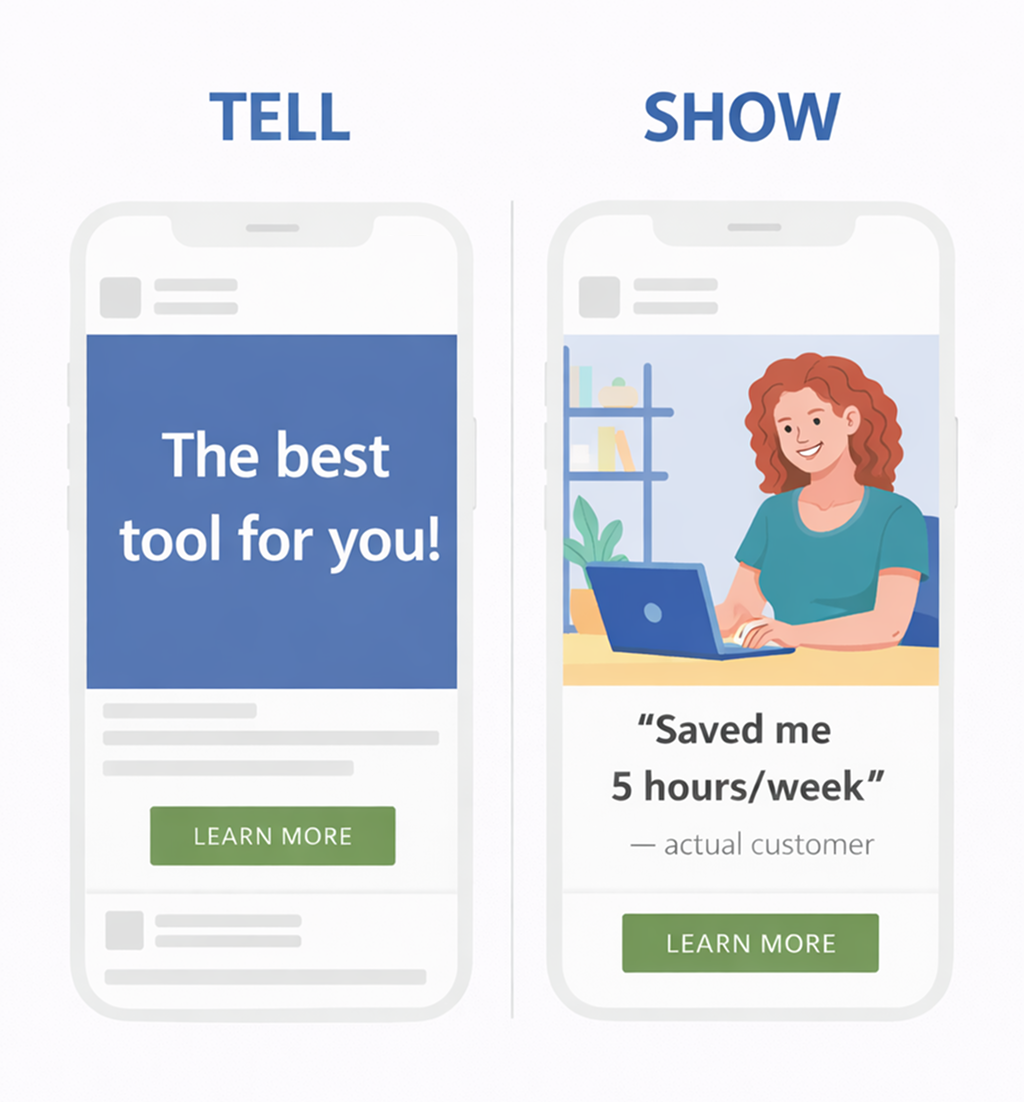
Try these content types:
-
Before-and-after visuals — perfect for skincare, fitness, cleaning, home, or apps. Quick proof in one image.
-
Customer success snapshots — quotes or mini case studies. Example: “We doubled conversions in 6 weeks — and it was easy.”
-
Behind-the-scenes content — show how your product works, who’s building it, or how it’s made. Transparency builds trust.
Don’t worry about making every piece perfect. Real beats polished.
Want tips for content that blends in and feels native? Check out 10 Tricks to Make Instagram Ads Look More Native and Perform Better.
3. Make Every Ad Look Like You
Consistency builds trust. When your ads all follow the same style, people start recognizing — and trusting — your brand.
In every ad, include:
-
Your logo — small but visible in the corner or footer.
-
Your brand colors and font — use them across visuals, but keep things simple and readable.
-
A repeatable layout or image style — whether it’s bold photos or calm illustrations, stick with a style that feels like your brand.
If every ad looks totally different, your brand feels scattered — and scattered brands don’t feel trustworthy.
4. Focus on Helping, Not Just Selling
People trust brands that help them learn something. Educational content shows you know what you’re talking about — and builds authority.
Great ways to educate through content:
-
How-to tutorials — like “3 ways to prep your skin for better results” or “Set up your first campaign in 5 minutes.”
-
Simple video explainers — great for breaking down tricky topics (e.g., how your product compares or how it works).
-
Side-by-side comparisons — honest comparisons with other products help people decide. Don’t exaggerate — be fair and clear.
When you give people value before asking them to buy, they’ll remember — and come back when they’re ready.
For more on this approach, read What Brand Recall Metrics Really Tell You About Campaign Effectiveness.
Use Social Proof Everywhere
Social proof builds fast trust. If others are using and loving your product, that matters.
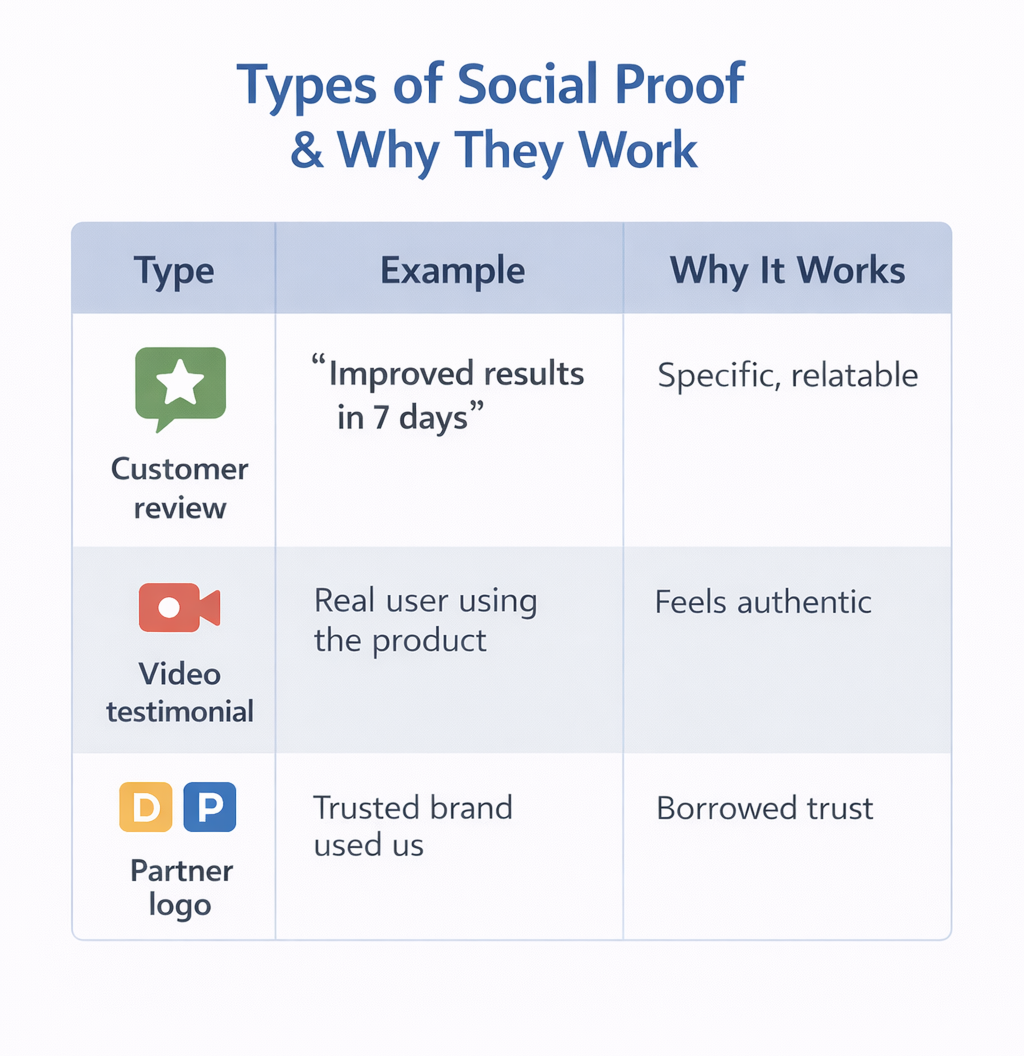
Types of social proof to include:
-
Customer reviews — use ones with real names and specific results: “Saved me 6 hours a week.”
-
UGC (User-generated content) — photos or short clips from real users. These feel natural and believable.
-
Well-known partners or brands — if big names trust you, show it. Logos or quick quotes help.
Don’t fake it. Fake reviews, inflated numbers, and stock UGC hurt your credibility fast — and are hard to fix.
You can learn how to apply social proof directly to ad creatives in this helpful guide:
The Role of Social Proof in Facebook Ads.
What Breaks Trust — Even in a Good Ad
You can have strong visuals and smart copy — but still lose trust if your message feels off.
Common mistakes to avoid:
-
Overpromising results — “Double your sales in 3 days” sounds like a scam. Keep it realistic.
-
Clickbait headlines — if your ad promises something the landing page doesn’t deliver, users will bounce.
-
Mixed messaging — if your Instagram post says one thing and your ad says another, people get confused.
-
Bad user experience after the click — if your site loads slow, has popups, or hides pricing, trust drops instantly.
Every part of your content journey should feel smooth, honest, and aligned.
Why Facebook and Instagram Favor Credible Content
Meta’s platforms are built to protect user experience. That’s why they reward ads that feel honest and helpful — not spammy.
Here’s how credibility helps performance:
-
Better engagement — more saves, shares, and clicks from real users.
-
Higher relevance scores — Meta notices when people react positively, and rewards you with better ad placement.
-
Lower ad costs — more trust means better conversion, which often means lower CPM and CPC over time.
So if you’re focused on long-term performance, credibility is just as important as your targeting or creative.
Final Thought: Trust Takes Time — and Repetition
Credibility doesn’t come from one ad. It comes from the total experience of your brand — what people see, feel, and remember.
Your job isn’t just to grab attention. It’s to build belief.
So keep your content honest. Keep your style consistent. Keep showing up with value.
When people trust what you say — they’ll be more likely to buy, share, and come back.