
Demographic clustering continues to be a cornerstone of effective digital advertising because it aligns messaging with the motivations, constraints, and expectations of distinct audience segments. When structured correctly, demographic clusters help reduce wasted spend and improve both CTR and conversion rates.
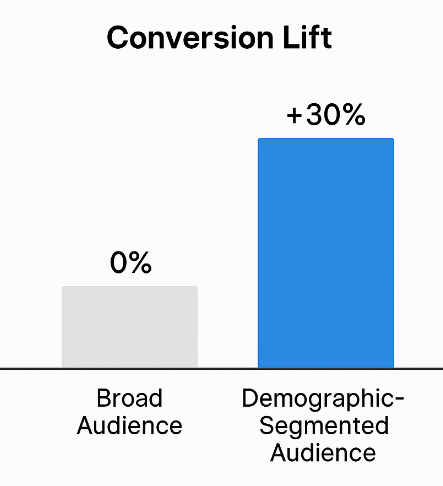
According to industry benchmarks, campaigns that use demographic segmentation see, on average, a 2–3x improvement in ad relevance scores and up to a 37% boost in conversion efficiency.
Step 1: Identify the Most Predictive Demographic Variables
Not all demographic traits influence conversions equally. Focus on variables that consistently correlate with buyer intent.
Most predictive variables typically include:
-
Age range (especially for products tied to life stages)
-
Gender (where behavior patterns significantly differ)
-
Income level
-
Education level
-
Occupation or professional tier
-
Location and population density
Useful statistic: Advertisers who prioritize 3–5 high-impact demographic variables see an average 28% decrease in CPA compared to those using broader demographic profiles.
Step 2: Map Demographics to Behavior Patterns
Demographics alone don’t convert—behavior does. The next step is identifying how demographic traits influence actions.
For example:
-
Younger demographics may prefer short-form, dynamic creative.
-
Higher-income groups respond better to value-oriented messaging.
-
Urban audiences typically show higher engagement with mobile-first creatives.
Stat insight: When demographic traits are paired with behavioral insights, conversion rates increase by up to 41% on average.
Step 3: Build Micro-Clusters for Maximum Precision
Micro-clusters combine 2–4 demographic traits into compact, high-conversion audience segments. Examples:
-
"Women, 25–34, mid-income, urban"
-
"Men, 35–44, high-income, tech sector"
Why this works:
-
Messaging becomes more relevant.
-
Creative can be tailored to real-world motivations.
-
Offers can be structured by cluster-specific preferences.
Micro-cluster campaigns typically see 15–25% higher ROAS than broad demographic campaigns.
Step 4: Validate Clusters With Real Performance Data
Once clusters are built, validate them through structured testing.
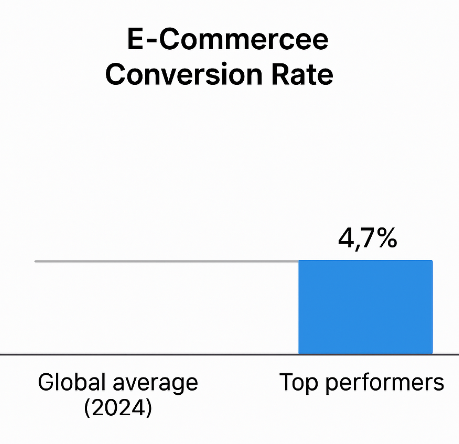
Average global e-commerce conversion rate (2024) is ~1.65%, while well-optimized stores often achieve 4.7% or higher
A reliable testing approach:
-
Run parallel ad sets for each demographic cluster.
-
Test identical creatives and offers to ensure clean data.
-
Compare CTR, conversion rate, and cost per result.
What to expect:
-
Top-performing clusters often deliver 2x higher CTR.
-
Poorly aligned clusters reveal themselves within 5–7 days of testing.
Retain only the clusters producing strong early signals, and gradually expand around them.
Step 5: Refine Messaging and Offers for Each Cluster
Demographic clusters convert best when the messaging aligns with their mindset.
Examples of refined adjustments:
-
Adjust value propositions based on income.
-
Reframe visuals and color palettes based on age-related aesthetic preferences.
-
Use location-based language for localized clusters.
Pro tip: Even small adjustments—like modifying tone or emphasizing a pain point common for a specific demographic—can improve conversion rate by 10–17%.
Step 6: Scale Winning Clusters
Once top-performing demographic clusters are identified:
-
Increase budgets gradually.
-
Introduce creative variations tailored to the cluster.
-
Expand into lookalike audiences based on the best-converting segments.
Scaling from validated clusters typically results in predictable and sustainable growth compared to launching campaigns with untested broad audiences.