Sequential audience targeting is no longer a nice-to-have tactic—it’s one of the most efficient ways to reduce CAC while improving lead quality. Instead of pushing every prospect directly toward a conversion, targeting chains guide people through a thoughtfully designed sequence of touchpoints that build awareness, trust, and intent.
Below is a practical breakdown of how targeting chains work, why they matter, and how to implement them effectively.
Why Sequential Audiences Matter
Modern buying journeys are multi-step and rarely linear. Research shows that:
-
Brands that use multi-step retargeting funnels reduce their CAC by up to 35% compared to single-step retargeting.
-
Users exposed to at least three stages of sequential messaging have a 48% higher conversion rate than those served the same message repeatedly.
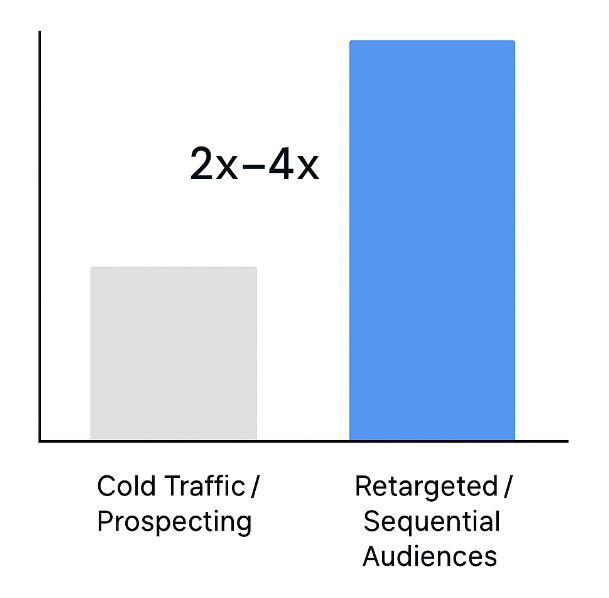
Conversion rates from retargeted audiences are 2–4× higher than from cold traffic
Sequential audience targeting works because it aligns your messaging with user intent at each stage rather than forcing a conversion too early.
The Structure of an Effective Targeting Chain
A well-built targeting chain moves users through three primary phases:
1. Awareness Audience
This stage focuses on broad education and problem recognition.
-
Ideal audiences: interest-based groups, lookalikes, contextual audiences.
-
Messaging: value introduction, problem framing, first-touch value.
-
Goal: generate attention and engagement.
Useful statistic: Awareness-stage video viewers who watch 50% or more of a video are 2.3x more likely to convert later in the funnel.
2. Consideration Audience
At this point, users know the category and are evaluating options.
-
Ideal audiences: engagers from stage one—video viewers, post engagers, landing page visitors.
-
Messaging: product benefits, comparisons, trust signals.
-
Goal: deepen intent and qualify users.
Useful statistic: Retargeting consideration-stage engagers can boost CTR by 60% compared to running consideration ads to cold traffic.
3. Conversion Audience
A highly refined group that has interacted multiple times.
-
Ideal audiences: pricing page visitors, high-intent video viewers, cart interactions.
-
Messaging: direct call-to-action, urgency, incentives.
-
Goal: convert efficiently at the lowest possible CAC.
Useful statistic: When conversion campaigns are limited to high-intent segments, CPA can drop by 22–40%.
Example of a Simple Targeting Chain
A practical three-step chain might look like this:
-
Awareness: short educational videos → build an audience of 50%+ viewers.
-
Consideration: carousel or value-focused ads shown only to viewers from step one.
-
Conversion: offer-focused ads targeting only users who clicked or visited landing pages.
By filtering users through stages, you avoid wasting spend on people not yet ready to convert.
How Targeting Chains Reduce CAC
1. They filter out low-intent traffic automatically
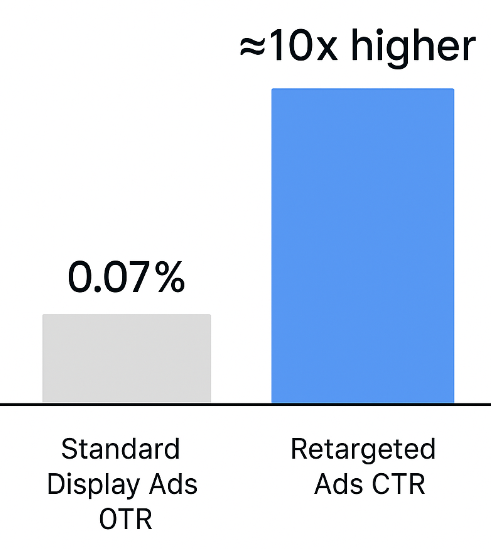
Retargeted ads enjoy about 10× higher click-through rates than standard display ads
Only users who demonstrate engagement move forward, improving the quality of every next audience.
2. They deliver the right message at the right time
Matching message to intent reduces friction and improves conversions.
3. They improve platform learning
Feeding platforms with cleaner intent signals boosts algorithmic efficiency, lowering costs.
4. They build compounding brand familiarity
Sequential exposure increases trust, and trust lowers CAC.
How to Measure the Success of Your Targeting Chain
-
Cost Per Engaged User (Awareness Stage)
-
Click-Through Rate (Consideration Stage)
-
Conversion Rate & CAC (Conversion Stage)
-
Multi-stage Retention: how many users move from one stage to the next.
A well-optimized chain should consistently show decreasing CAC and higher intent at each audience step.
Advanced Variations of Targeting Chains
1. Behavior-Based Chains
Trigger audiences based on micro-actions like scroll depth or time on page.
2. Multi-Creative Messaging Chains
Serve different creatives at each stage to avoid fatigue and reinforce different value angles.
3. Time-Delayed Chains
Introduce delays between stages to allow natural decision-making and avoid oversaturation.
Final Thoughts
Sequential audience strategies provide structure to the chaotic buying journey. When executed well, they reduce CAC, increase conversion rates, and create a more efficient marketing system overall.