

When users scroll through Facebook or Instagram, they decide in seconds whether to stop or keep scrolling. You don’t get a second chance to make a first impression — especially if your brand is unfamiliar.
That’s why the very first ad impression must do more than grab attention. It has to earn trust immediately. Without that trust, even the best offer or targeting won't convert.
In this article, we’ll walk through the psychological triggers, creative techniques, and structural choices that help you build trust from the first scroll.
Why Trust Is the First Conversion Barrier
It doesn’t matter how powerful your targeting is or how attractive your offer seems — if users don’t trust your ad, they won’t engage.
Modern audiences are hyper-aware of scams, low-quality products, and clickbait ads. Trust is the filter they apply before clicking, reading, or buying.
That’s why high-performing advertisers are shifting from attention-first creative to trust-first creative.
What Users Scan for in the First 3 Seconds
Users don’t fully read your ad at first. They scan. They make quick, subconscious judgments based on a few core signals.
What they look for immediately:
-
Familiarity: Have I seen this brand before? Is it associated with quality or value?
-
Visual tone: Does this look clean and professional — or sketchy and rushed?
-
Relevance: Is this speaking to my situation, or is it generic?
-
Risk: If I click this, will I regret it?
If any of those early signals feel off, users scroll past — often without remembering the ad at all.
What Makes an Ad Trustworthy at First Sight?
Let’s break down what actually builds trust in that first moment. These principles apply whether you’re running direct-to-consumer ecommerce, lead generation, or service-based ads.
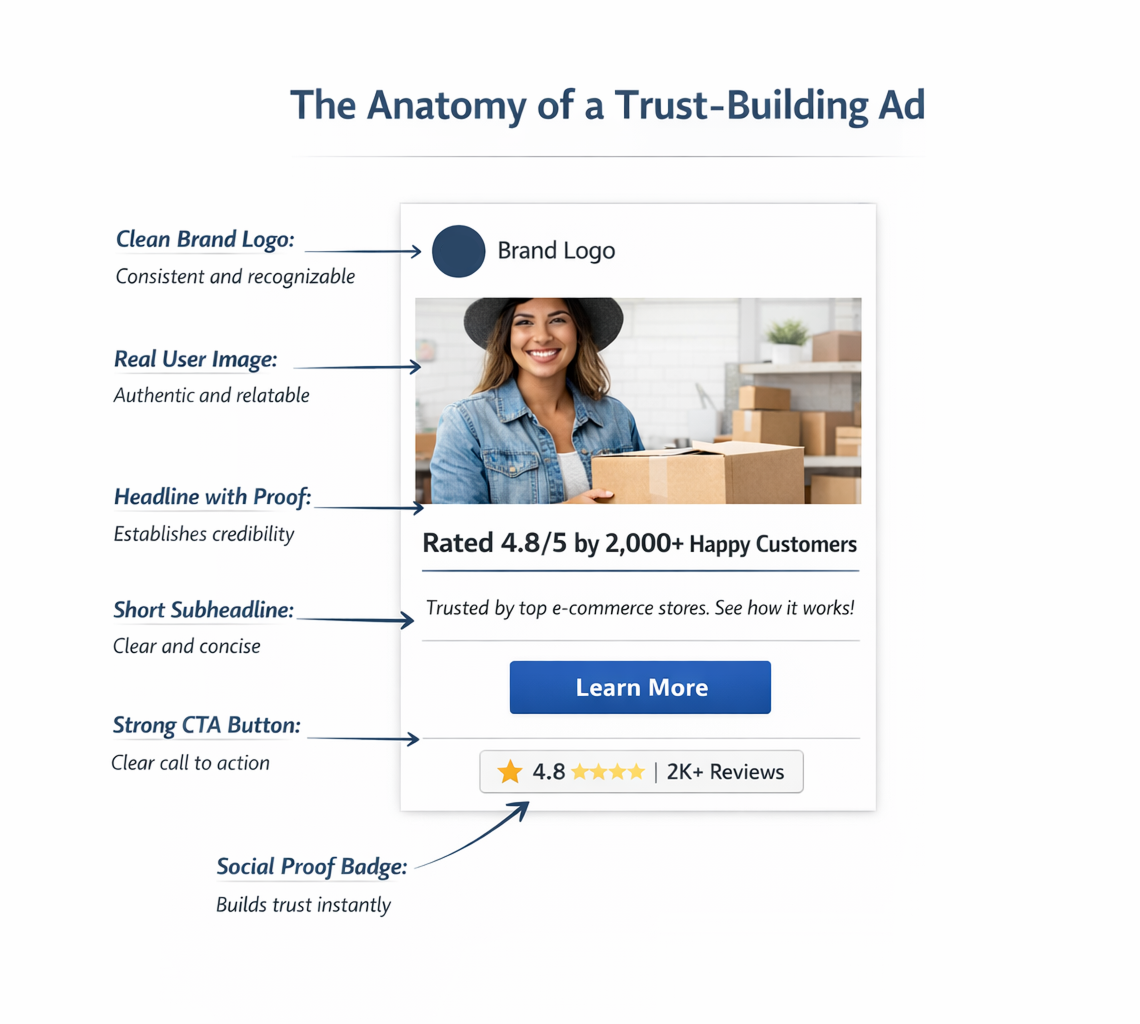
1. Use High-Quality, Brand-Aligned Visuals
Visual quality is the first layer of trust. In milliseconds, people decide if your ad feels legit.
Avoid:
-
Pixelated or compressed images;
-
Generic stock photography that lacks context;
-
Flashy banners, exaggerated “LIMITED TIME” offers, or too many bold colors;
-
Overdesigned templates that make your message hard to parse.
Use instead:
-
Real images of your product in use — lifestyle settings work better than sterile studio shots;
-
Clean, minimal layouts with consistent fonts, colors, and logo placement;
-
Visuals that match your website and organic content — familiarity builds trust over time.
Even if you're early-stage, prioritize original assets. Learn how to develop these consistently in Make Your Facebook Ads a Trust-Building Machine.
2. Lead With a Clear, Proof-Based Message
Your headline and first line of copy carry the weight of trust. Avoid the urge to be clever — aim to be clear, specific, and credible.
Avoid:
-
Buzzwords (“best ever,” “revolutionary,” “game-changing”);
-
Vague claims (“trusted by professionals,” “loved by users”);
-
Clickbait (“You won’t believe what this ad says!”).
Use instead:
-
Quantified social proof: “Rated 4.9/5 by 3,200 ecommerce store owners”;
-
Time-relevant metrics: “Over 8,000 small businesses started using [Product] in 2024”;
-
Specific problem-solving statements: “Struggling to get reviews? Automate the ask with [Brand].”
Want to make your copy more ethical and persuasive? Read Advertising and Trust: How Brands Can Win Without Manipulation.
3. Surface Clear and Verifiable Trust Cues
Adding the right form of social proof instantly increases believability. This is especially powerful for cold audiences who’ve never heard of you.
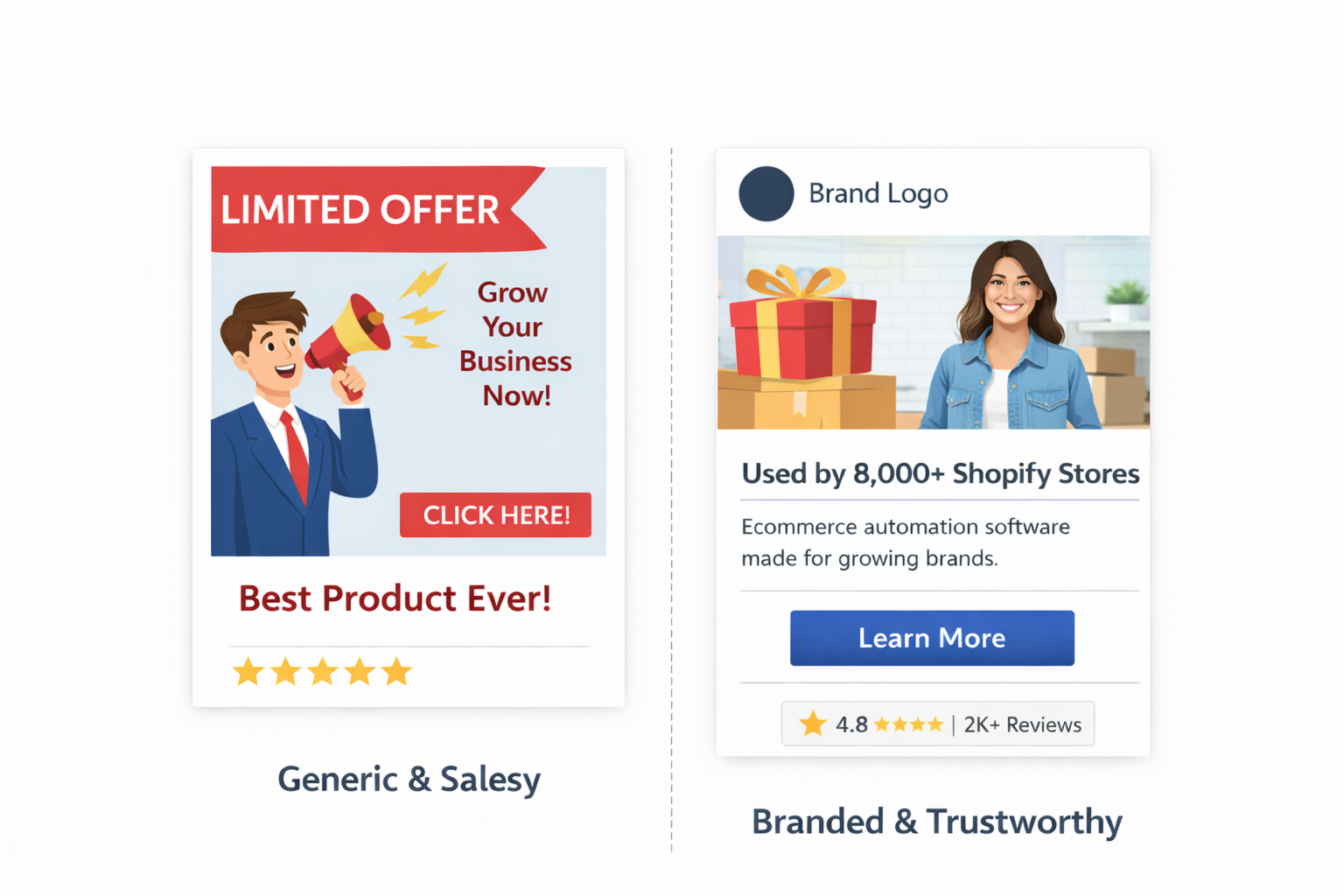
Most effective formats:
-
Star ratings with review counts: “4.7 stars from 1,500+ verified customers”;
-
Logos of recognizable clients or publications: subtle, clean, and relevant to your audience;
-
Screenshots, testimonials, or user-submitted content that show your product or service in context.
If you’re using customer reviews or UGC in your ads, make sure you’re following platform guidelines and legal best practices. See How to Use Customer Review Content in Product Ads.
4. Match Your Language to the User’s Reality
Cold traffic doesn’t care how great your product is — yet. To earn attention, show users that you understand their world.
Trust-building ad copy should:
-
Reflect the customer’s actual situation or pain point;
-
Use plain language — no jargon or vague marketing speak;
-
Offer a relatable scenario or outcome.
Examples:
-
“Still manually updating spreadsheets? Here’s a smarter way to manage your inventory.”
-
“Sick of ghosted leads? Here’s how top realtors follow up automatically.”
-
“Your invoicing tool shouldn’t stress you out. Try one designed for freelancers — not accountants.”
The moment your copy feels “off,” users disconnect. Empathy is a faster path to trust than explanation.
5. Offer Value Before You Ask for Commitment
For new audiences, friction is your enemy. Asking for a purchase or form fill too early creates resistance.
What builds trust instead:
-
Free tools, templates, or checklists;
-
Short interactive quizzes with value-based results;
-
Educational videos or stories from real users;
-
Low-commitment lead magnets with no credit card required.
Examples:
-
“Download our 5-step Facebook ad audit template — free, no signup.”
-
“Take our 2-minute quiz: What’s your conversion bottleneck?”
-
“Watch how [Brand] helped this solo founder 3x sales in 90 days.”
Be specific in your CTA. Vague offers reduce perceived value. Clear, relevant value builds confidence — and opens the door to future conversion.
Structuring Your Ad to Visually Support Trust
Even if your copy and offer are great, cluttered layout or chaotic design can undo it all.
Best Practices for High-Trust Layouts
-
One clear image or video (avoid overcrowded carousels);
-
Short, direct headline (under 10 words);
-
Visual hierarchy — the user should know what to look at first;
-
One CTA, styled as a button;
-
Generous whitespace — don’t cram every feature into one creative.
Trust is visual. Simple, organized, confident ads make your brand feel competent.
Watch for Design Patterns That Trigger Skepticism
Even subtle design missteps can trigger unconscious red flags.
Common trust-breakers to avoid:
-
ALL CAPS or excessive bolding;
-
Multiple CTAs competing for attention;
-
Bright red urgency banners or fake countdowns;
-
Sloppy image cropping or poor mobile formatting.
Audit your ad from a user's perspective. Would you click this ad if you didn’t know the brand?
Trust Is Earned — in a Scroll
Your first ad impression isn’t just about visibility. It’s a test: Can this brand be trusted?
The brands that win don’t just say the right things — they feel trustworthy from the very first second.
They use clear language, clean design, and proof that resonates. They speak to the user’s reality, reduce risk, and deliver value before asking for action.
If you’re running Facebook or Instagram ads, focus your creative process on earning trust — not just grabbing attention. That’s how real campaigns scale.
