Many advertisers obsess over Cost per Lead (CPL). It’s easy to track and makes campaigns look efficient. But CPL only tells you the cost to get a contact, not whether that contact has buying potential.
In most funnels, 60–80% of leads never turn into qualified sales conversations. That means your CPL is misleading and potentially dangerous if used alone.
High-quality leads, on the other hand:
-
Respond quickly to outreach and book calls;
-
Ask specific product-related questions;
-
Convert at 2–4x the rate of low-quality leads.
This is especially important for high-ticket, B2B, or service-based businesses — where one great lead can outweigh 50 weak ones.
If your current campaigns struggle to bring in quality leads, it may be worth reading Why Your Facebook Ads Aren’t Generating Leads — and How to Fix It.
The Biggest Mistake: Treating Lead Quality as a Targeting Problem
Targeting on Facebook and Instagram is a powerful lever — but it's only the starting point. Even with perfect targeting, what happens after the ad shapes the final outcome far more.
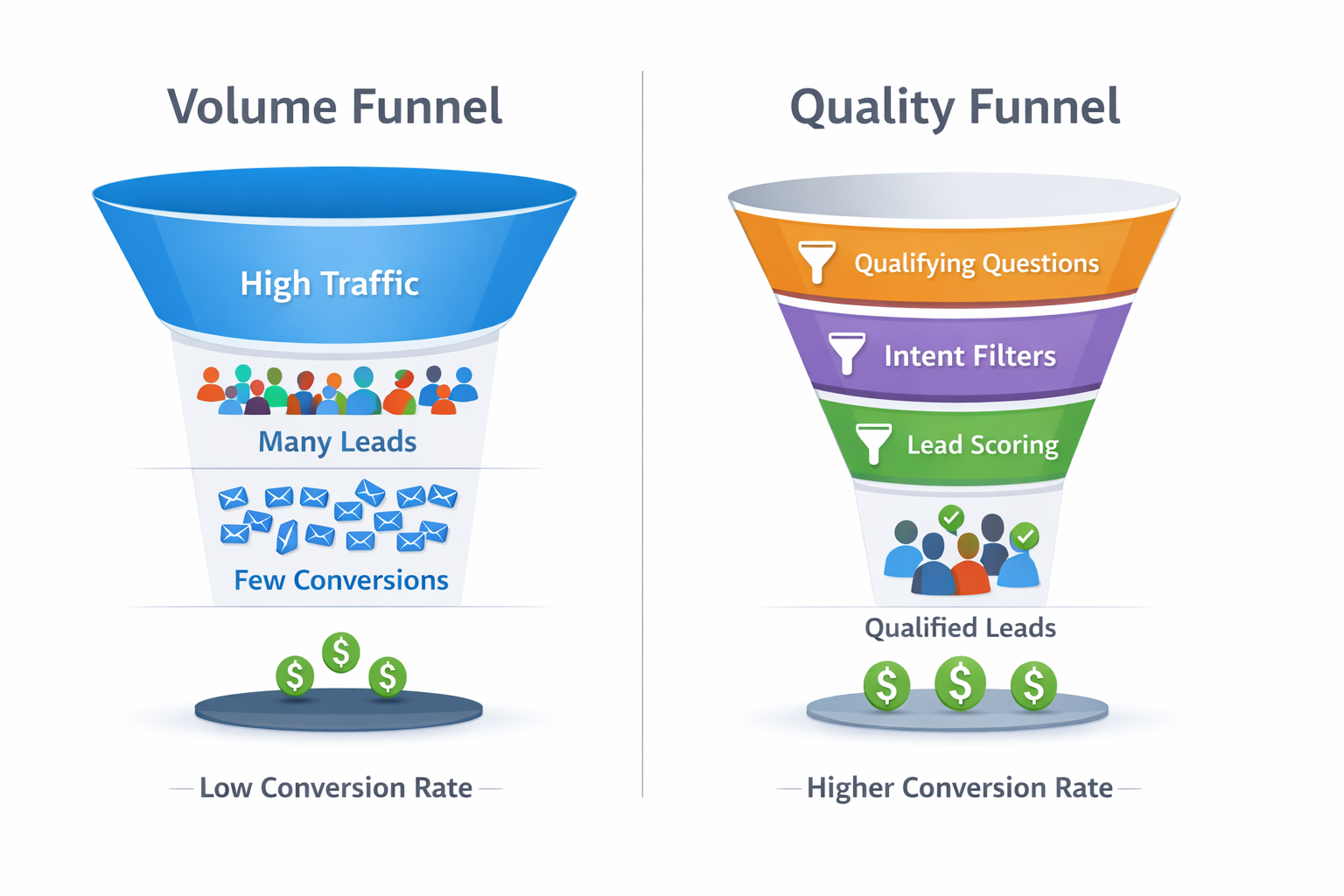
Poor lead quality often results from:
-
Vague or exaggerated ad messaging;
-
Funnels that incentivize volume over fit;
-
Generic follow-up that fails to engage real intent.
If you want consistent ROI, you need a system that attracts, filters, and nurtures leads based on what they do — not just who they are.
To learn how to prevent poor-fit leads from derailing your funnel, check out How to Spot Low-Quality Leads Before They Hurt Your Funnel.
Post-Click Optimization: The Real Source of Lead Quality Gains
Every ad click is a decision to learn more. What comes next determines who fills out your form — and why.
The Landing Page Should Do More Than Match the Ad
A good landing page doesn’t just match the ad visually — it should deepen the message and build psychological momentum.
Tips to improve lead quality through better landing pages:
-
Reinforce trust with clarity: Don’t overload the hero section. Instead, clarify your value in the first 3 seconds — use bold headlines, real examples, or quick stats.
-
Disqualify with honesty: If your offer is only for certain business types or budgets, say so. Clarity improves conversion quality, even if volume drops.
-
Use dynamic sections: Pull in UTM data or audience tags to personalize copy. For example: “We help real estate pros scale client acquisition — without cold calls.”
Use Forms as Intelligent Filters — Not Just Gateways
A lead form is not just a wall to get through — it’s a sorting tool. Used right, it helps you focus on buyers who are more likely to act.
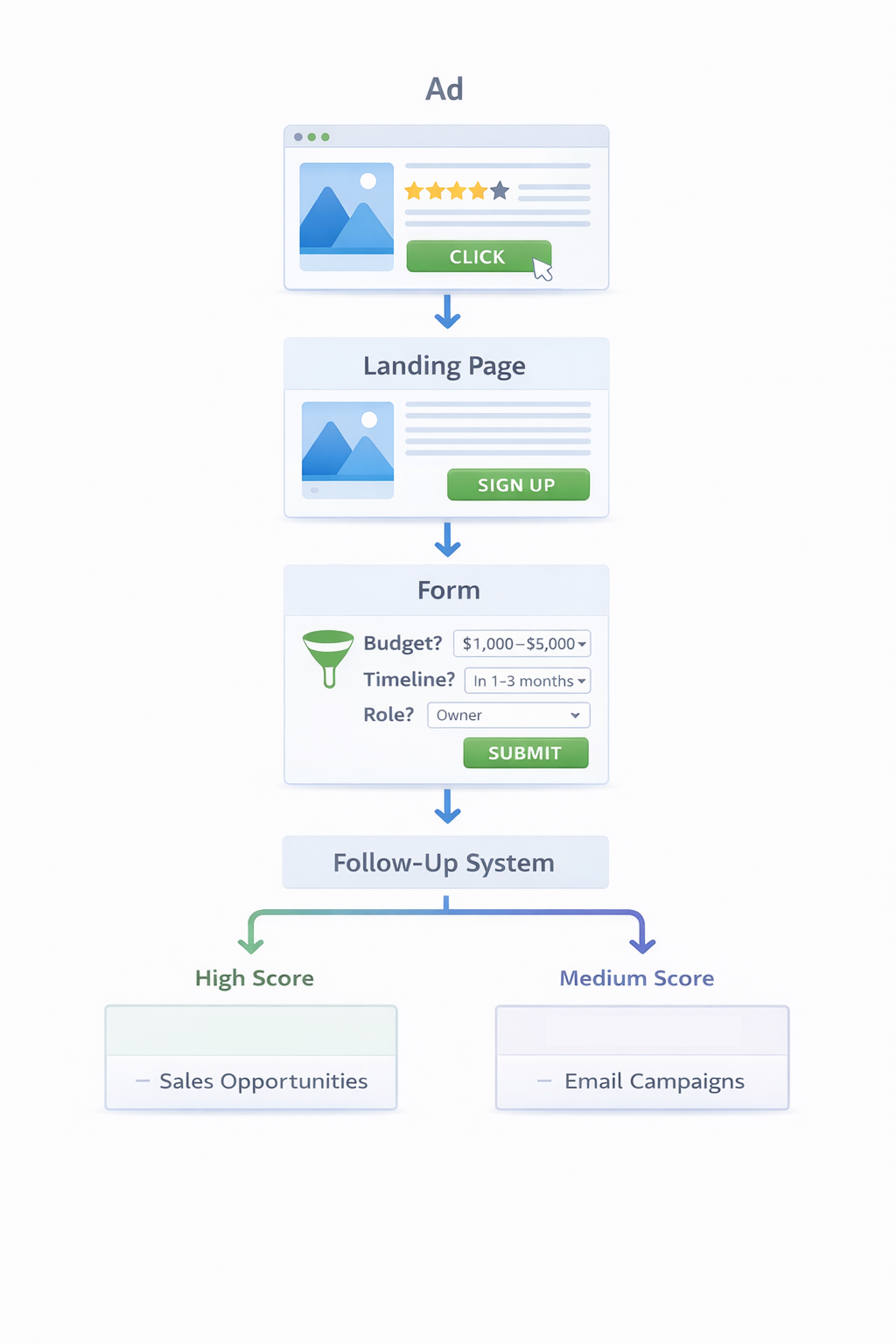
Smart form field examples:
-
Budget tiers: Instead of asking “What’s your budget?”, give multiple choice options:
“Under $1,000”, “$1,000–$5,000”, “$5,000+”.
This helps segment leads into nurture vs. sales-ready buckets. -
Timeframe questions: “How soon are you looking to start?” — a crucial signal of urgency.
-
Role or business size: Helps you understand buying authority and deal size potential.
Avoid using too many open text fields. Use dropdowns and structured questions to make scoring easier.
To dive deeper into this tactic, read How to Qualify Leads Through Facebook Ads Without Adding Friction.
Align Creative Strategy With High-Intent Mindsets
Creative is often blamed for poor CTR — but it also plays a critical role in attracting the right type of person. If you promise “amazing results instantly”, you’ll get clicks from skeptics or freebie-seekers.
Instead, lead with content that reflects the mindset of serious buyers.
Creative Signals That Attract Higher-Intent Leads
1. Specific proof points:
Ads that say “Our clients double booked appointments in 45 days” outperform vague claims like “Grow your business today.”
2. Real visuals:
Avoid generic stock. Use screenshots, dashboards, or customer-submitted content. People trust what feels native and real.
3. Teaching-first hooks:
Educational ads attract people further down the funnel. Try formats like:
-
“3 mistakes that block consistent lead flow — and how to fix them.”
-
“Why most CRMs kill your follow-up — and what to do instead.”
These pre-qualify users by interest and stage — reducing bounce rates and improving form quality.
For more strategies, see Facebook Lead Generation: How to Qualify Leads Without Losing Conversions.
Don’t Just Convert — Sort and Score Leads
Many advertisers build funnels that aim to convert every visitor. But conversion rate shouldn’t be the goal — sorting rate should.
High-quality funnels segment and qualify leads before they ever reach your sales team.
Funnel Design Tactics That Elevate Lead Quality
-
Conditional logic in forms:
Based on initial answers, show or hide follow-up questions. For example, if someone chooses “Over $10K monthly budget”, ask if they want a strategy call this week. -
Score leads automatically:
Tools like HubSpot, ActiveCampaign, or custom Zapier flows can assign quality scores based on responses. -
Multi-step form flows:
Breaking the form into 2–3 screens helps filter unserious users and reduce noise. Those who complete all steps are typically more committed. -
Lead routing by score:
Send high scorers directly to sales. Send others to longer email sequences that warm them over time.
This approach may reduce form fill rate — but will drastically increase the percentage of qualified leads who book calls or make purchases.
What to Measure Instead of Just CPL
Cost per Lead (CPL) is a starting metric — not an end goal. Here’s what seasoned advertisers track to understand true lead performance.
Post-Lead Metrics That Signal Profitability
-
Lead-to-sale rate:
Of the leads generated, how many convert within 30–60 days? -
Cost per qualified lead (CPQL):
Filter leads by predefined quality criteria. Then measure CPL just for that segment. -
Time-to-conversion:
Higher-quality leads often close faster. Use this as a tie-breaker in creative testing. -
Revenue per lead (RPL):
Total revenue ÷ total leads. A core metric for real business growth.
Tracking these metrics helps you avoid the illusion of performance and focus on what actually moves your business forward.
When and How to Revisit Targeting
Once your funnel, creative, and follow-up are optimized — you can revisit targeting to refine outcomes further.
Advanced Targeting Tactics to Pair With Quality Funnels
-
Retarget based on actions, not time:
Focus on users who viewed the form but didn’t submit, or who clicked deeper into your funnel. -
Exclude low-quality behaviors:
Build exclusion audiences for people who submitted forms but never opened follow-up emails or booked calls. -
Use status-based targeting:
Target by life situation, not just interests — like “recently moved”, “new parents”, or “small business owners under 2 years”. -
Create value-based lookalikes:
Instead of building lookalikes from all leads, filter for those with high LTV or conversion rate — then upload that list to Meta.
These targeting strategies work best after the funnel does its job of qualifying and converting efficiently.
Final Thoughts
Many advertisers blame the platform when lead quality drops. But Meta, Google, or TikTok only bring the traffic. Your system determines what stays.
Think of your ad funnel as a filtering engine:
-
Ads attract interest;
-
Pages clarify and screen;
-
Forms segment;
-
Follow-ups convert or nurture.
When each layer is optimized for fit, not just form completions, your business becomes scalable, not just busy.