Some Facebook campaigns are set up to fail before they spend anything.
The ad may look good. The audience may look fine. The budget may be reasonable. But the objective can still point Meta toward the wrong result.
That is objective mismatch. It happens when the campaign goal, conversion event, CTA, creative, and funnel stage do not support the same action.
The problem is expensive because the campaign still produces data. It just produces the wrong data.
What objective mismatch looks like
Objective mismatch often shows up as “good” early metrics with weak business results.
A traffic campaign may get cheap clicks, but no leads. A lead campaign may get a low CPL, but poor sales acceptance. An engagement campaign may get comments, but no real movement through the funnel.
Meta is not confused. It is doing what the setup told it to do.
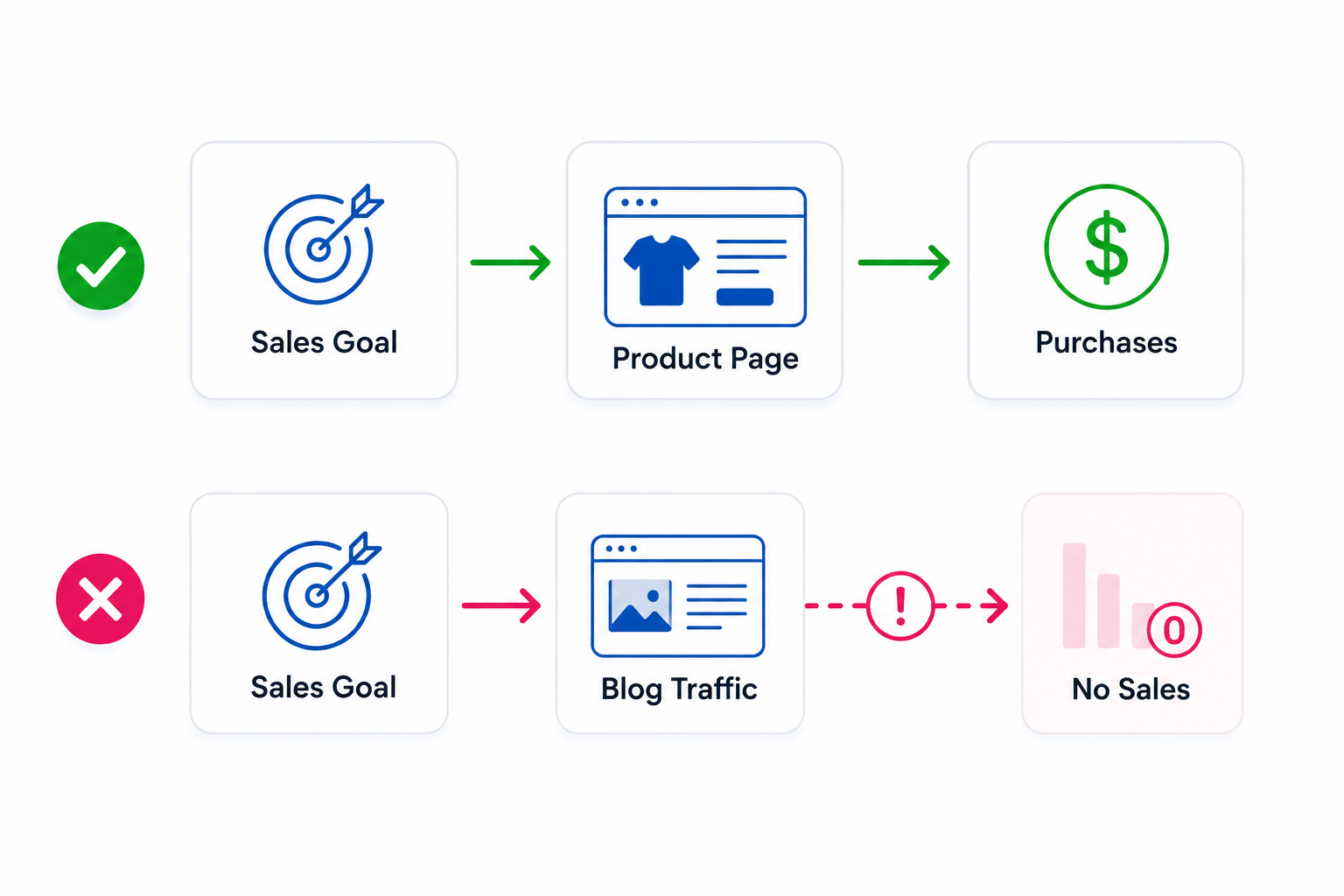
If the campaign asks for link clicks, Meta finds likely clickers. If it asks for form fills, Meta finds users likely to submit forms. If it asks for engagement, Meta finds users likely to interact.
The issue starts when the advertiser expects one result but chooses another setup. This is why it helps to know when Facebook ads are optimizing for the wrong goal.
Check the business goal before checking the ad
Start with the real business result. Do you need purchases, booked calls, demo requests, qualified leads, messages, or landing page traffic?
Then check whether the campaign objective matches that result closely enough.
A B2B company that needs sales calls should be careful with simple lead volume. A local service business running message ads should make sure someone can reply quickly. An ecommerce brand should not use traffic as a shortcut when the real goal is purchases.
The objective does not need to be perfect, but it should not fight the funnel.
Use a simple pre-launch QA
Before publishing, trace the campaign from business goal to user action.
Check these five points:
- Campaign objective: Does it match the result you actually need?
- Performance goal: Is Meta optimizing for clicks, landing page views, leads, purchases, or another event?
- Conversion location: Does the user go to the right place after clicking?
- Creative and CTA: Does the ad prepare the user for the next action?
- Measurement: Can you see whether the result became valuable after Meta reports it?
This catches many Meta Ads setup mistakes before budget starts moving.
It also prevents the team from blaming creative or targeting when the setup is the real problem.
Watch the first 72 hours for mismatch signals
If the campaign is already live, the first few days can show warning signs.
Do not look at one metric alone. Look at how the metrics behave together.
For example, low CPC with flat conversions usually means the traffic is cheap but weak. Low CPL with poor contact rate may mean the form is too easy. Strong CTR with no sales can mean the ad creates curiosity, not buying intent.
A few signs to check:
- CPC is low, but CPA keeps rising.
- Leads are coming in, but sales says they are poor quality.
- CTR is strong, but landing page conversion rate is weak.
- One ad gets most of the spend, but downstream results are poor.
- Engagement is high, but retargeting or sales activity does not improve.
These patterns do not always mean the campaign should be paused. They mean the objective and conversion path should be checked before making creative changes.
Do not fix an objective problem with new creatives
Many teams react to weak CPA by making more ads.
That can waste more budget.
If Meta is optimizing for the wrong action, new creatives may only bring more of the wrong users. A stronger hook can increase clicks without improving conversions. A cleaner design can increase form fills without improving lead quality.
Before changing creative, check the setup.
A basic Facebook ad campaign audit should separate three questions:
- Is the campaign buying the right action?
- Is the audience relevant enough?
- Is the creative strong enough for the funnel stage?
If the first answer is no, fix the objective before touching the ad.
Final takeaway
Objective mismatch is one of the easiest problems to prevent and one of the most expensive to notice late.
Before launch, check whether the objective, event, CTA, creative, and destination all point to the same action.
Do not judge only the ad preview. The preview shows what users see. The objective tells Meta what to chase.
A clean setup gives the campaign a better chance to learn from the right signals.