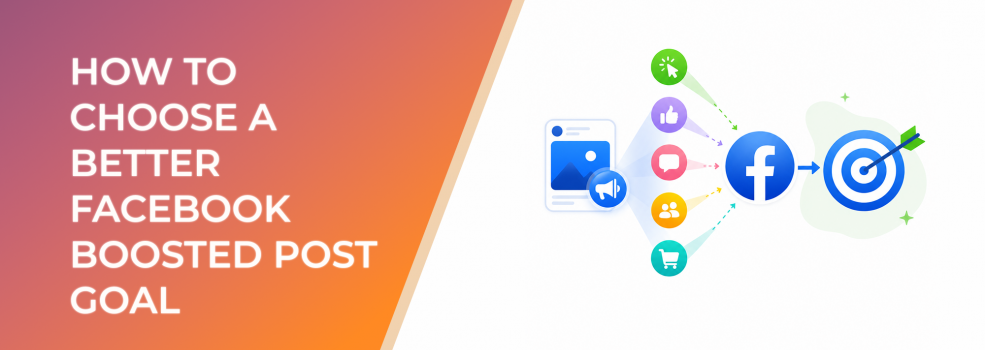
The default boosted-post goal is tempting because it removes friction. You can move quickly from a Page post to a paid promotion without building a full campaign from scratch.
But paid social performance rarely improves because setup was fast.
It improves when the goal, post, audience, CTA, and measurement plan all point toward the same outcome. If the default goal does not match that outcome, the campaign may produce the wrong kind of results from the start.
The Problem
The problem is not knowing how to choose a better boosted-post goal.
Many advertisers know the default option might be too generic, but they do not have a practical replacement process. So they keep the default, choose the goal that sounds familiar, or select the option that appears likely to generate the cheapest result.
That approach creates weak campaign logic.
A goal should answer one question: what action should this campaign encourage?
If the campaign needs visibility, the goal should support visibility.
If it needs qualified visits, the goal should support traffic quality.
If it needs leads, the setup should support lead capture.
If it needs sales, the campaign structure must support purchase behavior.
The default goal may or may not do that.
Why This Problem Hurts Performance
Choosing the wrong boosted-post goal hurts performance because every later decision becomes harder to interpret.
If the campaign produces high engagement, is that good? It depends on whether engagement was the goal.
If CPC is low, is that good? It depends on whether those clicks convert.
If messages increase, is that good? It depends on whether the conversations are qualified.
Without a better goal-selection process, advertisers can confuse motion with performance. That leads to wasted budget, poor CPA, unstable CAC, weak ROAS, and low-quality leads.
It also slows testing. When the goal is wrong, a failed campaign does not teach much. You cannot tell whether the post was weak, the audience was wrong, or the campaign simply optimized for the wrong behavior.
Common Scenarios Where This Happens
An ecommerce brand wants purchases but chooses a traffic-style goal because website visits sound close enough to sales. The result is more visitors, not more revenue.
A B2B team wants demo requests but boosts an educational post for engagement. The campaign creates discussion, but not pipeline.
A local business wants bookings but chooses the goal that creates the most visible activity. The post gets attention, but the phone does not ring.
An agency wants to prove a client’s new offer and chooses a quick boosted-post goal without defining what proof means. The campaign spends, but the result is hard to evaluate.
Why the Problem Happens
This happens because boosted-post goals are often chosen too late.
The marketer starts with the post. Then they choose a goal from the available options. That sequence makes the goal feel like a setup field instead of a strategic decision.
Another cause is vague language. “Get more interest” can mean reach, comments, clicks, messages, leads, or sales. Unless the team defines the desired action, any goal can sound reasonable.
A third cause is budget pressure. On small budgets, advertisers often choose the goal that appears likely to produce the most activity. That may make reporting easier in the short term, but it can increase acquisition cost later.
The Solution
Choose the boosted-post goal by working backward from the outcome.
Start with the business result. Complete this sentence before launching:
“This boosted post is worth funding if it produces ______.”
Then map that answer to the goal.
If the answer is visibility, choose a goal that supports reach, awareness, or broad exposure. This works for announcements, events, local visibility, and top-of-funnel education.
If the answer is social proof, choose a goal that supports engagement. This can be useful when comments, shares, and reactions have value, or when you want to validate whether a message resonates.
If the answer is website evaluation, choose traffic only when the post has a clear reason to click and the destination has a clear next step.
If the answer is conversations, choose messages or calls only when your team can respond quickly and qualify interest.
If the answer is leads, purchases, bookings, or revenue, be more cautious. A simple boosted post may not provide the control needed for serious acquisition. In that case, a full Meta campaign may be a better fit.
Risks and Considerations
A better goal does not fix every campaign weakness.
If the audience does not match the ideal customer profile, the campaign may still reach the wrong people. If the post lacks clarity, users may ignore it. If the landing page is weak, clicks may not convert. If tracking is unreliable, results may be difficult to evaluate.
Also remember that different goals create different trade-offs. Engagement may be cheaper than leads. Traffic may be cheaper than purchases. But cheaper is not better if the behavior does not support the funnel.
Prerequisites and Dependencies
To choose the right boosted-post goal, you need a clear campaign objective, defined funnel stage, target audience, KPI, and post-click path.
The post itself must also fit the goal. A strong awareness post may not be a strong lead-generation post. A good discussion post may not be a good sales post. A product post may need a stronger CTA before paid promotion.
Finally, the team should agree on how the campaign will be judged. If the goal is traffic, do not judge only engagement. If the goal is leads, do not celebrate cheap clicks that fail to convert.
Practical Recommendations
Before boosting, write down three things:
- The outcome you want.
- The action the user must take.
- The metric that will prove the campaign worked.
Then choose the boosted-post goal that most directly supports those three items.
- If more than one goal seems possible, choose the one closest to the business result, not the one likely to produce the cheapest surface metric.
- If no boosted-post goal fits, do not force it. Build the campaign in Ads Manager where you can control objective, audience, placements, testing, and measurement more carefully.
Final Takeaway
The default boosted-post goal is not automatically wrong, but it should never be accepted without review.
A better goal starts with the business outcome, not the setup screen. Define what the campaign must produce, match the goal to that action, and judge performance by the metric that matters most.
Related LeadEnforce Articles
- Choose the Right Facebook Page Ad Goal Before You Spend Budget — A close companion for goal-first Page ad planning.
- Set Up a Facebook Boosted Post Without Missing Budget, Audience, or Goal Settings — Shows how goal, audience, and budget should work together.
- Boosted Post or Full Ad? How to Choose Based on Campaign Goals — Helps readers decide when a boosted post is too limited for the intended outcome.